
LAMBORGHINI MIURA
The Ultimate Guide To The Lamborghini Miura: Every Variant, Specs, Pics, Performance & More
A Brief Lamborghini Miura History
Only three years after the first Lamborghini prototype appeared at the 1963 Turin Motor Show, Miura number 1 was parked on the Place du Casino during the 1966 Monaco F1 week. The car shared its name with the fierce fighting bulls from Seville and it was completely different from anything Ferrari had on offer. Ferruccio said “the Miura is for the keenest sporting driver who wants the ultimate in looks and performance.”1 It caused a stir that weekend and had to be one of Ferruccio Lamborghini’s best moments.
Before the Miura, Ferruccio had established himself as a successful industrialist and decided to take on Ferrari with a series of high-quality grand tourers known as the 350 GT and 400 GT. These laid foundations for the Miura, such as the V12 engine designed by ex-Ferrari engineer Giotto Bizzarrini to have as much available horsepower as possible. Initially, this high-revving, 3.5-liter V12 produced a maximum output of 360 bhp at 9800 rpm and was enlarged on the SV to 3929cc for a reported 385 bhp. For the Miura, it was formed from a single aluminum casting that combined the cylinder blocks, crankcase and transmission.
Gian Paolo Dallara and assistant Paolo Stanzani designed the unique steel tub chassis that placed Bizzarrini’s V12 engine directly behind the driver in a transverse position. They were inspired by both the Lola GT, a race car developed by Eric Broadley that lent its chassis tub design to the Ford GT; and the Austin Mini with its transverse engine that had a common crankcase for the engine and transmission. The final design was first presented as a bare chassis at the 1965 Turin Motor Show where everyone could admire its radical layout and only imagine what the final product would look like.
Although the Miura chassis design could be mistakenly interpreted as a race chassis, Ferruccio had a strict no-racing attitude. He wrote a policy in the company’s bylaws that prohibited racing and avoided the pitfalls of expensive development by trying to intercept Ford vs Ferrari at Le Mans. Instead, the Miura was destined to be a road car of the highest order.
At the Turin show, design of the Miura’s body was still up for grabs and at the end of the show Ferruccio gave Nuccio Bertone the job as he was well suited for series production at Carrozzeria Bertone SpA. Initial sketches were laid out by Giorgetto Guigiario who thought he was designing a new Bizzarrini. When he left the firm, Marcello Gandini finished the work which included a lower nose that repositioned the front radiator. Bertone then sent Gandini on vacation while he finalized the design himself before submitting to Lamborghini. Due to these three talented men, the Miura didn’t have a wrong line anywhere. Later, Carrozzeria Bertone became responsible for manufacturing the Miura bodies and interiors on chassis produced by Marchersi. Final installation of the engine, transmission and suspension were completed at Lamborghini’s factory in Santa’Agata Bolognese.
The first completed prototype was painted orange and personally driven by Bertone to the 1966 Geneva Motor Show where it became the highlight of the event and overshadowed the debuting Ferrari 330GTC. Furthermore, with a press release proclaiming 198 mph, everyone in Maranello took notice. A later trip down to Monte Carlo for the F1 weekend was another resounding success.
Initially, orders exceeded production and Lamborghini had to only worry about manufacturing. Several pre-production prototypes were built and tested which varied only slightly to the final production specification. Over time, upgrades and small details were changed, but a huge update called the SV was planned in 1971 starting with chassis 4758. The main focus of the SV was a new rear suspension that made the car much wider. Longer wishbones were fitted that added 1.5 inches of length. Furthermore, larger Campagnolo cast magnesium wheels were added with wider Pirelli Cintaurato tires. Many of these changes were undertaken by chief test driver Bob Wallace in conjunction with Claudio Zampolli and greatly improved handling of the Miura.
Eventually the oil crisis and lack of demand halted Miura production in 1973 after nearly 150 cars were completed. By this time, development emphasis had been placed on the Countach which the public first saw in 1971. In April of 1972 Ferruccio sold off his controlling shares of the Lamborghini, probably because he achieved everything he had set out to do with the Miura.
The Basics
Years: 1966-1973
Production: 764 units
Assembly: Sant’Agata Bolognese, Italy
Layout: Transverse rear mid-engine,
Driven Wheels: Rear-wheel-drive
Engine: 3.9L Naturally Aspirated V12
Original price (base): US$20,000 (1966)
Successor: Lamborghini Countach
Miura Fun Fact
Lamborghini had decided to name his first supercar Miura, after his long-time friend, Don Eduardo Miura, a renowned breeder of Spanish fighting bulls in Seville, Spain. Don Eduardo was reportedly filled with pride when he learned that his friend, Ferruccio, had named a car in honor of his family and their line of prized bulls.
Best Miura? The SV
This one is easy. The Lamborghini Miura SV, also known as the P400SV was easily the best Miura made. It was introduced in 1971. Essentially an updated Miura S, the SV was the last and most famous Miura. Produced in significantly smaller numbers than the previous versions, the SV is also the rarest Miura as well. Although visual updates were mostly subtle, the Miura SV featured extensive drivetrain and chassis upgrades that enhanced both the output and the handling of the car.
At a time when a mid-engined layout was largely reserved for racing, the Miura’s stunning proportions and amazing power instantly put more established exotic carmakers on notice.
Supercars.net

LAMBORGHINI MIURA PRODUCTION MODELS
Very few cars managed to change the automobile world like the Miura. It was the first true supercar. It had a radical specification in relation to common engineering of the time. The Miura was endowed with a quad-cam V12 that sat transverse and behind the drivers. Immediately, everything from Ferrari to Aston Martin looked outdated by comparison upon release. It redefined the concept of a sports car. In all, three production models were made over its production life.

Lamborghini Miura P400
Years: 1966 – 1969
Production: 275 units
Engine: 3.9 L Nat Aspirated V12
Power: 350 bhp @ 7,000 rpm
Torque: 300 ft lbs @ 5,500 rpm
0-60 mph: 6.7 seconds
Top Speed: 174 mph
Lamborghini Miura. The first supercar definitely stood out in looks, tech and performance. The Miura was the fastest production car in the world with a top speed of 163 mph and 0 to 60 mph in 6.3 seconds.
Unlike almost anything on the road, the Miura was endowed with a quad-cam V12, that sat transverse and behind the drivers. Immediately, everything from Ferrari to Aston Martin looked outdated by comparison upon release. The Bizzarrini-designed quad-cam 3929cc V12 was carried over from 400GT. Output increased from 320hp to 350hp thanks to increased compression ratio and the upright positioning of carburetors. This overwhelmed Ferrari 275GTB by as much as 50 horsepower. Fastest car in the world.

Lamborghini Miura P400 S
Years: 1969 – 1971
Production: 338 units
Engine: 3.9 L Nat Aspirated V12
Power: 370 bhp @ 7,500 rpm
Torque: 287 ft lbs @ 5,500 rpm
0-60 mph: 6.5 seconds
Top Speed: 177 mph
Lamborghini Miura S. The second generation Miura was released at the 1968 Turin Motor Show with a number of detail upgrades both in and out of the car. It shared the same potent transverse V12 engine and Bertine-designed body from it’s predecessor released three years earlier. Inside Lamborghini fitted power windows to the Miura S and also offered optional air conditioning for the first time. Detail differences included a locking glove box. The engine also received an overhaul which was good for 20 additional horsepower. This included new intake manifolds and different camshafts. Outside, the car received a new chrome trim piece around the window locking strip. Around 140 cars of this type were produced until the SV replaced the model in March of 1971.

Lamborghini Miura P400 SV
Years: 1971 – 1972
Production: 150 units
Engine: 3.9 L Nat Aspirated V12
Power: 385 bhp @ 7,850 rpm
Torque: 295 ft lbs @ 5,750 rpm
0-60 mph: 5.75 seconds
Top Speed: 186 mph
Lamborghini Miura SV. Over time, upgrades and small details were changed, but a huge update called the SV was planned in 1971. The main focus was a new rear suspension that made the car much wider. Longer wishbones were fitted that added 1.5 inches of length. Furthermore, larger Campagnolo cast magnesium wheels were added with wider Pirelli Cintaurato tires. Many of these changes were undertaken by chief test driver Bob Wallace in conjunction with Claudio Zampolli and greatly improved handling of the Miura. Other changes also resulted in a much more aggressive car that emphasized the Miura’s rear-engine power. In the end, the Miura SV was a remarkable performer. Lamborghini’s listed 385 bhp but this was likely exaggerated, production cars making less.
LAMBORGHINI MIURA FACTORY SPECIALS
It turns out that while most of us thought the Lamborghini Miura was far from perfect a supercar, and several people invested in making improvements to the platform, creating several special editions. There were also factory efforts that never made series production worth mentioning too. We go over some of them below.

Lamborghini Miura Jota
Year: 1970
Production: 1 unit
Engine: 3.9 L Nat Aspirated V12
Power: 440 bhp @ 8,500 rpm
Torque: 297 ft lbs @ 6,500 rpm
0-60 mph: 3.6 seconds
Top Speed: 199 mph
Lamborghini Miura Jota. Only one original Miura Jota was ever made, and it was Bob Wallace’s personal test car built around chassis #5084. He used it to test various ideas that would prepare the Miura for the track and improve overall performance. Having plenty of time on his hands, the Jota became evermore radical to the point were it eclipsed standard Miura performance by several degrees. The main focus of Bob’s modifications was to decrease and balance weight. This meant the car had a completely stripped interior, single window wiper, Plexiglas windows and fixed headlights. Most of weight savings came from the use of a light-gauge aluminum alloy called Avional which was used for the new body, floor pan and front spoiler.

Lamborghini Miura SVR
Year: 1968 (1975)
Production: 1 unit
Engine: 3.9 L Nat Aspirated V12
Power: N/A
Torque: N/A
0-60 mph: N/A
Top Speed: N/A
Lamborghini Miura SVR. When Heinz Straber, from Germany, acquired this Miura in 1974 he had her sent back to the factory to have a very special conversion done to really understand why we have to go back to 1970, when famous Lamborghini test driver Bob Wallace took chassis #5084 from the assembly line and created the Miura Jota in his spare time, a pure-bred racing machine based on the Miura, using engine 30744 inside a body made from Avional composite on a lightened chassis fixed headlights, a deep chin spoiler, wide wheel arches and additional air vents and intakes made the Miura Jota look amazing. The Jota was lost forever, but several regular Miura were rebuilt to Jota specifications, some sources call these the Miura SVJ model.

Lamborghini Miura SVJ
Year: 1971 – 1975
Production: 1 unit
Engine: 5 units
Power: 440 bhp @ 8,500 rpm
Torque: 297 ft lbs @ 6,500 rpm
0-60 mph: N/A
Top Speed: N/A
Lamborghini Miura SVJ. As if the Miura wasn’t already radical enough, Lamborghini let test driver Bob Wallace make an experimental version that was even better. Prepared as a quasi-racecar, it had no compromises to comfort. Known internally as ‘Miura Privata’ by the factory, the project was later named Jota to potential customers. Unfortunately the original Jota was lost in the crash, but the factory fitted some Jota modifications to several road cars and these became known as the SVJ. The main focus of Bob’s modifications was to decrease and balance weight. This meant the car had a completely stripped interior, single window wiper, Plexiglas windows and fixed headlights. Most of weight savings came from the use of a light-gauge aluminum alloy called Avional.
MIURA CONCEPTS, PROTOTYPES & TUNER CARS
Prior to the first production Miura on 20 April 1967, the company produced five developmental prototypes to use as testing and show cars, being chassis 0502, 0862, 0706, 0961, and 0979. The first three vehicles featured counter-clockwise crankshaft rotation which was converted to clockwise with the fourth car by introducing an idler gear. The first three of the vehicles also featured pop-out roof-mounted vents that were abandoned due to rainwater leaking issues. The first four of the cars featured a slightly lower roofline that was ultimately raised by vehicle number five to give the car some extra needed headroom.

Lamborghini Miura Roadster (Zn75)
Year: 1968
Production: 1 unit
Engine: 3.9 L Nat Aspirated V12
Power: 350 bhp @ 7,000 rpm
Torque: 300 ft lbs @ 5,500 rpm
0-60 mph: 6.6 seconds
Top Speed: 174 mph
Lamborghini Miura Roadster. There was only one factory built Roadster and it was created in 1968 by Marcello Gandini and Bertone for the Geneva Show. Ot featured larger air intakes, lower roll-over hoop, different taillights and a larger spoiler. It was more than just a chop job, it was dramatically different from production Miuras. As released at the show, the Roadster featured larger air intakes and a lower roll-over hoop which distinguished it from any other Miura. Other modifications included different taillights and a larger spoiler. As needed, the box section structure of the chassis was strengthened up to cope with additional loads usually absorbed by the roof.

Lamborghini Miura Targa Special
Year: 1971
Production: 1 unit
Engine: 3.9 L Nat Aspirated V12
Power: N/A
Torque: N/A
0-60 mph: N/A
Top Speed: N/A
Lamborghini Miura Targa Special. In September 1980 the Miura Jota Spider was nearly finished, adding a deep front spoiler, removing the roof section (but it still remained functional unlike the original Miura Roadster that didn’t even have a roof) and the necessary Jota look alike vents cut into the front hood, two replacing the grilles on top and two large air outlets on the side, just behind the front wheels. To make it look even better additional air extractors behind the rear wheels and broadened ‘shoulders’ were added. A bit too modern on a Miura for some people, but that didn’t keep this very rare car from being sold right on the 1981 Geneva Auto Show exhibit.

Lamborghini Miura P400 Prototipo
Year: 1966 – 1967
Production: 5 units
Engine: 3.9 L Naturally Aspirated V12
Power: 350 bhp @ 7,000 rpm
Torque: 300 ft lbs @ 5,500 rpm
0-60 mph: N/A
Top Speed: N/A
Lamborghini Miura Concept. Before the first production Miura was completed on April 20th of 1967, Lamborghini produced five developmental prototypes which were used for testing and as show cars. A total of five prototypes were built in 1966 and 1967 which progressed towards the production spec. These cars were chassis 0502, 0862, 0706, 0961 and 0979. The first one appeared at the 1966 Geneva Motor Show as the Miura P400 GT, also known as the Sperimentale. The first three of the prototypes featured counter-clockwise crankshaft rotation which later turned clockwise with car number four with the addition of an idler gear. The first four cars benefit from a slightly lower roofline.
Lamborghini Miura P400 SV Prototipo
Year: 1971
Production: 1 unit
Engine: 3.9 L Nat Aspirated V12
Power: 385 bhp @ 7,850 rpm
Torque: 295 ft lbs @ 5,750 rpm
0-60 mph: N/A
Top Speed: N/A
Lamborghini Miura SV Prototipo. Over time, upgrades and small details were changed on the Miura, but a huge update called the SV was planned in 1971 starting with development chassis 4758. The main focus of the SV was a new rear suspension that made the car much wider. Longer wishbones were fitted that added 1.5 inches of length. Furthermore, larger Campagnolo cast magnesium wheels were added with wider Pirelli Cintaurato tires. Many of these changes were undertaken by chief test driver Bob Wallace in conjunction with Claudio Zampolli and greatly improved handling of the Miura. The prototype is the first car to feature many of the SV upgrades that later typified the model and was first shown in Geneva in 1971.
The Miura went on to become one of the most famous performance cars in the world.
LamboCARS


A summary of the Main Miura specifications and performance numbers.
Lamborghini Miura Specs & Performance OVERVIEW
Lamborghini miura model guides
Every Miura variant has it’s own story. we go in-depth with our model guides, giving you the story behind these amazing miuras.
-

1968 Lamborghini Miura Roadster (Zn75)
One of the most exclusive Miura still in existence is the Miura P400 Roadster, which was presented on the 1968 Brussels Auto Show. Designed…
-
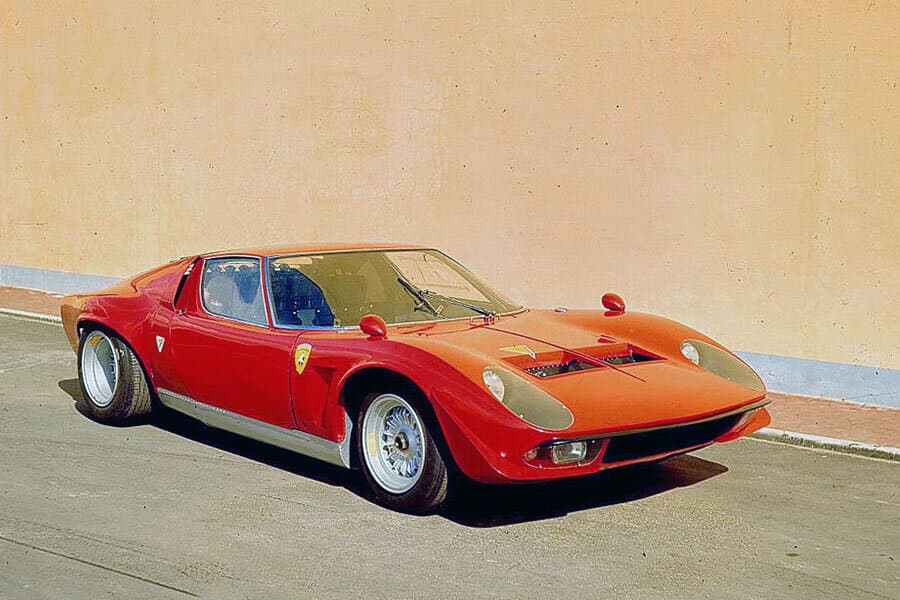
Lamborghini Miura Jota – Guide
If you mention the name Miura among car enthusiasts, chances are most of them know exactly what you are talking about, the Lamborghini Miura…
-
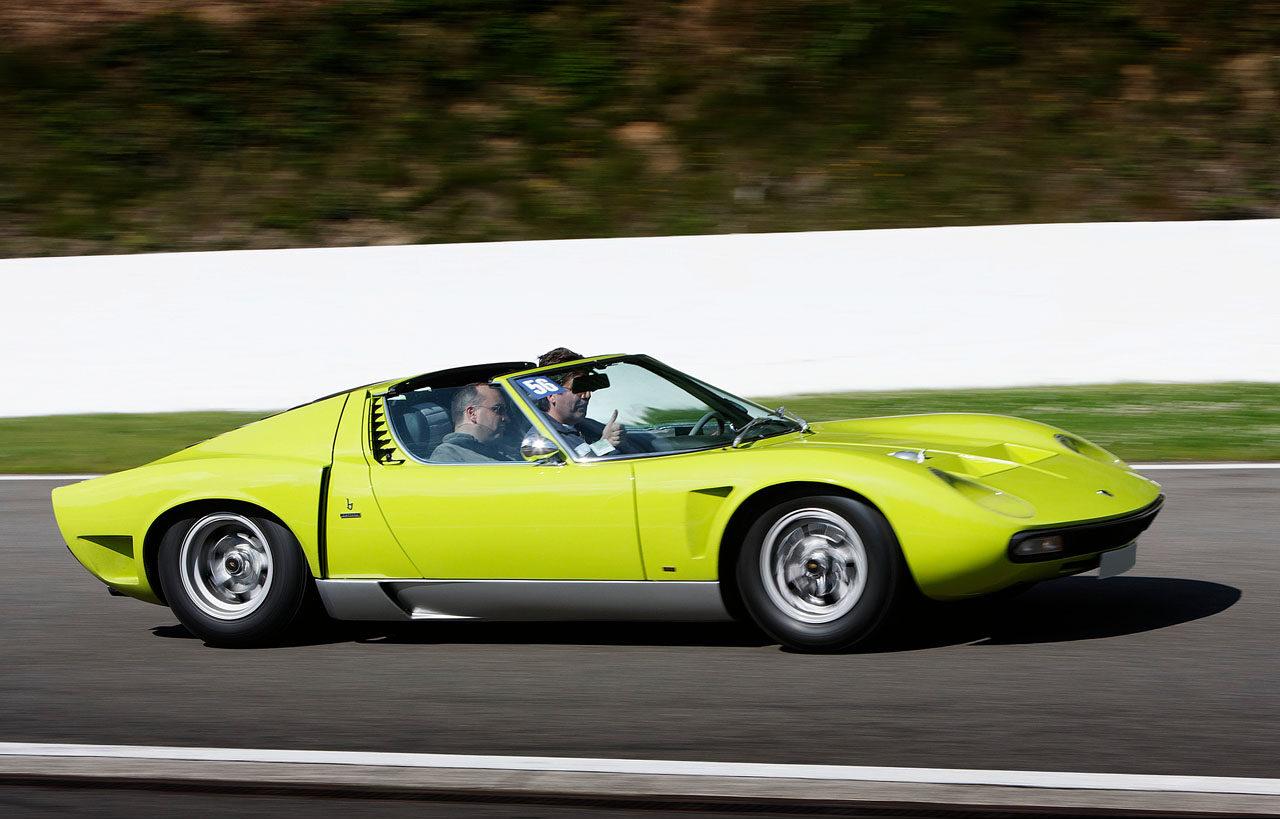
Lamborghini Miura Targa Special – Guide
Only one original Miura Roadster was ever built, and in fact it was merely a prototype by Bertone, it was eventually sold to the…
-
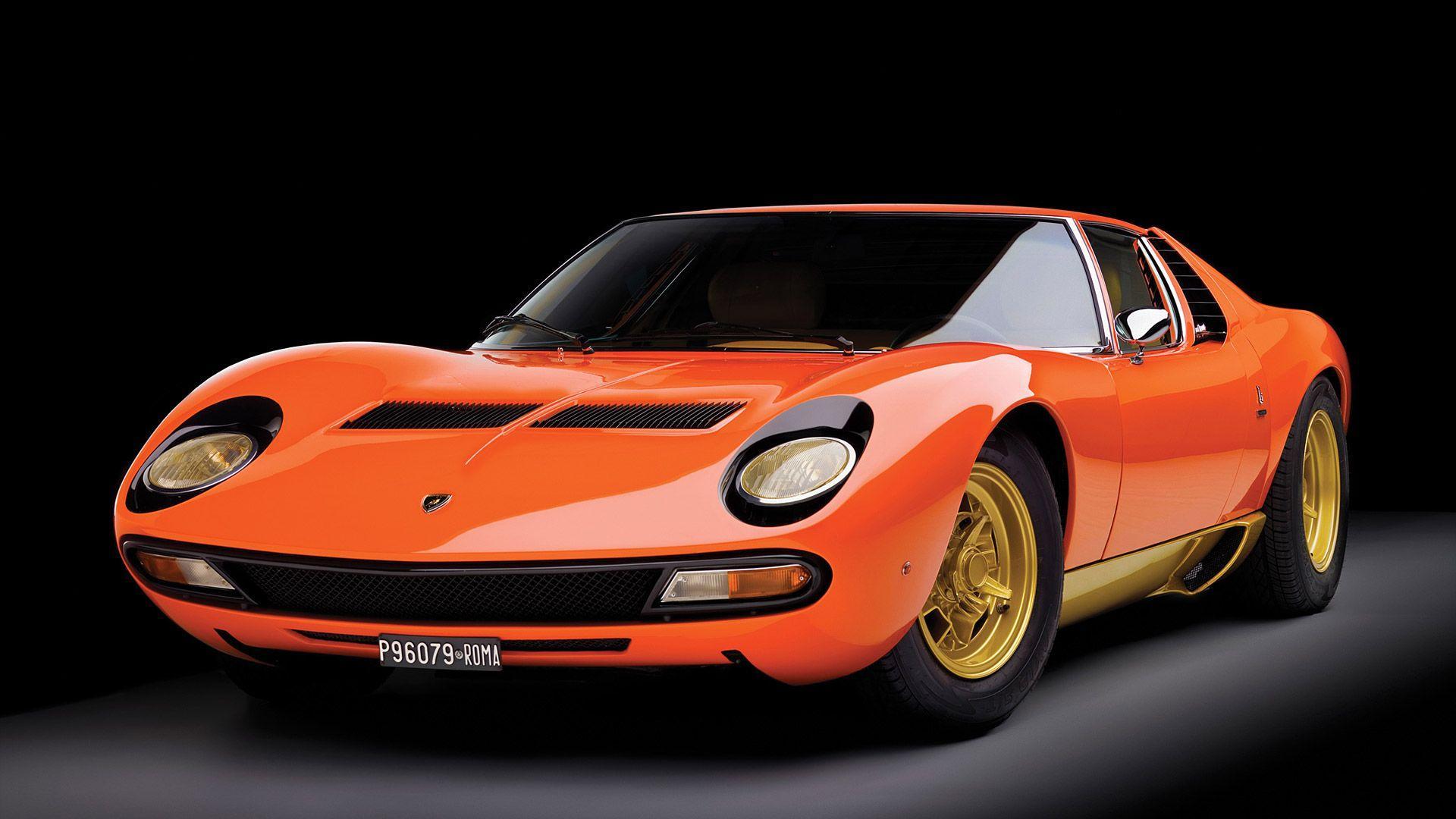
1971-1973 Lamborghini Miura P400 SV
The final evolution of the Miura was presented in 1971 as the SV, which stood for Spinto Veloce, it didn’t look like it at…
-

1968-1971 Lamborghini Miura P400 S
Lamborghini built a total of 275 Miura before they decided it was time to introduce a first evolution in 1969, Lamborghini showed the first…
-
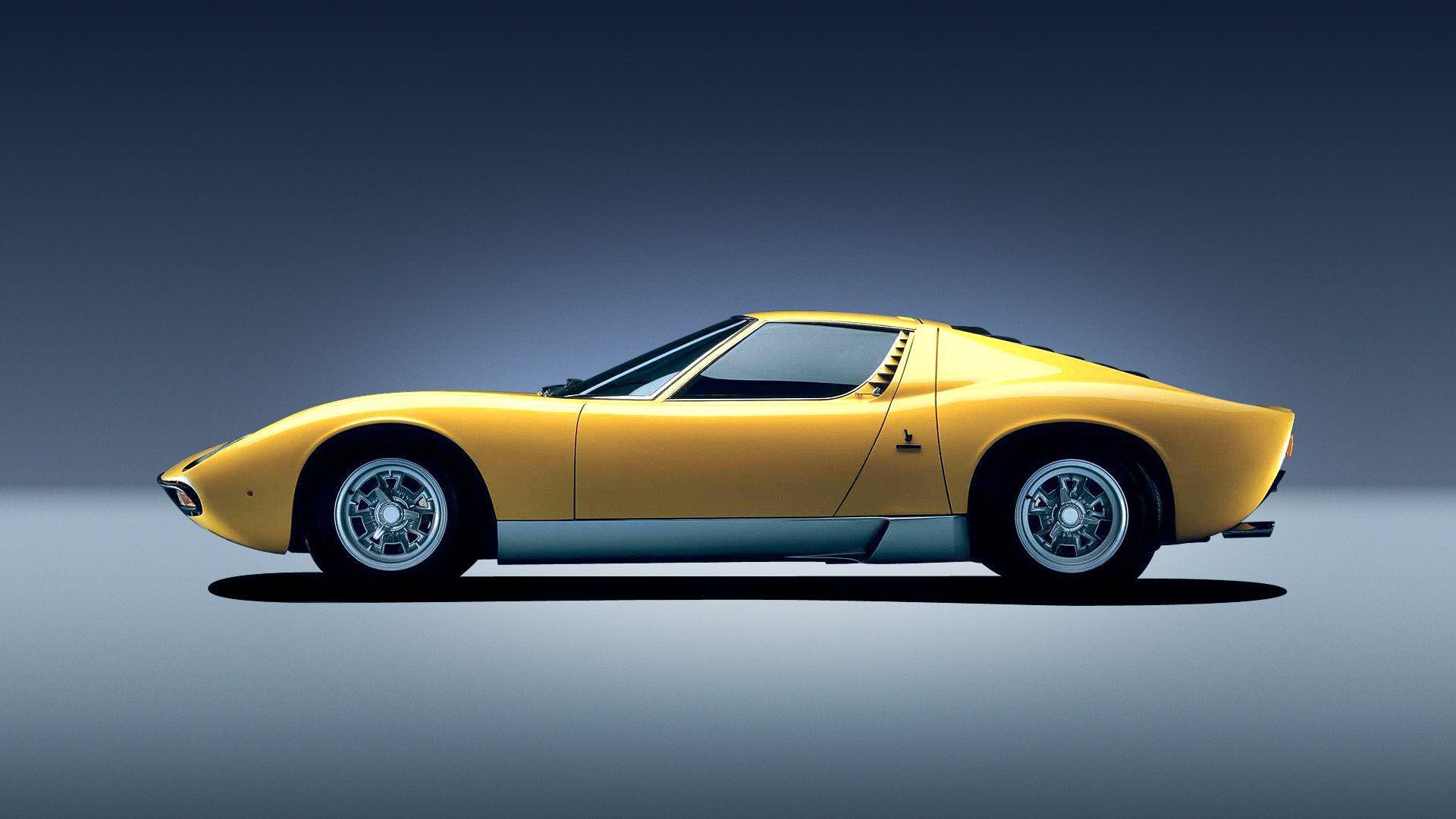
Lamborghini Miura P400 (1966-1969)
After only three years of production, during which Ferruccio built the very nice 350 GT and later the 400 GT, he stunned the world…
-
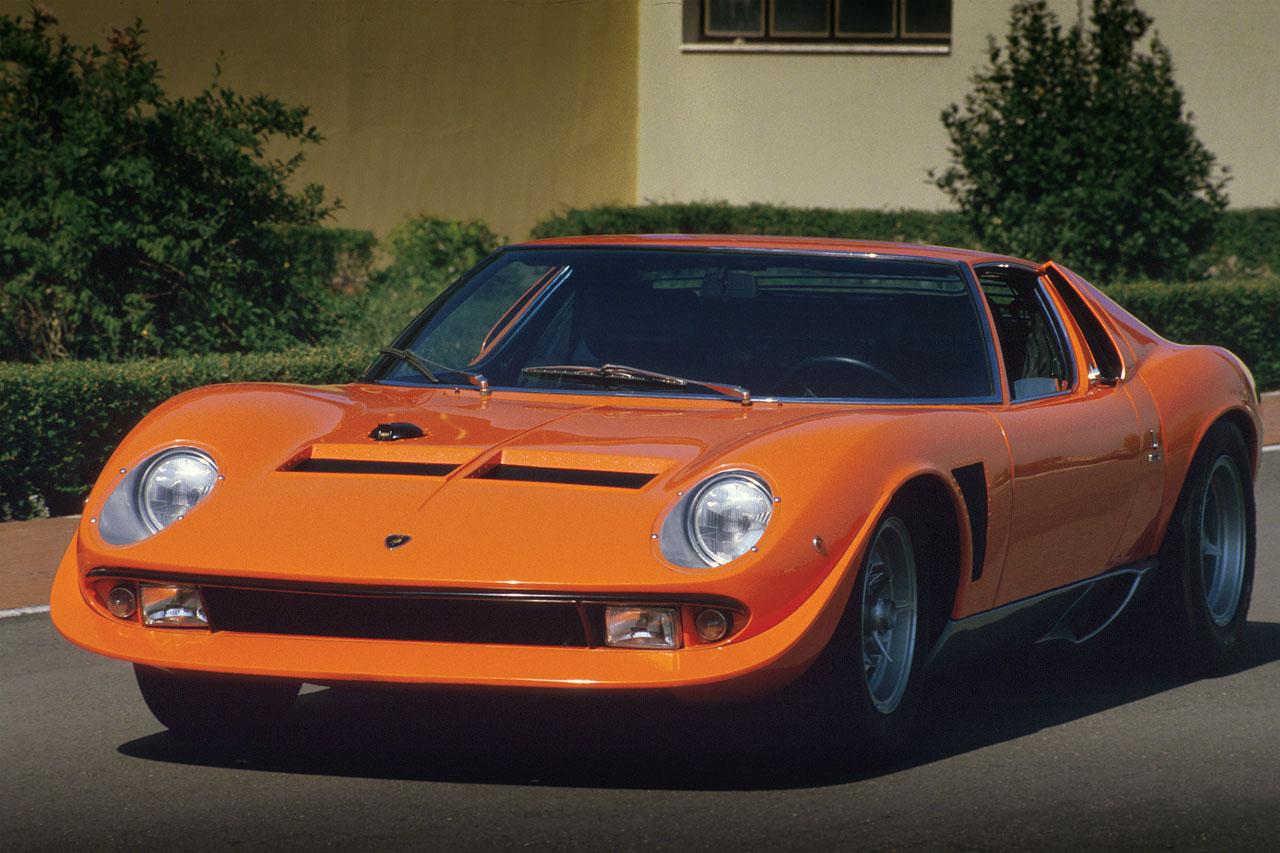
1971–1975 Lamborghini Miura SVJ
Soon after the Jota became public knowledge, several Miura owners asked to have their car modified to Jota specifications, since the one and only…
-
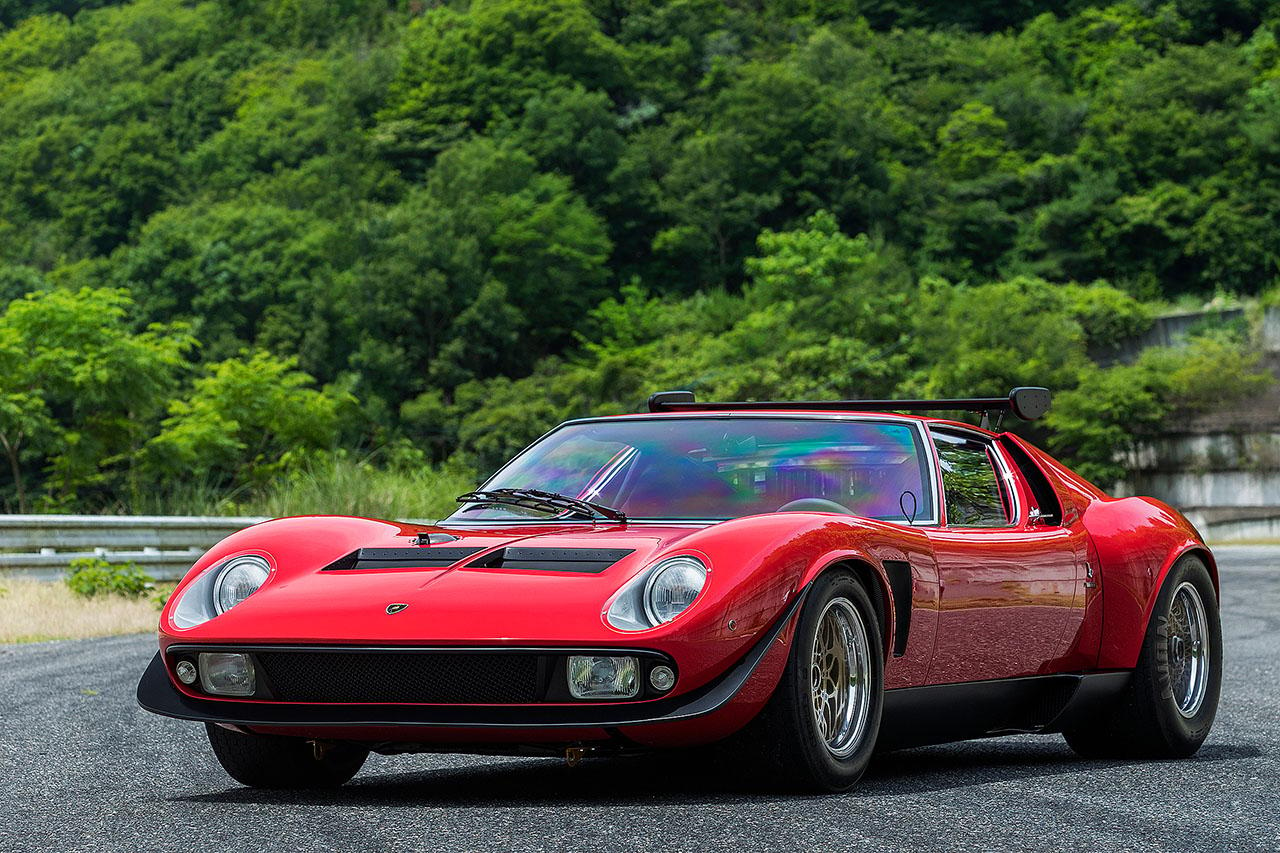
Lamborghini Miura SVR – Guide
I think most of us agree the sensual looking Miura from the Sixties was a stunning car that made Automobili Lamborghini SpA world-famous only…


Recent lamborghini Miura News & Updates
Lamborghini Miura NEWS, UPDATES, AUCTION RESULTS, WALLPAPERS AND MORE. While the Miura has long been out of production, there are lots of people the world over with one in their garage and millions more wishing that there was a miura in theirs! Whenever we find something cool about the LAMBORGHINI Miura, we will post it here.
-
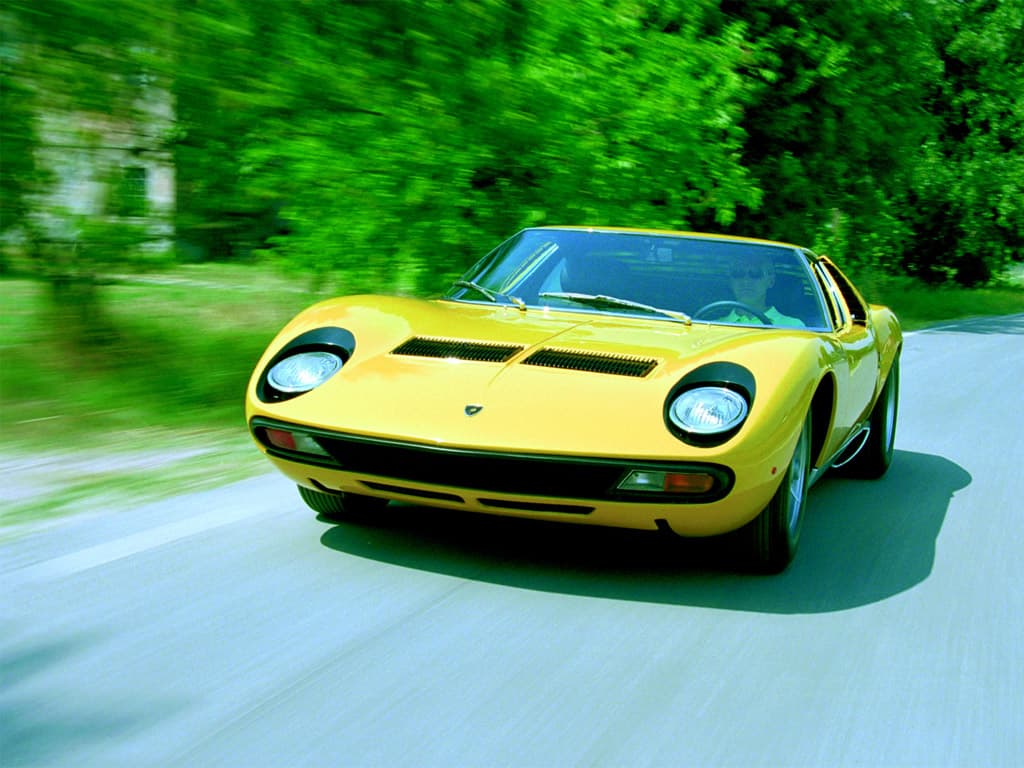
5 Legendary Lamborghini Supercars That Redefined Speed and Style
Lamborghini is more than just a name in the automotive world; it represents a legacy of audacity, innovation, and breathtaking design. Since its inception…
-
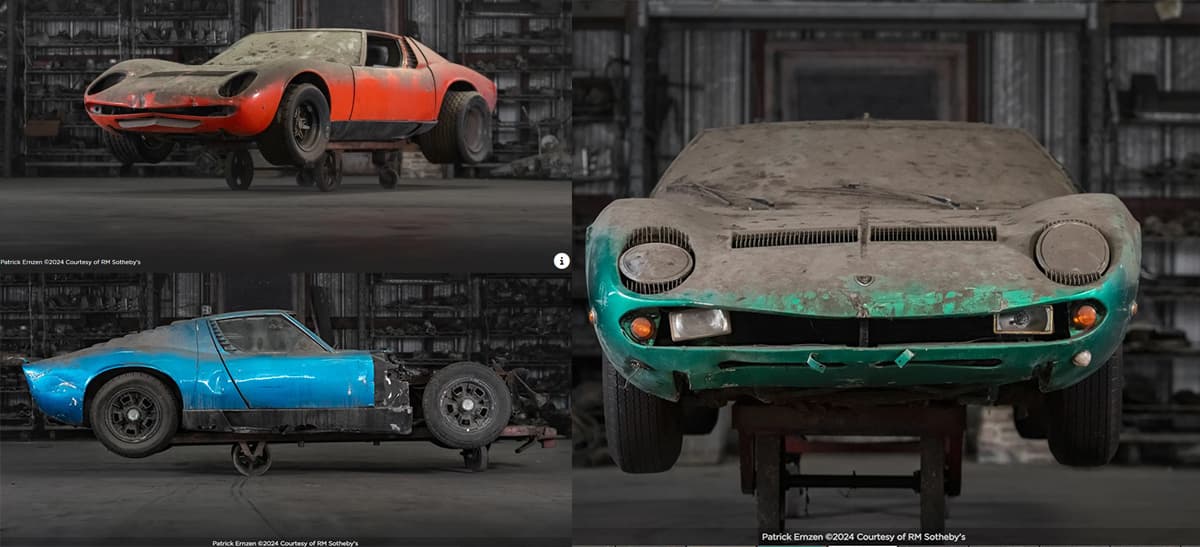
An Extremely Rare Historic Discovery: The Unveiling of 3 Unrestored Lamborghini Miuras Worth Over 2 Million From A Junkyard!
In classic cars, few names evoke as much passion and reverence as Lamborghini. The Miura, often hailed as the first supercar, represents a pinnacle…
-
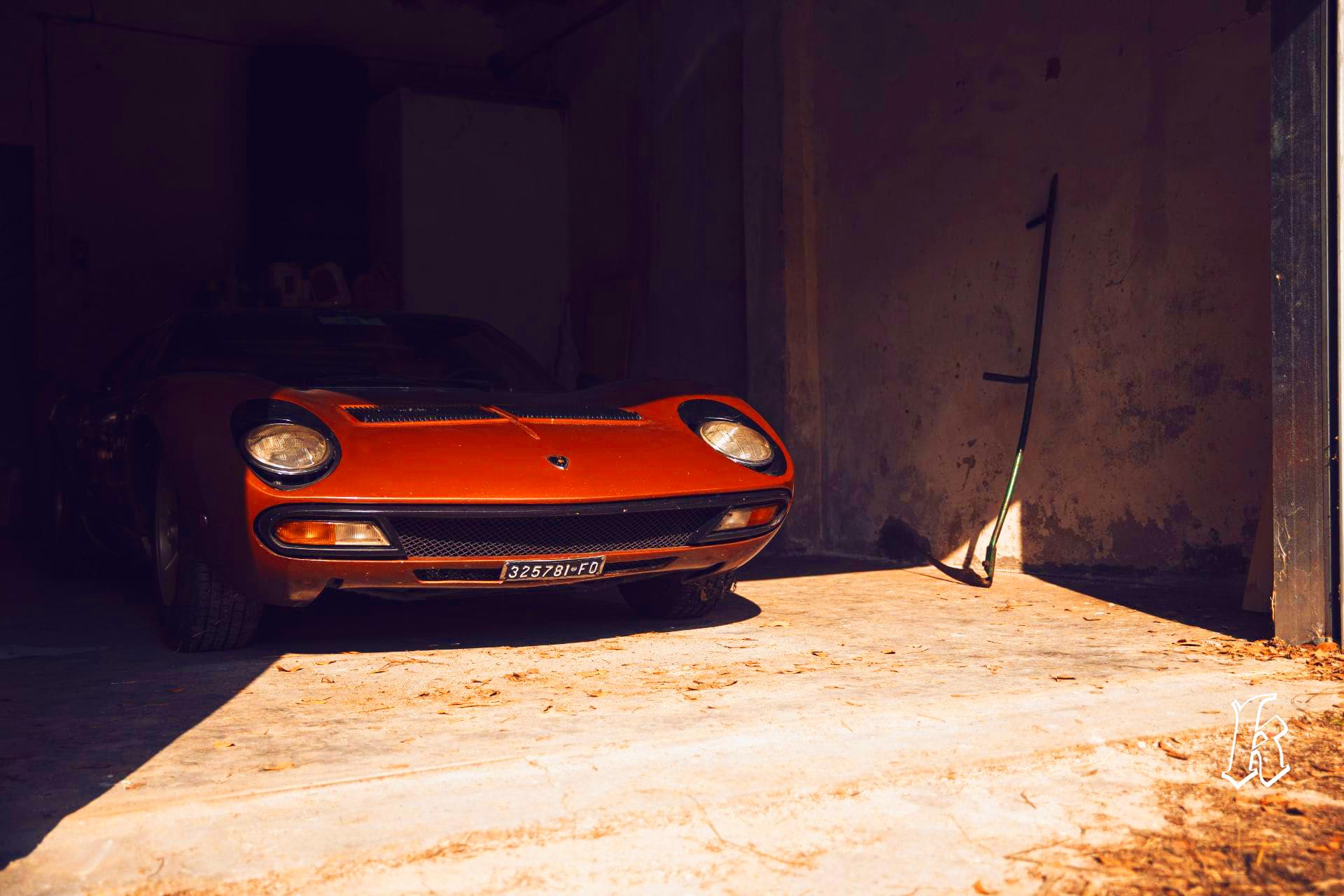
The $4 Million Rare 1972 Lamborghini Miura P400SV In Bruno Metallizzato Color Discovered Hidden in a Northern Italy Barn
In the world of classic car collecting, few discoveries are as thrilling as a true “barn find” – a vehicle hidden away and forgotten…
-
10 Classic Lamborghini Models For Sale in 2024
Lamborghini has long been synonymous with automotive desire, blending striking design, innovative engineering, and adrenaline-pumping performance. From the sleek lines of the Miura to…
-
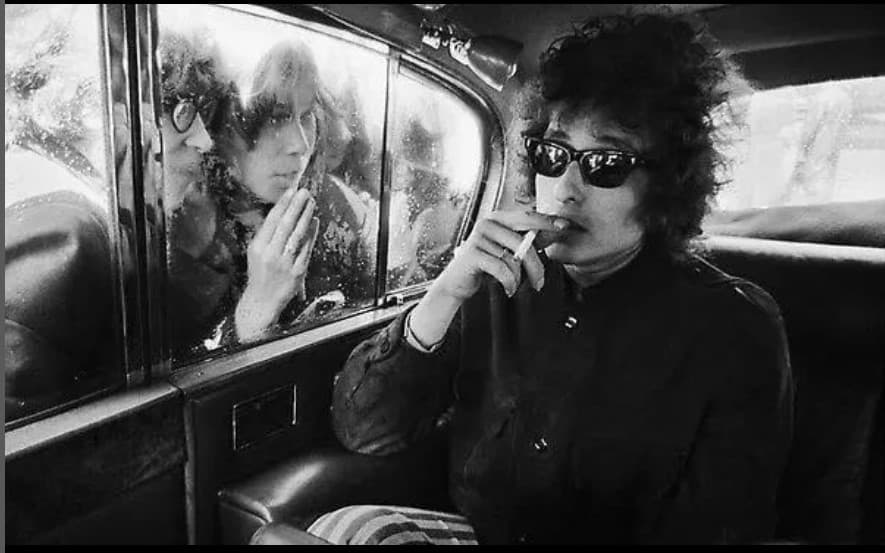
Unveiling the legendary Bob Dylan’s Car Collection: From 6 stunning vintage cars to the new generation models
Bob Dylan (legally Robert Dylan; born Robert Allen Zimmerman on May 24, 1941) is an American singer-songwriter renowned as one of history’s greatest songwriters.…
-

Lamborghini At 2024 Goodwood Festival of Speed (FOS): 10 incredible masterpieces you might have overlooked at the event
Lamborghini at the 2024 Goodwood Festival of Speed stole the spotlight in an awe-inspiring display of automotive brilliance. The renowned Italian brand showcased a…
-
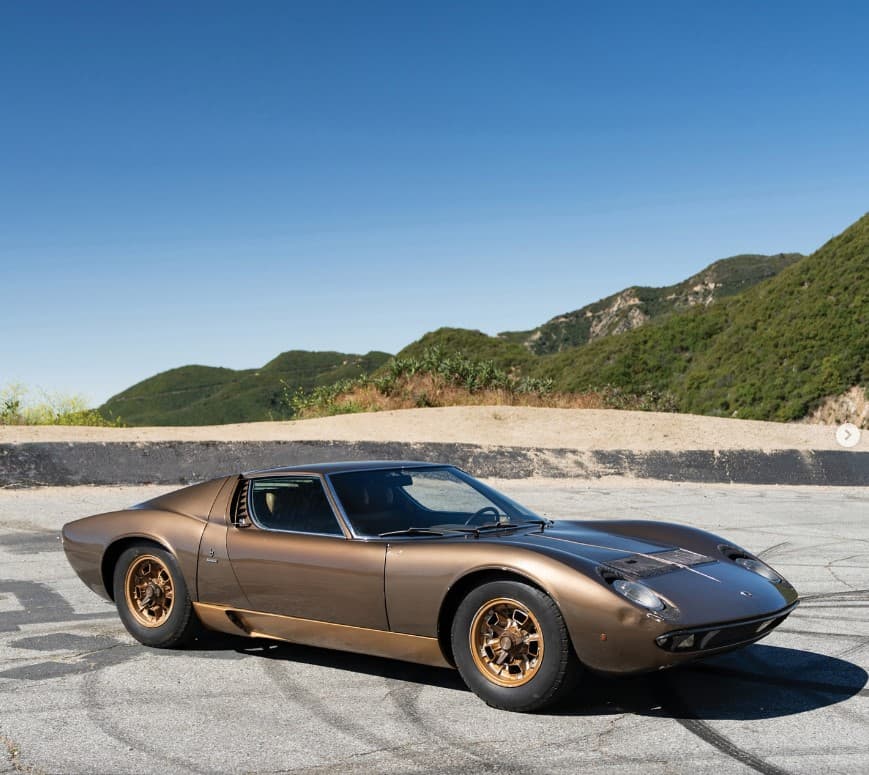
Rare 1970 Lamborghini Miura P400S, Stored in a Living Room for 40 Years, Expected to Fetch Millions at Pebble Beach Auction
In a remarkable turn of events, a 1970 Lamborghini Miura, which spent over 40 years in a living room, is poised to captivate collectors…
-
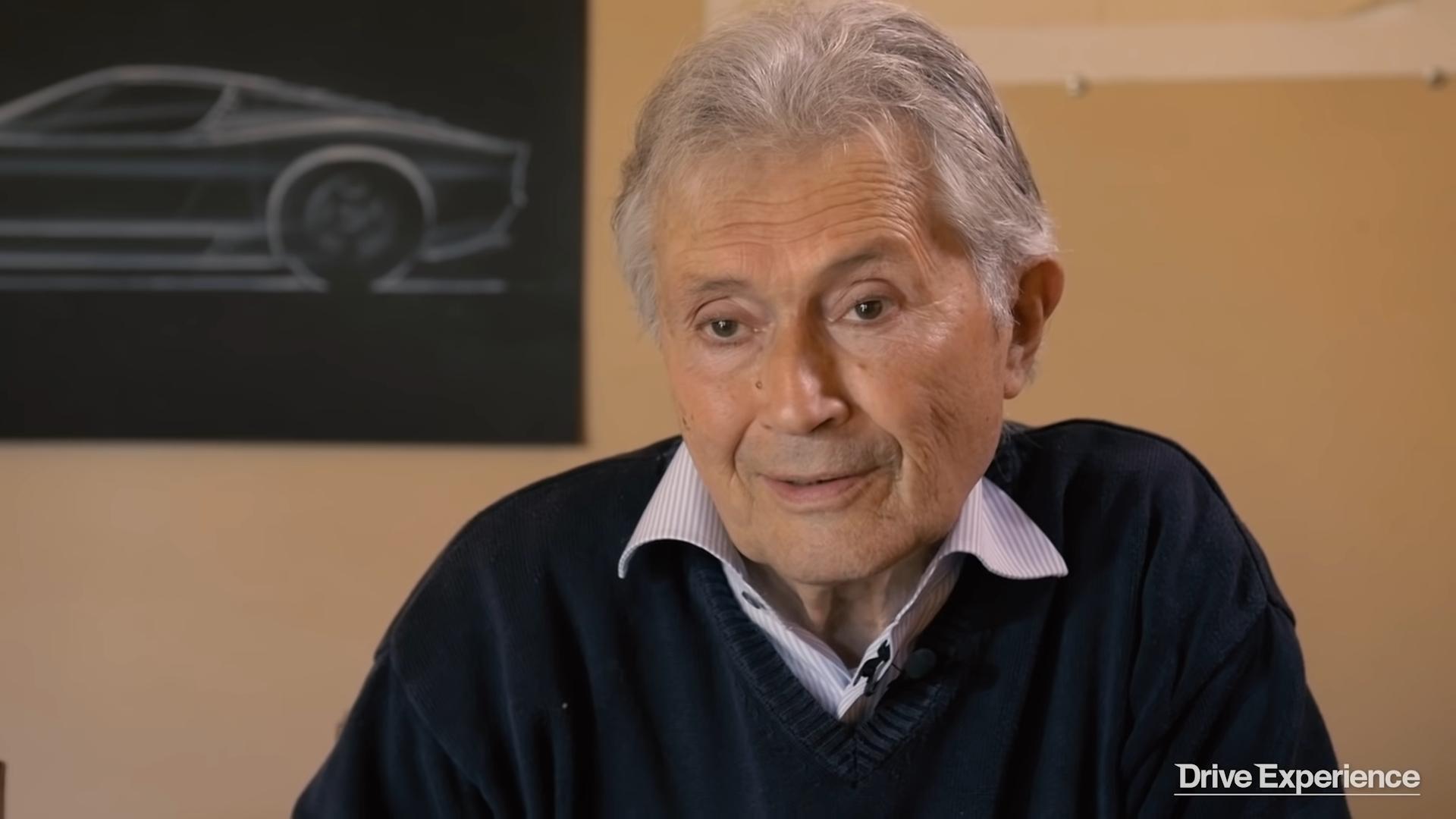
Marcello Gandini, Iconic Designer of the Legendary Lamborghini Countach & Miura, Dies at 85
Marcello Gandini, a towering figure in the world of automotive design, sadly passed away at age 85. His sudden departure occurred on Wednesday, the…
-

10 Popular Used Lamborghini Models In The Current Car Market
Lamborghini, a marque representing the pinnacle of automotive engineering and design, has been a dominant force in high-performance cars since its inception in 1963…
-

Which Console Game Has The Most Lamborghinis?
With the massive improvements in the console hardware capabilities, we’ve seen countless photorealistic racing games offering the biggest car collection. In games like Need…
-
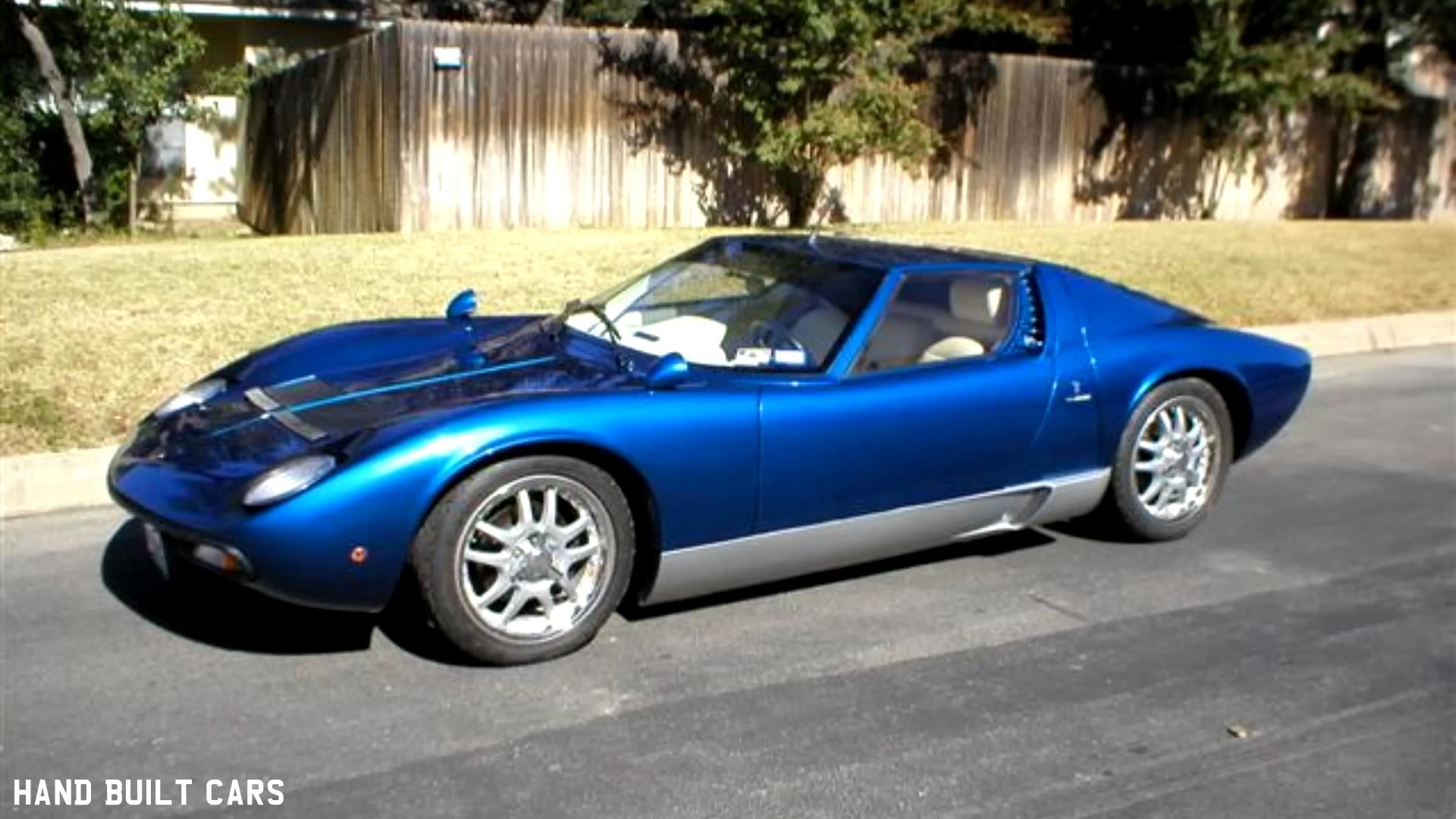
This Astounding Pontiac Fiero Lamborghini Miura Blend With 500 Horses Honors Two Automotive Titans
In the realm of automotive replicas, discernment is the norm. Yet, occasionally, a gem emerges that blurs the lines between originality and innovation. Such…
-
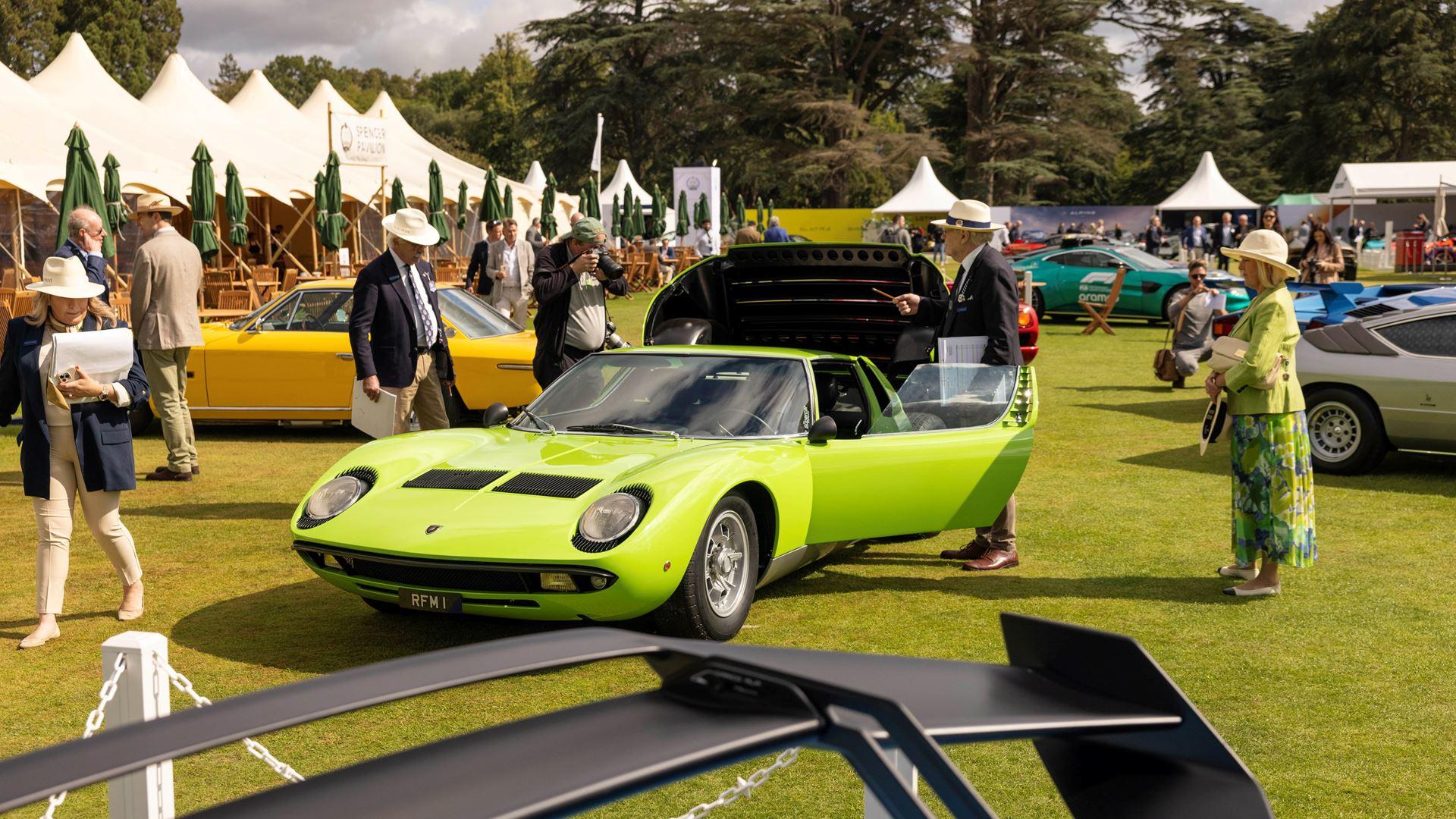
2023 Lamborghini Salon Prive Event Showcases 60 Exquisite V12 Models in London
London recently witnessed a spectacular blend of classic nostalgia and future-forward engineering at Salon Privé, set against the regal backdrop of Blenheim Palace. The…
-
Lamborghini in Hollywood: Top 10 Hollywood Celebrities Who Still Owns Crazy Expensive Lamborghinis In 2023
Vehicles have become more than just a means of transportation in Hollywood today. They signify one’s social standing, drawing eyeballs and cameras wherever they…
-
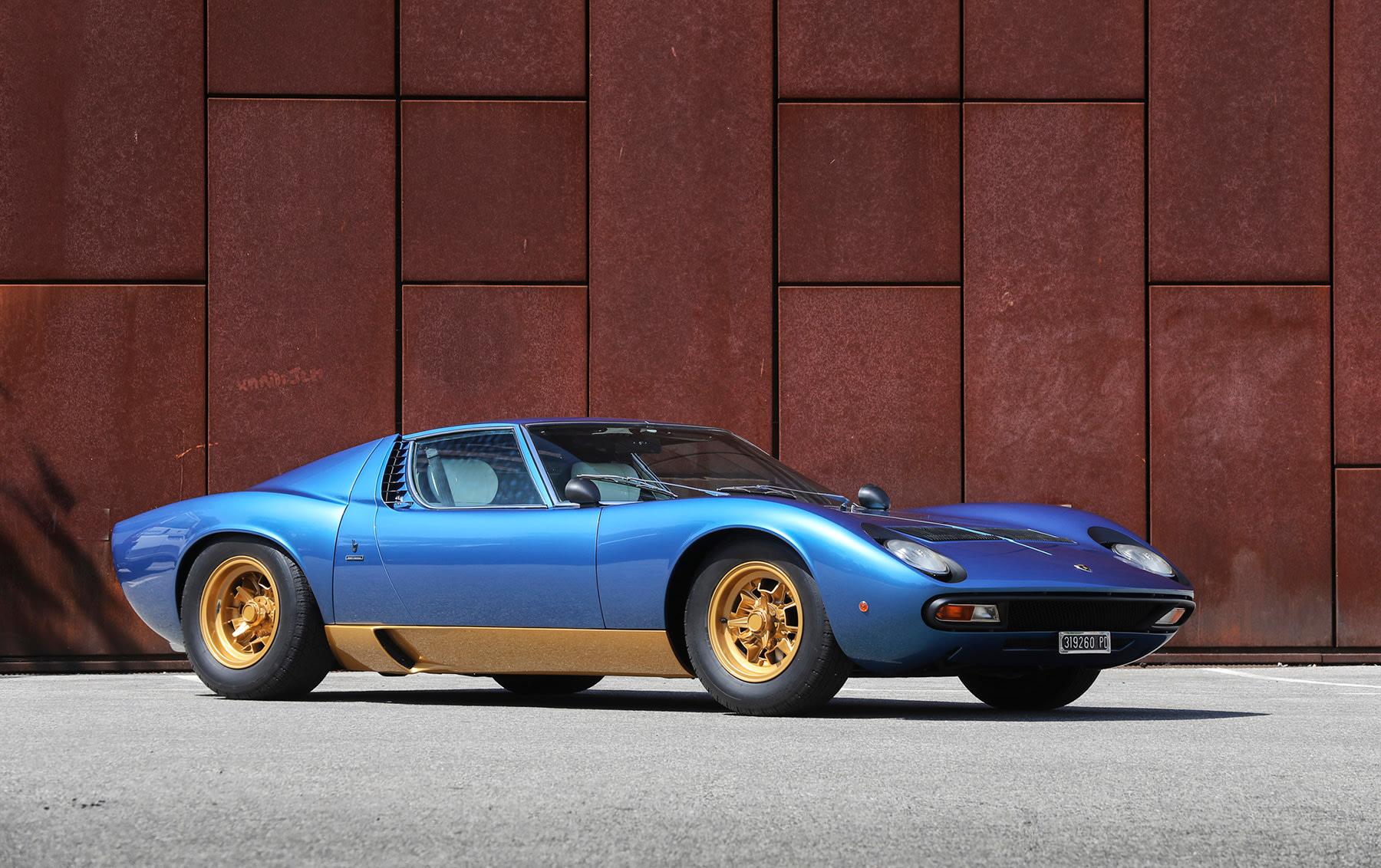
An Exclusive 1972 Lamborghini Miura SV In Pristine Condition Is For Sale
In the groundbreaking and inventive era of the 1960s, the Lamborghini Miura P400 was born. This car didn’t just alter automotive design; it founded…
-

The Crew Motorfest To Feature 2023 Lamborghini Revuelto
Ubisoft jsut announced announced an expanded partnership with Lamborghini during the ‘Ubisoft Forward Live event in Los Angeles on June 12, 2023. Lamborghini’s newly…
-

The final Aventador is an homage to the Miura Roadster
We’ve only recently published the news that the Lamborghini Aventador production came to an end when the 11,465th unit left the Linea Aventador in…
-
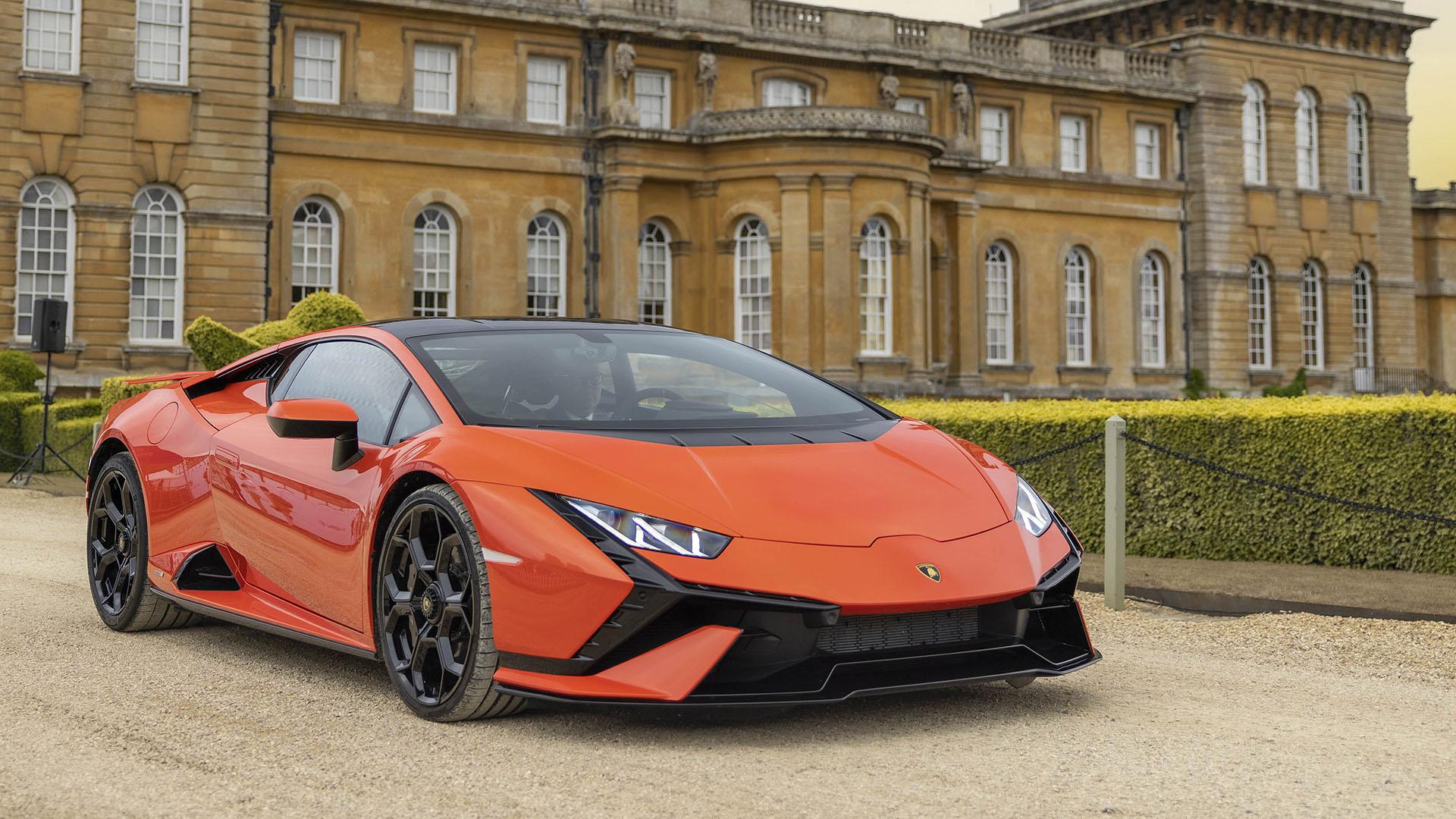
Rare Lamborghini at Salon Privé
In early September 2022, there were two major events being organized in the UK, the Salon Privé’s annual Blenheim Palace event and the Concours…
-
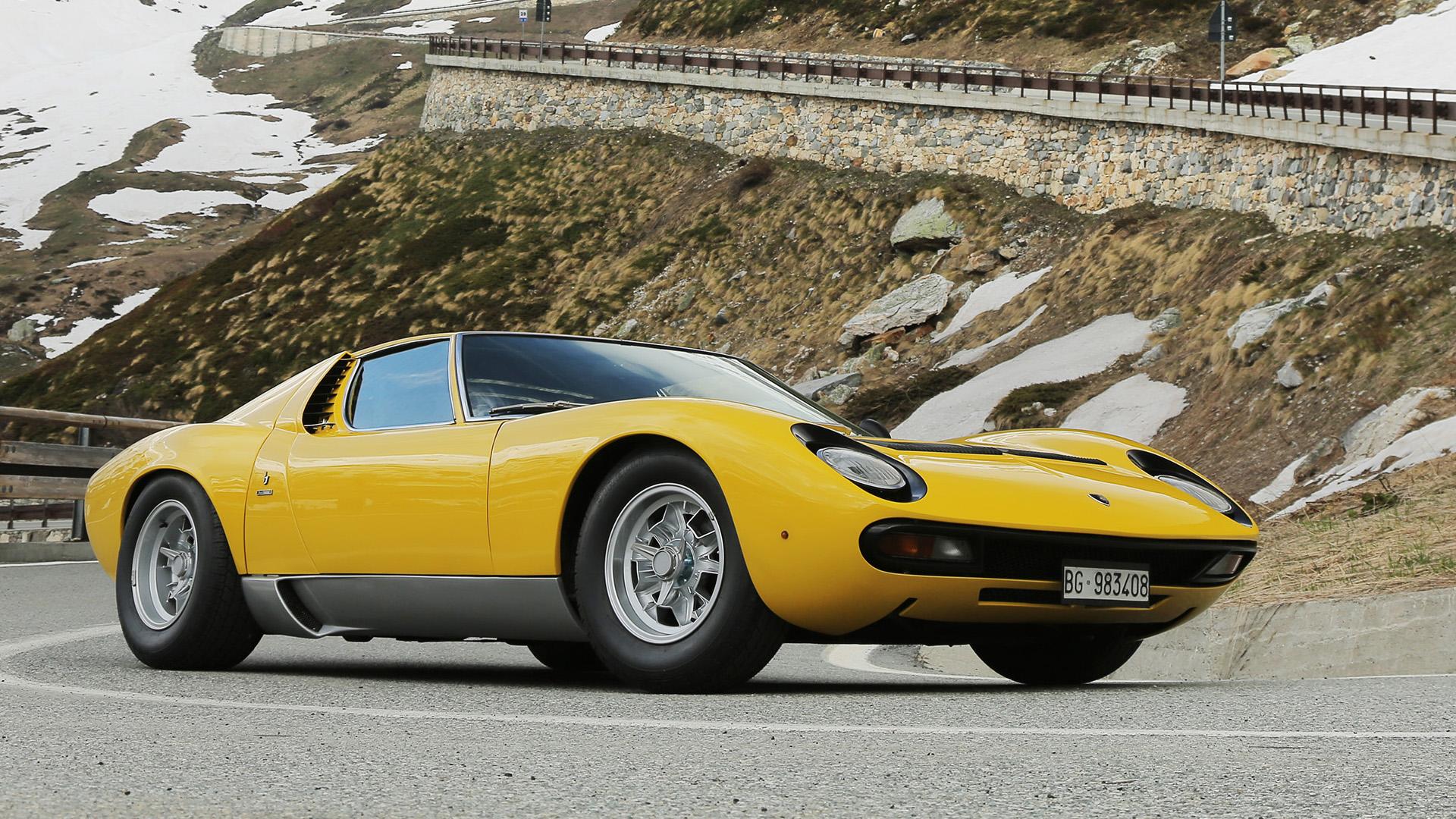
Doug DeMuro on the Lamborghini Miura, the world’s first supercar
We all consider the Lamborghini Miura from the Sixties the first-ever supercar in the world, this was a race car to be used on…
-
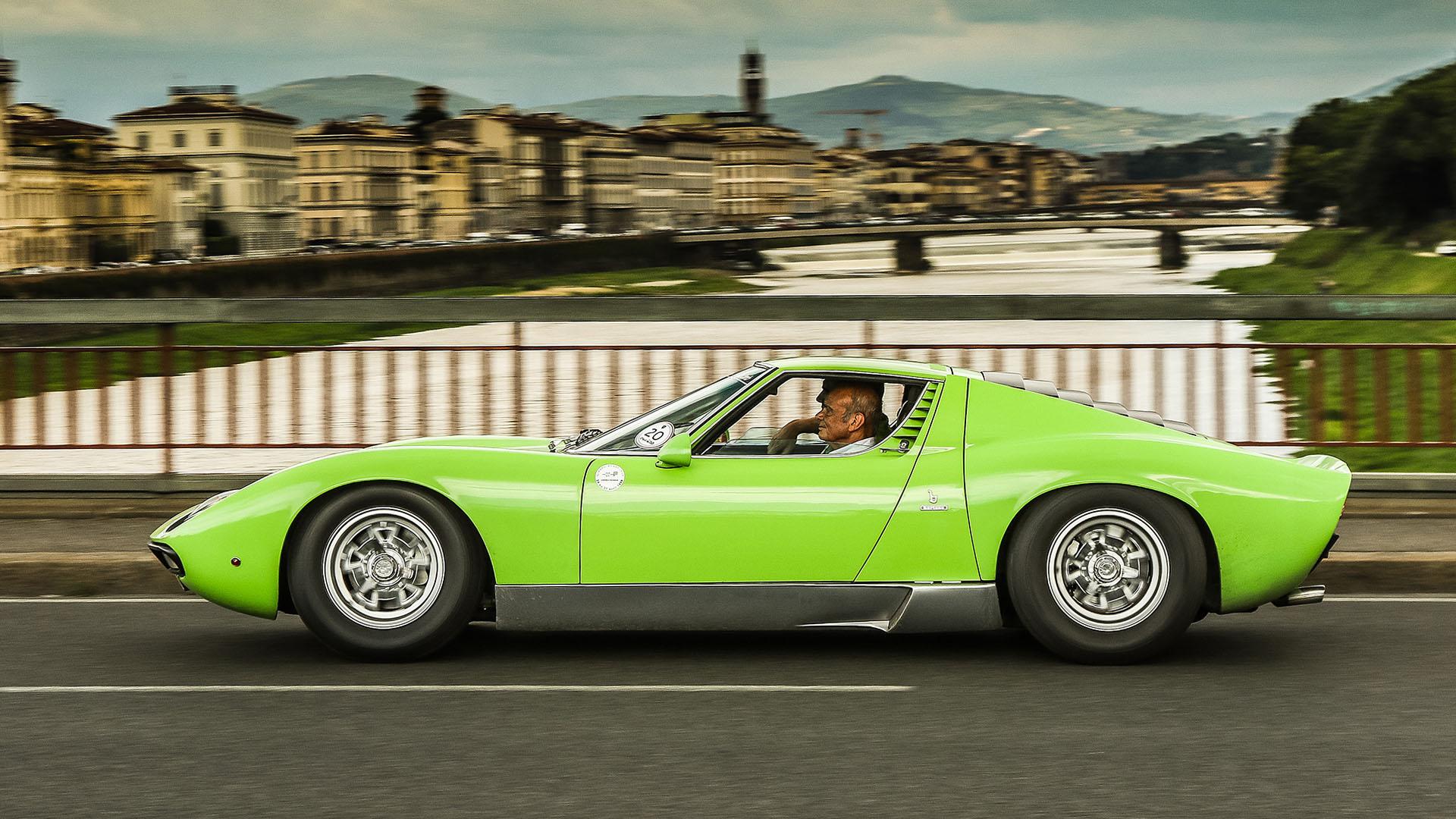
Supercar genesis, the Lamborghini Miura tribute by Chris Harris
Back in the Sixties Automobili Lamborghini SpA was still a very young company, being founded in 1963 with the stylish 350 GT coupe as…
-
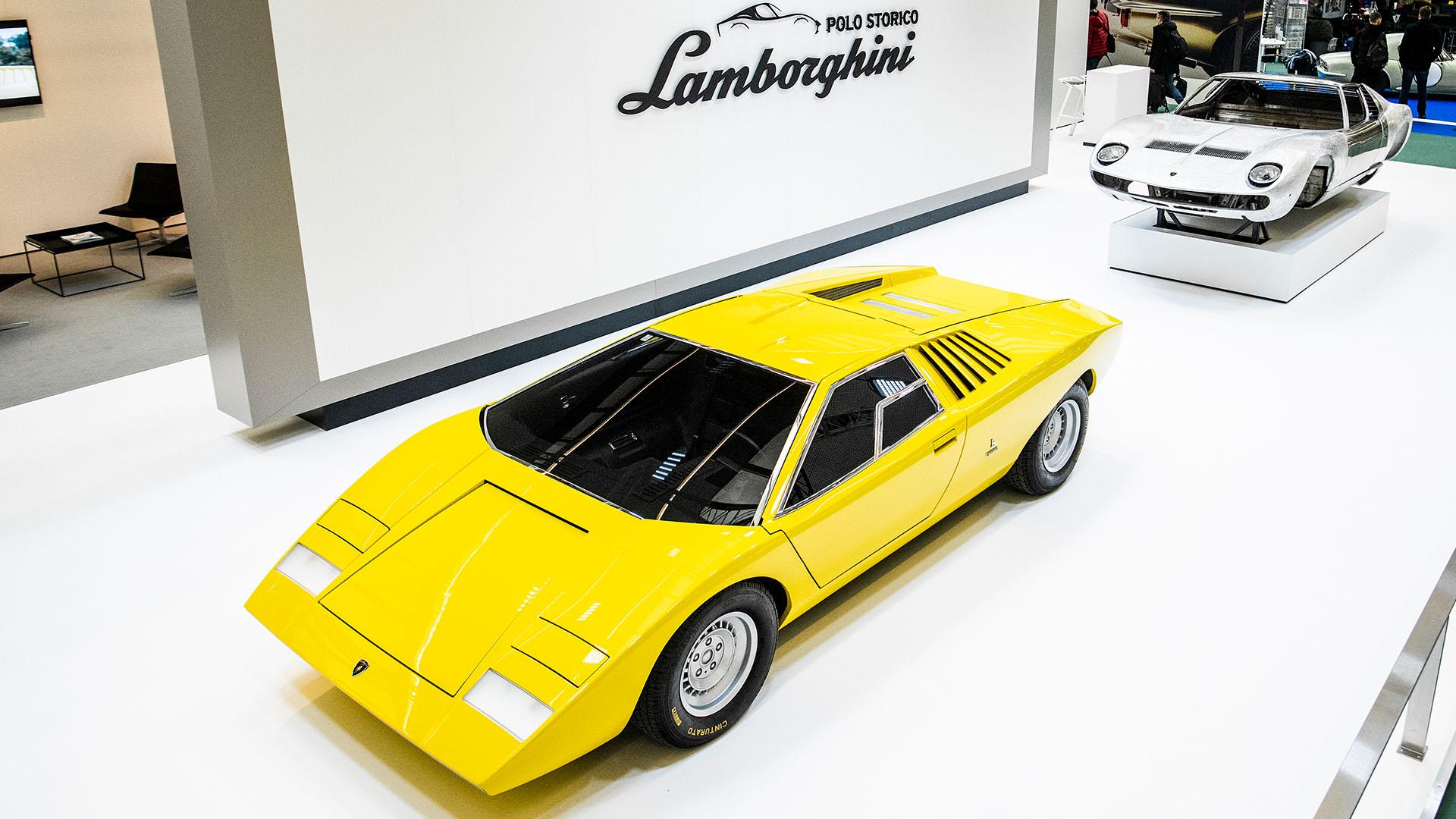
Lamborghini shows two icons at the 2022 Rétromobile in Paris
Automobili Lamborghini SpA unveiled the recreation of the Lamborghini Countach prototype to a select public at the Concorso d’Eleganza Villa d’Este held between October…


LAMBORGHINI MIURA PRICES
FIND OUT HOW MUCH LAMBORGHINI MIURA CARS ARE WORTH. WE REVIEW AUCTION AND SALES DATA FOR THE LAMBORGHINI MIURA SO YOU CAN FOLLOW THE MARKET.
