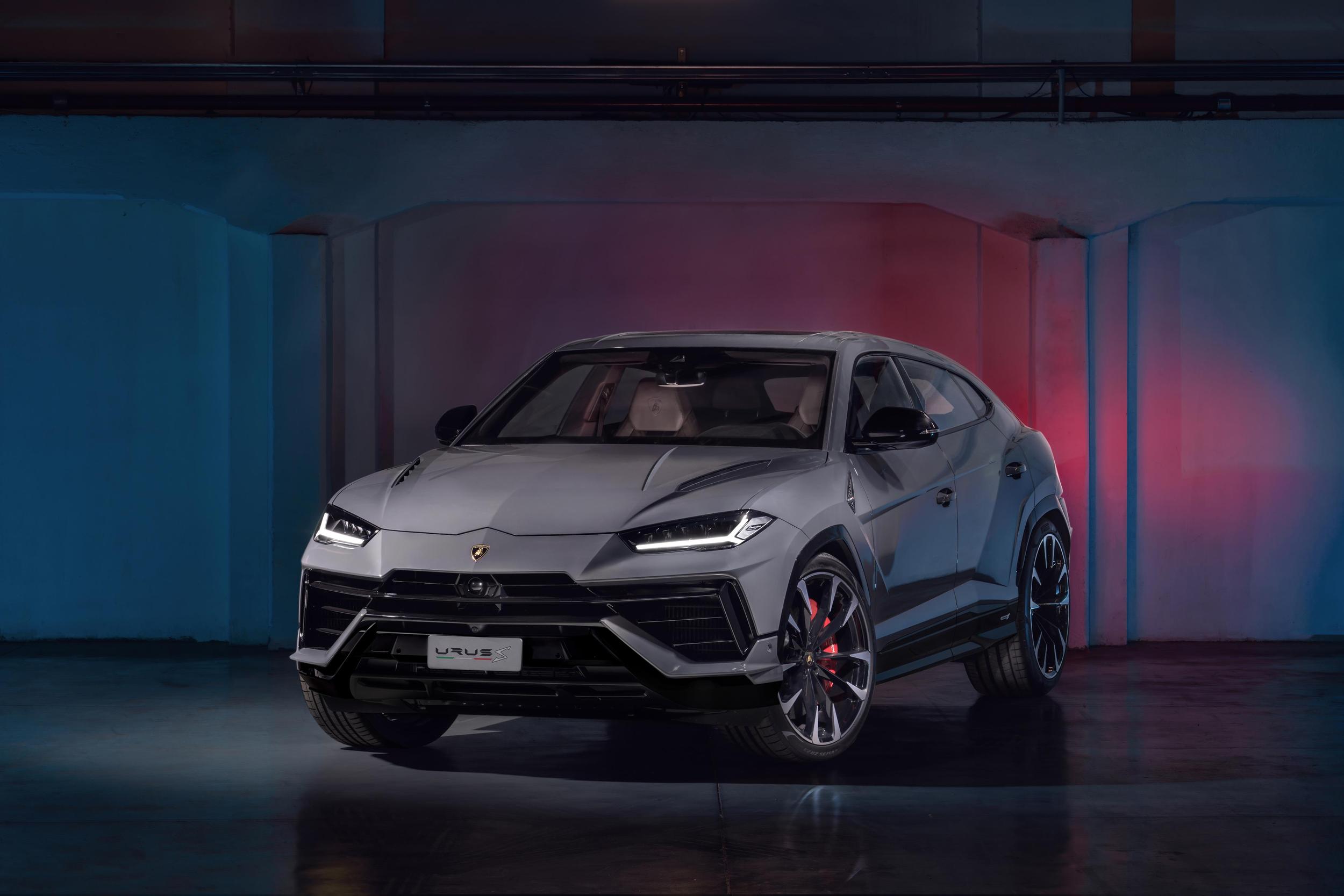
10,000 Units in Two Years: How the Urus Rewrote Lamborghini's Business Model
A single SUV rebuilt the financial foundation of one of Italy's most famous supercar makers.
In July 2020, the 10,000th Lamborghini Urus rolled off the line at Sant'Agata Bolognese, finished in Nero Noctis Matt with a full carbon fiber exterior package and a two-tone Ad Personam interior in black and orange, destined for a customer in Russia.
SUV meets supercar DNA
The Urus attracted buyers who would never have considered a mid-engine supercar as a daily driver but wanted the badge, the drama, and the performance envelope that only a Lamborghini could deliver in SUV form.
Factory celebration for the 10,000th Urus
Lamborghini doubled its factory footprint in 2017, expanding from 80,000 to 160,000 square meters at Sant'Agata Bolognese — the single largest physical investment in the company's history, purpose-built to accommodate the Urus alongside the Huracán and Aventador.
Customization as a business strategy
The Pearl Capsule edition, introduced in June 2020, offered a two-tone exterior treatment using ultrabrilliant four-layer pearl effect paints in three signature colors: Giallo Inti, Arancio Borealis, and Verde Mantis.
The LM002 — Lamborghini's first SUV chapter
The LM002 proved in the 1980s that Lamborghini could build an SUV, but the real question was whether building one at massive scale would dilute the brand or strengthen it.
The milestone that silenced skeptics
The Huracán needed roughly four years to reach similar production territory, and the Gallardo took five years to pass 14,000 units, but the Urus compressed that timeline dramatically, with implications rippling from the factory floor to the engineering budget for future supercars.
Lamborghini's broader ambitions beyond the supercar
The Urus proved its duality — a car that can idle through a valet line and then embarrass sports sedans on a highway on-ramp — was exactly what a huge segment of the luxury market wanted.
Artisan assembly at new volumes
Lamborghini's Manifattura production philosophy scales artisan-level assembly with technological assistance, maintaining hand-finished quality while hitting production volumes the company never previously attempted.
The Urus lineup alongside the supercar range
The Ad Personam program lets buyers select unique leather colors, stitching patterns, carbon fiber trims, and exterior finishes that go well beyond the standard configurator, making each Urus feel individually specified even as the platform scales to thousands of units per year.
The SUV that funded Lamborghini's next generation
Consistent Urus demand gave Sant'Agata the financial breathing room to pursue ambitious engineering programs for its next generation of supercars, proving the brand's identity did not shrink when it built an SUV at scale — it grew bolder.