Aventador Ultimae's Italian Farewell Drive Stages the End of Lamborghini's Pure V12 Era
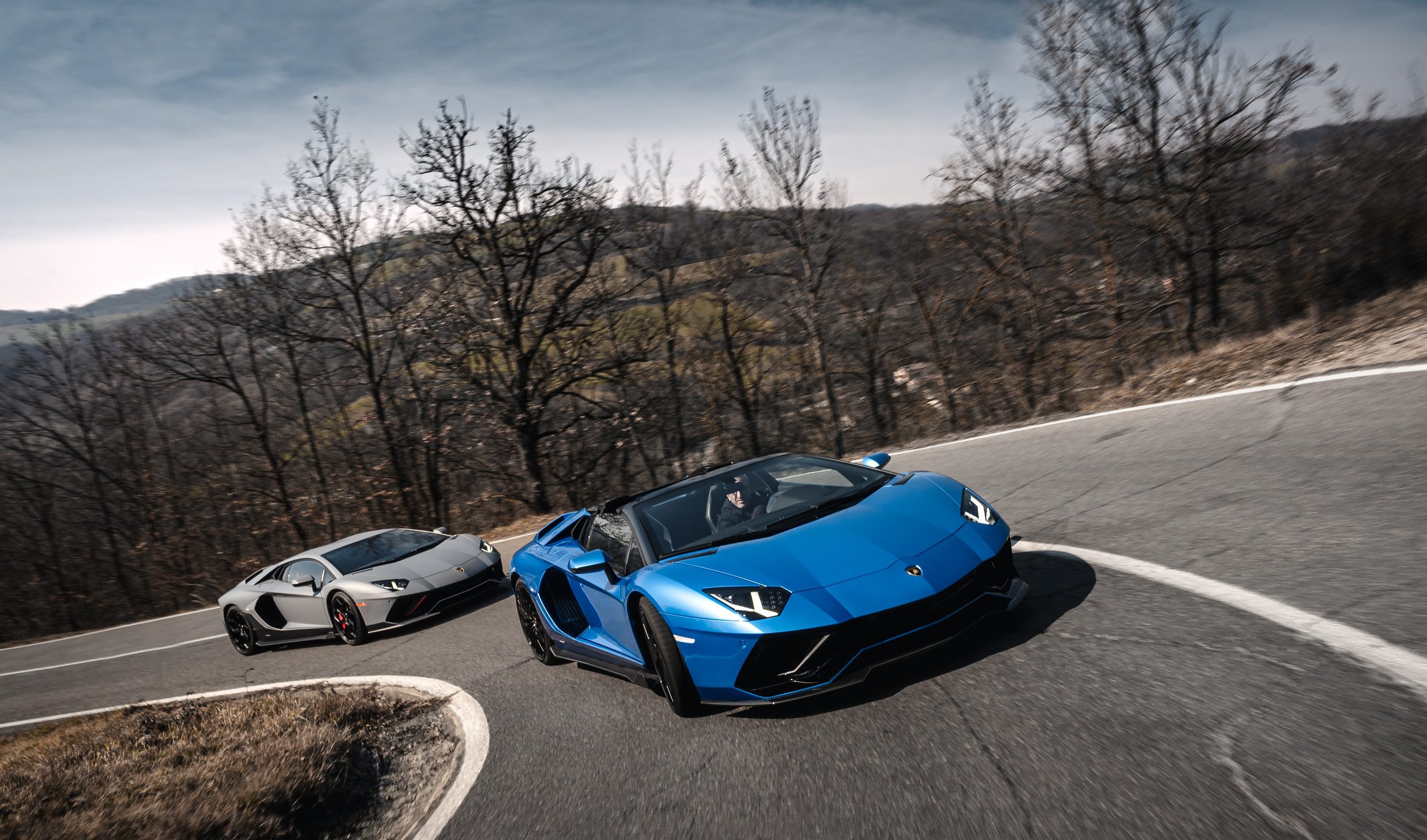
A grey Coupé and a blue Roadster trace the roads between the Adriatic coast and the Apennines in Lamborghini's visual eulogy for its last naturally aspirated V12.
Lamborghini sent a grey Ultimae Coupé and a blue Ultimae Roadster on a drive from the Adriatic coast through the hills of Emilia Romagna and into the Marches, photographing them at twilight overlooks, grand Italian villas, and winding mountain roads.
Emotion over data: why Lamborghini chose scenery instead of a lap time
Lamborghini could have sent the Ultimae to the Nürburgring for a final lap time, but instead chose a slow, scenic, deeply Italian drive that emphasized emotion over data.
The 6.5-liter V12's final flourish: ORDINE DI ACCENSIONE
The Ultimae's 6.5-liter naturally aspirated V12 produces 769 horsepower, and its gold-finished engine block carries the inscription ORDINE DI ACCENSIONE — firing order — a small flourish of Italian engineering theater.
A marketing template for every "last of its kind"
Lamborghini's transition to hybrid and electrified power turns each "last of its kind" moment into a marketing asset, and the Ultimae drive establishes the format: curated route, controlled imagery, emotional narrative.
350 Coupés, 250 Roadsters — every one spoken for
The Coupé was limited to 350 examples and the Roadster to 250, and every production unit was sold before the cars in these photographs even reached the coast.
An instant collector's piece at a grand Italian villa
For collectors, the math is straightforward: 600 total units, a historically significant powertrain, and no possibility of a follow-up without electric assistance.
The benchmark the Revuelto must answer to
Every future Lamborghini V12 will be measured against the purity of the Ultimae's powertrain, and every hybrid successor will be praised or criticized based on how close it gets to replicating the naturally aspirated experience.