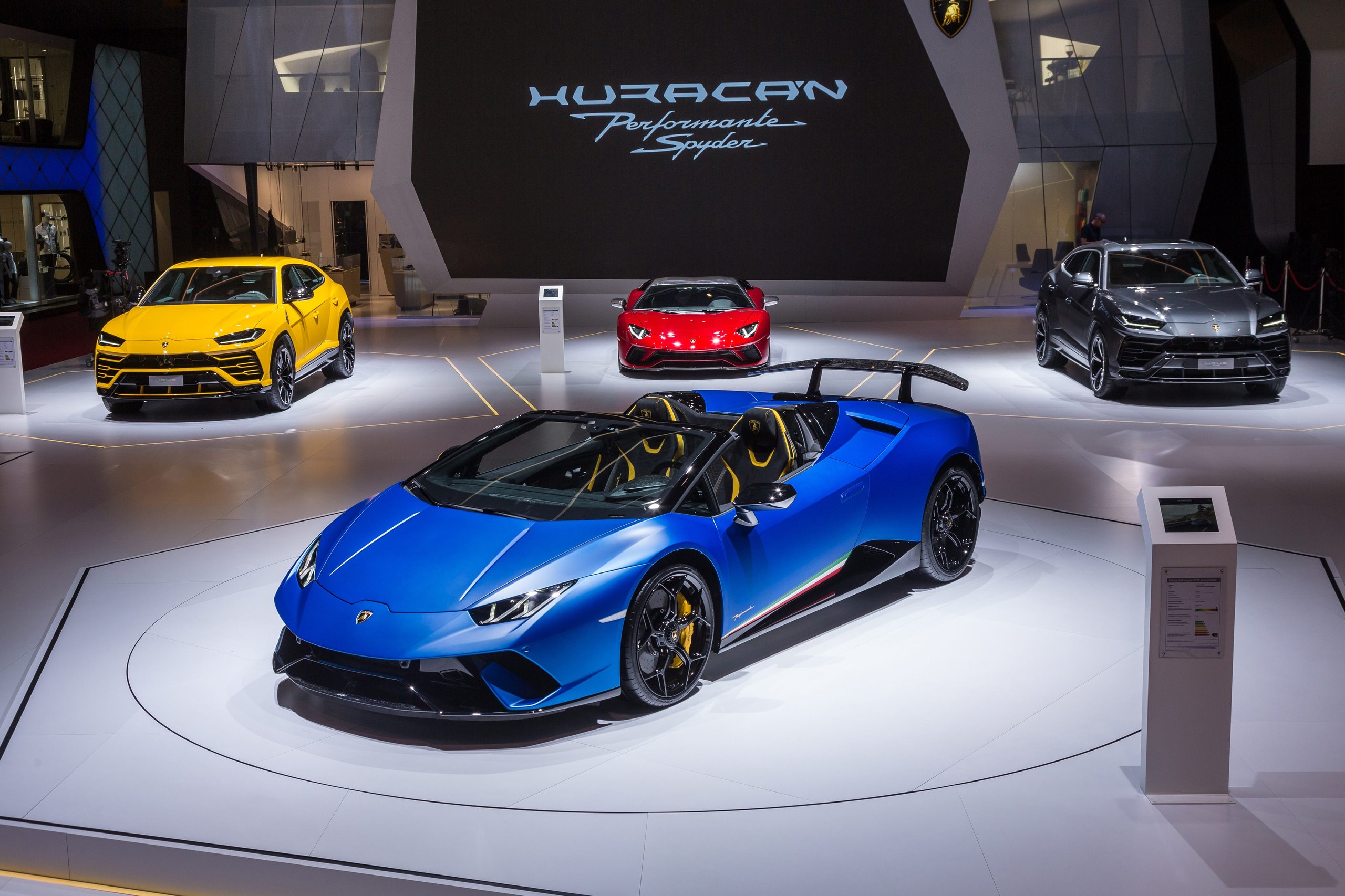
How Lamborghini Kept the Performante Spyder From Being a Compromise
The coupe held a Nürburgring record — could a convertible really deliver the same experience?
Lamborghini promised the Huracán Performante Spyder would match its record-setting coupe sibling with the same 640 hp V10, the same ALA active aerodynamics, and the same 325 km/h top speed.
The engineering problem convertibles rarely solve
Most convertible supercars accept a performance tax from lost rigidity, added weight, and disrupted airflow, but Lamborghini's ALA system operates independently of the folding roof, with its forged composite rear wing and front spoiler flaps working exactly as they do on the coupe.
Domenicali's promise at Geneva
Stefano Domenicali, then Lamborghini's Chairman and CEO, framed the car as putting the driver "even closer to asphalt and air, as well as the unique resonance of a naturally-aspirated Lamborghini engine."
Performante cockpit: function over luxury
The ANIMA driver-mode system offers STRADA, SPORT, and CORSA settings, each adjusting throttle response, steering weight, damping, and the behavior of ALA.
The case for dropping the roof
More than 70 percent of the V10's torque arrives from just 1,000 rpm, but the character of the car lives above 5,000 rpm, where the intake note turns from a growl into something closer to an early-2000s Formula 1 car.
Forged composite: the material behind ALA
The rear wing is crafted from Lamborghini's patented forged composite, a material that can be molded into the complex hollow channels ALA needs for active airflow management in ways traditional carbon fiber layup cannot easily achieve.
One of the last naturally aspirated open-top supercars
Performante Spyder values on the used market reflect its status as one of the last great naturally aspirated open-top supercars, a distinction that only grows sharper as the industry moves toward electrification.