Lamborghini Paired the Huracán Tecnica with Its Rarest Classics at Salon Privé
At Blenheim Palace and Hampton Court, the selection read less like inventory and more like a thesis statement.
Each car Lamborghini chose for the display represents a specific inflection point across six decades, from the Miura that invented the mid-engine supercar template to the Ultimae that closed the book on a powertrain philosophy.
The Diablo SE: carrying the brand through turbulent years
A Titanium-colored Diablo SE, number 64 of 150 units built for Lamborghini's 30th anniversary and originally delivered to Austria in 1996, represented the era that carried the brand through its most turbulent ownership years.
The modern lineup at Blenheim Palace
Lamborghini positioned the Aventador Ultimae alongside the Huracán Tecnica and STO, giving VIP guests a visual timeline showing exactly where the pure combustion era ends and the bridge to hybrid successors begins.
The 'Hahne Jota' — chassis #4860
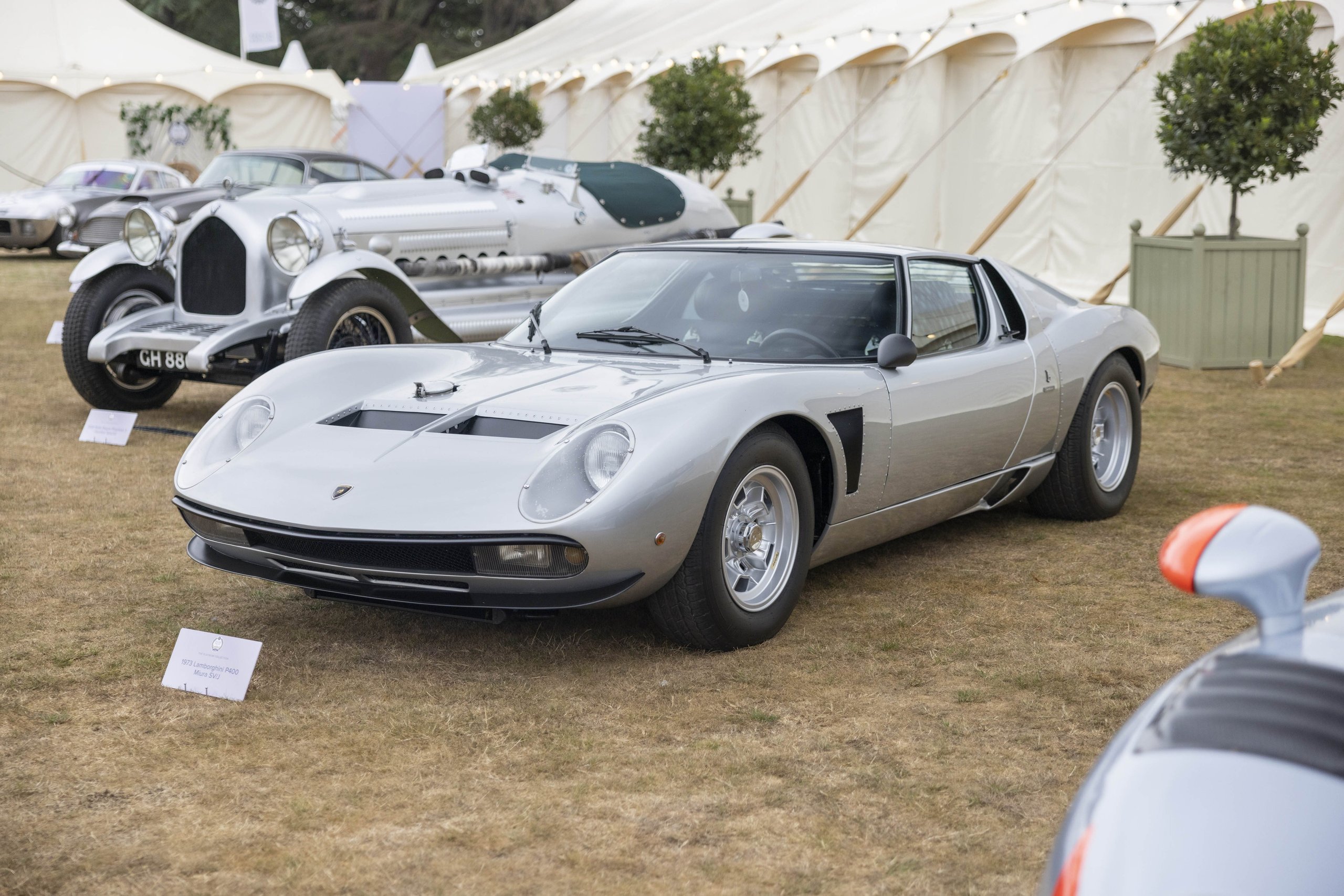
The 1973 Miura P400 SVJ on display was the fourth and last Miura SV to receive official Jota modifications from the factory, built for German racing driver Hubert Hahne, a personal friend of Ferruccio Lamborghini.
Paul Oz paints the bull at Salon Privé
Artist Paul Oz, commissioned by Lamborghini, painted the brand's bull logo in thick oils on a carbon fibre panel during the event, and the piece sold to a Lamborghini owner before the weekend concluded.
The Tecnica in Arancio Xanto — the hinge of the argument
Lamborghini constructed a visual argument that the brand's identity survived every prior transition, from the Miura's transverse V12 to the Countach's longitudinal layout, from carburetors to fuel injection, and from the Diablo to the Aventador's carbon-tub sophistication.
Huracán Tecnica on the Blenheim Palace lawn
Lamborghini brought the Huracán Tecnica in Arancio Xanto to Salon Privé at Blenheim Palace and the Concours d'Elegance at Hampton Court Palace in early September, flanking it with heritage models chosen to form a thesis statement.
The Tecnica's rear-drive balance
Road & Track described the Tecnica as "silly fun on the track, but a handful on the road," noting that softer suspension tuning compared to the STO improves livability without fully matching the steering precision of a Porsche 911 GT3.
Tecnica parading past Salon Privé guests
Lamborghini positioned the Aventador Ultimae at Salon Privé as the final naturally aspirated V12 the company will build before hybrid models arrive from 2023 onward, lending the display a sense of genuine finality.
Reventón Roadster — one of 15 built worldwide
The Reventón Roadster, built on the Murciélago's V12 chassis with fighter jet-inspired bodywork, bridged two design eras when it was announced in 2009, two years after the 20-unit coupe debuted.
Owners as ambassadors at Hampton Court
Lamborghini owners parked their cars in a dedicated paddock at Hampton Court alongside concours displays that included a 1971 Miura SV and a 1976 Countach LP400 Periscopio, turning current customers into brand ambassadors in front of prospective ones.
Continuity, not disruption — the full Blenheim lineup
Lamborghini's concours strategy leans heavily on certified heritage and the emotional weight of naturally aspirated engines while introducing hybrid successors, standing in contrast to competitors who have moved more aggressively toward full electrification.