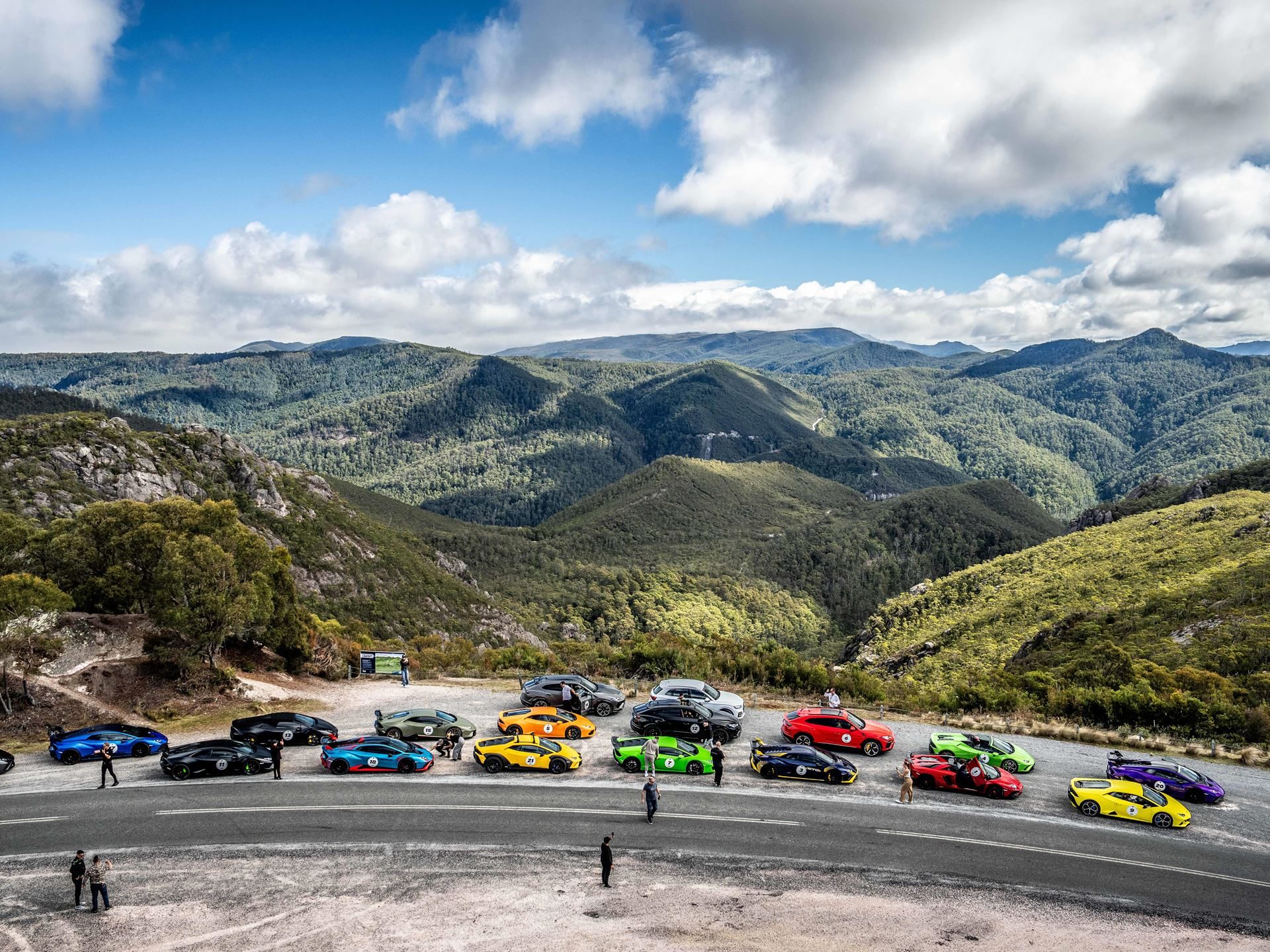
Lamborghini Took 40 Owners and 20 Supercars to Tasmania, and the Real Product Was the Trip Itself
Five days, 600 kilometers, and a convoy threading from Launceston to Hobart across Australia's island state.
Lamborghini's Esperienza Giro Oceania follows a formula the brand has refined over several years: put owners in their own cars, give them roads worth driving, and wrap the whole thing in hospitality that sells access to a world, not just a vehicle.
A vineyard stop along the Tasmanian route
The Giro sits within a broader owner-engagement ecosystem that includes the Accademia driving school, the Super Trofeo one-make racing series, and large-scale gatherings like the Lamborghini Arena festival in Italy.
Huracán STO at a Tasmanian harbor between driving stages
Huracán STOs with their prominent rear wings ran alongside taller Urus models through the same mountain passes, creating a striking visual contrast that reflects the full breadth of Lamborghini's current lineup.
The STO's track DNA tested on Tasmanian public roads
The Huracán STO repeatedly led the convoy, its track-derived aero package and racing-inspired details cutting a dramatic figure against Tasmania's pastoral backdrop.
Intimate scale versus the European grand tour
Ferrari's Cavalcade is the most direct comparison, a multi-day factory-organized driving tour typically reserved for its most valued clients, but Lamborghini's Giro skews toward community and shared adventure rather than hierarchical prestige.
Local character built into the route
Future Giro events will likely feature the Revuelto, whose V12 hybrid powertrain and considerable size present different logistical considerations on narrow mountain roads like Tasmania's.
The convoy descending toward Tasmania's coast
The itinerary paired driving with curated luxury stops including a dinner along the Tamar River in Launceston, a gourmet lunch near Cradle Mountain, a vineyard overlooking Great Oyster Bay, and a farewell dinner at Hobart's Museum of Old and New Art.
Tasmania replaced familiar mainland roads for repeat attendees
The Oceania edition builds on a history stretching back to at least 2017, when Lamborghini ran a Giro in Victoria covering over 750 kilometers, and the move to Tasmania for 2024 marked the first time the program ventured beyond mainland Australia.
Supercar and super SUV sharing the same mountain road
Tasmania's narrow, technical, and lightly trafficked roads asked different questions of the chassis than a straight blast on a desert highway, rewarding composure and engagement at real-world velocities.
The full convoy climbing through Tasmania's interior
Both the Huracán and Urus families were well represented, and the event was structured to accommodate the different driving characteristics of a low-slung, naturally aspirated V10 supercar and a high-riding, twin-turbo V8 SUV.