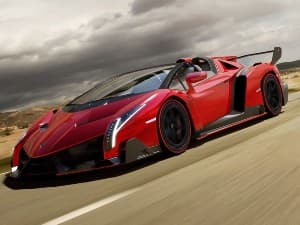
The Lamborghini Veneno: The Rarest V12 Hypercar Named After a Deadly Bull
In 1914, a fighting bull named Veneno killed the celebrated matador José Sánchez Rodríguez — over a century later, Lamborghini bolted that name to the most aggressive car it had ever built.
Underneath the Veneno's carbon fiber bodywork sat a 6.5-liter V12 mated to a 7-speed ISR transmission and permanent all-wheel drive, with a top speed reaching around 355 km/h.
Fewer than thirteen built, total
The Veneno Coupé production run can be counted on one hand, and the Roadster saw a reported nine units built, making even the Bugatti Centodieci's ten-unit run look generous by comparison.
Every surface serves airflow first
The central dorsal fin, front splitter, side skirts, massive rear wing, and rear diffuser all work together to generate downforce without relying on active aerodynamic elements — every vent is functional and every crease channels air toward a cooling duct.
Race-car cockpit, no luxury padding
Lamborghini used two proprietary materials throughout the cabin: Forged Composite, a chopped carbon fiber molded into complex shapes, and CarbonSkin, a flexible carbon fiber fabric thin enough to wrap around soft-touch surfaces while retaining exposed carbon weave texture.
The template for every V12 special that followed
The Veneno opened the door for the Centenario, the Sián, the Essenza SCV12, and the Invencible — each a limited-run V12 special that followed the same formula of bespoke Centro Stile bodywork wrapped around the current flagship's powertrain.
Famous not for beauty, but for lethality
Every Lamborghini carries the DNA of the bull on its badge, but the Veneno wears the legacy of a specific animal — one famous not for its beauty but for its lethality, and the car that reshaped how Lamborghini builds its most exclusive machines.