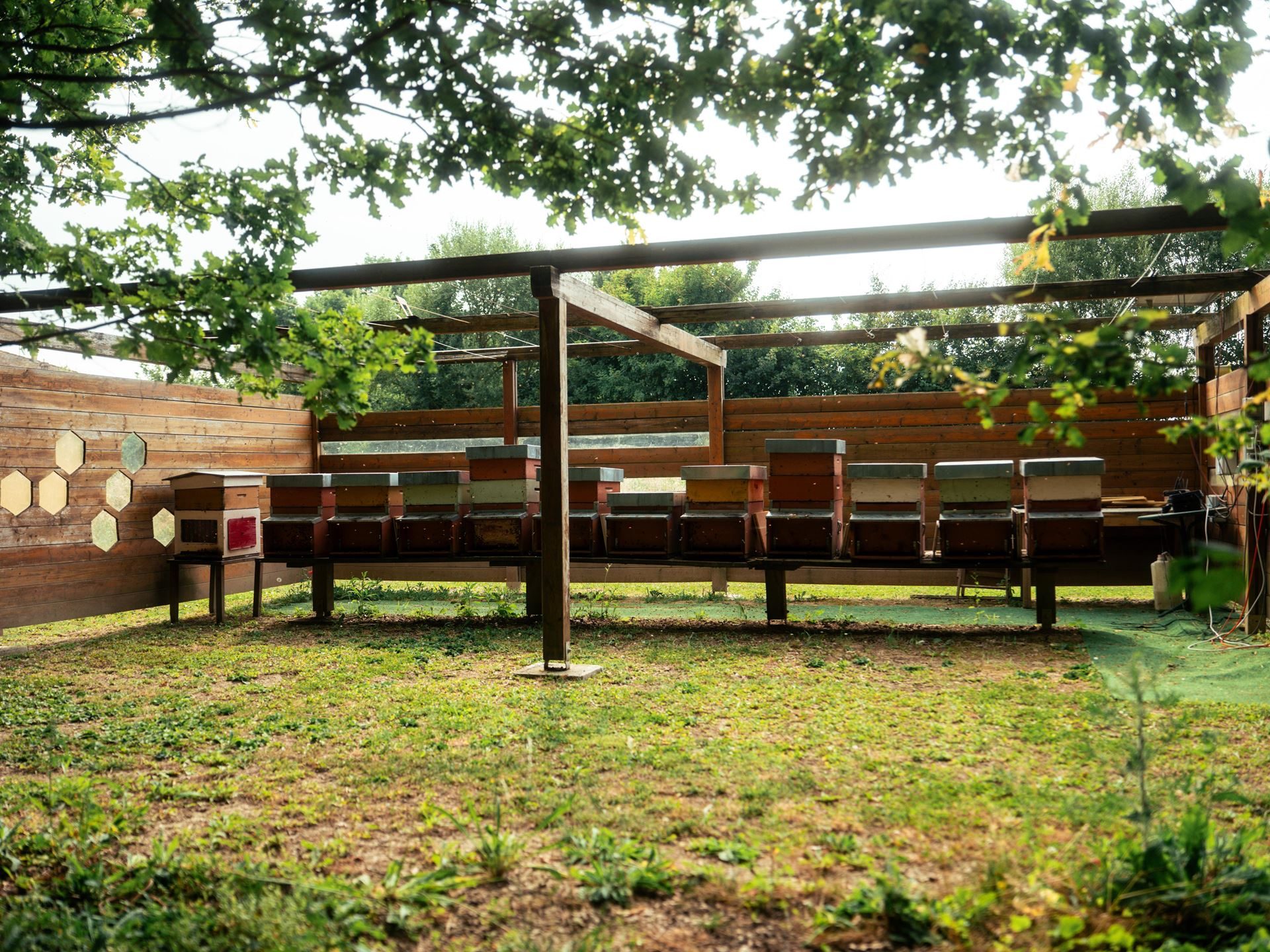
800,000 Bees and a Jar of Honey: Inside Lamborghini's Decade-Long Environmental Experiment
A supercar factory seems like an odd place to keep bees, but Lamborghini's biomonitoring program just turned ten.
Lamborghini launched an environmental biomonitoring program using bee colonies in 2016, and the company chose World Bee Day on May 20 to mark the project's tenth anniversary.
A decade of colony growth
Reports from 2021 indicated the apiary had grown to 12 hives from its original eight, with a bee population of around 600,000 at that time and more than 120,000 bees foraging daily across the surrounding area.
Collecting environmental data, hive by hive
In collaboration with academic partners, Lamborghini monitors insect activity using instruments installed inside the hives, generating data on air quality and the presence of pollutants such as pesticides, heavy metals, aromatic compounds, and dioxins.
Bees as biological early-warning sensors
Lamborghini highlights that the bees are effective natural indicators of environmental health within their foraging radius, making the program a biological early-warning system for the territory around Sant'Agata Bolognese.
Lamborghini's own 'Miele'
The hives also produce Lamborghini-branded honey, a small but distinctive byproduct that ties the automaker's identity directly to the land where its cars are built.
Seven hectares of biodiversity
The park surrounding the factory spans seven hectares with over 10,000 plants and is open to employees, the local community, and researchers, serving as both a biodiversity corridor and a data-collection site.
Where supercars meet sustainability
The Sant'Agata Bolognese production site achieved carbon-neutral certification in 2015 and, according to one report, maintained that status even after doubling the facility's footprint.
Ten years in, the colonies keep foraging
The bee project fits within Lamborghini's broader Direzione Cor Tauri strategy, which aims for total decarbonization by 2050, as a local, community-facing element that separates it from a one-year PR stunt.