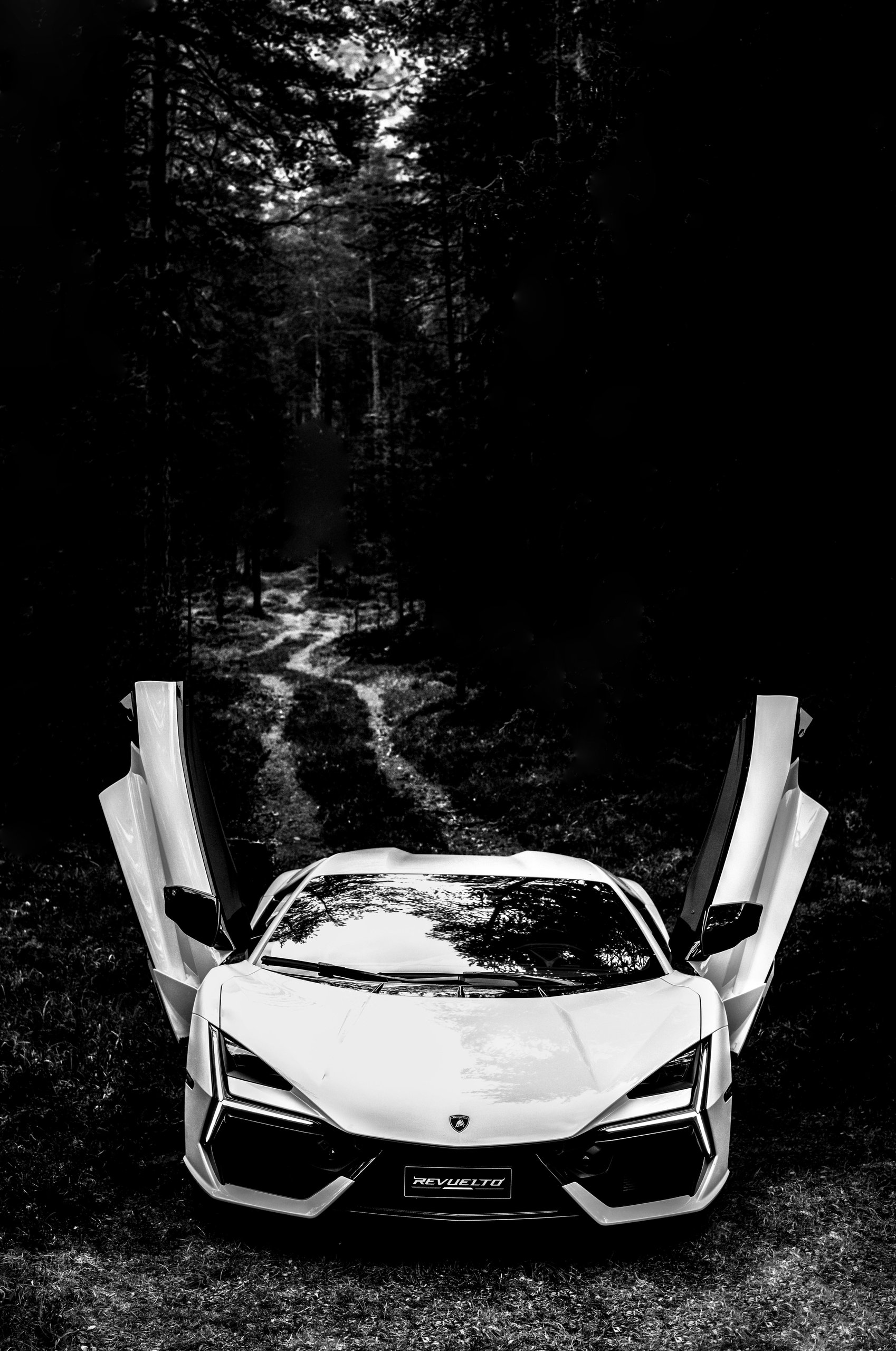
Anton Corbijn Photographs the Revuelto Like a Rock Star
Lamborghini handed its hybrid V12 flagship to the photographer who defined the visual identities of U2, Depeche Mode, and David Bowie.
Lamborghini commissioned Anton Corbijn to spend two days with the Revuelto in the Italian Dolomites, and the resulting images look less like a luxury car campaign and more like album artwork.
Corbijn's minimalist philosophy at work
Corbijn believes his style is defined by your inability to do it any other way, and he credits Brian Eno for teaching him to minimise his choices and then become very inventive with what remains.
The Revuelto as creative subject, not commercial product
Corbijn described Lamborghini as representing sophistication in cars, calling it a beautiful, sophisticated, and chic name for any product, revealing that he approached the assignment as a creative interpretation rather than a commercial job.
Breaking from the horsepower war
Ferrari and McLaren typically introduce their flagships with motorsport heritage and aerodynamic data, keeping the conversation firmly inside the performance envelope where arguments reduce to tenths of a second.
Anton Corbijn between takes in the Dolomites
Corbijn built his reputation by turning musicians into myths, from his early black-and-white portraits of Joy Division's Ian Curtis to the album covers that shaped how the world saw Bowie, Miles Davis, and U2.
Building cultural value from the outset
The Aventador's residual values stayed remarkably strong across its production run partly because the car became a cultural object, referenced in music, film, and social media far more than its competitors.
Corbijn at work against the Dolomites cliffs
Lamborghini commissioned Anton Corbijn, the Dutch photographer and filmmaker whose lens defined the visual identities of U2, Depeche Mode, and David Bowie, to spend two days with the Revuelto in the Italian Dolomites.
Treating a supercar like a portrait subject
Corbijn placed the Revuelto in a quiet alpine forest, alone, surrounded by mist and moss, forcing the viewer to look at the car the way he looks at a musician — as a subject with presence and personality, not just technical capability.
Behind the wheel of the Revuelto
Multiple owners on enthusiast forums describe the Revuelto's dual-clutch transmission as a transformative improvement over the Aventador's single-clutch unit, making the car considerably more livable day to day.
Corbijn framing the flagship
Lamborghini is arguing that the Revuelto belongs in a cultural conversation, not just a horsepower war, by associating it with an artist whose work hangs in museums and whose album covers shaped popular culture.
1,015 CV in a forest clearing
The Revuelto's 6.5-liter naturally aspirated V12, supplemented by three electric motors for a combined output of 1,015 CV (1,001 horsepower), provides the substance behind the style.
The photographer and his subject
Corbijn did not photograph the Revuelto because it was fast — he photographed it because, in his estimation, it was worth looking at, and for a company navigating the transition to electrification while preserving its identity, that endorsement carries real weight.