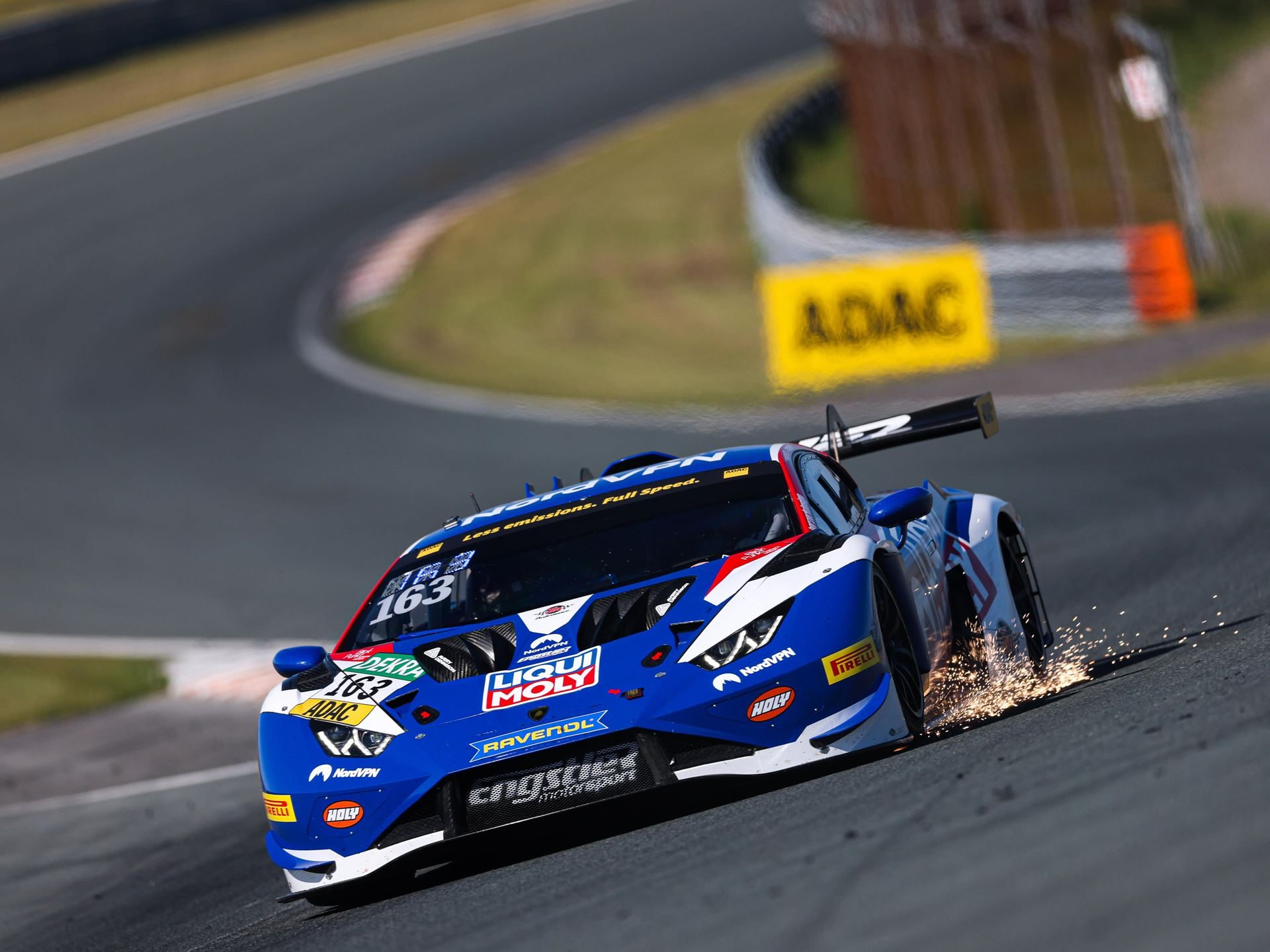
Five Wins in a Row: The Huracán GT3's Remarkable 2017 Streak
From Monza to Lausitzring, five consecutive victories in less than a month redefined Lamborghini's GT3 credentials.
Mirko Bortolotti crossed the line first in Race 2 at the Lausitzring on May 21, 2017, completing the fifth consecutive international GT victory for the Lamborghini Huracán GT3 in less than a month.
The naturally aspirated advantage
The 2017 Huracán GT3 was powered by a naturally aspirated 5.2-liter V10 engine derived from the road car, and that choice of aspiration mattered enormously in a class where Balance of Performance regulations attempt to equalize different powertrains.
Grasser Racing Team — proving the customer car model
Grasser Racing Team became one of the most visible Huracán GT3 customer teams during this period, demonstrating that the car delivered consistent performance in the hands of a well-organized private team, not only with a factory engineering squad behind the pit wall.
From GT3 to EVO to EVO2 — a decade of evolution
Lamborghini evolved the platform through the Huracán GT3 EVO and then the EVO2, refining aerodynamics, intake systems, and chassis details while retaining the naturally aspirated V10 at its core.
Beating the establishment at Lausitzring
The 2016 ADAC GT Masters champions Connor De Phillippi and Christopher Mies, in the Audi R8 LMS, finished behind the Grasser Lamborghini — a result that reflected genuine pace advantage, not circumstance.
Four wins before Lausitzring — the Blancpain sweep
The winning streak included four prior victories in the Blancpain GT Series championship at Monza, Brands Hatch Race 1 and Race 2, and Silverstone before Grasser Racing Team carried the momentum into the ADAC GT Masters at Lausitzring.
Racing success feeds back to the showroom
Lamborghini released the Huracán EVO GT Celebration, a limited run of 36 units reserved for the American market, to commemorate the GT3 EVO's endurance racing victories.
The benchmark for everything that follows
By 2026, the Huracán GT3 platform was described as a decade-old design still capable of leading the field, with the Temerario GT3 program now carrying a fundamentally different powertrain philosophy into the next generation.