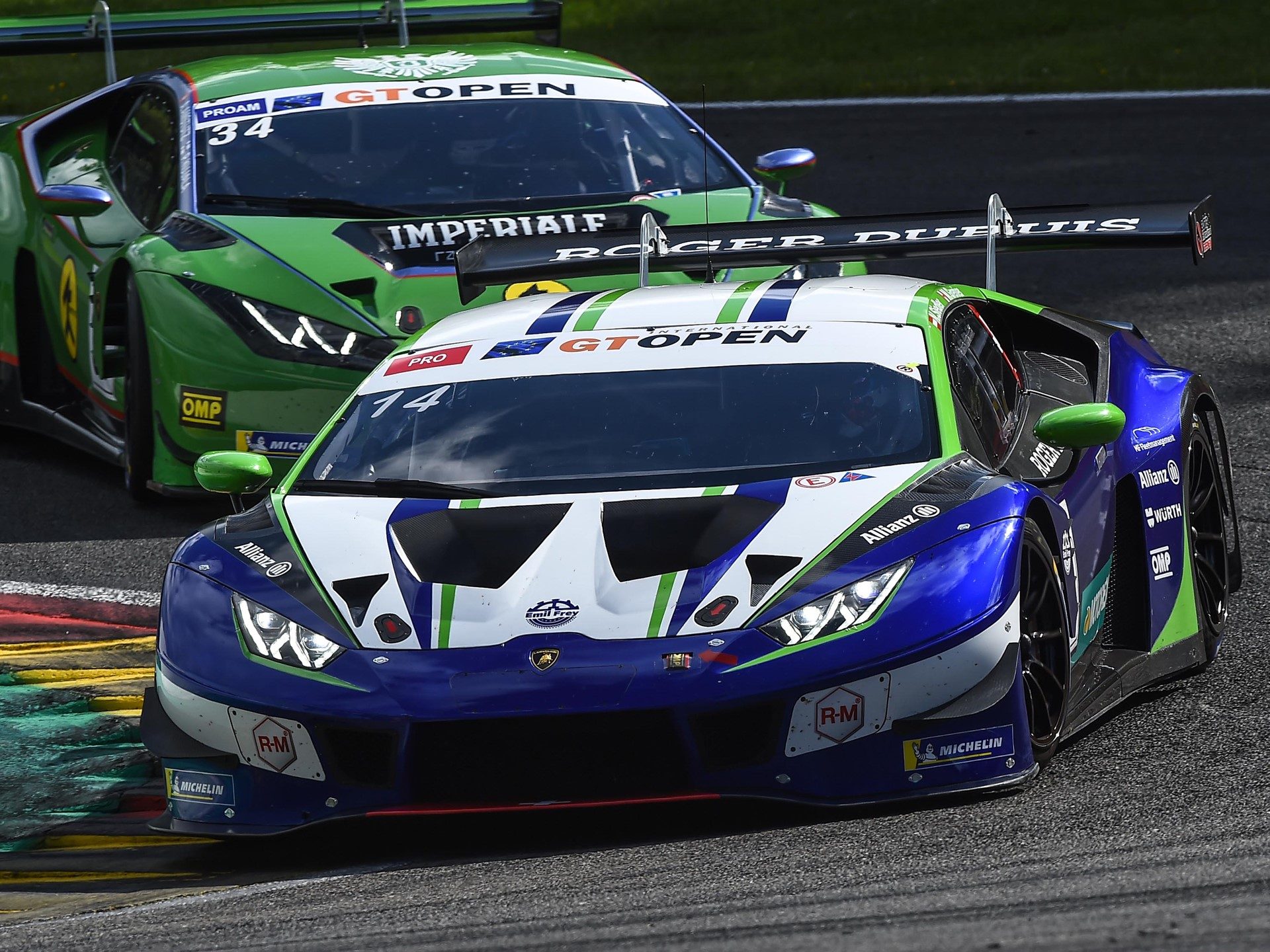
How a 15-Second Penalty and a Spa Downpour Couldn't Stop the Huracán GT3 EVO
Fifth after the pit stop, first at the checkered flag.
Norbert Siedler rejoined the 2019 GT Open race at Spa in fifth place after a 15-second success penalty erased the advantage his teammate Mikael Grenier had built, then drove through the field to win.
Built to absorb a handicap
Lamborghini's then-R&D director Maurizio Reggiani homologated the GT3 engine with lower output than the road car to leave room for future Balance of Performance adjustments, a strategic decision that prioritized long-term competitiveness over peak power.
Mid-engine traction on a drying track
The Huracán GT3 EVO's mid-engine layout gives it a natural advantage in rear traction out of slow corners, precisely the kind of grip that matters most when a wet track is drying unevenly.
A decade of competitive service
By mid-2019 the Huracán GT3 platform was already four years old, yet Lamborghini was still winning with an evolution of a car that competitors had been studying since 2015, while Porsche alone released three entirely new GT3 cars in the same period.
Everything stacked against a win
A safety car start, shifting rain, a 15-second success penalty, and a decisive rival error at La Source all compressed into a single hour of racing that proved why the Huracán GT3 EVO earned its reputation as one of the most dependable GT3 platforms of its generation.
Privateer-friendly by design
The Huracán GT3 EVO's integrated electronics package, built around a Bosch MS6.4 ECU and a Cosworth Powerbox, gave customer teams like Emil Frey Racing the tools to extract competitive performance without a factory pit wall.
The successor's challenge
The Temerario GT3 now carries the burden of matching the Huracán's record while adapting to turbocharged power delivery, a characteristic that fundamentally changes how drivers manage throttle application in the low-grip conditions that defined Spa in June 2019.
Lamborghini's double at Spa
Emil Frey Racing's penalty-defying outright victory plus a ProAm class win for the Imperiale Racing Huracán gave Lamborghini a weekend at Spa that few manufacturers could match under similar handicaps.