Lamborghini's Daytona GTD Dynasty: Three Wins, One Platform
How the Huracán GT3 Evo delivered an unprecedented three consecutive victories at the 24 Hours of Daytona.
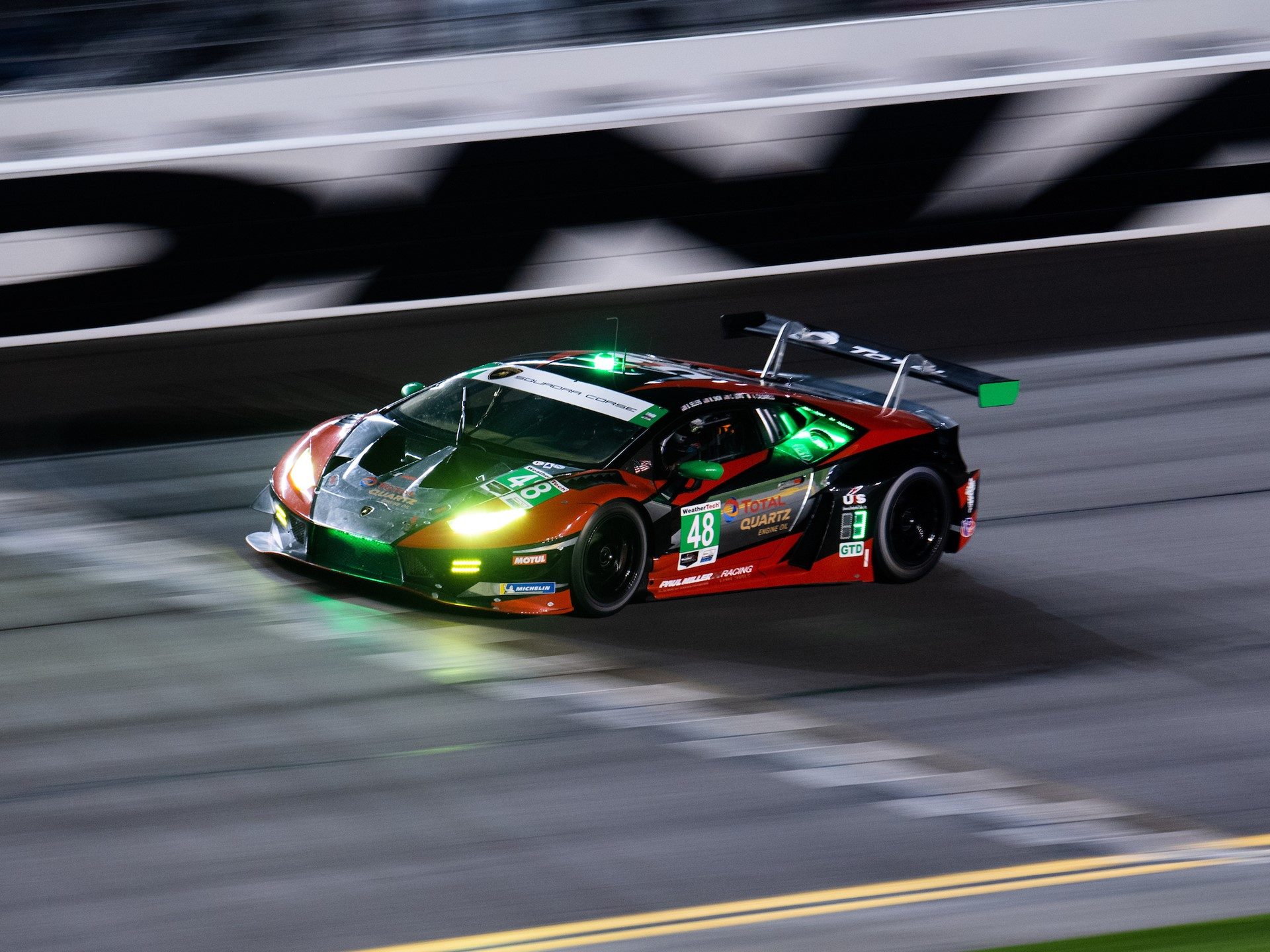
The #48 Paul Miller Racing Lamborghini Huracán GT3 Evo won the 2020 24 Hours of Daytona by 21.908 seconds over its sister car, completing the first three-peat in GTD class history.
Clean racing between teammates sealed the 1-2 lockout
Paul Miller Racing and Magnus Racing let their drivers race each other cleanly rather than imposing team orders, a decision that reflected both teams' confidence in the Huracán's mechanical integrity under close combat at racing speed.
Squadra Corse's customer racing advantage
Squadra Corse embedded factory drivers like Andrea Caldarelli and Marco Mapelli into privateer lineups, giving Lamborghini teams a structural advantage in world-class talent and engineering guidance that went beyond the car itself.
Lamborghini's GT3 racing lineage faces a platform shift
Customer teams that built their programs around the Huracán's naturally aspirated V10 and its linear power delivery will need significant recalibration to adapt to the twin-turbocharged V8 architecture of the Temerario GT3.
Magnus Racing's charge from dead last to second place
The #44 Magnus Racing Huracán started 17th and dead last on the grid after mechanical issues prevented the team from setting a qualifying time, then clawed through the entire field over 24 hours to finish second.
The V10 engineered for endurance
The 5.2-liter naturally aspirated V10, derived from the road car, received new camshafts and titanium valves specifically to optimize drivability and extend reliability during endurance events.
The 2020 race turned into a sprint to the finish
Fewer full-course yellows than in previous years meant the field spent more time at racing speed, and the closing hours turned into a strategic chess match between the two surviving Lamborghinis and the #88 Audi R8.
Decades of GT3 competition built Squadra Corse's credibility
Squadra Corse supplied technical support, engineering resources, and factory drivers to privateer teams running the Huracán GT3 Evo, a customer racing model that was central to how Lamborghini competed in GTD.
From GTD dominance to the top class of endurance racing
The GTD dynasty built the institutional knowledge and competitive credibility that made Lamborghini's leap toward the top class of endurance racing with the SC63 LMDh hybrid prototype plausible.