A 1-2 Lockout and an Unprecedented Three-Peat at Daytona
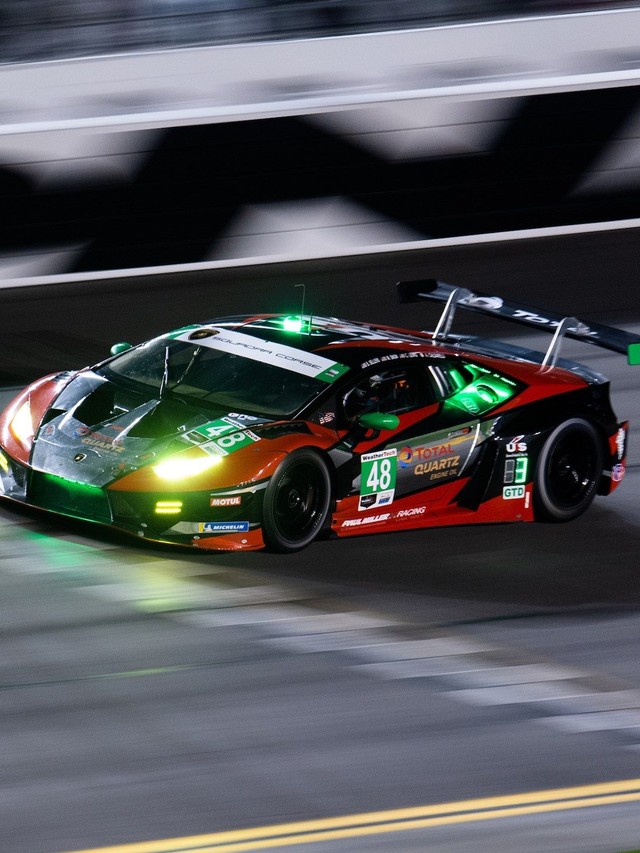
When the #48 Paul Miller Racing Lamborghini Huracán GT3 Evo crossed the finish line at the 2020 24 Hours of Daytona, 21.908 seconds ahead of its sister car, it completed something no manufacturer had managed in the GTD class before: three consecutive victories at North America’s most grueling endurance race. The Magnus Racing by GRT #44 Huracán locked out second place, giving Lamborghini a clean 1-2 sweep that left no ambiguity about which brand owned this event.
The winning #48 was piloted by Andrea Caldarelli, Corey Lewis, Bryan Sellers, and Madison Snow. The #44, which finished second, ran with Marco Mapelli, John Potter, Spencer Pumpelly, and Andy Lally. That runner-up finish carried its own remarkable subplot: Magnus Racing’s car started 17th and dead last on the grid after mechanical issues prevented the team from setting a qualifying time. Clawing from the back of the field to a podium lockout over 24 hours is the kind of story only endurance racing produces.
The defending champions, Grasser Racing in the #11 Huracán, started fifth but suffered a fuel problem midway through the race that ended their bid to defend the crown. Christina Nielsen’s #19 GEAR Racing entry retired with mechanical issues, and the #47 Precision Performance Motorsport car was collected by an Aston Martin on the Tri-Oval. Of five Huracáns entered, two survived to the finish. Both stood on the top two steps of the podium.

The #48 Lamborghini Huracán GT3 EVO races under the night lights, showcasing its vibrant livery and speed on the track.
Why the Huracán GT3 Evo Kept Winning When Others Couldn’t
Winning a 24-hour race once requires speed and luck. Winning three in a row requires something deeper: a platform that privateer teams can operate reliably under extreme stress, race after race, season after season. Developed by Lamborghini’s Squadra Corse division in collaboration with Dallara, the Huracán GT3 Evo was built around exactly that principle.
One source describes the car’s engineering focus as centered on three pillars: aerodynamic stability, mechanical reliability, and driver accessibility. The aero package reportedly features a pronounced front splitter leading edge and lateral bumper recesses with large flicks designed to generate consistent front downforce, reducing the pitch sensitivity that punishes drivers during long stints. The 5.2-liter naturally aspirated V10, derived from the road car, received new camshafts and titanium valves specifically to optimize drivability and extend reliability during endurance events.
The chassis philosophy reveals how deeply Squadra Corse thought about the realities of 24-hour racing. The Huracán GT3 Evo uses an aluminum and carbon fiber hybrid chassis with an integrated FIA roll cage that was reportedly redesigned to improve roof-hatch access and accommodate taller drivers. That sounds like a minor ergonomic detail until you consider that driver comfort directly affects lap-time consistency at hour 18 or 22. A fatigued driver in a cramped cockpit makes mistakes; a comfortable one keeps pushing. The rear suspension was also designed to allow quick driveshaft changes, saving critical minutes during pit stops in a race where seconds of margin decide class victories.
In GT3 racing, Balance of Performance regulations theoretically level the playing field. Every manufacturer gets adjusted to keep competition close. That Lamborghini won three consecutive times under those constraints suggests the advantage was never raw power or a favorable BoP ruling. It was the total package: a car that teams could extract maximum performance from while minimizing the mechanical attrition that eliminates competitors over 24 hours.
Strategy and Execution: How the Final Hours Unfolded
Caldarelli, who drove the decisive final stint for the #48, described the 2020 race as feeling more like a sprint than an endurance event. Fewer full-course yellows than in previous years meant the field spent more time at racing speed, and the closing hours turned into a strategic chess match between the two surviving Lamborghinis and the #88 Audi R8.
The key tactical divergence came in the final fuel stops. The #88 Audi short-filled its tank to gain track position, while both Huracáns committed to full refueling stops. That gamble gave the Audi a temporary advantage but left it vulnerable to running dry or needing an extra splash of fuel. The two Lamborghinis, meanwhile, could push hard without fuel anxiety.
Mapelli in the #44 held the class lead heading into the final two hours, but Caldarelli in the #48 was demonstrably quicker. The pair fought nose-to-tail in what Caldarelli called a “pretty strange feeling,” battling his European teammate for a victory at Daytona. Caldarelli grabbed the lead before the final round of pit stops, and when the sequence shook out, he emerged with a gap exceeding 20 seconds that he maintained to the checkered flag.
That Paul Miller Racing and Magnus Racing let their drivers race each other cleanly, rather than imposing team orders, speaks to the confidence both squads had in the Huracán’s mechanical integrity. When your car can absorb close combat at racing speed without breaking, you can afford to let your drivers sort it out on track. The result was a finish that validated the platform as much as the people behind it.
Squadra Corse and the Customer Racing Model That Enabled the Streak
Lamborghini’s GT3 success story cannot be separated from Squadra Corse, the motorsport division that supplies technical support, engineering resources, and factory drivers to privateer teams running the Huracán GT3 Evo. This customer racing model is central to how Lamborghini competes in classes like GTD, where manufacturer entries rely on independent teams to carry the brand’s colors.
Paul Miller Racing’s record with Lamborghini illustrates the depth of that relationship. Over their six-season partnership, the team secured six wins, 25 podiums, and 10 pole positions. They claimed the 2018 IMSA WeatherTech SportsCar Championship GTD title and the 2020 Michelin Endurance Cup. Their efforts were instrumental in Lamborghini winning the overall GTD Manufacturers’ Championship in both 2018 and 2019.
For anyone considering Lamborghini’s customer racing program, this track record matters. GT3 racing is expensive and unforgiving, and the quality of factory support can determine whether a team fights for wins or fights to finish. Squadra Corse’s ability to embed factory drivers like Caldarelli and Mapelli into privateer lineups, providing world-class talent alongside engineering guidance, gave Lamborghini teams a structural advantage that went beyond the car itself.
The partnership between Paul Miller Racing and Lamborghini concluded in November 2021, two years after this Daytona victory. Paul Miller Racing later won the 2026 Rolex 24 in GTD PRO with a BMW, proving the team’s operational excellence extends beyond any single manufacturer. But the Lamborghini years remain the period that defined both the team’s identity and the Huracán GT3 Evo’s competitive legacy.
What the Three-Peat Proved to Lamborghini’s Rivals
GTD at Daytona is not a single-marque playground. Ferrari, Porsche, Audi, BMW, Mercedes-AMG, and Aston Martin all field competitive GT3 machinery in the class, and Balance of Performance regulations ensure no single car can dominate on raw specification alone. Winning once against that field is an achievement. Winning three consecutive times is a statement about organizational depth.
The Huracán GT3 Evo’s Daytona dominance coincided with a period where Lamborghini was building credibility as a serious motorsport manufacturer, not just a builder of exotic road cars that occasionally went racing. The Super Trofeo one-make series, established in 2009, served as the entry point. The GT3 program expanded Lamborghini’s reach into international competition. And the three consecutive Daytona wins provided the kind of results that no marketing campaign can replicate.
As Car and Driver noted in 2023, Lamborghini’s motorsport trajectory was already pointing toward the top class of endurance racing with the SC63 LMDh hybrid prototype. The GTD dynasty built the institutional knowledge and competitive credibility that made that leap plausible. You do not walk into Le Mans and Daytona’s top class without first proving you can consistently win in the classes below.
From the Huracán GT3 Evo to the Temerario GT3: What This Legacy Means Now
The Huracán GT3 Evo’s competitive life is winding down as Lamborghini prepares the Temerario GT3 to succeed it. That transition represents a fundamental shift: from a naturally aspirated V10 platform to a twin-turbocharged V8 architecture that mirrors the road-going Temerario’s powertrain philosophy. For customer teams that built their programs around the Huracán’s linear power delivery and distinctive exhaust note, adapting to turbo lag management and different weight distribution will require significant recalibration.
Lamborghini has not disclosed detailed specifications for the Temerario GT3 or confirmed when it will enter IMSA competition. What the Daytona three-peat established, though, is a benchmark that the next platform will be measured against. Any successor to the Huracán GT3 Evo inherits both the engineering expectations and the competitive reputation that three consecutive Daytona victories created.
The Huracán GT3 Evo proved that Lamborghini could build a customer racing car reliable enough, fast enough, and well-supported enough to beat every major rival at the most demanding endurance race in North America, three years running. Whether the Temerario GT3 can replicate that consistency with forced induction remains the open question. The foundation, built at Daytona between 2018 and 2020, gives Squadra Corse a credible claim that they know how to do this.


