The Fifth Super Veloce Steps Into Monterey Sunlight
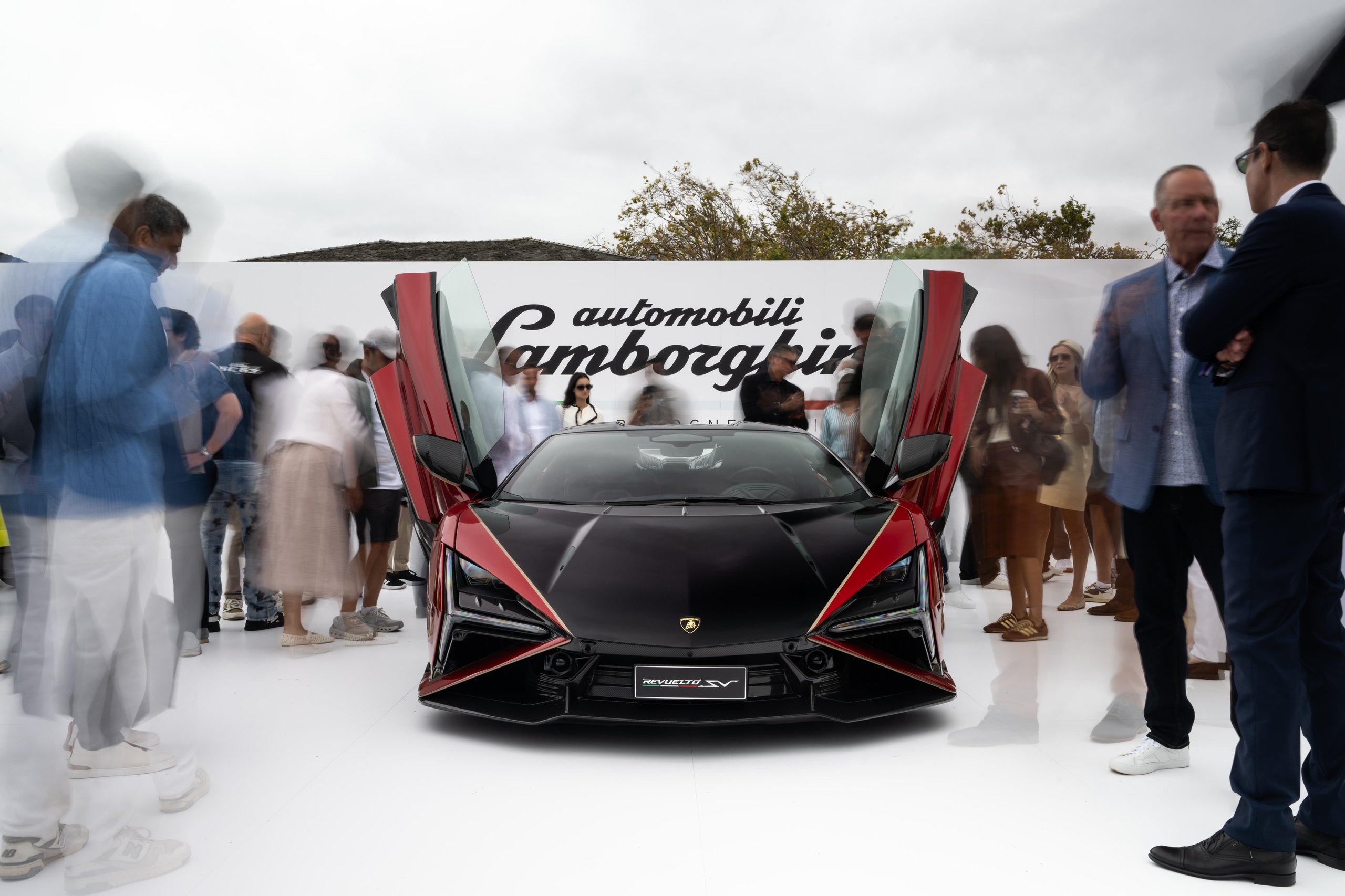
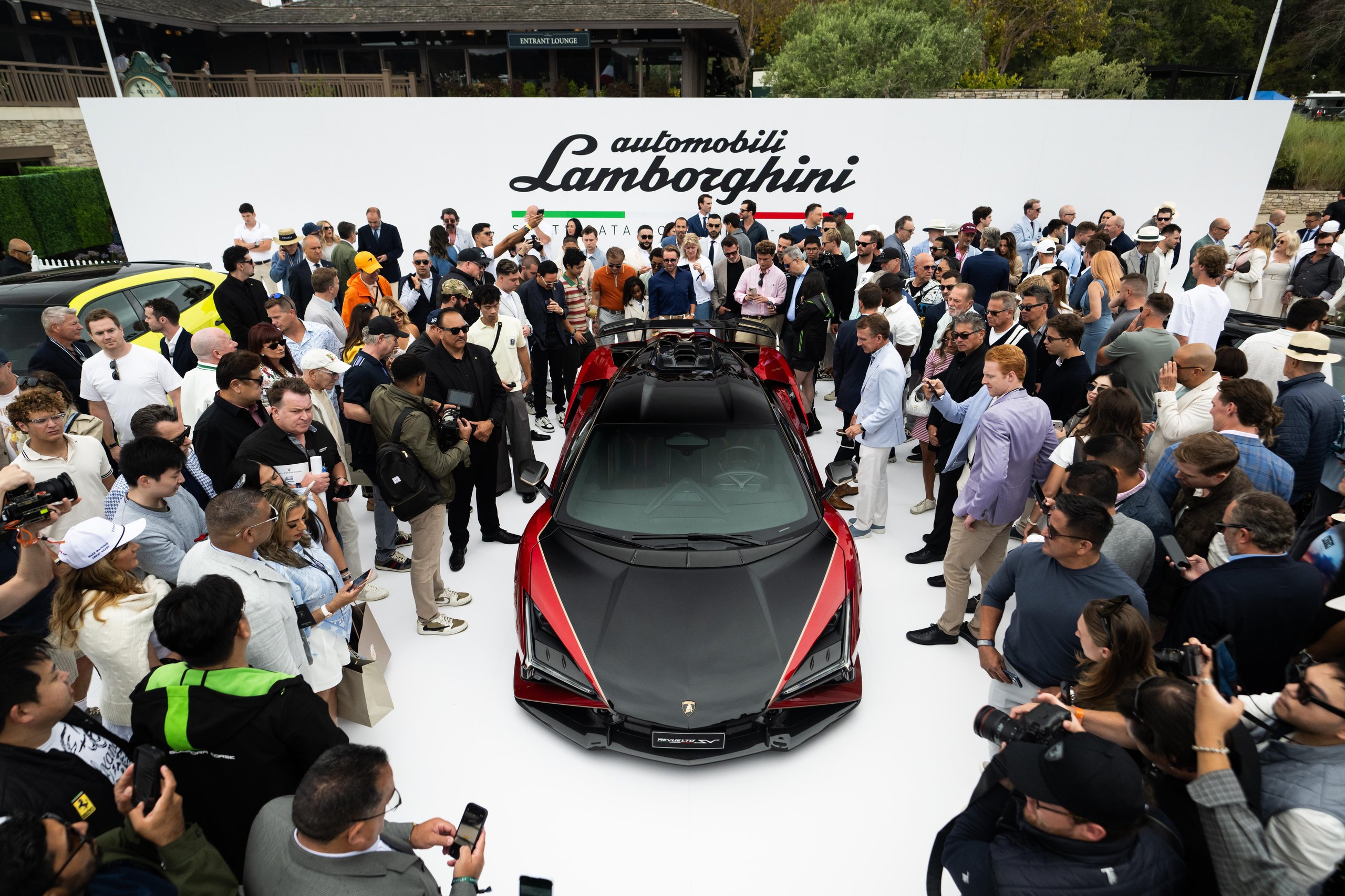
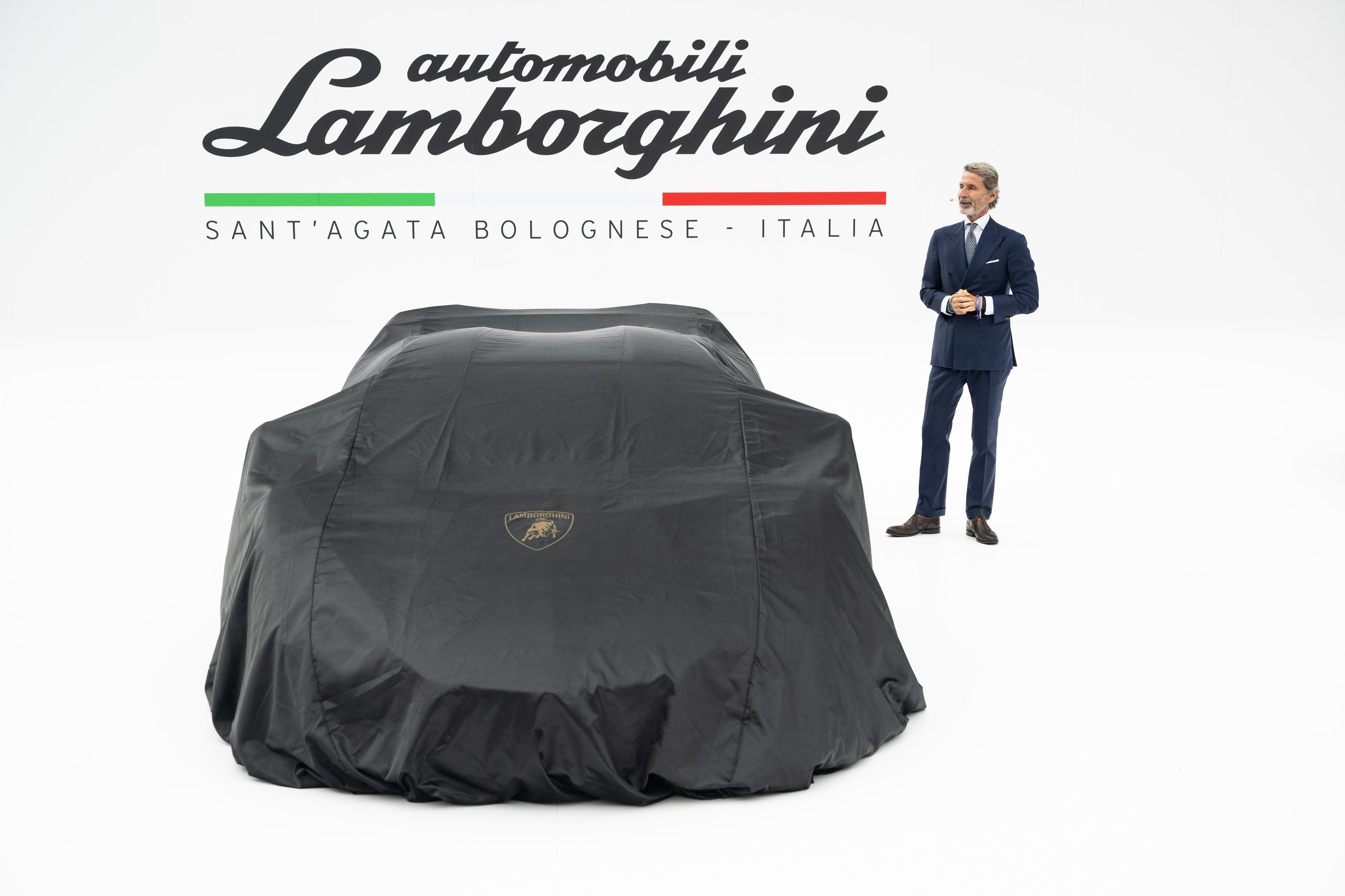
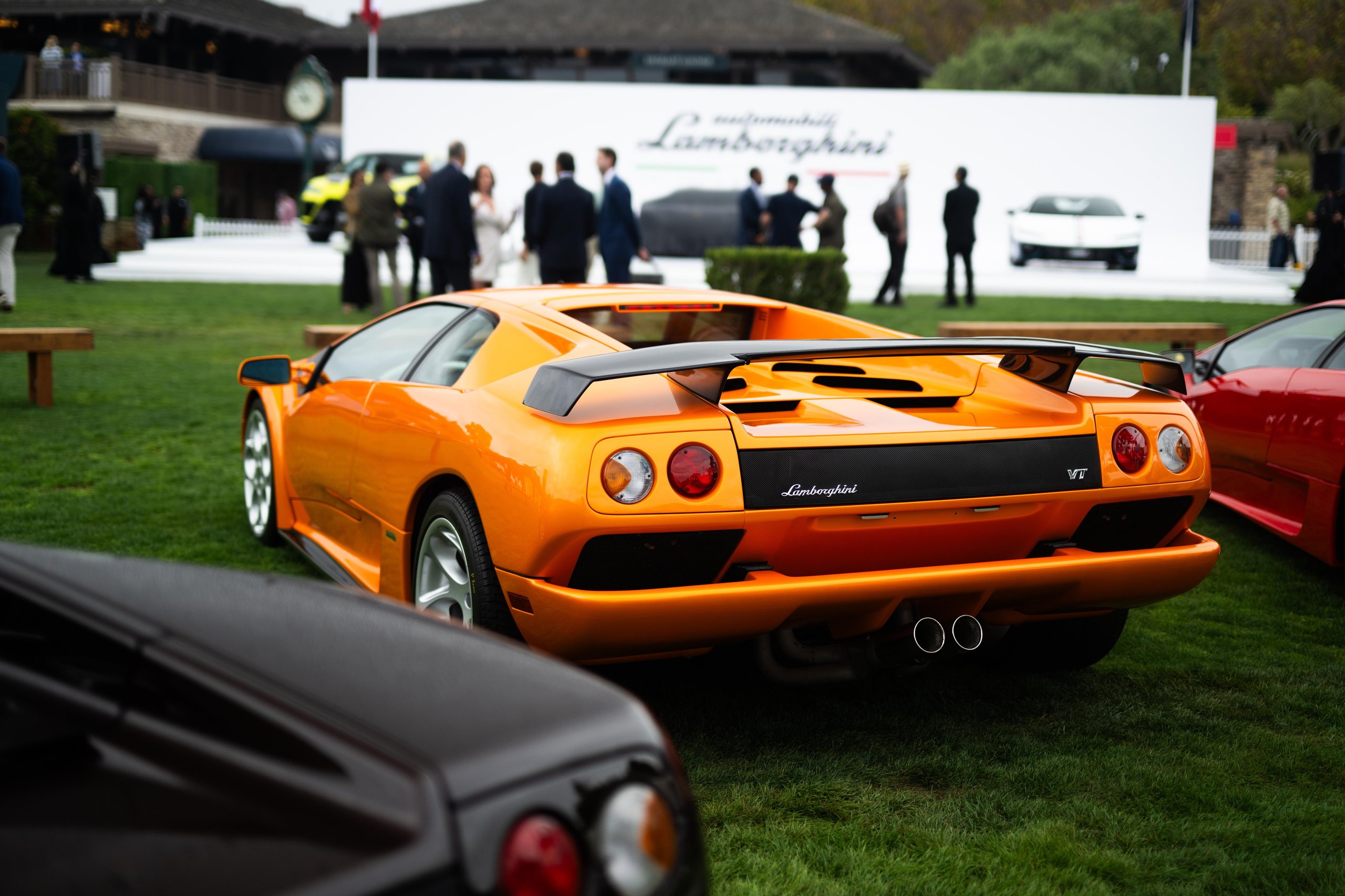
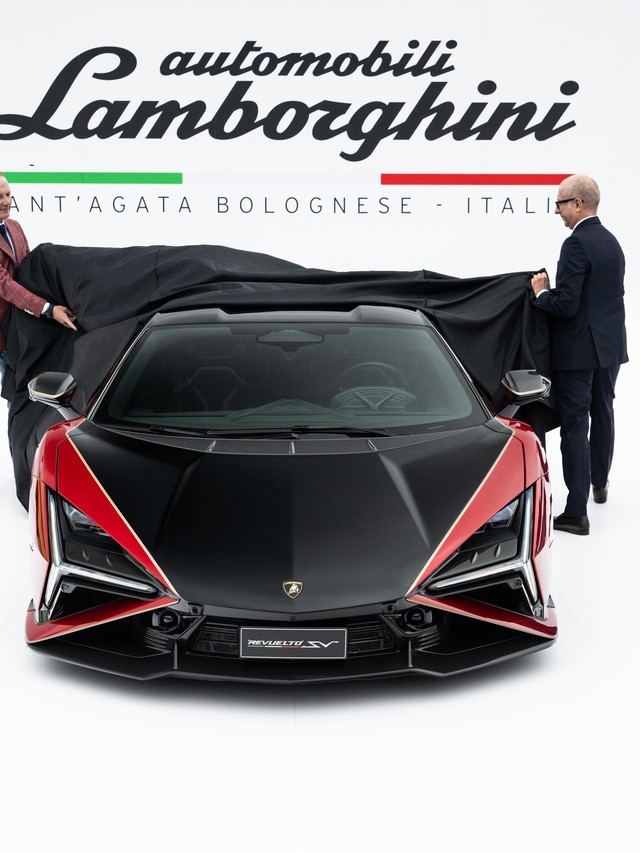
Lamborghini pulled the cover off the Revuelto SV at The Quail, A Motorsports Gathering, placing its most powerful production car on the lawn alongside 30 Diablos and a crowd that knew exactly what the two letters on the rear quarter panel mean. The car is the fifth model to carry the Super Veloce designation, following the Miura SV (1971), Diablo SV (1995), Murciélago LP 670-4 Super Veloce (2009), and Aventador SV (2015). Production will be limited to 1,963 units.
Stephan Winkelmann framed the moment as a continuation rather than a reinvention. “The Super Veloce lineage is one of the most iconic in Lamborghini’s history, reserved for some of our most extreme V12 models,” he said during the reveal. “With the Revuelto SV, we continue that tradition by taking our V12 flagship to higher expression of performance and driving emotion.”
Combined output sits at 1,050 horsepower. The sprint from 0 to 62 mph takes 2.4 seconds. Top speed exceeds 214 mph. Those figures make the Revuelto SV the fastest-accelerating and most powerful production Lamborghini ever assembled in Sant’Agata Bolognese. But the real story is not the numbers themselves. It is where the extra power comes from, and what that choice reveals about the future of Lamborghini’s V12.

The stunning new Lamborghini Revuelto SV is dramatically unveiled by three executives, revealing its bold black and red design. Image: Automobili Lamborghini.
The V12 Stays Untouched. The Battery Does All the Talking.
Every previous SV extracted more from its combustion engine. The Murciélago SV squeezed an extra 30 horsepower from its 6.5-liter V12 through revised intake runners and exhaust tuning. The Aventador SV gained 50 horsepower the same way. The Revuelto SV breaks that pattern completely.
The naturally aspirated 6.5-liter V12 still produces 814 horsepower at 9,250 rpm, identical to the standard Revuelto. All 49 additional horsepower come from revisions to the electrical side of the plug-in hybrid powertrain: a larger 7.3-kWh battery pack, nearly double the standard car’s 3.8 kWh, capable of delivering more current to the three electric motors. The V12 is the constant. The electrons are the variable Lamborghini chose to optimize.
This matters for reasons beyond the spec sheet. It signals that Lamborghini views the hybrid architecture as the performance lever for future V12 development, not a compliance add-on bolted to the side. The V12 already screams to 9,250 rpm; extracting more from it would likely require fundamental changes to displacement, compression, or valvetrain. Increasing electrical output, by contrast, improves torque fill at lower speeds, sharpens launch performance, and enhances the front-axle torque vectoring that multiple owners already describe as one of the standard Revuelto’s strongest traits. For buyers wondering whether electrification dilutes the SV formula, the answer Lamborghini is giving here is that the battery is the SV formula now.
Aero, Chassis, and Brakes: Where the GT3 Program Pays Rent
The fixed rear wing is the most immediately visible change, replacing the standard Revuelto‘s active pop-up spoiler with a permanent, track-oriented element. A redesigned front bumper and revised side air inlets complete the visual transformation. Road & Track reports that Lamborghini claims 80 percent more downforce than the existing Revuelto, a figure that, if accurate, moves the car from grand-touring aero into genuine track-weapon territory.
Underneath, the SV borrows adjustable dampers from Lamborghini’s GT3 race cars. These are not marketing-department “race-inspired” components; they are functional hardware from the same program that fields the Huracán GT3 EVO2 in customer racing worldwide. According to MotorTrend, Lamborghini claims the SV corners 17 percent more agilely with 10 percent more lateral grip than the standard car. The Drive reports claims of 13 percent more overall grip and 5 percent better traction at full throttle.
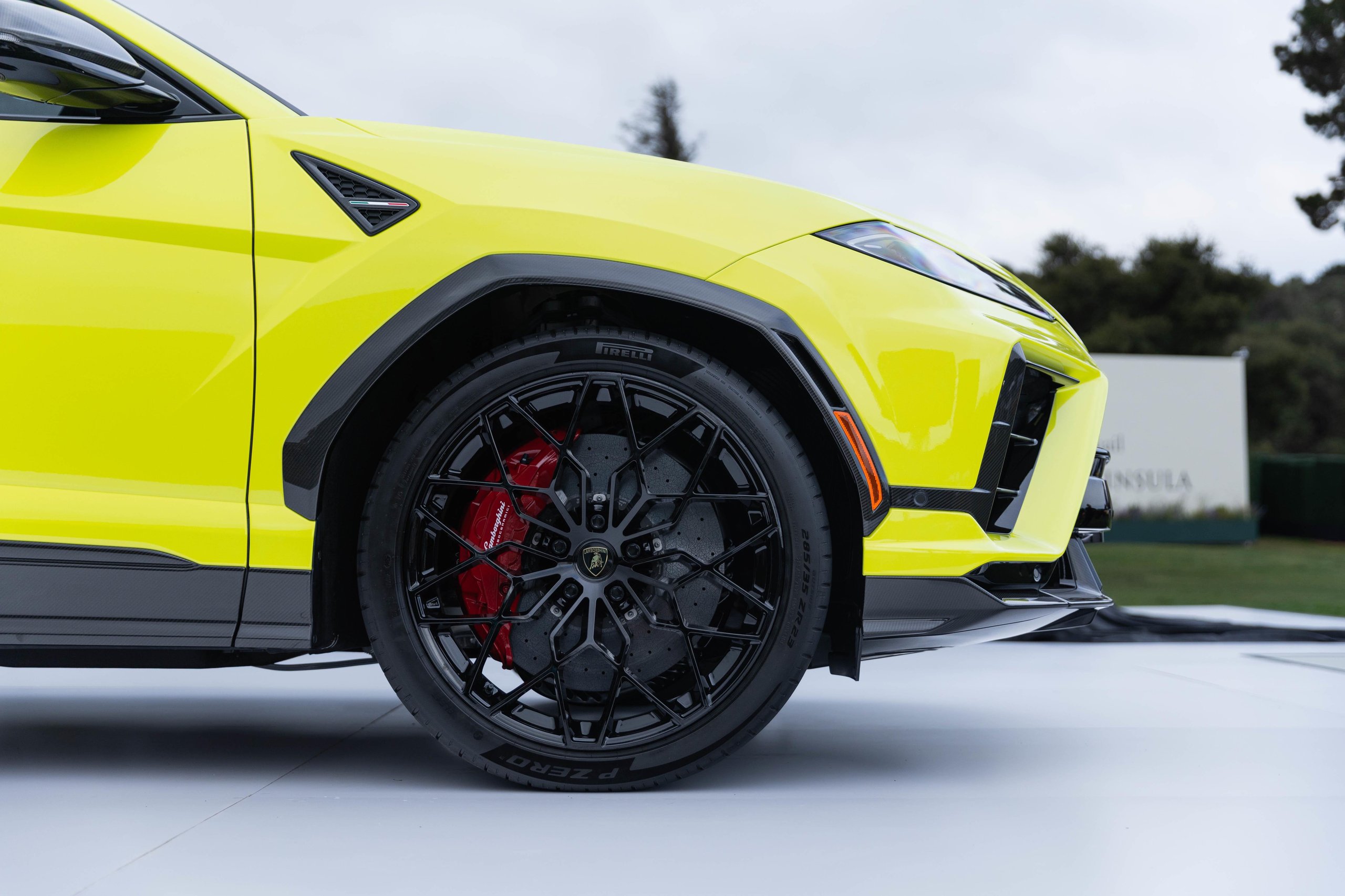
Braking receives equally serious attention. New CCM-R Plus carbon-ceramic discs measure 16.5 inches at the front, with racing-derived ventilation channels designed to dissipate 23 percent more heat than the standard system. Lamborghini also claims an 11 percent increase in peak deceleration. Model-specific Bridgestone Potenza Race R tires wrap the wheels, developed exclusively for the SV’s weight distribution and downforce profile.
Road & Track notes a quoted dry weight of 3,900 pounds even with lightweight options ticked. For a plug-in hybrid carrying a 7.3-kWh battery and a full V12, that figure reflects aggressive material choices throughout the structure, though Lamborghini has yet to detail specific weight-saving measures beyond what the images show: extensive carbon fiber on the bumper surrounds, side skirts, and rear diffuser. The engineering logic is consistent throughout: the battery may add mass, but every other system on the car is tuned to make that mass irrelevant on track.

The intricate design of the wheel and the iconic Lamborghini emblem are highlighted in this detailed close-up shot. Image: Automobili Lamborghini.
Pilota Mode: Five Stages of Traction Control Borrowed from the Race Paddock
Most competitors offer a “track mode” that loosens stability systems and sharpens throttle response. The Revuelto SV’s new Pilota driving mode goes further by remapping ABS, traction control, and stability control simultaneously, then offering a five-stage traction control setup derived directly from Lamborghini’s GT3 race car. The name itself, Italian for “pilot,” signals intent: this mode treats the driver as a trained operator, not a passenger being managed by software.
The practical implication for owners who actually track their cars is significant. A five-stage traction control ladder lets a driver progressively reduce electronic intervention as confidence and skill increase, rather than facing the binary choice of “full nannies” or “everything off.” Combined with the GT3-derived dampers and the increased mechanical grip from the Bridgestone Race R tires, Pilota mode positions the Revuelto SV as a car that can be genuinely explored at the limit without requiring a racing license to enjoy safely. It also reinforces the central thesis of this car: the hybrid system is not a passenger. The electric motors’ torque vectoring is integral to how Pilota mode manages grip across its five stages.
MotorTrend also reports that the eight-speed dual-clutch automatic shifts 30 percent faster than the standard Revuelto’s unit. Forum discussion around the base Revuelto consistently praises the DCT as a transformative improvement over the Aventador’s single-clutch automated manual, so a further 30 percent improvement in shift speed suggests gear changes that approach imperceptibility at high rpm.

The bold 'SV' graphic on the vibrant red body panel signifies the extreme performance of this Lamborghini model. Image: Automobili Lamborghini.
Five Decades of SV: Why the Badge Still Carries Weight
The SV designation occupies a specific place in Lamborghini’s hierarchy, sitting below the one-off or hyper-limited specials (the Sesto Elemento, the Veneno, the recently announced Fenomeno) but above every standard production model. Each SV historically represented the engineering team’s answer to a single question: what would this car be if we optimized it for the driver who cares most about speed and feel?
The Miura SV widened the rear track and revised the suspension geometry. The Diablo SV stripped weight and added rear-wheel drive purity. The Murciélago SV introduced aerodynamic elements that looked like they belonged on a GT1 car. The Aventador SV brought active aerodynamics to a Lamborghini for the first time. Each one reflected the engineering priorities of its era, and each one found its extra performance in the combustion engine.
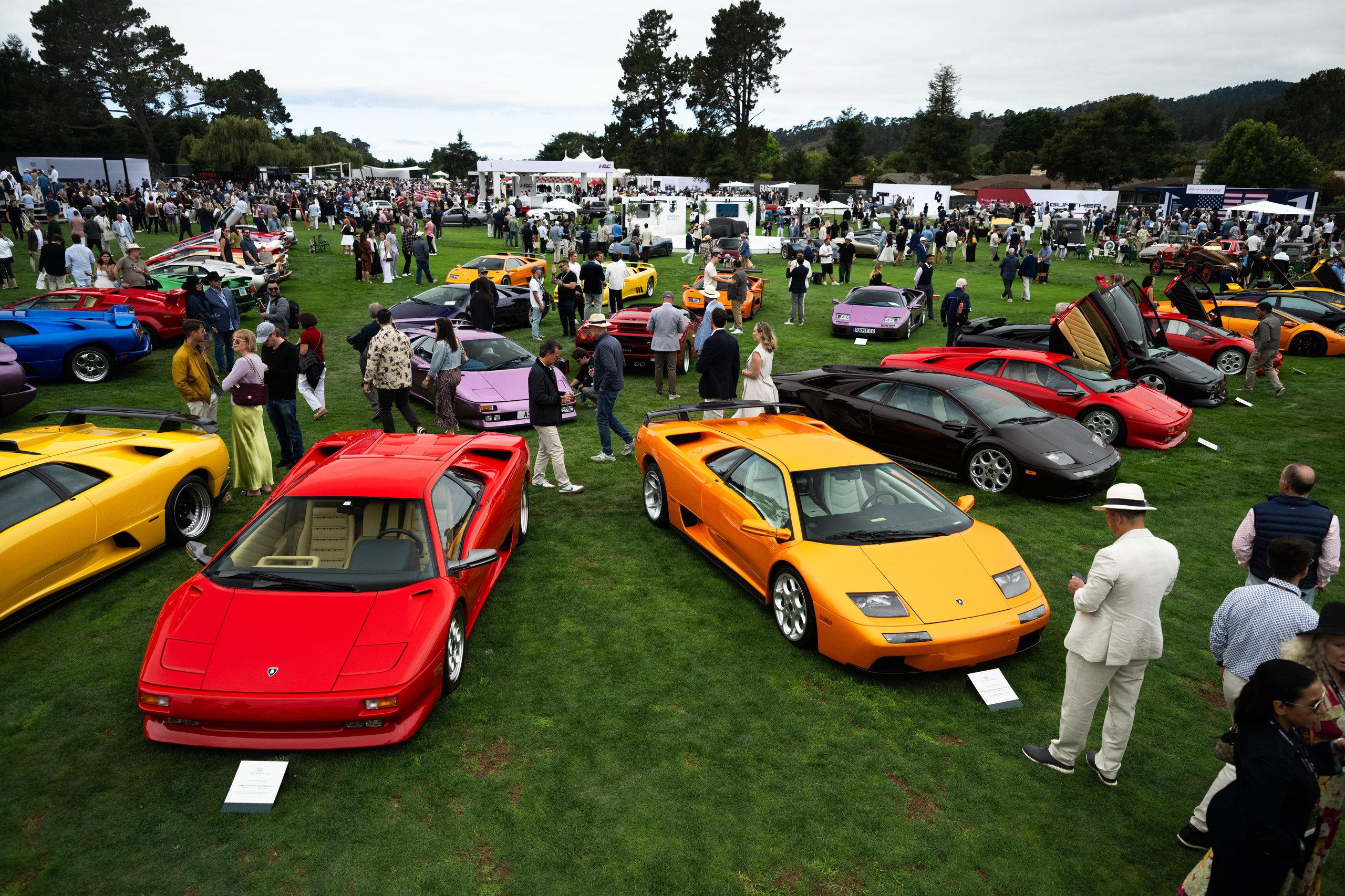
The Revuelto SV reflects 2026’s priorities: hybrid power management, race-derived electronic chassis control, and aerodynamic efficiency measured in percentages of downforce rather than subjective visual aggression. A dedicated Diablo class at The Quail, featuring 30 examples spanning 1994 to 2001, provided a deliberate visual timeline. Seeing a Diablo SV on the same lawn as the Revuelto SV makes the philosophical continuity obvious, even as the technical approach is almost unrecognizably different. The SV badge has always meant “the fastest version of our V12.” What changed is the tool used to get there.

A vibrant red Lamborghini Diablo with a striking yellow interior is showcased on the lush green lawn of an exclusive outdoor event. Image: Automobili Lamborghini.
Where This Leaves Buyers and Collectors
Lamborghini has not confirmed pricing for the Revuelto SV. One report indicates a starting price of $741,172, with optioned examples expected to exceed $1 million. For context, the standard Revuelto already commands significant secondary-market premiums, with some examples trading at roughly double their original price according to recent listings. A 1,963-unit production run, the number referencing Lamborghini’s founding year, suggests scarcity without the extreme rarity of a 63-unit special.
Deliveries are expected to begin in 2027 based on available reporting, though Lamborghini has not published a specific timeline. The car was privately shown to top VIP clients in June 2026, two months before the public debut, which suggests the allocation process is already well underway.
The competitive question is how the Revuelto SV stacks up against Ferrari’s track-focused V12 offerings. Ferrari’s 812 Competizione used a naturally aspirated V12 without hybrid assistance, relying on higher-revving combustion engineering for its performance gains. Lamborghini’s approach, keeping the V12 output constant and boosting electrical power, represents a fundamentally different philosophy about where performance comes from in 2026. Neither approach is objectively superior, but for Lamborghini, the hybrid path preserves the option of further electrical upgrades in future variants without redesigning the engine.
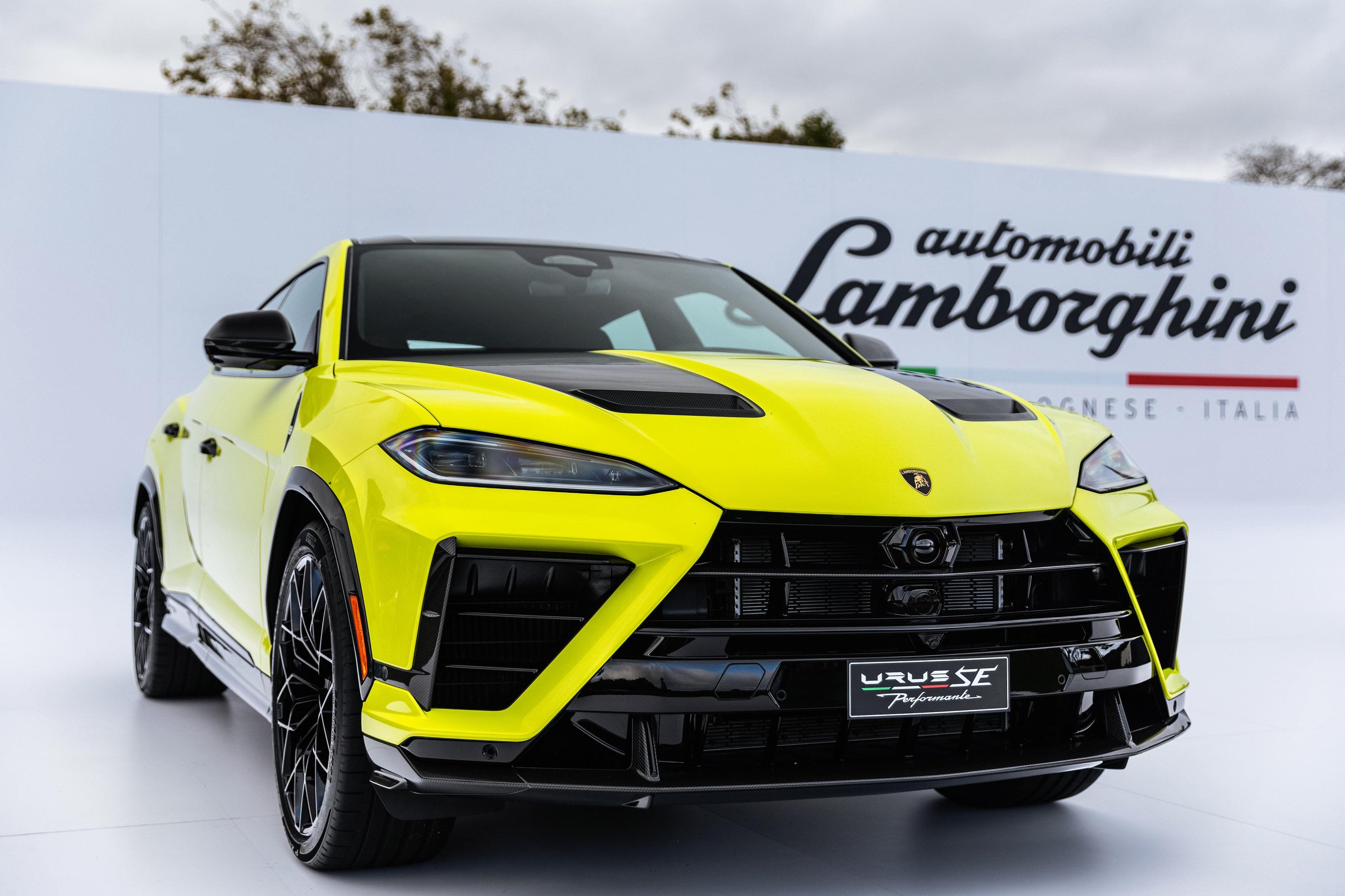
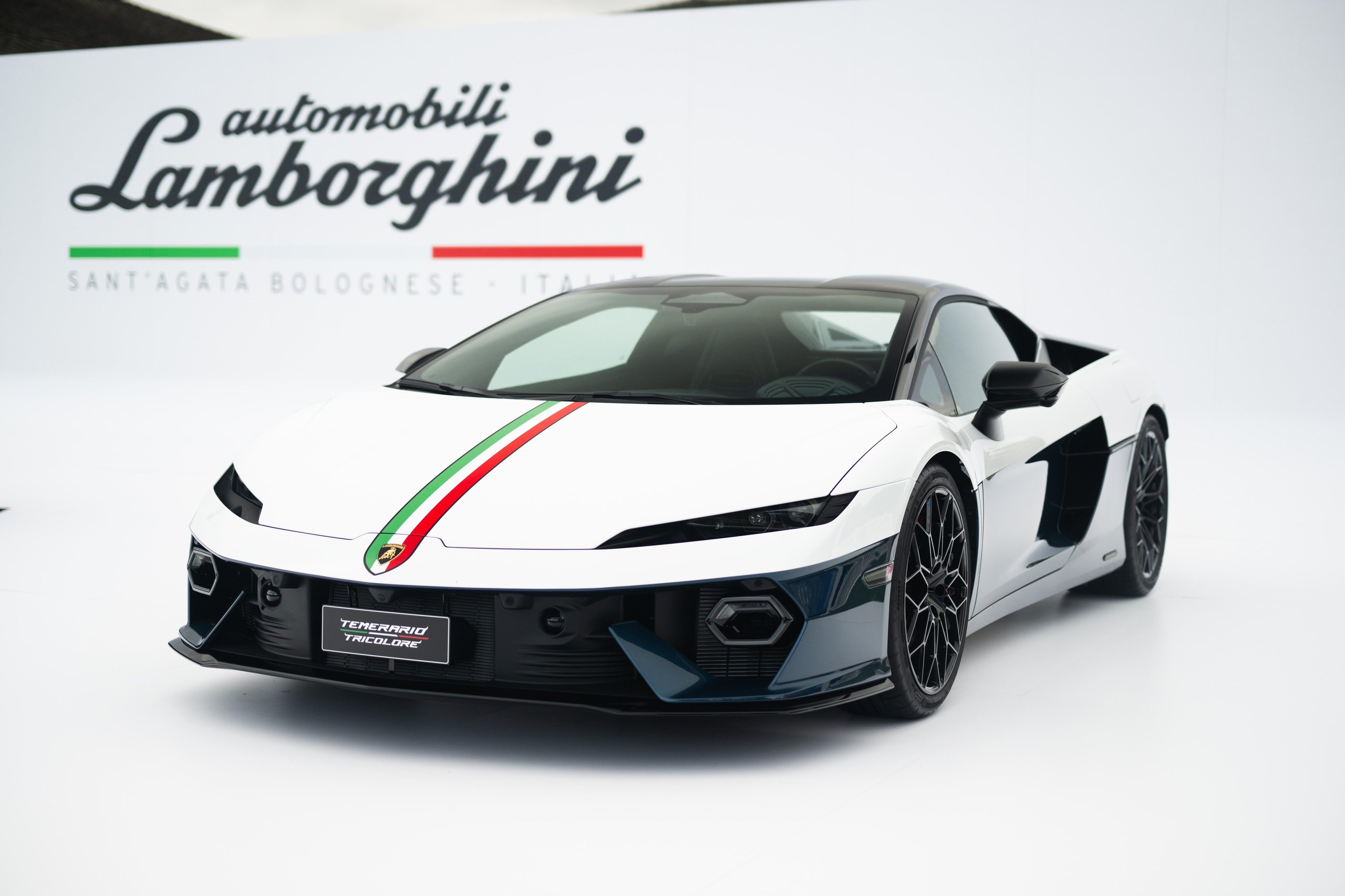
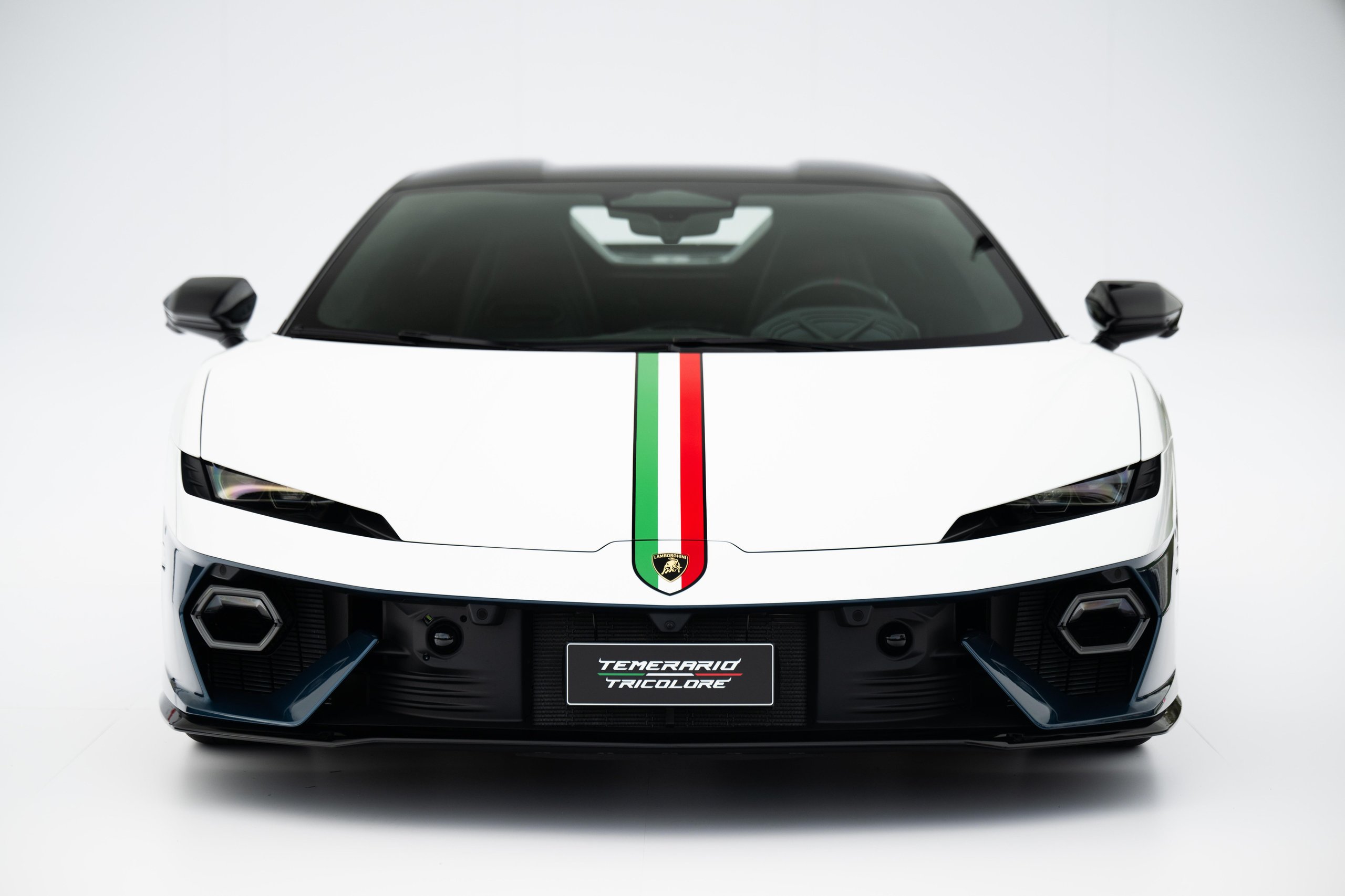
The Revuelto SV also shared its debut stage with the Temerario Tricolore, wearing an Italian-flag livery through Lamborghini’s Ad Personam program, and the Urus SE Performante, which Lamborghini positions as the fastest Super SUV in the world at 3.3 seconds to 62 mph. On Sunday, over 40 Miuras gathered at Pebble Beach to mark the model’s 60th anniversary, anchored by the Revuelto Miura 60° Homage limited to 99 examples. Taken together, the weekend was Lamborghini demonstrating that its V12 heritage and its electrified future are the same story, told at different engine speeds and, now, at different voltages.

The powerful front fascia of the Lamborghini Revuelto SV is showcased against a clean, branded backdrop. Image: Automobili Lamborghini.
Gallery