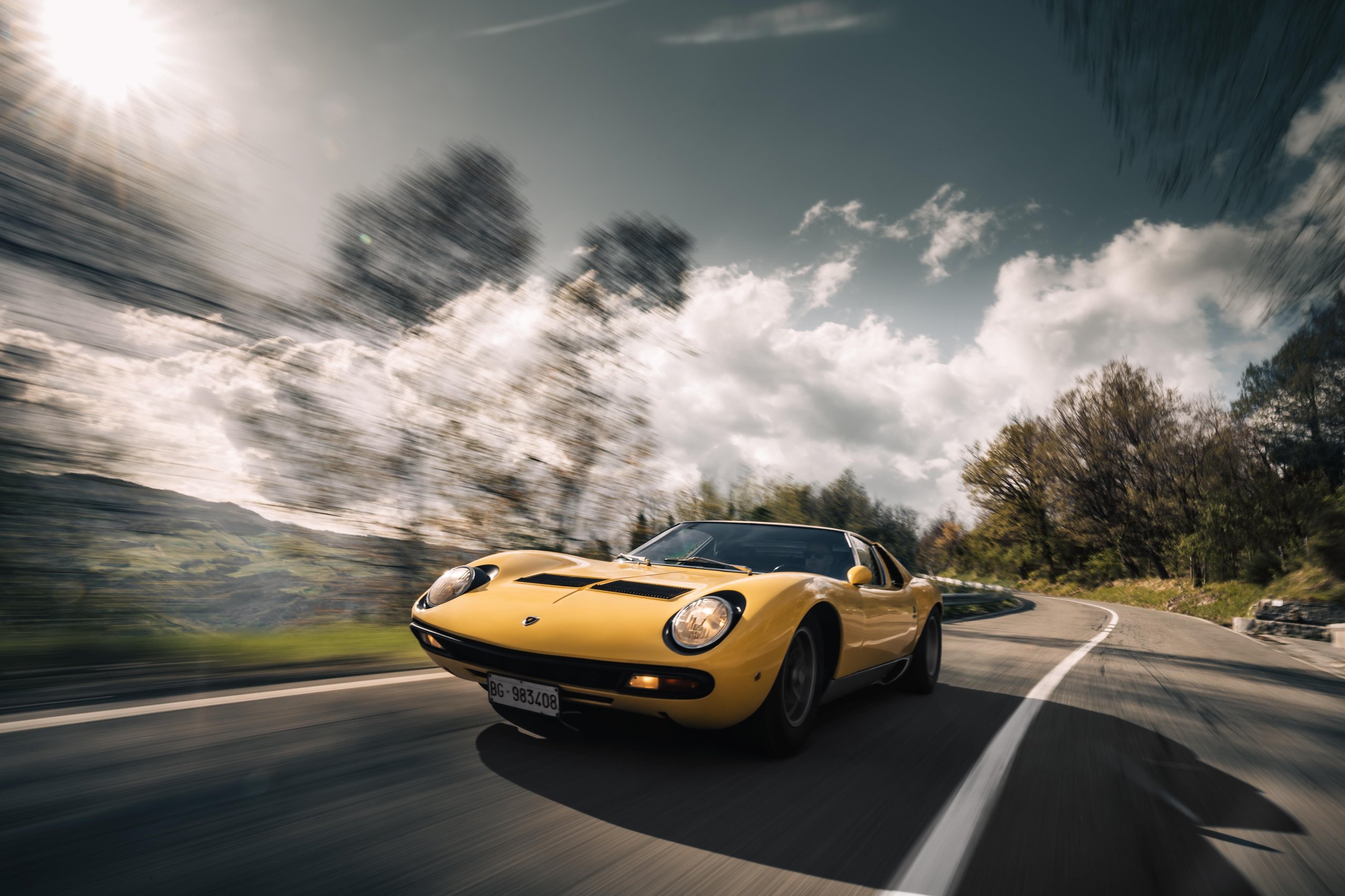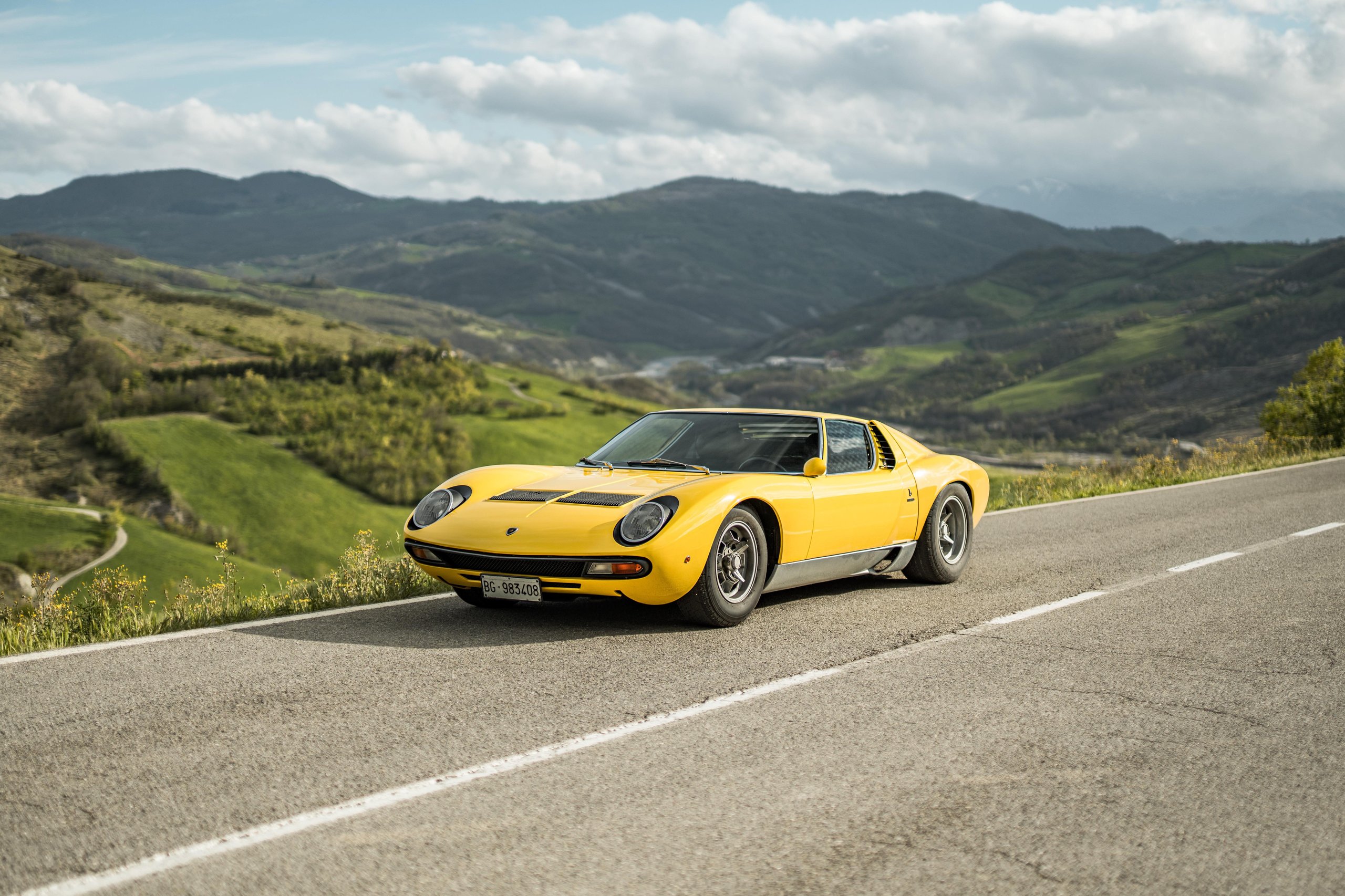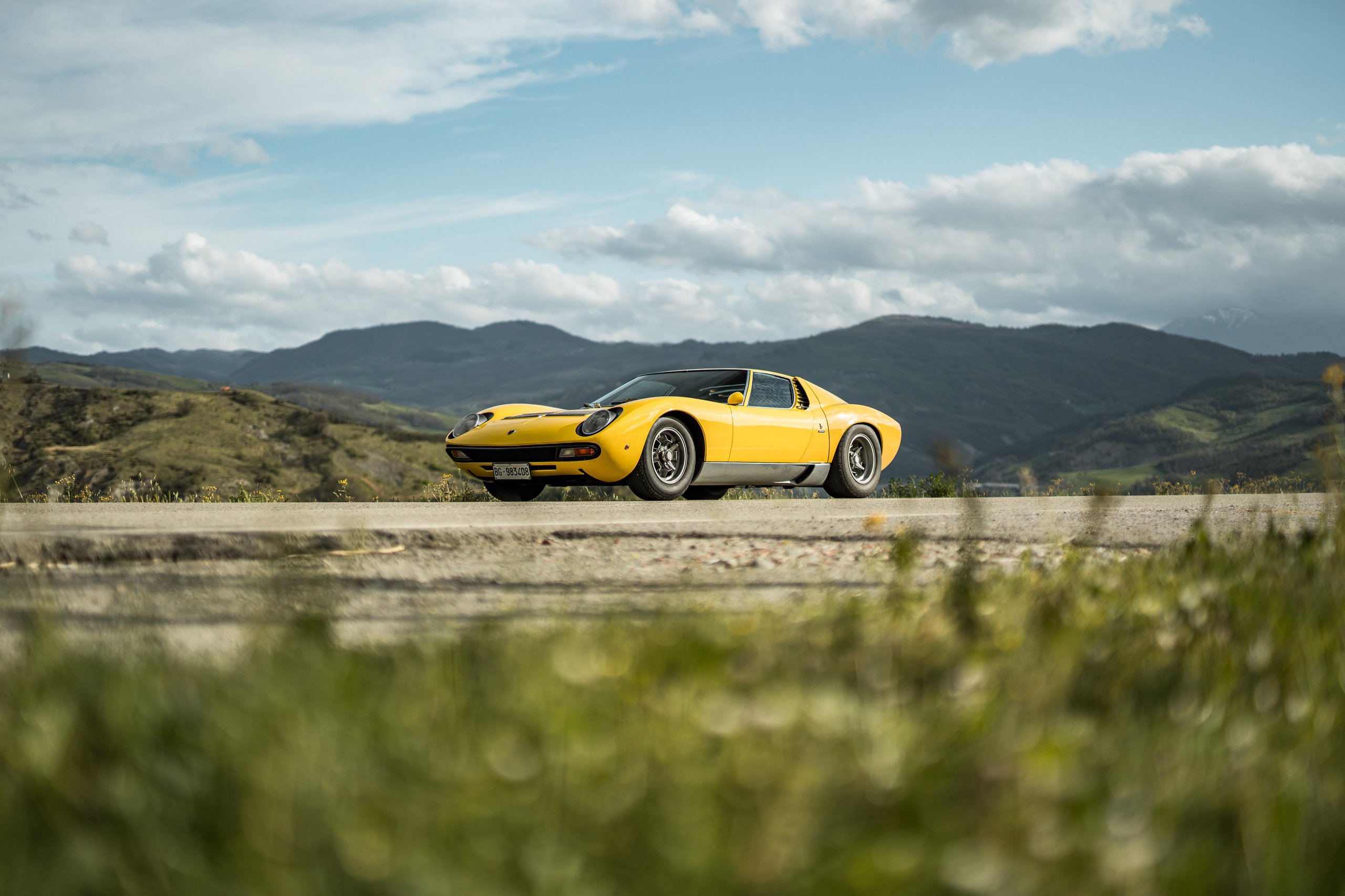
The 55-Year Milestone: Where ‘Super Veloce’ Was Born
Fifty-five years ago, Lamborghini did something that would shape the vocabulary of every V12 it built afterward. The Miura SV debuted in 1971, and with it came two letters that would reappear across decades of the brand’s most extreme creations: S and V. Super Veloce. Super fast.
The Miura itself, introduced as the P400 in 1966, already occupied a category of one. Its transversely mounted V12 ahead of the rear axle was a layout so radical it essentially invented the modern mid-engined supercar. The S variant followed in 1968 with incremental improvements. But the SV, which remained in production until 1973, was the version where Lamborghini’s engineers stopped refining a concept and started perfecting a philosophy. As Stephan Winkelmann, Chairman and CEO of Automobili Lamborghini, put it: “Super Veloce has always represented the purest interpretation of Lamborghini performance.”
The anniversary is worth examining closely not for nostalgia’s sake, but because every subsequent Lamborghini carrying those two letters, from the Diablo SV to the Aventador SVJ, traces its conceptual DNA directly to the decisions made in Sant’Agata Bolognese in 1971. The SV badge was never a trim level. It was a declaration of intent, and the thread it started remains unbroken.

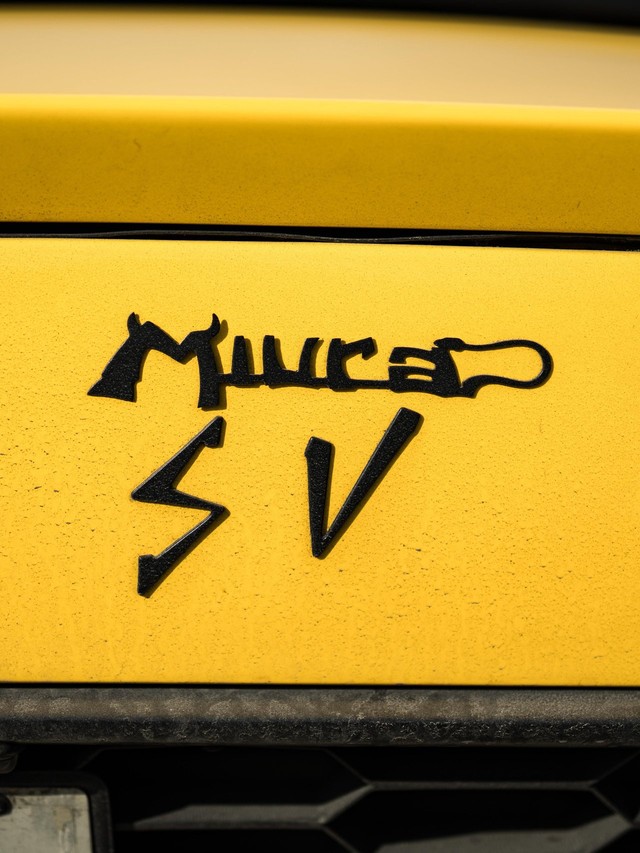
The distinctive 'Miura SV' badge proudly displayed on the rear of the classic yellow Lamborghini. Image: Automobili Lamborghini.
Engineering the Ultimate Miura: Solving Real Problems, Not Adding Stickers
The Miura SV‘s improvements read like a direct response to every complaint early Miura owners brought back to the factory. The original P400 and S variants were spectacular to drive but carried a serious engineering compromise: the engine and transmission shared a common oil circuit. Metal shavings from the gearbox could migrate into the engine’s lubrication. For a car with a 3.9-liter V12 spinning to nearly 8,000 rpm, this was not a theoretical concern.
Lamborghini’s solution was straightforward and expensive. Engineers separated the engine and transmission into independent oil circuits, a change Lamborghini says significantly improved the durability and reliability of both components. It sounds mundane next to horsepower figures, but for the people actually driving these cars hard, it was the single most meaningful upgrade in the Miura’s evolution, and it established the Super Veloce principle that would persist for decades: address the car’s real weaknesses, not just its headline numbers.
The chassis received equally purposeful attention. A widened rear track, revised suspension geometry, and stiffer overall tune arrived without sacrificing ride comfort. Lamborghini says these changes delivered noticeable stability at high speeds and more controlled handling. Ventilated disc brakes, powerful by early-1970s standards, improved deceleration. The SV’s 3.9-liter V12 produced 385 hp at 7,850 rpm and 388 Nm of torque at 5,500 rpm. Lamborghini says it reached 100 km/h from rest in under 5.5 seconds and exceeded 290 km/h flat out, making it one of the fastest production cars of its era.
Magneto magazine reports the SV’s output represented an increase of 35 bhp over the original P400 Miura. That gain came alongside wider rear fenders to accommodate larger tires, a detail that was functional before it was beautiful. At 1,245 kg, according to Lamborghini, the SV possessed a power-to-weight ratio most competitors simply could not match. Here was the template: less weight, more power, sharper focus. Every future SV would follow the same recipe.

The powerful V12 engine of the Lamborghini Miura SV is revealed in intricate detail. Image: Automobili Lamborghini.
The Face Without Eyelashes: Design as Engineering Statement
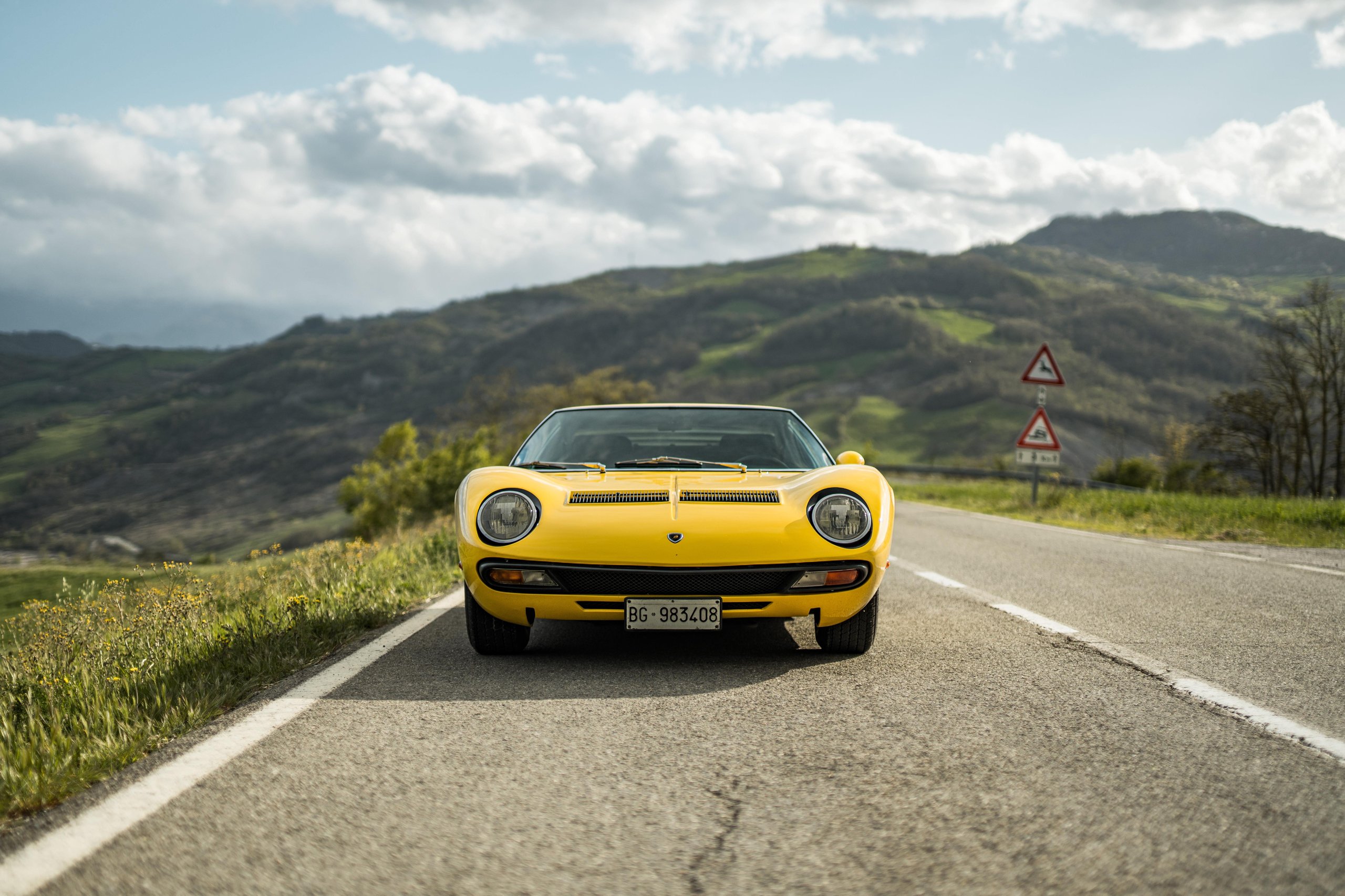
The easiest way to spot a Miura SV from across a parking lot is its face. Earlier Miuras wore delicate chrome “eyelashes” framing the headlights, a Marcello Gandini design detail that gave the car an almost feline expression. The SV dropped them entirely, producing a cleaner, more aggressive front end that visually telegraphed the mechanical seriousness underneath.
According to Magneto magazine, the decision was partly pragmatic: Ferruccio Lamborghini reportedly ordered the eyelashes removed to eliminate the time-consuming process of fitting them precisely during assembly. One report claims his personal SV was the sole exception, the only car to leave the factory with the original trim intact. Whether the motivation was production efficiency or aesthetics, the result became the defining visual signature of the ultimate Miura, and it reinforced a principle that would carry through every future SV: ornamentation yields to function.
The wider rear haunches completed the transformation. Those flared fenders were a direct consequence of the larger tires needed for the SV’s improved chassis, but they gave the car a stance that communicated purpose even standing still. Magneto describes the interior as more modern and better finished than earlier variants, with increased leather usage and chrome accents. Approximately 150 SVs were built during the production run, at an original price of 8,600,000 lire. A final one-off example was commissioned in 1975 by Canadian billionaire Walter Wolf, and that car now resides in Lamborghini’s Mudetec Museum in Sant’Agata.

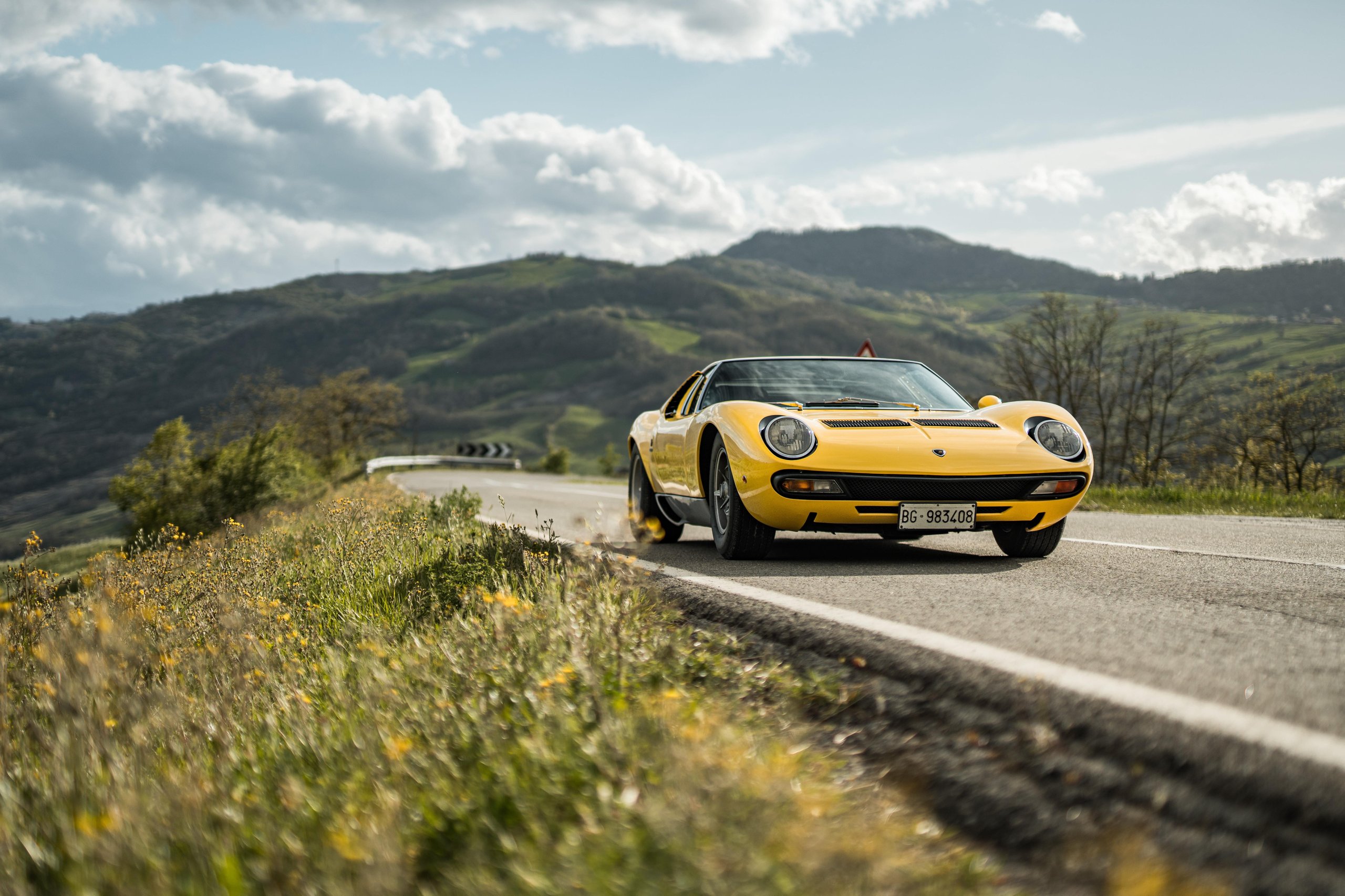
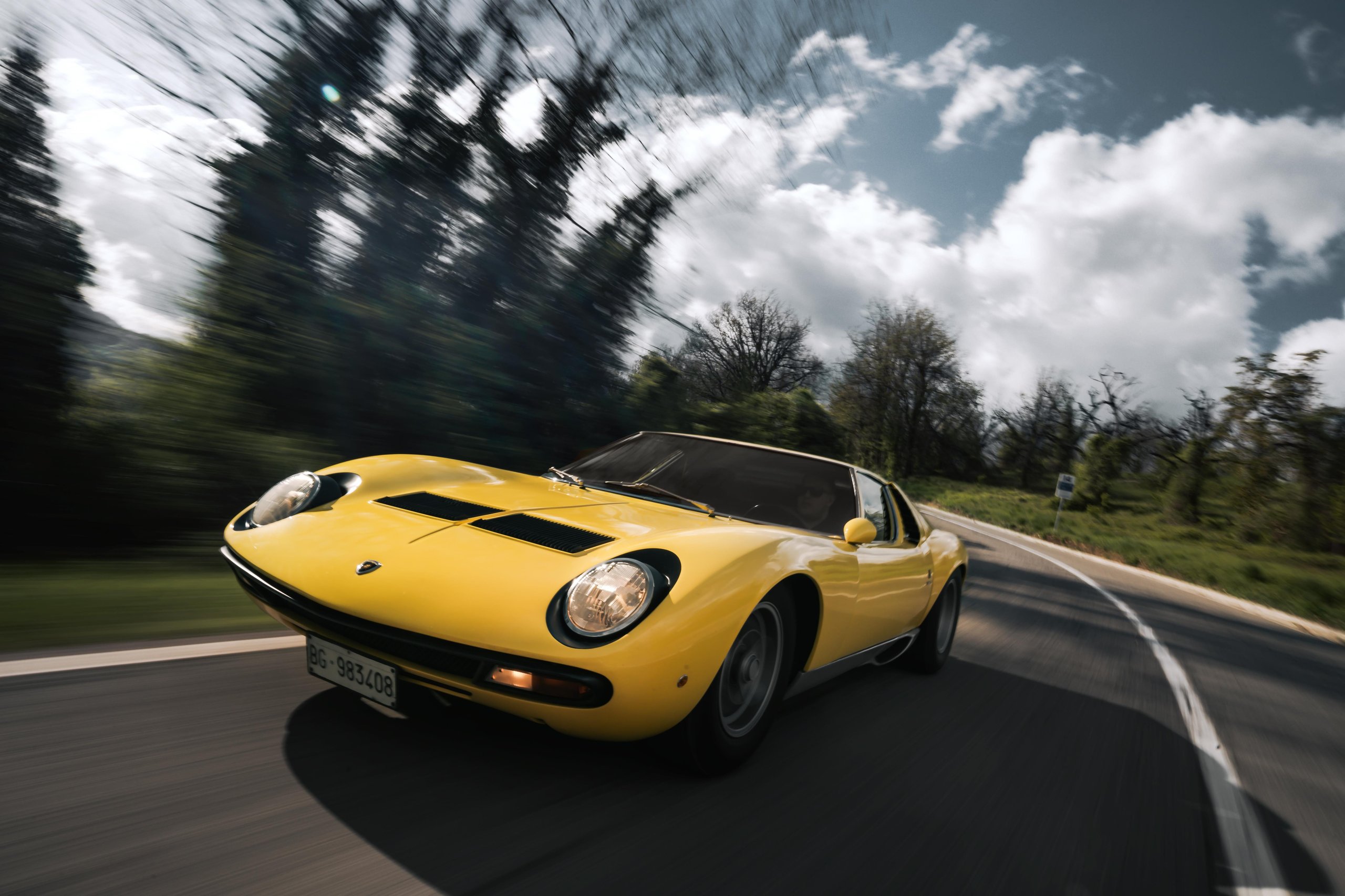
The striking yellow Lamborghini Miura SV commands attention, parked front and center on a scenic mountain road. Image: Automobili Lamborghini.
From V12 Purity to Hybrid Power: The Super Veloce Lineage
The SV badge disappeared from Lamborghini’s lineup for 24 years after the Miura. When it returned on the 1995 Diablo SV, the formula was instantly recognizable: strip weight, add power, sharpen the chassis. The Diablo SV delivered 510 hp from its V12, up from the standard car’s 492 hp, and was conceived as a lighter, harder driver’s machine. The Murcielago LP 670-4 SV carried the same ethos further, treating reduced mass and increased output as non-negotiable principles rather than marketing talking points.
The Aventador generation expanded the concept most aggressively. The Aventador SuperVeloce LP 750-4, announced at the 2015 Geneva Motor Show, pushed its V12 to 750 PS while cutting 50 kg through extensive carbon fiber usage. Aerodynamic downforce increased by 180 percent over the standard coupe, according to one report. The Aventador SVJ then added the Jota suffix and a Nurburgring Nordschleife lap record, cementing the SV lineage as Lamborghini’s answer to every competitor’s track-focused special edition. Through each generation, the underlying logic remained the one the Miura SV established: take the flagship, make it uncompromising.
What Ferrari does with its Pista and Speciale badges, what Porsche achieves with GT3 RS, Lamborghini accomplishes with Super Veloce. The difference is historical depth. Ferrari’s special-series naming conventions shift between generations. Porsche’s GT department operates almost as a separate entity. Lamborghini’s SV thread runs through a single, unbroken philosophy established in 1971. No exceptions.
The question collectors and enthusiasts are now asking is whether the SV badge will appear on a hybrid. Lamborghini’s current lineup is fully electrified: the Revuelto pairs a V12 with three electric motors, the Temerario combines a twin-turbo V8 with hybrid assistance, and the Urus SE Performante brings the performance-first approach to the SUV platform. Lamborghini has not confirmed an SV variant for any of these models. But the company’s own language around the anniversary, connecting the Miura SV’s philosophy to its “hybrid future,” suggests the designation is very much alive in planning conversations at Sant’Agata.

The striking rear of the yellow Lamborghini Miura SV, with its iconic louvers, is captured on a quiet road. Image: Automobili Lamborghini.
What Super Veloce Means for Lamborghini Owners Today
For anyone currently on a Revuelto or Temerario waiting list, the Miura SV anniversary is more than a history lesson. It is a signal about where the brand places its emotional center of gravity. Lamborghini could have commemorated the Miura broadly, celebrating the entire model line. Instead, it chose to spotlight the SV specifically, reinforcing the idea that the most extreme version is the one that matters most to the brand’s identity.
In the collector market, the Miura SV occupies a tier that reflects this status. Lamborghini has not published current valuations, but the combination of roughly 150 units produced and the car’s foundational role in the SV lineage makes it among the most sought-after classic Lamborghinis. Enthusiast forums consistently rank the SV as the most desirable Miura variant, and the fact that Lamborghini will never produce a modern reinterpretation of the Miura (the company confirmed this publicly, as Jalopnik reported) only deepens the original’s significance.
The practical takeaway for current buyers is this: if Lamborghini follows its own historical pattern, the most extreme versions of the Revuelto and Temerario are almost certainly coming. When they arrive, expect them to carry the same core recipe the Miura SV established 55 years ago. Less weight. More power. Sharper focus. And probably those two letters.

The classic manual gear shift and black leather console define the driver-focused interior of a Lamborghini Miura SV. Image: Automobili Lamborghini.
Gallery