The Miura SV Takes Top Honors at Villa d’Este 2026
A white 1971 Lamborghini Miura SV secured the class award in Class G at the 2026 Concorso d’Eleganza Villa d’Este, one of the most prestigious concours events in the world. The class, titled “From Carnaby Street to the Autostrada: The Swinging GT Driver,” celebrated the style-led grand tourers that defined the performance and cultural identity of the 1960s and 1970s. The timing carries real weight: 2026 marks sixty years since the Miura debuted at the 1966 Geneva Motor Show, a car that journalist L.J.K. Setright famously reviewed using the word “supercar” for the first time.
The winning car retains its original white exterior paintwork and blue leather interior, delivered on September 10, 1971, to the Italian market through the dealer Lamborauto Torino. Lamborghini says this particular SV is currently undergoing certification by Polo Storico, the company’s in-house heritage division. That detail matters more than it might seem at first glance. Concours judges at this level scrutinize provenance and authenticity as rigorously as they assess paint depth and panel gaps, and arriving at Villa d’Este with a Polo Storico certification in progress signals that the car’s history and originality can be traced back to the factory records in Sant’Agata Bolognese.
A 1974 Countach LP400 also competed in the same class, giving Lamborghini two entries in a field that pitted some of the era’s most desirable GTs against each other. The Miura won.
Sixty Years of the Car That Invented Its Own Category
The Miura first appeared as a bare rolling chassis at the 1965 Turin Motor Show, an audacious engineering exercise by Giampaolo Dallara, Paolo Stanzani, and test driver Bob Wallace, who developed the project largely in their spare time. Ferruccio Lamborghini preferred elegant grand tourers, but the mid-engine layout was too compelling to shelve. When Marcello Gandini at Bertone draped the chassis in one of the most beautiful bodies ever penned, the completed P400 prototype stopped the 1966 Geneva Motor Show cold. At the time of its release, the Miura was the fastest production car in the world.
What made it revolutionary was the transversely mounted 3.9-liter V12 sitting behind the cockpit, a layout borrowed from racing but applied to a road car for the first time at this level. That architecture kept the wheelbase short (2500mm across all iterations) and concentrated mass near the center of the car. The original P400 produced 350 PS. The more powerful Miura S followed in late 1968 with 370 bhp, and ventilated disc brakes became part of the specification by April 1970.
The SV, introduced in 1971, represented the final and most resolved evolution. Its 385 CV output was only part of the story. The chassis received further stiffening for improved torsional rigidity. Rear suspension pick-up points were relocated, new lower rear wishbones were installed, and wider rear wheels paired with the latest Pirelli tires. These changes addressed the earlier Miura’s tendency toward oversteer, a characteristic that, along with a front-mounted fuel tank that lightened the nose as it emptied, had made the car famously demanding at high speed. The SV was the Miura that Dallara and Stanzani always wanted to build, and sixty years on, it is the version that Villa d’Este judges chose to honor.

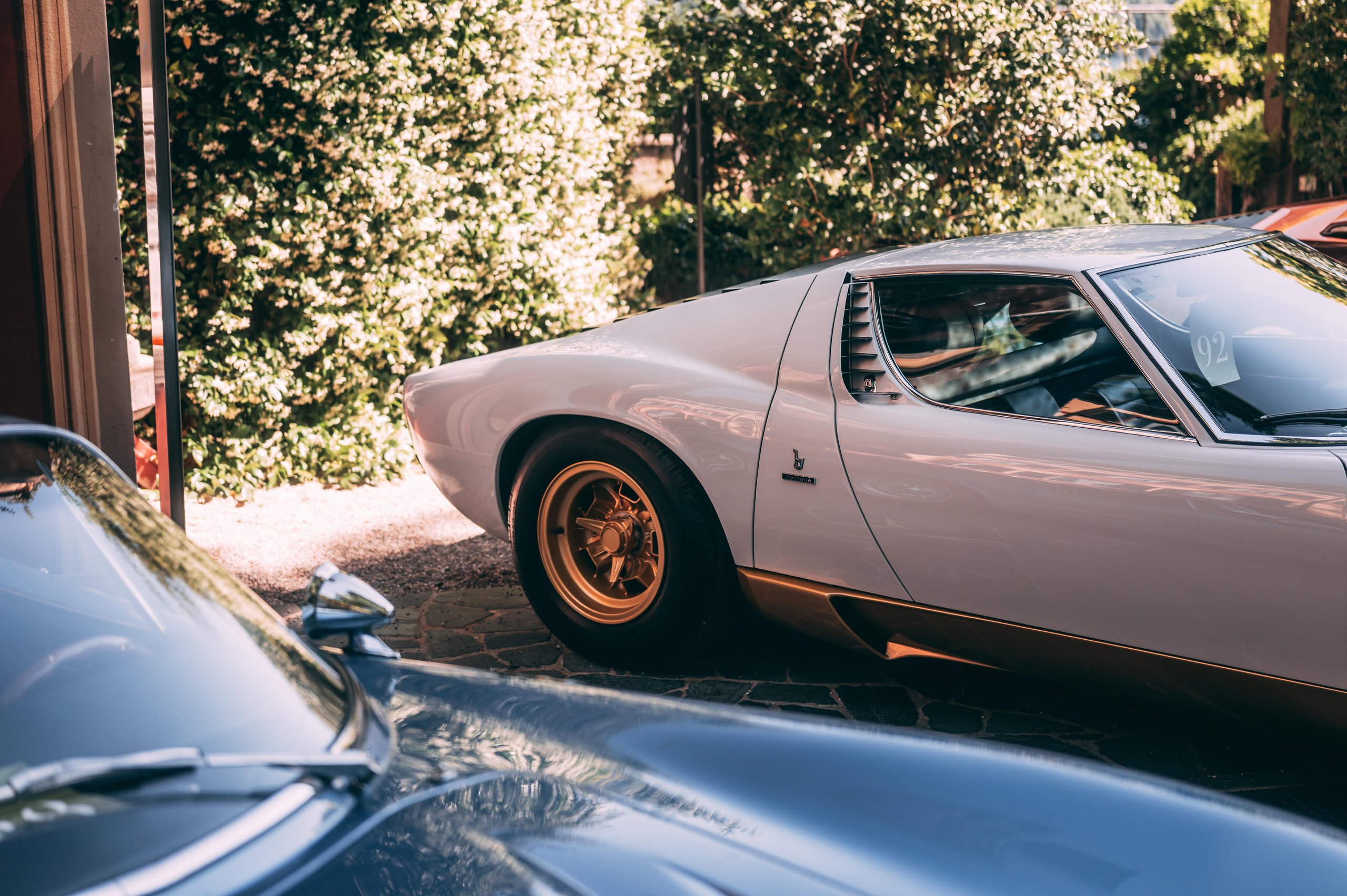
The distinctive gold wheels and elegant side profile of a Lamborghini Miura SV are highlighted in this detail shot. Image: Automobili Lamborghini.
Polo Storico: Why Factory Certification Shapes Collector Value
Lamborghini’s Polo Storico division occupies a space that every major Italian supercar manufacturer now considers essential. Ferrari runs Classiche, Porsche operates Porsche Classic, and each program exists for the same fundamental reason: as these cars appreciate into seven- and eight-figure territory, buyers need ironclad provenance. A factory stamp confirming that a car’s components, paint, and configuration match original build records can meaningfully affect both auction results and concours eligibility.
Giuliano Cassataro, Head of After Sales at Automobili Lamborghini, framed the Villa d’Este showing as validation of this approach:
“The presence at Villa d’Este of Lamborghinis certified or undergoing the certification process through Polo Storico is a source of great pride. Our mission is to preserve and enhance the brand’s historic heritage, supporting clients and collectors in maintaining the authenticity of their cars.”
Lamborghini says Polo Storico certification is becoming increasingly requested to complement the documentation accompanying vehicles at the world’s leading concours events. The practical implication for collectors is straightforward: if you own a classic Lamborghini and plan to show it, sell it, or insure it at its full value, factory certification is no longer optional. It is the baseline expectation. Lamborghini has not publicly detailed the cost or timeline for Polo Storico certification, but the program’s growing visibility at events like Villa d’Este suggests the company is investing in capacity to meet rising demand.

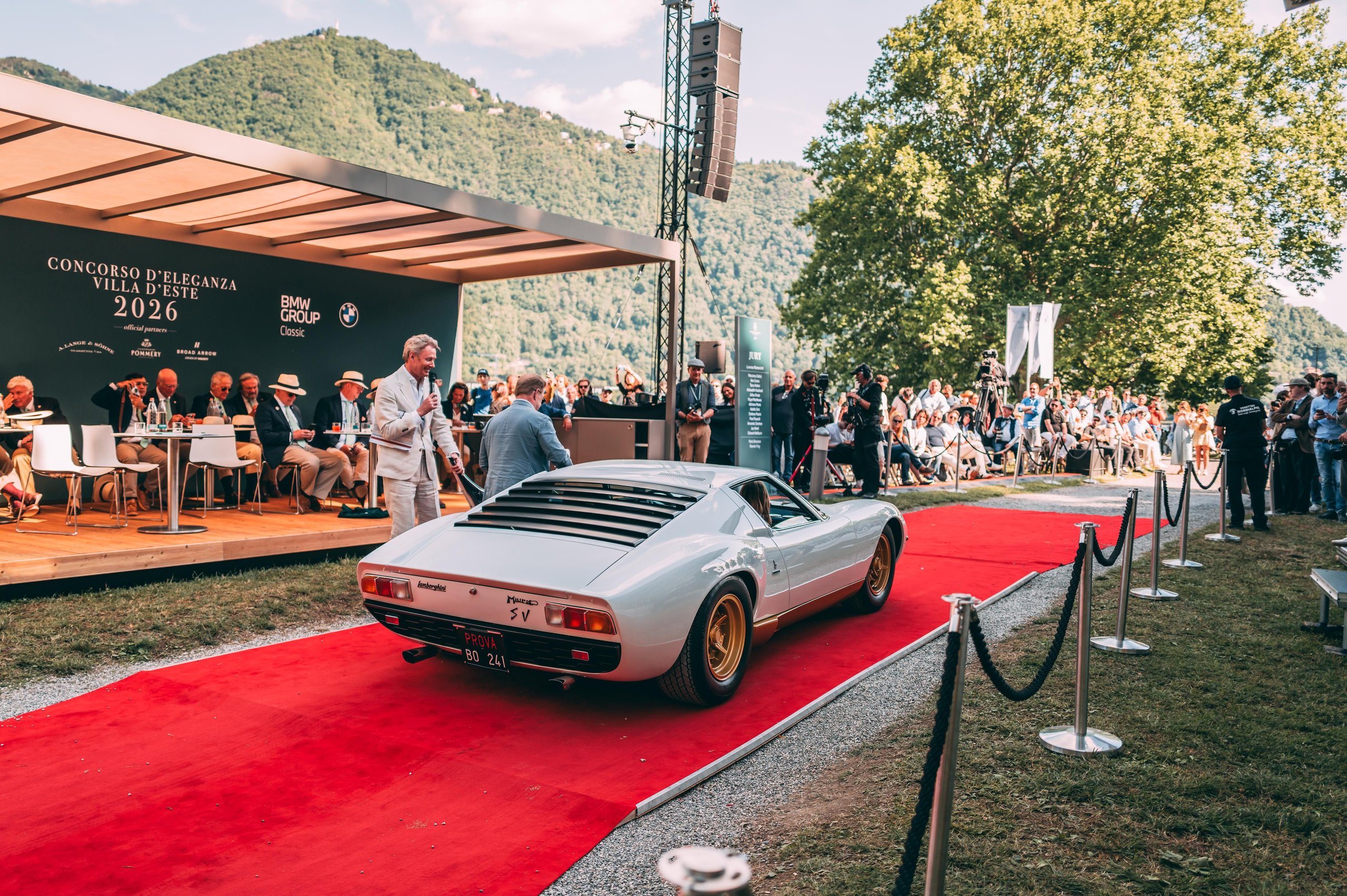
The distinctive rear design of the Lamborghini Miura SV, complete with its iconic badging and louvers. Image: Automobili Lamborghini.
The Swinging GT Driver: What the Class Theme Reveals
Villa d’Este class themes are never accidental. “From Carnaby Street to the Autostrada” frames the GT cars of the 1960s and 1970s not just as machines but as cultural artifacts, products of an era when performance, fashion, and personal expression converged. The Miura fits that narrative with almost eerie precision. It was a car bought by rock stars, industrialists, and racing drivers who wanted something that looked as fast standing still as it did at 170 mph. Gandini’s design for Bertone captured that mood so completely that the Miura remains, six decades later, one of the most instantly recognizable shapes in automotive history.
For the Miura to win this particular class, against competitors from marques that also defined the swinging GT era, reinforces something Lamborghini enthusiasts already know but outsiders sometimes underestimate: the Miura was not merely a fast car. It was the car that proved a mid-engine road car could be beautiful, desirable, and culturally significant all at once. Every mid-engine supercar that followed, including every V12 Lamborghini from the Countach to the Revuelto, traces its conceptual DNA back to what Dallara, Stanzani, and Gandini created in 1966.

A classic Lamborghini Miura SV gracefully navigates a cobblestone path at a sun-drenched outdoor event. Image: Automobili Lamborghini.
The Ninth Countach Ever Built Tells Its Own Story
The 1974 Countach LP400 that competed alongside the Miura deserves more than a footnote. As the first production evolution of the Countach, the LP400 represented one of the purest interpretations of Gandini’s radical design, equipped with a rear longitudinally mounted 4.0-liter V12. Lamborghini says the LP400 delivered 375 CV and exceeded 300 km/h.
This specific car was delivered on October 1, 1974, to the French market through dealer Thepenier. Its “Marrone” over “Naturale” color combination makes it a one-of-one factory specification. During a recent restoration, the original paint was discovered beneath layers applied over the years, confirming the car’s authentic color. That kind of forensic detail is exactly what Polo Storico exists to document, and it underscores the same thesis the Miura’s win illustrates: at the highest levels of the collector car world, provenance verified by the factory is the currency that matters most.
The Countach LP500 prototype, which debuted at the 1971 Geneva Motor Show, reportedly overshadowed the Miura SV’s own debut that same year. The production LP400 that followed carried that radical promise into reality, and seeing the ninth example ever made at Villa d’Este, freshly restored with its original paint confirmed beneath decades of subsequent layers, connects the Countach’s origin story to the present in a way that few surviving examples can. Collectors tracking early-production Countachs know these clean-body LP400s occupy a different tier than later, wing-laden versions, and single-digit production numbers with unique factory colors make provenance documentation through Polo Storico especially valuable.

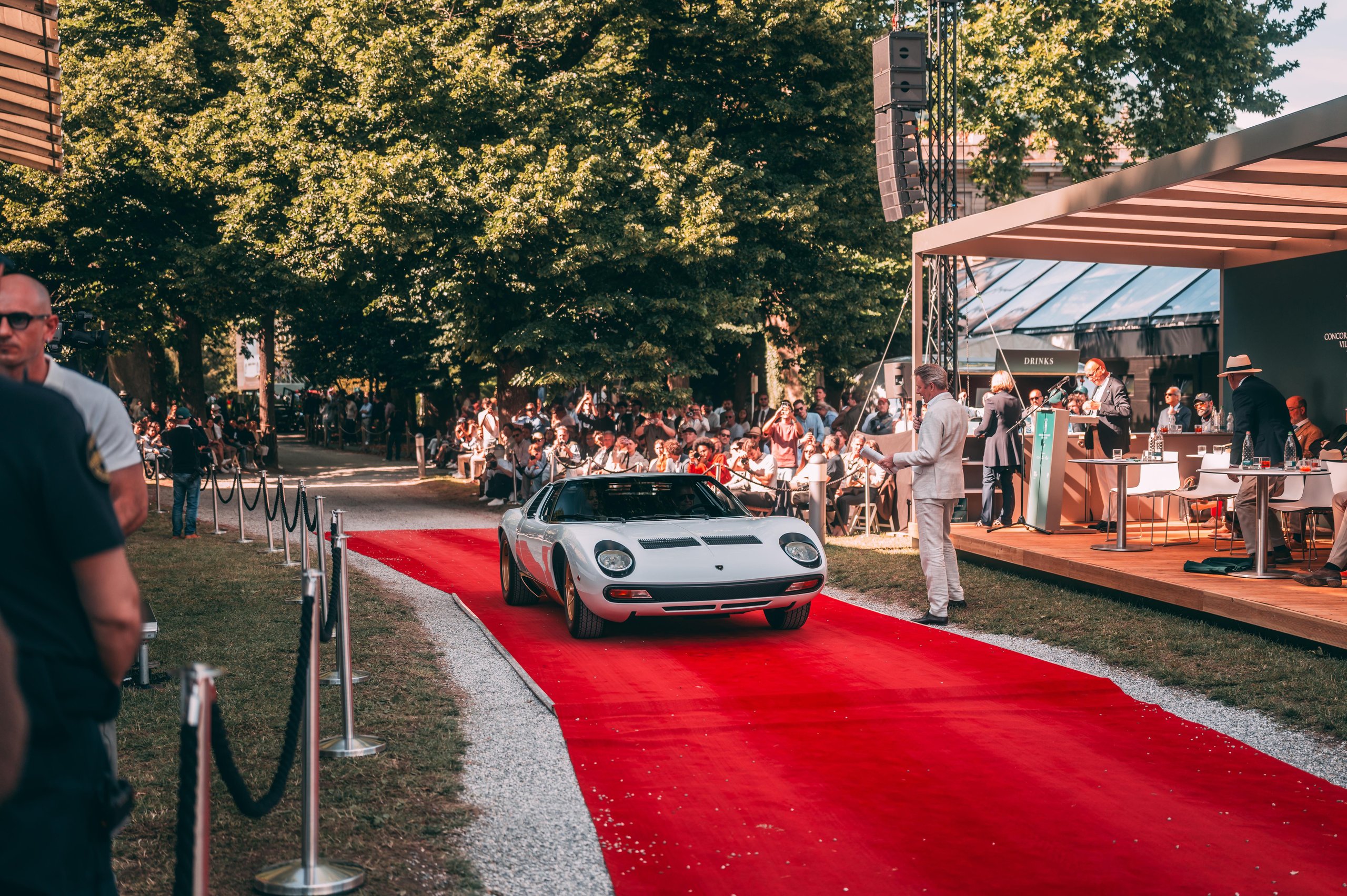
A pristine Lamborghini Miura SV is proudly displayed on a red carpet, drawing attention from event attendees. Image: Automobili Lamborghini.
What This Means for Collectors and Classic Lamborghini Owners
A Villa d’Este class win does not change the Miura’s market position; it was already among the most valuable and sought-after classic supercars in the world. What the 2026 result does is reinforce the growing importance of manufacturer-backed heritage programs in the concours circuit. Judges, buyers, and insurers increasingly treat factory certification as a prerequisite rather than a bonus. For Lamborghini owners who have not yet engaged with Polo Storico, this is a practical signal: the program is becoming the standard documentation expected at the highest levels of collector car competition.
Lamborghini has not disclosed specific pricing or wait times for Polo Storico certification. What the company confirms is that the program covers historical research, parts authentication, and conformity documentation. For owners of Miuras, early Countachs, and other classic models, the practical takeaway is clear: if you plan to show, sell, or pass down a significant classic Lamborghini, engaging with Polo Storico sooner rather than later is worth serious consideration.
The Miura turned sixty this year. It won at Villa d’Este in original white paint over blue leather, with factory records tracing it back to a specific dealer in Torino on a specific September day in 1971. That level of documented authenticity is what separates a beautiful old car from a concours winner.

The striking rear of a Lamborghini Miura SV commands attention amidst a bustling outdoor event. Image: Automobili Lamborghini.
Gallery