A Year-Long Birthday Party, from Suzuka to Bologna
Lamborghini staged its 60th birthday not as a single gala but as a rolling, continent-spanning calendar designed to put owners and their cars at the center of the celebration. The program kicked off in January with the reopening of a newly renovated Lamborghini Museum in Sant’Agata Bolognese, anchored by an exhibition titled “The Future Began In 1963.” From there the company moved to Japan, where “Lamborghini Day Japan” brought enthusiasts together at Suzuka. On April 29, “Lamborghini Day UK” gathered over 380 Lamborghinis at Silverstone, a turnout that speaks volumes about the depth of the British owner community. A Lamborghini Day event in Chengdu, China, drew over 200 customers and enthusiasts, while the four-day Esperienza Giro China covered more than 800 kilometers across western Sichuan Province with nearly 40 super sports cars and super SUVs.
The headline event sits on the Italian calendar: the “60th Anniversary Giro” tour launches May 24 and winds through Italy before culminating on May 28 in Piazza Maggiore in Bologna with a public Concours d’Elegance. Lamborghini says more than 150 cars are expected. For anyone who remembers the Grande Giro that marked the 50th anniversary in 2013, the format will feel familiar, but the scale keeps growing. That earlier celebration produced the Veneno and the Aventador LP720-4 50° Anniversario. The question for 2023 is what collectible hardware emerges this time around.

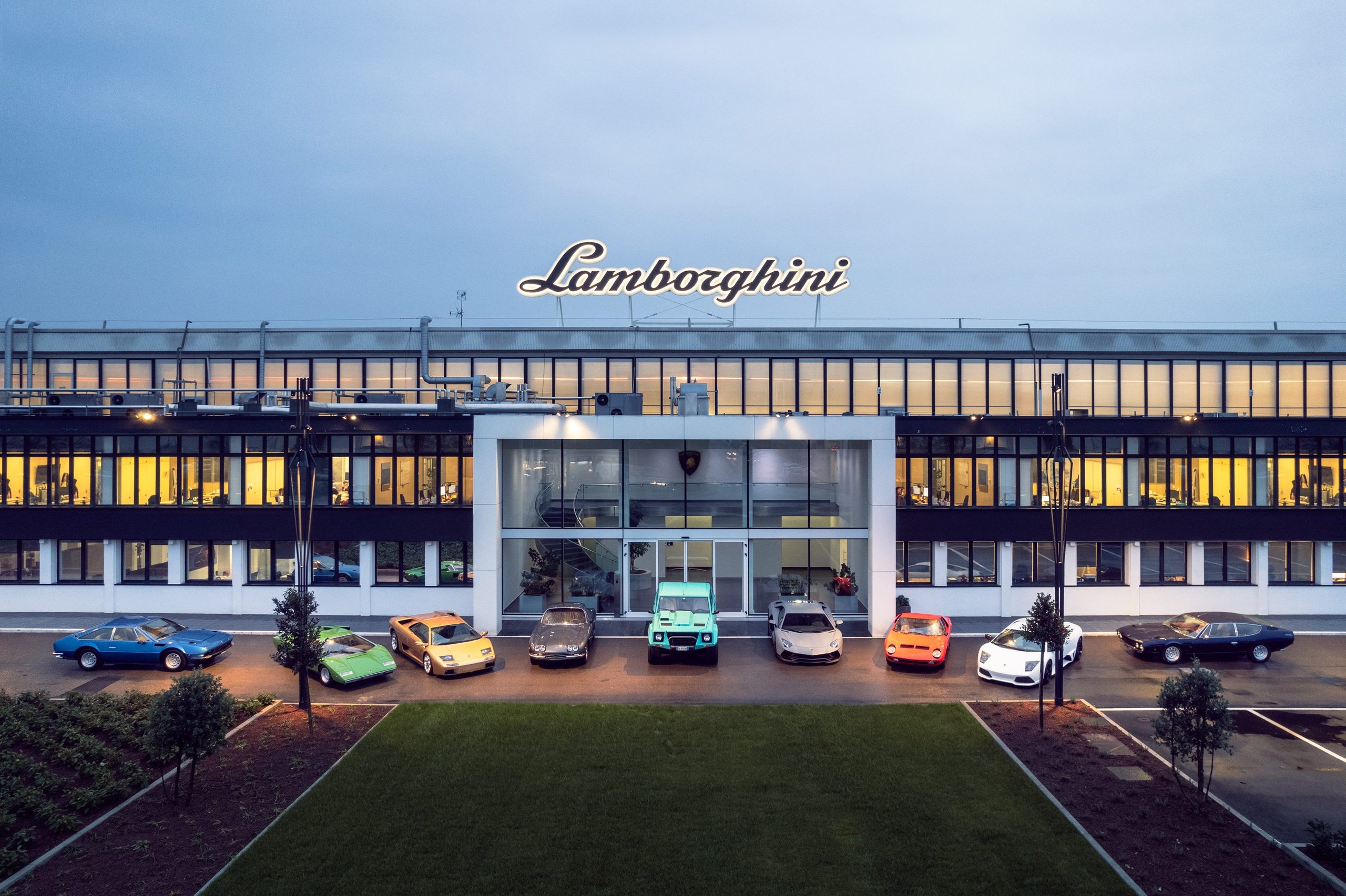
A stunning lineup of classic Lamborghini models graces the front of the historic factory building.
Why Owner Events Are Lamborghini’s Sharpest Competitive Weapon
Strip away the champagne and photo ops, and these anniversary gatherings serve a strategic purpose. Every one of those 380 cars at Silverstone or 150 expected in Bologna functions as a rolling showroom, visible to thousands of spectators who might never set foot in a dealership. Ferrari leans heavily on its racing pedigree and Cavalcade tours; McLaren runs its own track days and ownership experiences. Lamborghini’s approach blends both: public spectacle with the intimacy of a club rally.
The company now employs over 2,000 people and delivered 9,233 cars in 2022, according to its own figures. Those numbers represent a manufacturer that sold roughly a quarter of what Ferrari moved in the same period, yet commands comparable cultural presence. Concentrating owners in photogenic locations, from Suzuka’s circuit to Bologna’s medieval piazza, reinforces a brand identity that punches well above its volume. For prospective buyers watching from the sidelines, the message is unmistakable: buy a Lamborghini and you gain entry to a global community that actually shows up. That buyer-community loop is difficult for any competitor to replicate quickly, because it depends on decades of accumulated enthusiasm rather than a marketing budget.
The 60-Unit Salute: Huracan STO and Tecnica Anniversary Editions
Lamborghini answered the collectibility question with two special-edition Huracans, each limited to exactly 60 units. The Huracan STO 60th Anniversary keeps the race-derived STO formula intact: a 5.2-liter naturally aspirated V10 producing 640 horsepower, rear-wheel drive, and aerodynamics derived from Squadra Corse competition cars. Lamborghini says it reaches 100 km/h in 3.0 seconds, with a top speed of 310 km/h. One example surfaced in Grigio Telesto over a Nero Cosmus interior, listed at $551,950.
The Huracan Tecnica 60th Anniversary Edition shares the same 640-horsepower V10 but wraps it in the Tecnica’s slightly more road-biased package, with one source reporting a 0-60 mph time of 2.8 seconds. A particularly striking example wears Bianco Asopo paint with Verde Viper accents, a color combination that signals the Ad Personam department earned its keep on this project.
The production cap matters. The 2013 Veneno, limited to just three customer cars plus one for the museum, became an instant million-dollar legend. These anniversary Huracans occupy a different tier of scarcity: rare enough to be genuinely collectible but numerous enough that a determined buyer with the right dealer relationship could theoretically secure one. For anyone who missed the boat, secondary-market premiums on limited V10 Lamborghinis tend to climb steadily, particularly once the naturally aspirated era officially closes with the Huracan’s retirement.
From Tractors to Supercars: The Founding Story That Still Defines the Brand
Automobili Ferruccio Lamborghini S.a.s. came into existence on May 7, 1963. The founding mythology is well-worn but worth revisiting: a successful tractor manufacturer, dissatisfied with the grand tourers available to him, decided to build something better. That act of industrial defiance against established Italian sports car makers set a tone the company still trades on six decades later.
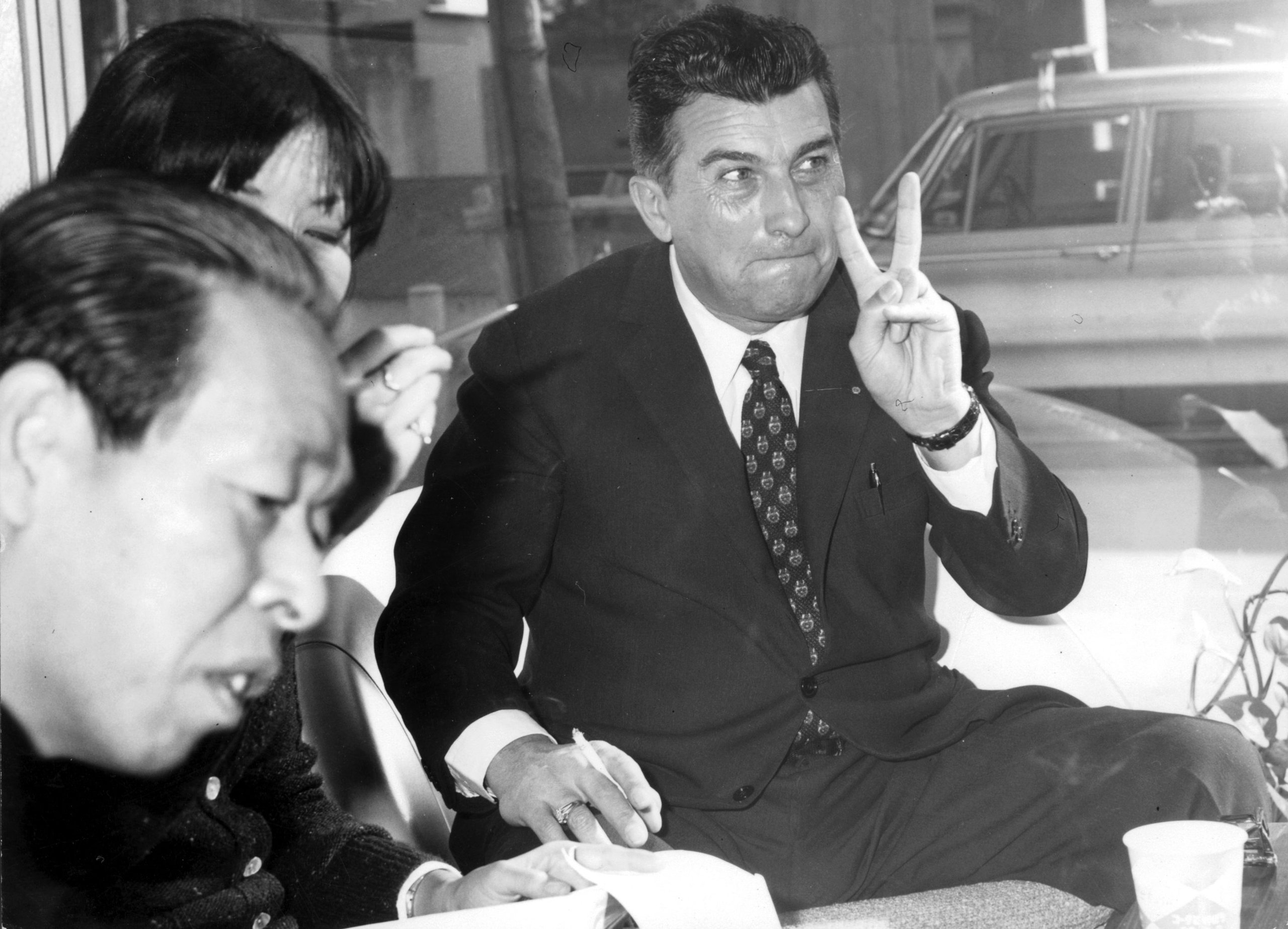
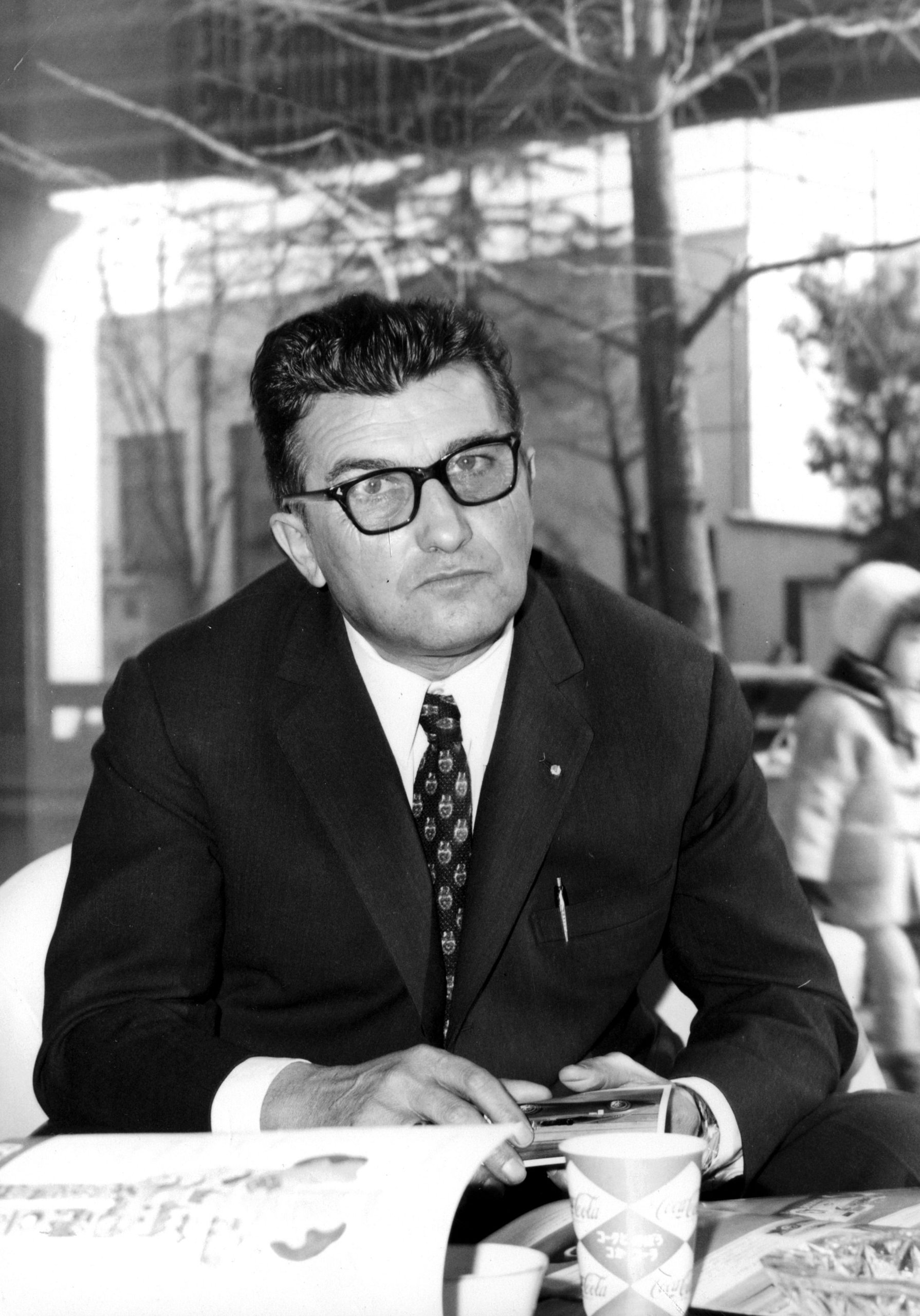
One black-and-white photograph from the company archive captures the duality perfectly: Ferruccio Lamborghini leaning against an Islero, a Lamborghini tractor parked to his right, the factory wall behind them both. Agricultural machinery funded the ambition. The 350 GT came first, an elegant front-engined grand tourer. Then the Miura redefined what a sports car could be by putting a V12 behind the driver. The Countach turned the poster-car concept into a cultural phenomenon. Each generation pushed further from Ferruccio’s original GT formula while somehow remaining faithful to his core idea: build the car you actually want to drive, and make it impossible to ignore.
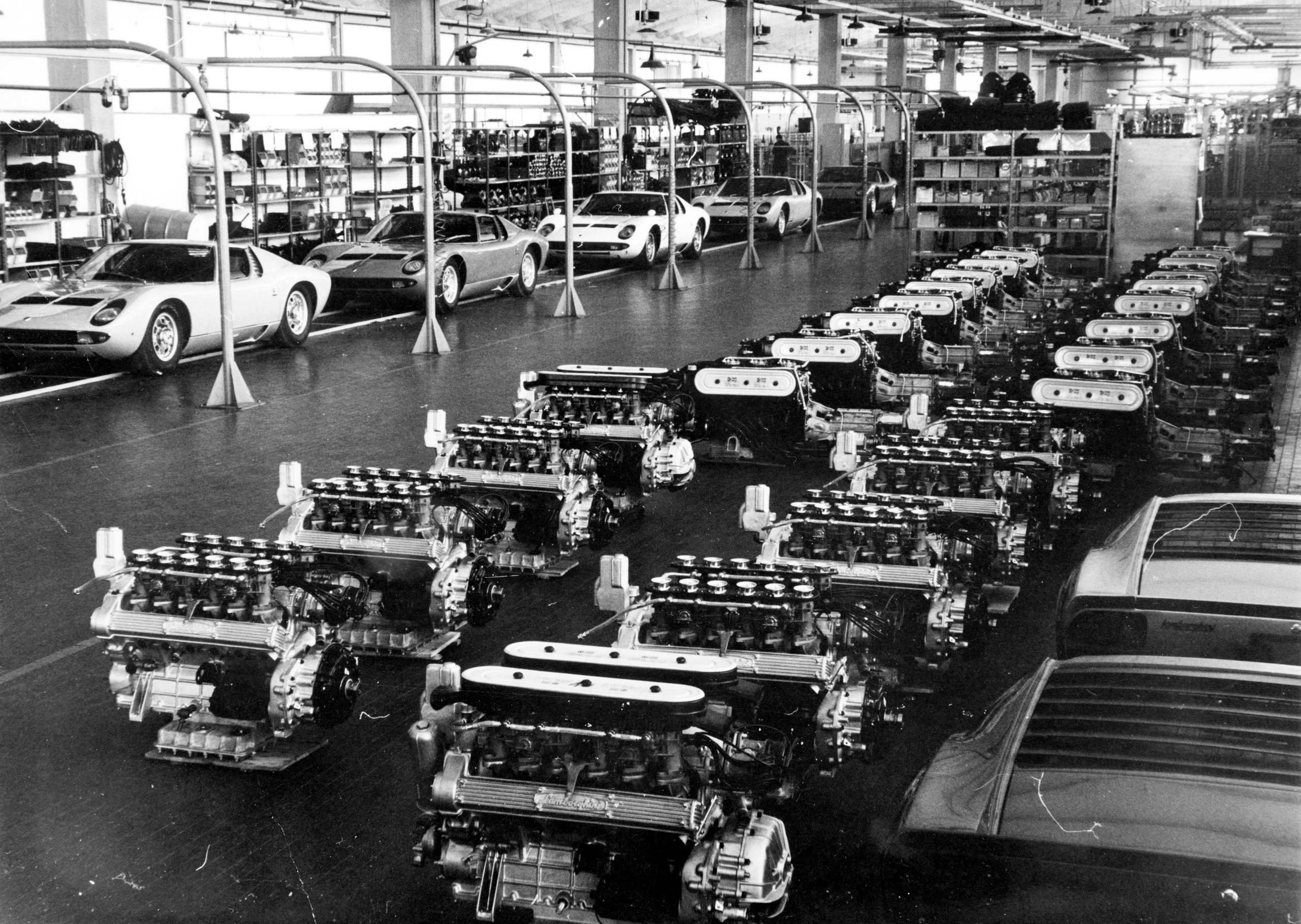
Factory floor photographs from that early era show rows of V12 engines in various stages of assembly, with Miura, Espada, and Islero chassis visible in the background. Production volumes were tiny. The entire operation ran on craftsmanship and conviction. What changed over six decades is scale and corporate backing (Volkswagen Group’s Audi division now owns the company), but the product philosophy remains recognizable.

Ferruccio Lamborghini poses confidently between a sleek Islero and a robust Lamborghini tractor, showcasing his diverse automotive legacy.
What the 60th Anniversary Signals About Lamborghini’s Next Chapter
Anniversary celebrations are inherently backward-looking, but the timing of this one carries forward implications. The Huracan, the platform honored by both 60th Anniversary editions, is approaching the end of its production life. Its replacement, the Temerario, adopts a twin-turbocharged V8 with hybrid assistance, marking the end of the naturally aspirated V10 in Lamborghini’s lineup. The V12 flagship already made the same transition with the Revuelto’s hybrid powertrain.
Choosing the Huracan STO and Tecnica as the anniversary vehicles reads as a deliberate farewell to a specific era of Lamborghini performance. Buyers who care about naturally aspirated engines and the mechanical directness they provide should pay attention: these 120 cars represent some of the final expressions of that philosophy in new-car form. Car and Driver recently reported that Lamborghini plans to return to its roots with a new two-door GT, a move that would echo Ferruccio’s original 350 GT vision. The anniversary, then, functions as both a celebration and a pivot point: acknowledging what the brand built while signaling where it intends to go.
For LamboCars readers watching the collector market, the practical takeaway is straightforward. Limited-production, naturally aspirated V10 Lamborghinis from the final generation of the Huracan are likely to appreciate. The 60th Anniversary editions, with their documented scarcity and commemorative significance, sit at the top of that list.

Three generations of Lamborghini excellence, from the classic 400 GT to the futuristic Sian, stand proudly together.
Gallery