Maiden DTM Victory at Oschersleben: Bortolotti and GRT Deliver
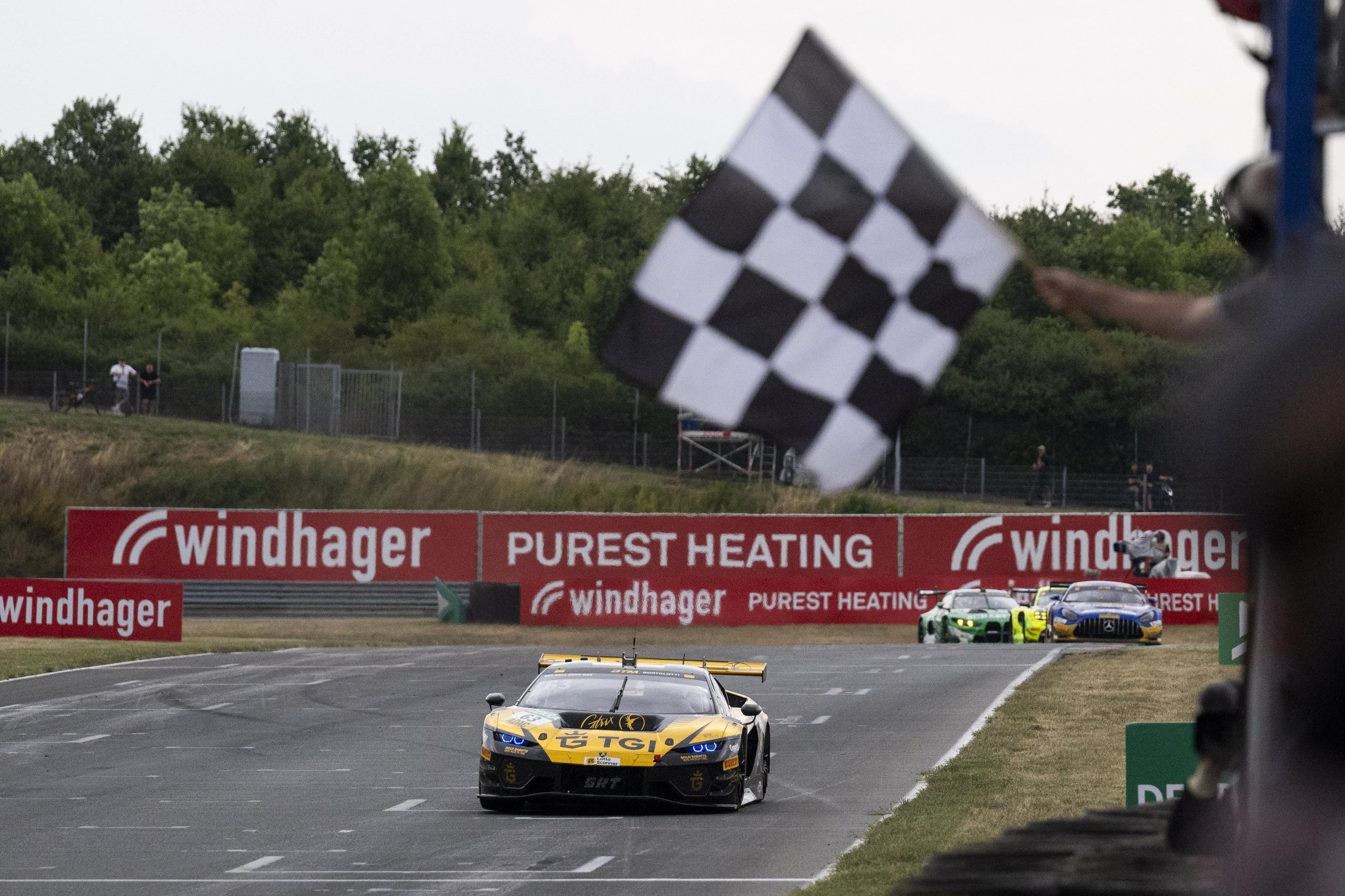
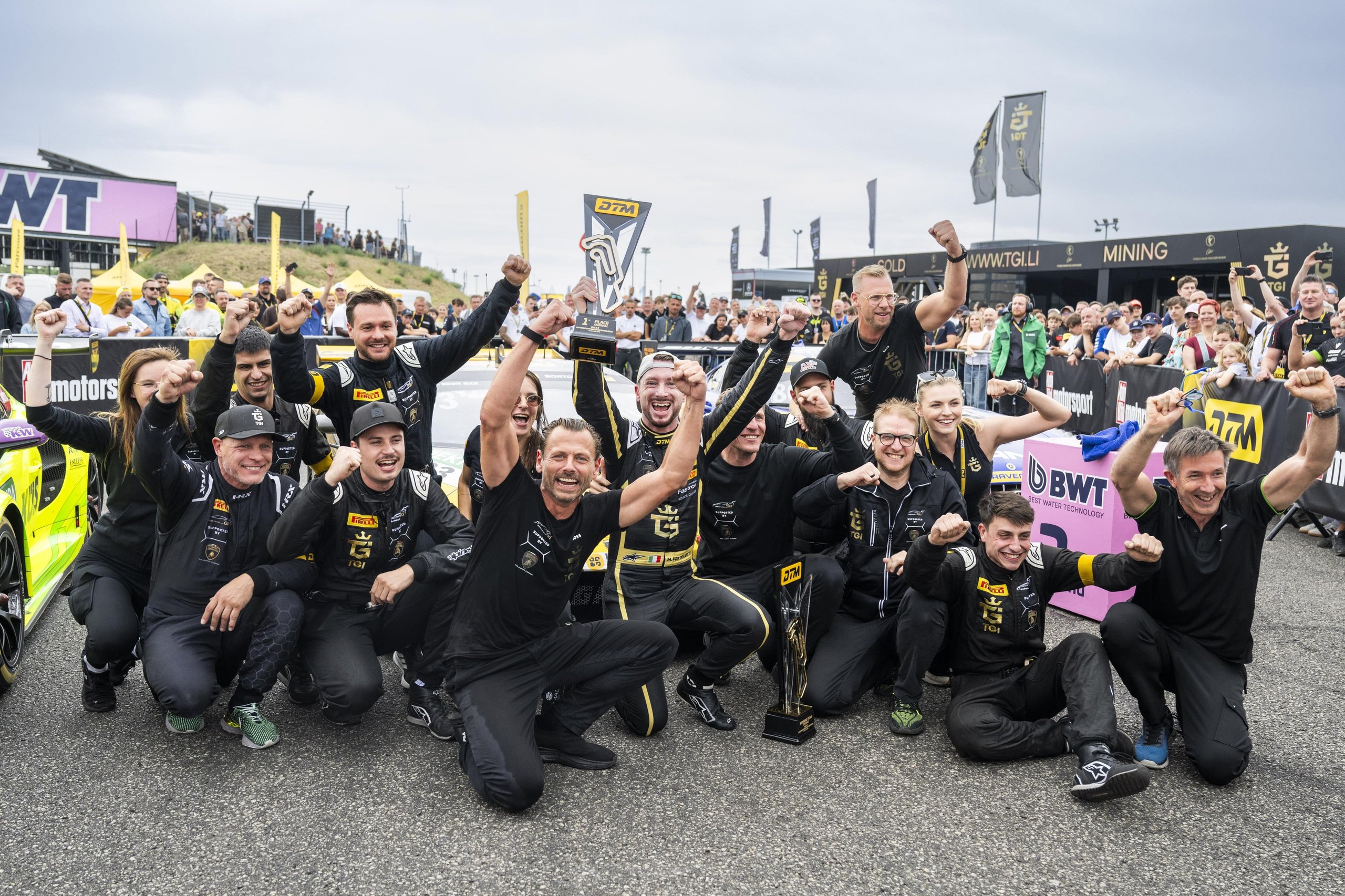
Mirko Bortolotti, the reigning 2024 DTM champion, drove the Lamborghini Temerario GT3 to its first outright victory in the second DTM race at Oschersleben on July 26, 2026. Starting sixth on the grid, Bortolotti and TGI Team by GRT used a carefully timed pit strategy to leapfrog the competition and cross the line 3.027 seconds clear of Maro Engel‘s Mercedes.
The result matters far beyond a single trophy. The Temerario GT3 is the first race car developed entirely in-house by Lamborghini Squadra Corse, built without the Audi collaboration that underpinned the decade-long Huracan GT3 program. Winning in DTM, one of the most competitive GT3 championships in the world, validates an engineering gamble that looked genuinely uncertain just months ago. Every section of this story traces the same arc: a manufacturer that bet its racing future on independence, and a single weekend that proved the bet was sound.
Bortolotti dedicated the win to his injured teammate Maximilian Paul, a DTM race winner in 2023 with GRT.
Why This Win Validates a New Racing Era for Lamborghini
Consider what Lamborghini was up against. The Temerario GT3 replaces the highly successful Huracan GT3 Evo2, a car that spent a full decade in competition and accumulated victories across every major GT3 championship on the planet. Replacing a proven winner with an entirely new architecture, a new engine format, and a new development philosophy is the kind of transition that can leave a manufacturer adrift for seasons.
Lamborghini did not ease into it. The Temerario GT3 made its global racing debut at the Sebring 12 Hours earlier this year, run by Pfaff Motorsports. Its European debut followed at the opening GT World Challenge Europe round at Paul Ricard in April. According to one report, the Sebring goal was simply to complete the 12 hours without unscheduled stops or mechanical failures. That is the language of a team still learning its own car.
Motorsport.com reported that Lamborghini faced genuine concerns about the Temerario GT3’s competitiveness ahead of the DTM season opener at Spielberg. Bortolotti himself admitted early in the season that he did not expect to be “in the mix at the front.” DTM regulations impose heavy restrictions on testing opportunities for new cars, which compounds the challenge of developing race pace on the fly. To go from that kind of candid pessimism to a victory in just a few rounds is a steep trajectory, and it suggests the car’s fundamental architecture is sound even if the fine-tuning remains in progress.

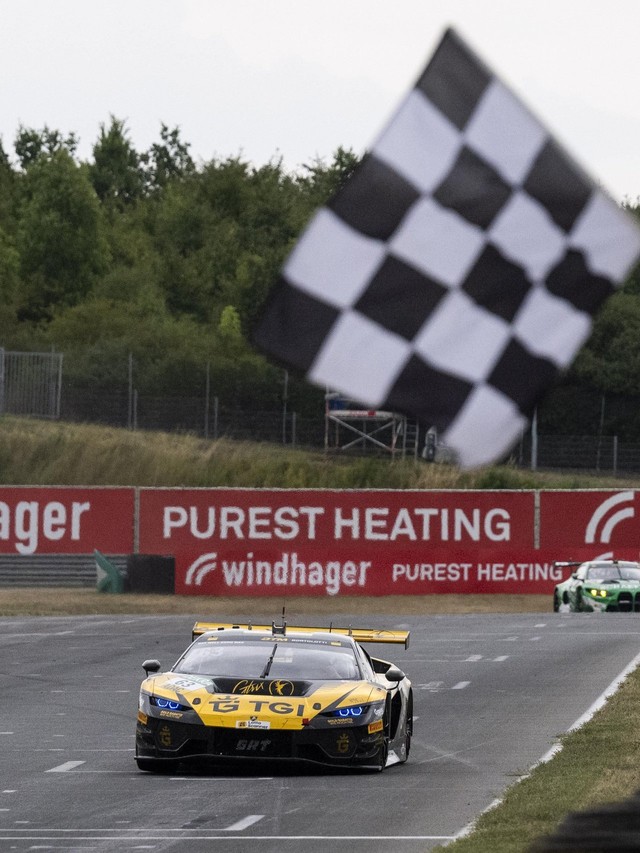
The black and yellow Lamborghini Temerario GT3 race car leads the pack during an intense race. Image: Automobili Lamborghini.
How Bortolotti and GRT Outmaneuvered the Field
The race itself was a study in patience. Bortolotti waited until the end of the first mandatory pit-stop window before coming in, a gamble that paid off when he emerged in second place. He capitalized on a battle between Engel’s Mercedes and the ABT Sportsline Temerario GT3 of Luca Engstler, who had briefly seized the lead from Thomas Preining’s Porsche at turn one.
During the second stint, Bortolotti shadowed the leading Porsche with a gap of less than a second. When the leaders pitted simultaneously for their second stops, GRT’s crew executed a faster turnaround than Preining’s team, vaulting Bortolotti into the lead. From that point, he built a comfortable margin and never looked back.
Lamborghini says the strategy was key, and Bortolotti agreed: “We adopted a perfect strategy, but I also managed to make a difference on the track.” That second clause is worth noting. Pit strategy can put a car in position, but holding off a Porsche for an entire stint at sub-second gaps requires genuine pace from the machine underneath. The Temerario GT3 clearly had it.
Engstler’s weekend reinforced the broader picture. The ABT Sportsline driver qualified second for Saturday’s opening race and scored his first podium of the season, then added another top-five finish on Sunday. Two different Temerario GT3 entries running at the sharp end of the field is a better indicator of car performance than a single result from one exceptional driver.

The black and yellow Lamborghini Temerario GT3 race car powers through a challenging bend on the circuit. Image: Automobili Lamborghini.
From V10 to Twin-Turbo V8: Engineering Autonomy in Action
The Huracan GT3 ran a naturally aspirated V10 for its entire competitive life. The Temerario GT3 uses a 4.0-liter twin-turbo V8, derived from the same engine family as the road-going Temerario but stripped of the hybrid components that GT3 regulations prohibit. The turbochargers, exhaust, and intake systems were re-engineered specifically for endurance racing.
This powertrain shift is not cosmetic. A turbocharged V8 delivers its torque differently from a high-revving naturally aspirated V10, which changes everything about how a driver manages tire wear, braking zones, and corner exit. GRT team boss Gottfried Grasser described the Temerario GT3 as a “state-of-the-art, latest-generation GT3 car” while acknowledging “several areas which can be improved on.” Bortolotti put it more bluntly, calling the car “completely new and feels totally different” from the Huracan.
For customer teams who built their entire programs around the Huracan’s characteristics, the transition means adapting to a fundamentally different driving experience. Initial reports indicated the car faced challenges with brake feel and turn-in behavior. The improved cooling package, particularly for brakes, represents one of the specific engineering responses to the Huracan’s known weaknesses in endurance events. Lamborghini engaged customer teams like Pfaff Motorsports and its European partners in the development process, suggesting Squadra Corse understood from the start that real-world feedback would be essential.
The deeper story here is independence. The Huracan GT3 program relied on Audi’s technical infrastructure. The Temerario GT3 was designed and developed entirely at Sant’Agata Bolognese. As Car and Driver confirmed when the car was revealed, this makes it the first Lamborghini race car built without that external partnership. Winning with your own engineering, on your own terms, carries a different kind of credibility than winning with a corporate sibling’s help. Oschersleben proved that credibility is now backed by results.

The black and red Lamborghini Temerario GT3 race car skillfully navigates a challenging turn on the racetrack. Image: Automobili Lamborghini.
The Near-Miss at Lausitzring and What It Tells Us
Oschersleben was nearly not the first Temerario GT3 victory. At the DTM Lausitzring round earlier in the season, Marco Mapelli initially crossed the line first in a Temerario GT3. A 15-second penalty for speeding under Full Course Yellow dropped him to second, handing the win to Ben Dörr instead. The car was fast enough to win before Oschersleben. It just needed a clean race.
That near-miss is actually encouraging for Lamborghini’s competitive outlook. Pace was never the sole problem. The car needed operational maturity, the kind of clean execution that Bortolotti and GRT finally delivered. When a new GT3 car shows front-running speed at multiple circuits before securing its first clean victory, the trajectory typically steepens rather than flattens. The pattern reinforces the central point: the Temerario GT3’s architecture was always capable. Oschersleben was the weekend everything came together.
What This Means for Squadra Corse and Lamborghini Buyers
Lamborghini’s GT3 program feeds directly into the brand’s commercial identity. Customer racing is a revenue stream, a marketing tool, and a proving ground for engineering talent. Teams buy these cars, and they need confidence that the manufacturer can support them with competitive machinery and responsive development.
Road & Track noted when the car was revealed that while Lamborghini stuck with updated versions of the same basic Huracan for a decade, Porsche alone released three entirely new GT3 cars during that period. The Temerario GT3 represents Lamborghini catching up to the pace of development that its rivals set years ago. Winning early in the car’s competitive life sends a clear signal to prospective customer teams evaluating their options for the next racing cycle.
For road car enthusiasts, the connection is less direct but still meaningful. The Temerario GT3’s 4.0-liter twin-turbo V8 shares its fundamental architecture with the road car’s engine. Lessons learned about cooling, durability under sustained load, and turbo response at the limit of competition filter back into the engineering knowledge base at Sant’Agata. Lamborghini has not publicly detailed how GT3 data informs road car calibration, but the pipeline exists, and a winning race program generates more useful data than a struggling one.
Lamborghini has not announced pricing for customer Temerario GT3 cars, and the total number delivered to teams globally remains undisclosed. What the Oschersleben result does confirm is that the car can win against Porsche and Mercedes in one of Europe’s premier GT3 series. For customer teams weighing their next purchase, that is the most persuasive data point available.

The triumphant driver celebrates his victory atop the Lamborghini Temerario GT3, cheered on by enthusiastic fans. Image: Automobili Lamborghini.
Competitive Landscape: Where the Temerario GT3 Stands Now
DTM’s current grid includes factory-backed entries from Porsche, Mercedes-AMG, BMW, and now a genuinely competitive Lamborghini. Bortolotti beat Thomas Preining’s Porsche and Maro Engel’s Mercedes to win at Oschersleben. Engstler’s consistent top-five pace in the ABT car suggests the result was not an outlier.
The real question is whether the Temerario GT3 can sustain that competitiveness across a full season and across different circuits with varying demands on braking, aero efficiency, and tire management. Grasser’s honest assessment that areas remain for improvement is the kind of candor that actually builds confidence. A team that knows what it still needs to fix is more dangerous than one celebrating prematurely.
Balance of Performance adjustments will inevitably play a role as the season progresses. Every GT3 championship uses BoP to keep competition close, and a dominant new entrant typically attracts regulatory attention. How Lamborghini navigates those adjustments while maintaining competitiveness will tell us more about the car’s true potential than any single result. For now, the Temerario GT3 earned its place at the front of the grid on merit. That is exactly the proof of concept Squadra Corse needed to confirm that its first fully independent race car can fight at the highest level.

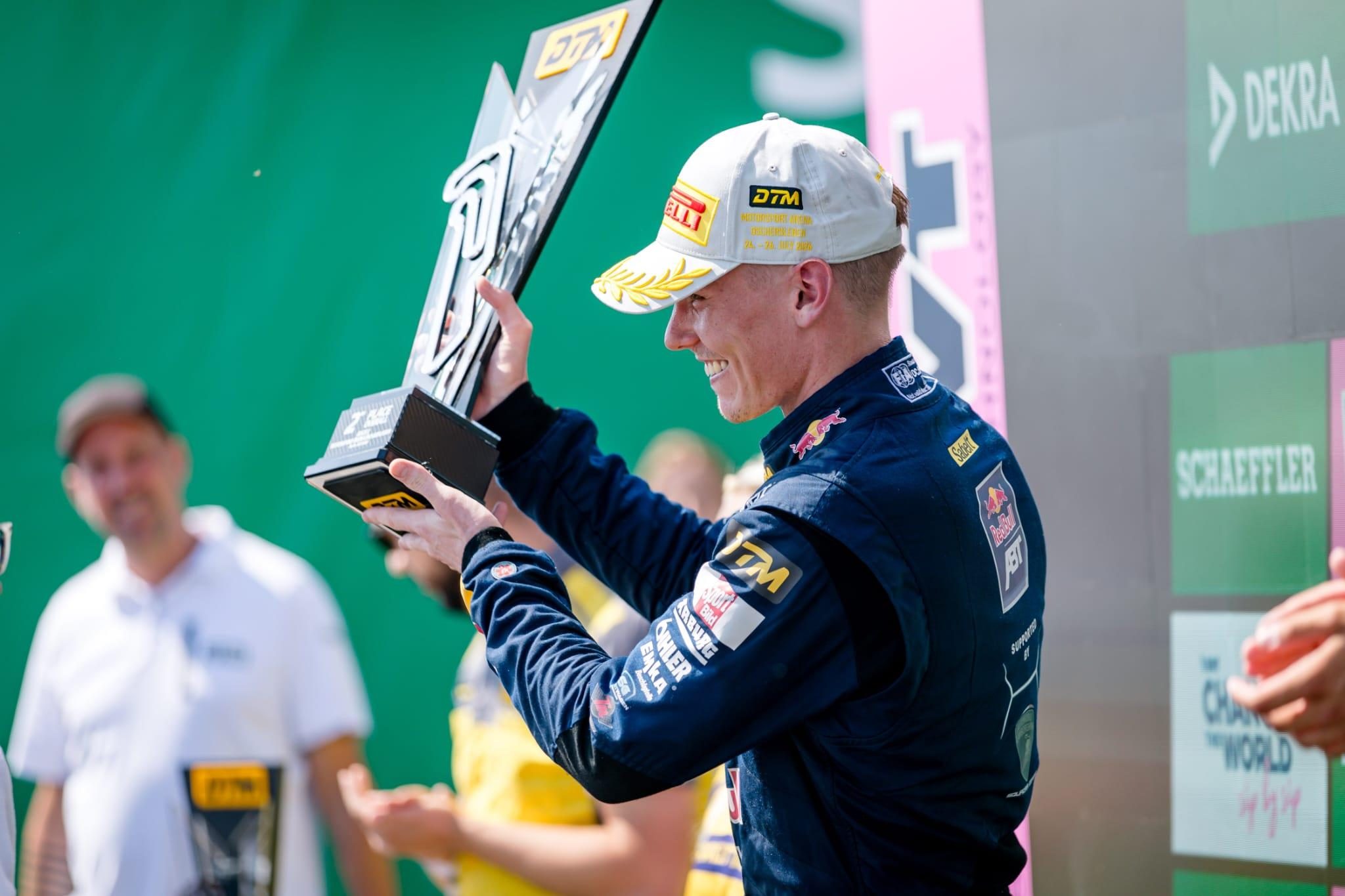
Three victorious race car drivers celebrate on the podium, flanked by national flags representing their achievements. Image: Automobili Lamborghini.
Gallery