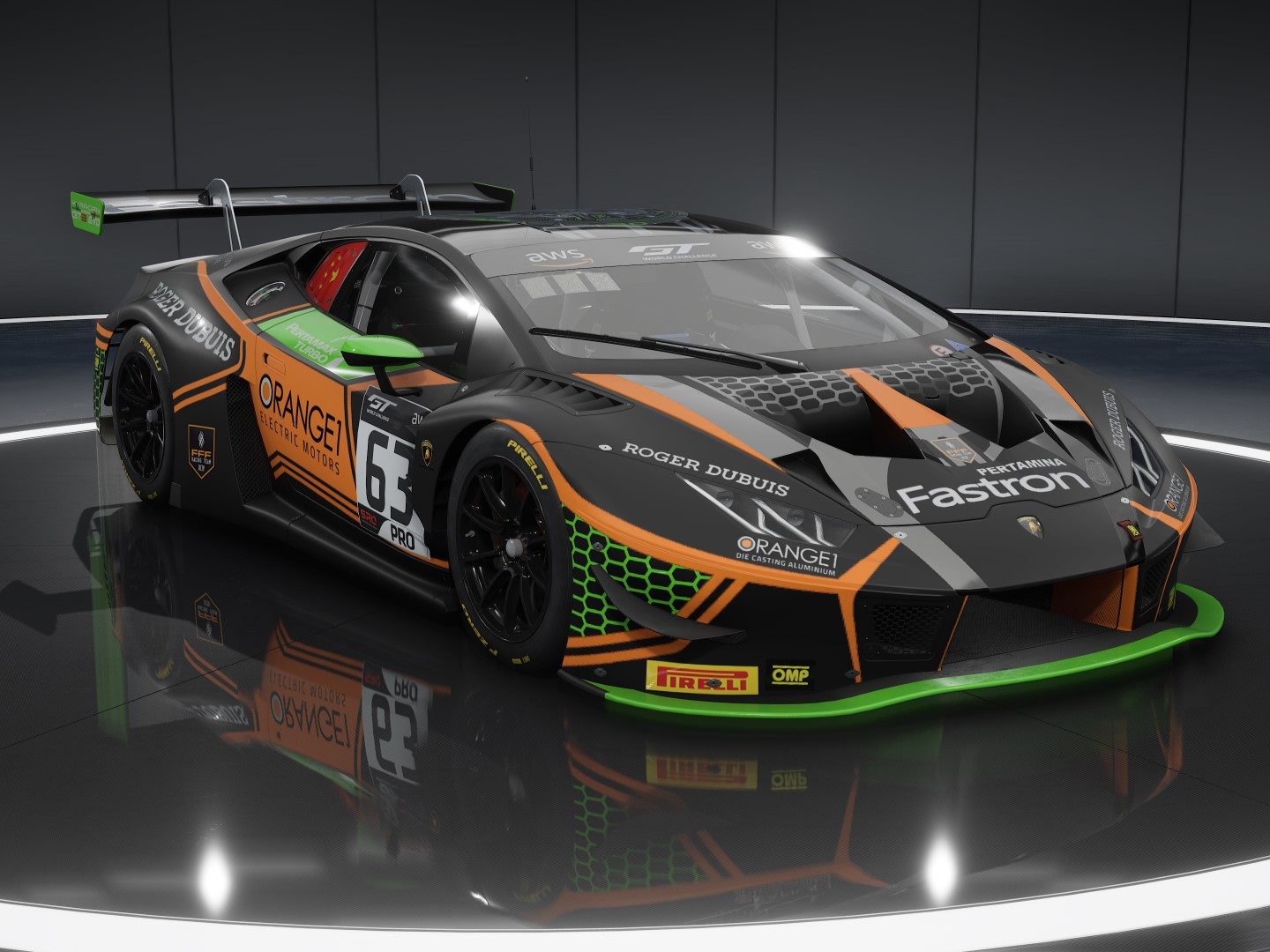
Lamborghini Sent Its Factory Drivers to Race Online—and It Changed Everything
Squadra Corse's 2020 SRO E-Sport GT Series entry became the blueprint for the brand's digital motorsport future.
In April 2020, Lamborghini Squadra Corse committed three contracted factory drivers—Andrea Caldarelli, Dennis Lind, and Albert Costa—to the inaugural SRO E-Sport GT Series on Assetto Corsa Competizione.
Real instincts, missing feedback
Albert Costa admitted he felt more nervous behind a sim rig than in an actual GT3 car, because professional drivers spend years calibrating their instincts around physical g-forces, tire feel through the steering column, and peripheral vision cues that a monitor and force-feedback wheel cannot replicate.
A problem every factory team faced in 2020
Lamborghini entered because the SRO series solved a specific problem: keeping its factory driver relationships active, its team partnerships visible, and its brand in front of an audience during a period when every physical racetrack on the calendar was dark.
A decade of GT3 credibility carried into the sim
The Huracán GT3 EVO had already proven itself across global GT3 championships, giving it a competitive baseline within Assetto Corsa Competizione's physics engine that sim racers and real drivers alike could trust.
The template Squadra Corse kept building on
The 2020 SRO E-Sport GT Series entry, with its factory drivers, team liveries, and structured Pro, Silver, and Am class system, established the template for everything Lamborghini did in digital motorsport afterward.
Depth beyond the headline factory roster
Beyond the three lead drivers, a deeper bench of Lamborghini-affiliated racers filled out the Pro category, including former Super Trofeo Europe champion Mikaël Grenier, Alberto di Folco, Jeroen Mul, 2019 World Finals runner-up Sandy Mitchell, and Dan Wells.
From V10 to twin-turbo V8—a GT3 succession
As Road & Track reported, the Temerario GT3 is now ready for global racing, marking the first time Lamborghini's customer GT3 car will move away from the naturally aspirated V10 to a twin-turbo V8 architecture.
Sim to tarmac: the pipeline that started here
Lamborghini's approach remains distinct because it emphasizes the sim-to-real pipeline more aggressively than most rivals, using virtual competition as a genuine scouting mechanism for real-world racing talent rather than purely as a fan engagement exercise.