How the Urus Rewrote Lamborghini's Business — Straight From the Harvard Lecture
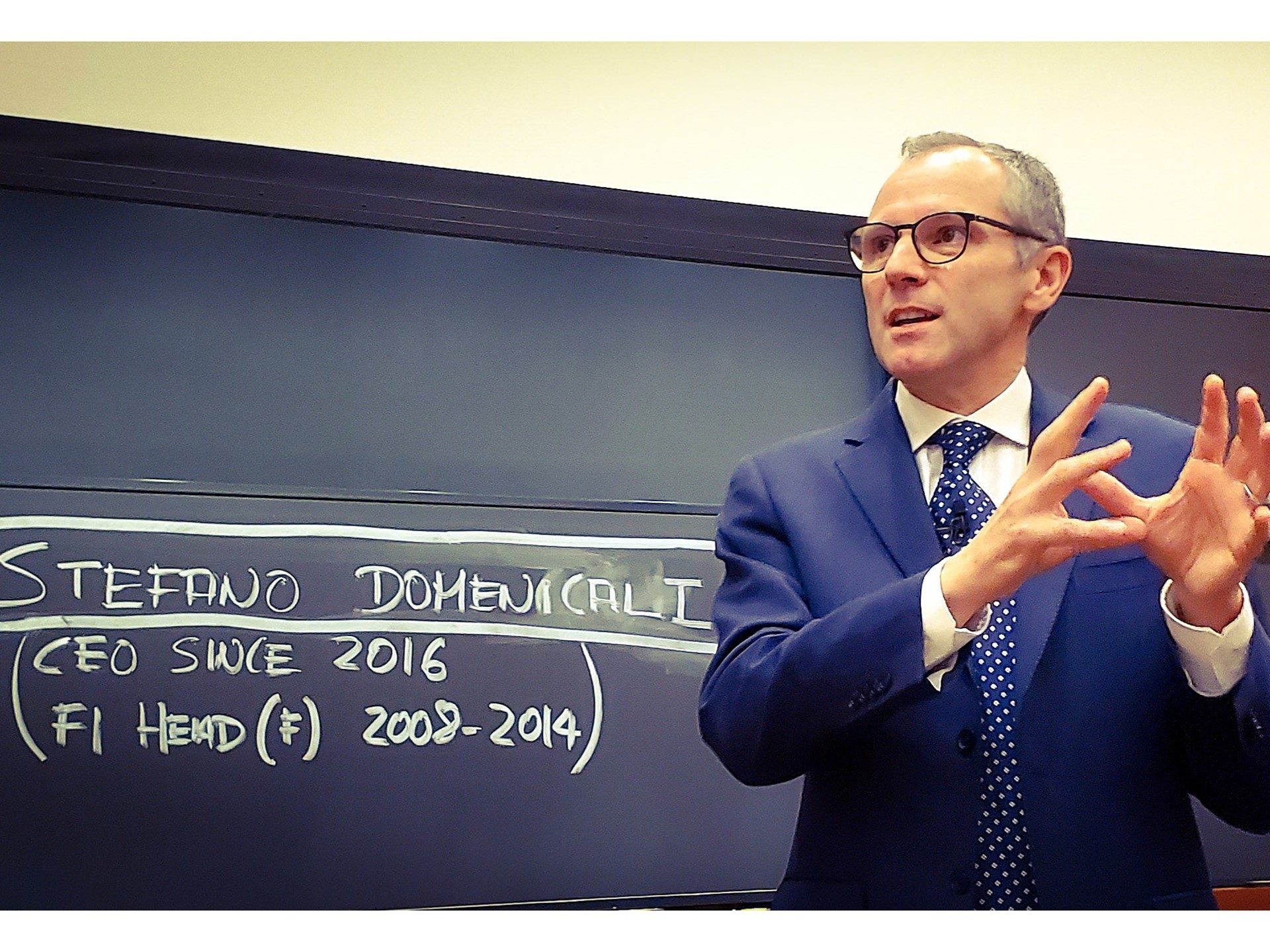
In November 2019, CEO Stefano Domenicali taught a class at Harvard Business School on how one SUV doubled the company.
Harvard Business School wanted a case study in brand transformation, and Lamborghini under Domenicali offered a clean example: a small company that rewrote its financial profile in roughly three years.
The Urus effect in one number
After the Urus arrived for 2018, customer deliveries rose 51 percent to 5,750 units, with record sales across all major markets.
From supercar maker to luxury-segment contender
Domenicali told the Harvard audience that Lamborghini had become, in his words, a true trendsetter in the luxury segment, competing on cultural influence rather than horsepower alone.
Motorsport credibility on the track
Lamborghini's back-to-back double victories at the 24 Hours of Daytona and 12 Hours of Sebring in 2018 and 2019 provided engineering validation that filters down into how the road cars are perceived and developed.
SUV revenue funds the next generation
According to Road & Track, Lamborghini achieved record deliveries and revenue in 2025 and plans multiple new car debuts for 2026, a product cadence that would have been unimaginable for the pre-Urus company.
Lamborghini's growth path versus Ferrari's restraint
Ferrari chose deliberate production restraint, building fewer cars than demand would support and layering profitability through personalization and limited editions, while Lamborghini expanded the addressable market with an entirely new product category.
The audience: 143 future senior leaders
Domenicali was invited to address Harvard's General Management Executive Education Program, directed by Professor Stefan Thomke, where 143 selected executives from around the world prepare for senior leadership positions.
From LM002 to Urus: a different business rationale
Revenue climbed 40 percent year-on-year to 1,415 million euros in 2018, and 70 percent of Urus buyers were new to the brand, a pipeline of first-time Lamborghini customers.
Multi-generational brand desire
Few other automakers can claim the kind of multi-generational brand desire that turns a poster on a dorm room wall into a dealership visit two decades later, and Domenicali framed that aspiration as a luxury-sector phenomenon.
Owners who demand competition credentials
Owners who track their cars, or who simply want to know their manufacturer takes competition seriously, pay attention to results like back-to-back endurance-race victories.
The financial foundation for hybrid supercars
The financial health Domenicali built means Lamborghini can invest in the engineering that keeps its supercars competitive against Ferrari's hybrid lineup, McLaren's evolving architecture, and Porsche's relentless iterative improvement.
The enthusiast debate that proves the strategy works
Multiple owners and followers on enthusiast platforms describe the Urus as a necessary commercial vehicle that funds the cars they actually care about, echoing the same Porsche Cayenne argument that time has largely settled in Porsche's favor.