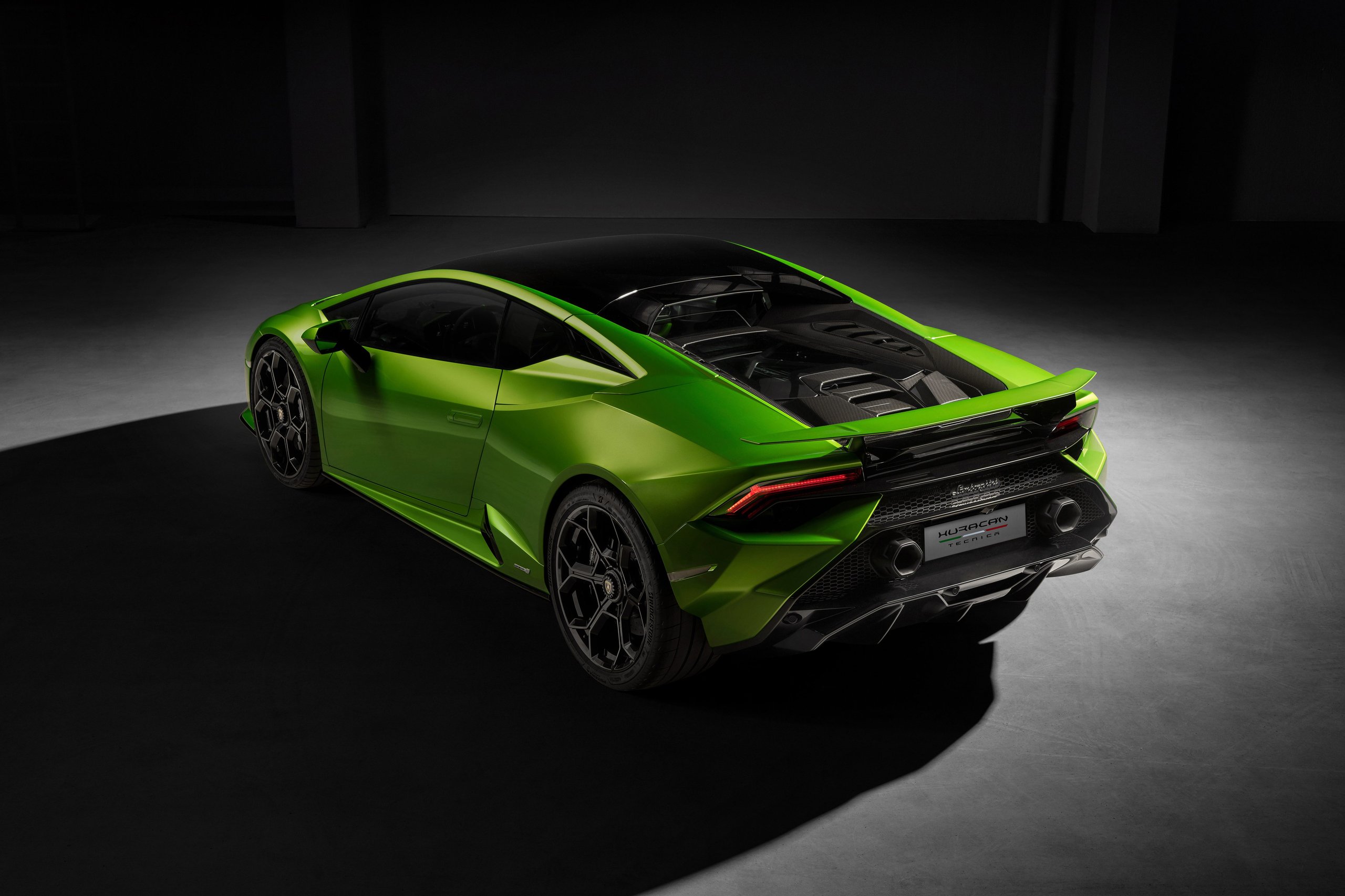
Huracán Tecnica: The V10 That Splits the Difference
STO power, real-world livability — Lamborghini's bid for the sweet spot in the Huracán lineup.
The Tecnica borrows the STO's full 640 CV naturally aspirated V10 but wraps it in bodywork and calibration tuned for the buyer who actually drives home from the circuit.
Livability the STO cannot match
Height-adjustable sports seats replace the STO's fixed racing buckets, and a redesigned HMI interface with a new arc layout reduces visual clutter while adding Apple CarPlay, Android Auto, and Amazon Alexa integration.
A naturally aspirated V10 in a turbocharged world
The Tecnica's 5.2-liter V10 produces 640 CV and 565 Nm of torque at 6,500 rpm, making it the last broadly available, naturally aspirated V10 Huracán built for both road and track.
Serious performance territory
A dry weight of 1,379 kg and a weight-to-power ratio of 2.15 kg/CV back up the Tecnica's 0 to 100 km/h time of 3.2 seconds, with Bridgestone Potenza Sport tires on 20-inch Damiso wheels providing the contact patch.
Recalibrated, not detuned
Lamborghini recalibrated the entire dynamic envelope, from aerodynamics to brake cooling to drive-mode software, rather than simply detuning the STO and bolting on prettier bumpers.
Three modes, three distinct characters
The LDVI feed-forward control system coordinates rear-wheel steering, torque vectoring, and a modified Performance Traction Control System across STRADA, SPORT, and CORSA modes, each calibrated to deliver a genuinely different character.
STO telemetry without the aftermarket workaround
Connected telemetry borrowed from the STO includes on-board diaries for tracking destinations and lap times, all linked to Lamborghini's UNICA app for post-session review.
The sound no hybrid torque-fill can replicate
The free-flowing exhaust delivers what one assessment describes as a wailing sound on track, an auditory experience that defines the naturally aspirated V10's character.
STO performance or livable packaging — the Tecnica's whole argument
The Tecnica's case comes down to a simple question: do you want STO performance with livable packaging, or do you need the STO's last tenth of a second on circuit badly enough to accept its compromises?