Lamborghini's 600,000 Bees Are Quietly Monitoring the Air Around Sant'Agata Bolognese
Twelve hives in a seven-hectare park next to the factory form a living sensor network for the surrounding environment.
Lamborghini's apiary in Lamborghini Park has grown from eight hives in 2016 to twelve today, supporting roughly 600,000 bees whose foraging across a 3 km radius picks up trace contaminants from soil, water, air, and vegetation.
Reed houses for solitary bees inside Lamborghini Park
Reed houses placed near the production site host solitary bee colonies that forage within about 200 meters, giving researchers a granular, localized complement to the honeybees' wider coverage.
Hive-matrix sampling at the Sant'Agata apiary
By periodically analyzing hive matrices such as honey, wax, and the bees themselves, researchers can detect pesticides, heavy metals, aromatic compounds, and dioxins circulating in the environment surrounding the factory.
A biomonitoring program unlike industry norms
Lamborghini's bee project generates localized environmental data tied to the geography where its cars are built, setting it apart from the automotive industry's more common reliance on carbon-offset purchases and aspirational sustainability reports.
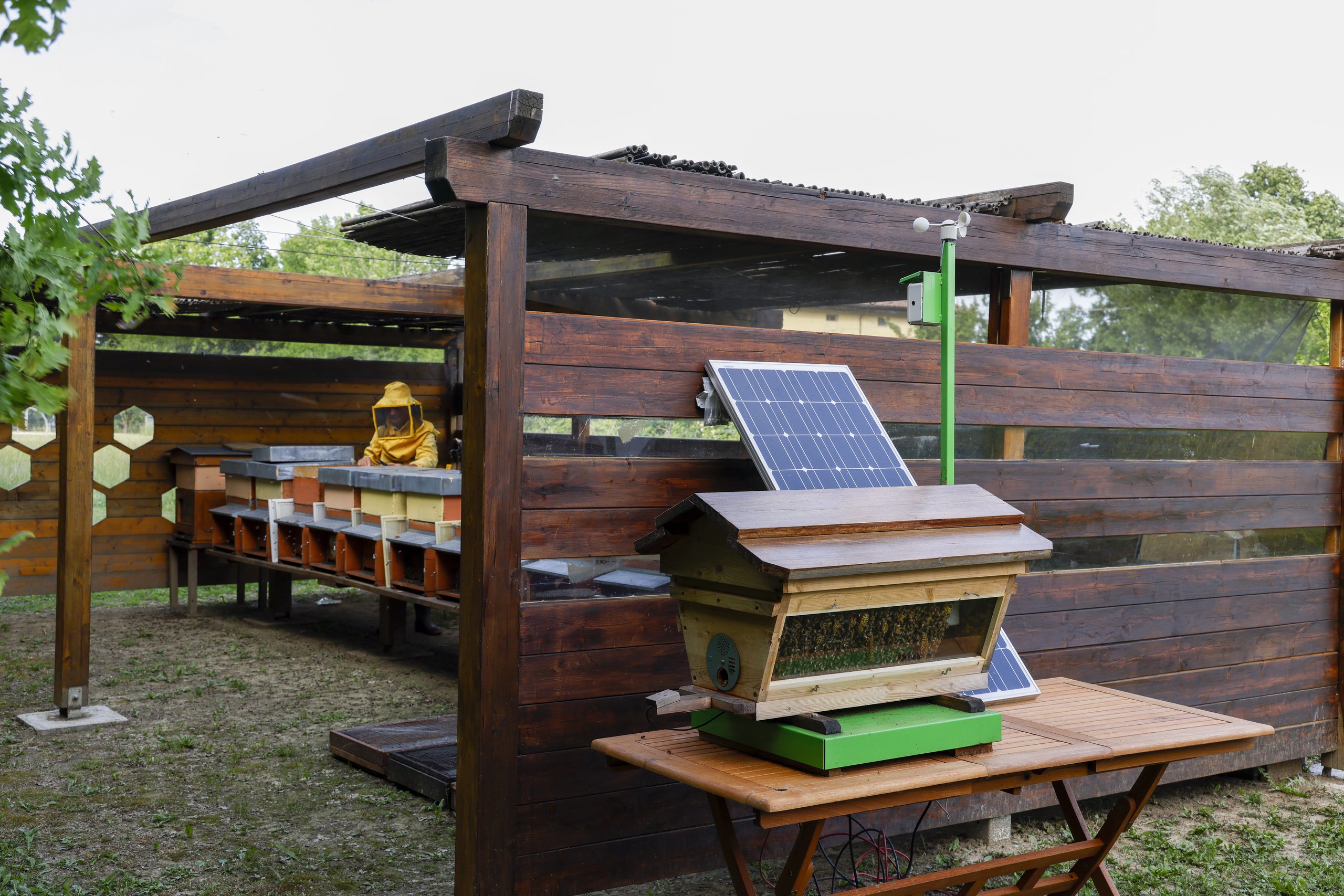
The Audi Environmental Foundation's camera-equipped hive
The newest addition is a technological beehive developed with the Audi Environmental Foundation, equipped with two video cameras that let entomological experts observe colony behavior without disturbing the hive.