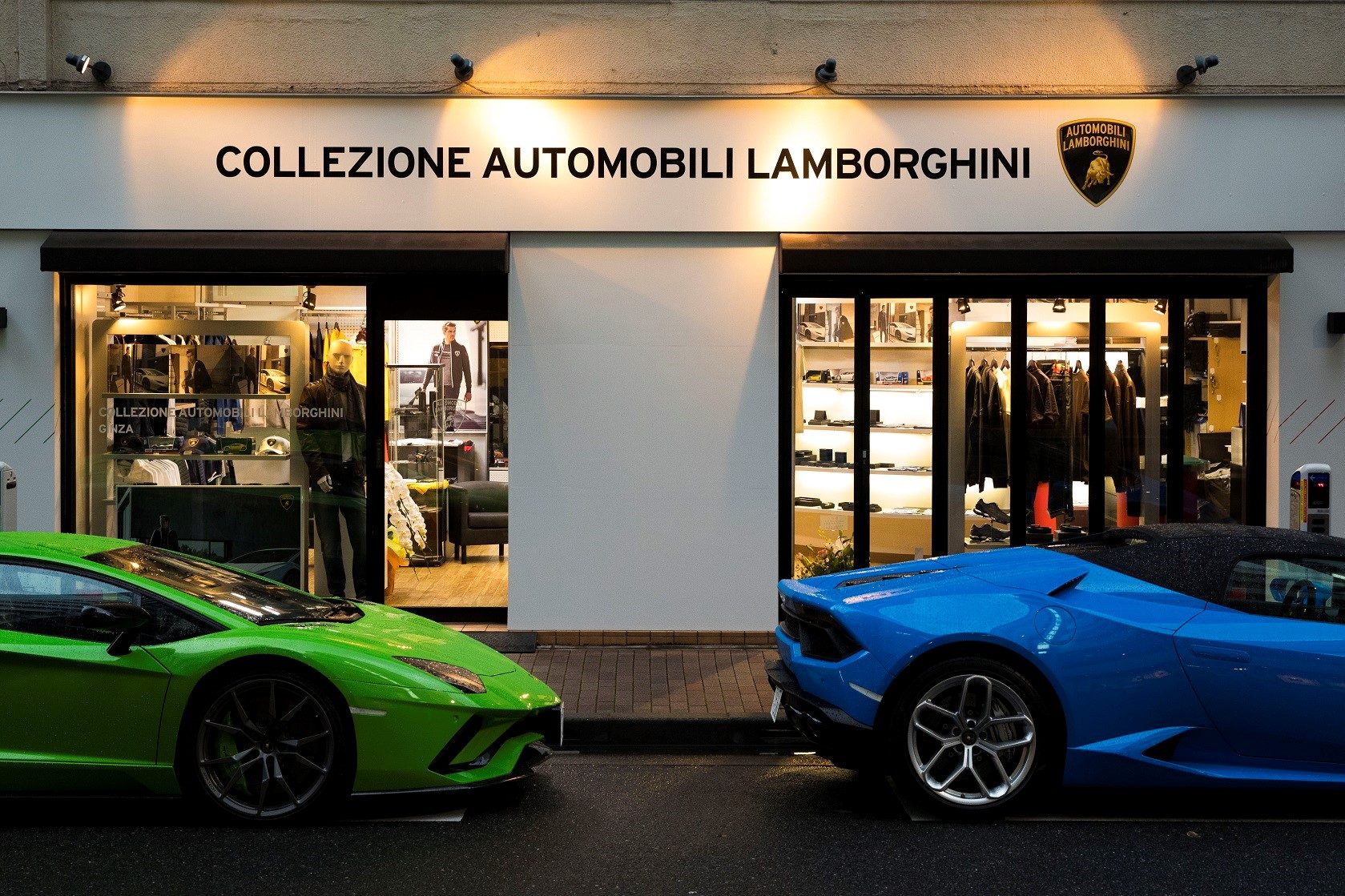
Lamborghini's Ginza Boutique Bets That the Raging Bull Belongs in Your Closet, Not Just Your Garage
How a standalone fashion store in Tokyo tested whether supercar design can survive without the supercar.
On September 23, 2017, Lamborghini opened its first dedicated Collezione Automobili Lamborghini boutique in Ginza, choosing Tokyo's premier luxury corridor to put its lifestyle brand on the same stage as established fashion houses.
The brand-reach calculation behind Collezione
Collaborations like a carbon fiber carry-on from TecknoMonster or Mizuno running shoes created exclusively for Lamborghini cost a fraction of a Huracán deposit, yet each purchase keeps the marque visible in contexts where supercars cannot follow.
From cockpit contrasts to clothing details
Gold stitching on black denim in the Autumn Winter 2017 collection echoes the interior contrast of a well-specced Aventador cabin, where owners routinely pair Nero Ade leather with oro detailing.
Choosing the right retail partner
Motorimoda, the Ginza store's operator, specializes in motorsport-inspired fashion retail in Japan, which suggests Lamborghini chose a partner with relevant expertise rather than simply licensing the badge to the highest bidder.
Cultivating the next generation in Japan
Lamborghini's long-term survival depends on cultivating new generations of customers, particularly in markets like Japan where automotive enthusiasm runs deep but supercar ownership remains rare relative to population.
A standalone store, not a dealership add-on
The Ginza boutique carries the full men's fashion lineup and the complete accessories range, positioned alongside established luxury houses rather than inside an existing car dealership.
The credibility question for collectors
Lamborghini confirmed that the collection is developed with what it calls top luxury partners, though the specific fashion houses and textile suppliers beyond TecknoMonster and Mizuno were not named.
Early reception of the Collezione line
Online customer reviews of the broader Collezione line are generally positive regarding build quality and presentation, though independent material comparisons against established fashion houses remain scarce.
Exclusivity as brand strategy
A tightly controlled, design-driven fashion line can reinforce exclusivity in the same way that limited-run special editions protect residual values on the automotive side.
The Ginza wager, in context
Dedicated Collezione stores also exist in Dubai, Taipei, and at the factory in Sant'Agata Bolognese, and the Ginza opening expanded that footprint into one of Asia's most important luxury retail corridors.