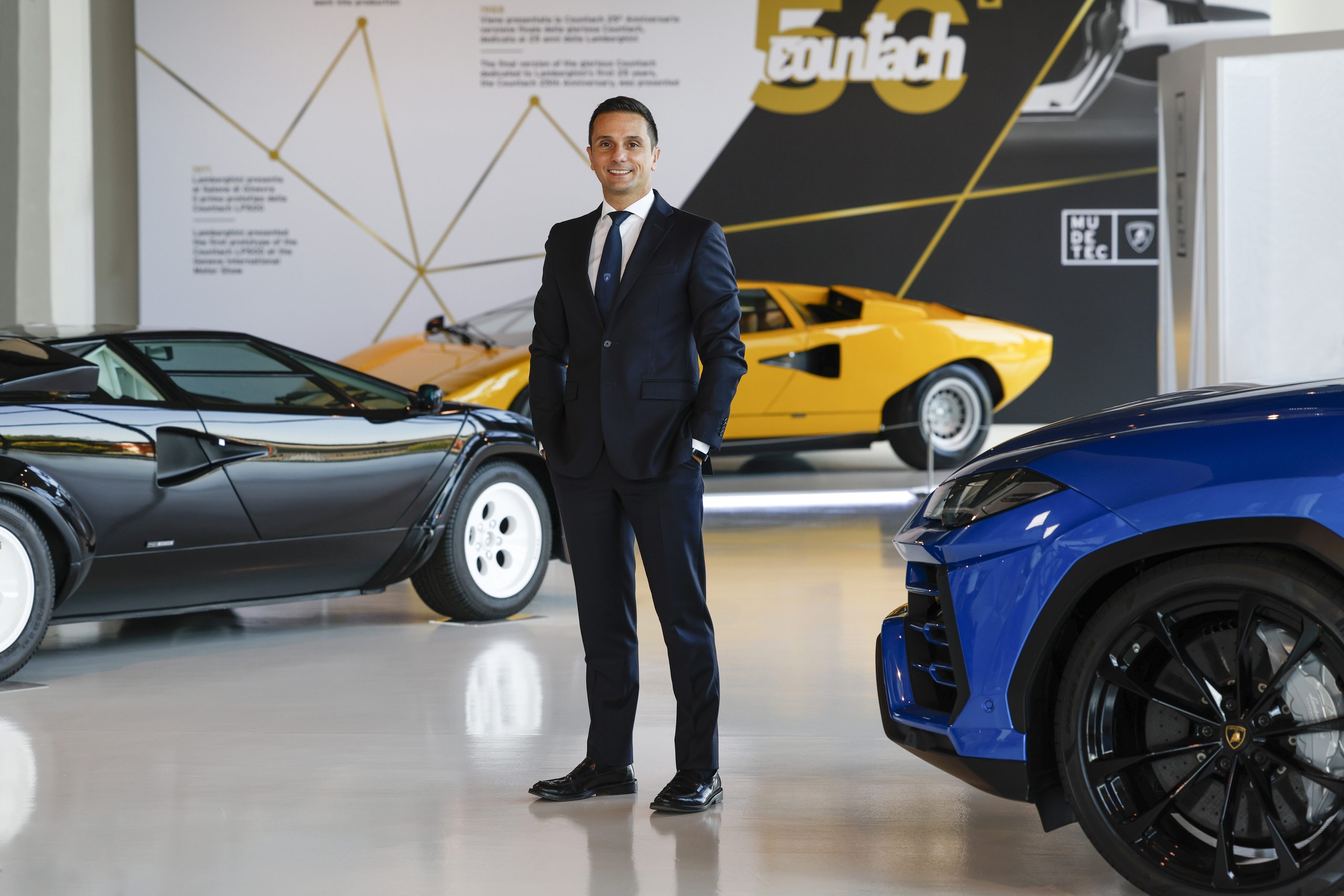
Lamborghini's New Procurement Chief Built Polo Storico. Now He Sources Parts for the Electric Era.
Paolo Gabrielli moves from preserving vintage Lamborghinis to overseeing the brand's electrified supply chain.
Paolo Gabrielli, the executive who founded Lamborghini Polo Storico and spent years tracking down unobtainable parts for vintage Miuras and Countachs, now oversees every supplier relationship that will define the brand's hybrid and electric future.
The old procurement equation
For most of Lamborghini's history, procurement meant sourcing leather, aluminum, carbon fiber, and naturally aspirated engine components from a relatively stable network of Italian and European suppliers.
Polo Storico discipline meets electrification
The discipline Gabrielli built at Polo Storico, verifying authenticity, demanding precision from small-batch suppliers, and refusing to compromise on specification, maps surprisingly well onto the challenge of sourcing high-performance EV components at low volumes.
Craft over commodity
Gabrielli's Polo Storico experience working with artisans and specialists who prioritize craft over scale could prove genuinely useful in building a supplier network for electrified Lamborghinis that prioritizes distinctiveness over commodity pricing.
Lamborghini's hybrid lineup versus the competition
Ferrari, Porsche, and McLaren each took different paths to electrified procurement, but Lamborghini's explicit decision to place heritage expertise at the top of the procurement hierarchy sets it apart from rivals who frame the challenge around performance metrics and manufacturing efficiency.
Sant'Agata Bolognese headquarters
Lamborghini's Direzione Cor Tauri decarbonization strategy places the CPO at the center of decisions about battery cells, power electronics, electric motor components, and thermal management systems the brand never needed before.
Paolo Gabrielli, Chief Procurement Officer
Automobili Lamborghini confirmed Gabrielli as its new Chief Procurement Officer, placing him at the center of the company's decarbonization strategy at a moment when what goes into a Lamborghini matters as much as what comes out of its exhaust.
The low-volume procurement challenge
Sourcing parts at the quality level a six-figure supercar demands, in the roughly 10,000 cars a year Lamborghini produces, creates procurement challenges that look nothing like what a mass-market automaker faces.
Polo Storico's foundational mission
Polo Storico certifies the authenticity of classic Lamborghinis, restores them to factory specification, reconstructs spare parts that no longer exist in any warehouse, and manages the company's historical archives.
Identity over scale in the VW Group
Porsche, Lamborghini's sibling within the VW Group, built an entire factory for the Taycan and established deep partnerships with battery cell suppliers, while Lamborghini chose instead to lead its procurement with heritage expertise.
The stakes for Lamborghini's electrified future
Lamborghini chose to staff its supply chain leadership with someone who understands what makes a Lamborghini feel authentic, and in an era when every supercar maker risks sharing the same battery modules and motor architectures, that instinct for distinctiveness could be the most valuable procurement tool of all.