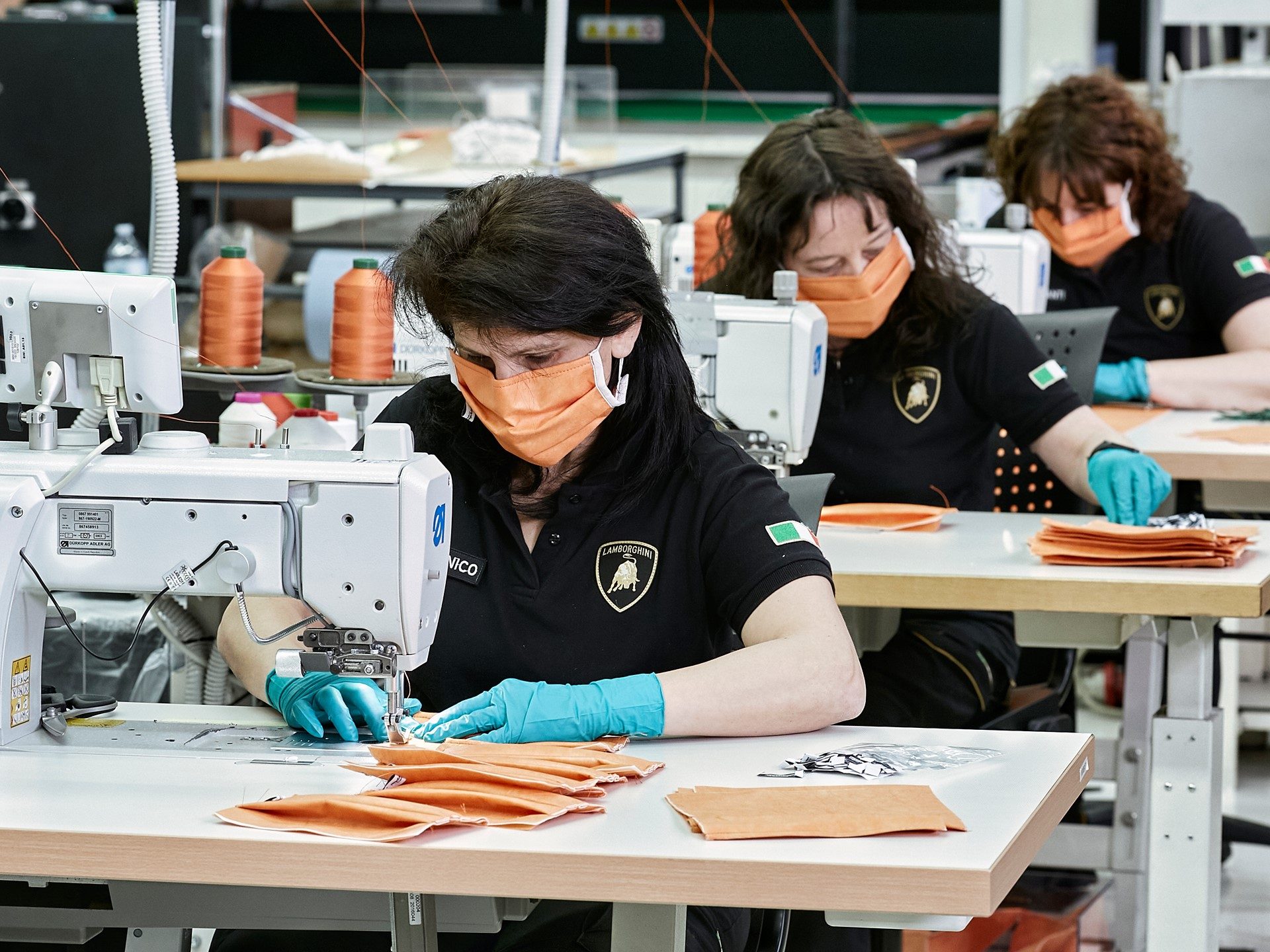
Lamborghini Turned Its Supercar Factory Into a Medical Supply Line
Saddlery artisans and 3D printers at Sant'Agata Bolognese pivoted to produce surgical masks and shields for Bologna's Sant'Orsola-Malpighi Hospital.
Automobili Lamborghini converted departments of its Sant'Agata Bolognese production plant to manufacture surgical masks and protective plexiglass shields, donating all output to the Sant'Orsola-Malpighi Hospital in Bologna.
A thousand masks a day from a bespoke workshop
The same hands responsible for stitching supercar interiors in Lamborghini's saddlery department were producing protective equipment at a rate of over a thousand units per day.
From aerodynamic prototyping to medical face shields
Lamborghini's 3D printers, normally used to prototype aerodynamic components in the carbon fiber plant, were redirected to produce 200 protective medical shields daily.
The human layer behind the ownership narrative
Knowing that the artisans who built your car's interior also pivoted to produce medical supplies during a national emergency adds a human layer to the ownership narrative that no spec sheet can replicate.
Boldness redefined: the necessary over the spectacular
Lamborghini's mythology is built on audacity and defiance, but the quiet discipline of mask production and shield printing represented a different kind of boldness — the willingness to set aside the spectacular in favor of the necessary.
Low volume, high skill, vertically integrated
The specific pairing of bespoke interior craftsmanship and additive composites manufacturing reflects Lamborghini's unusual production model — low volume, high skill, and vertically integrated — a combination few other single factories could replicate.
Validated by the University of Bologna
The University of Bologna's Department of Medical and Surgical Sciences oversaw validation testing of the devices, confirming that the factory's technical infrastructure was genuinely capable of producing medical equipment, not just symbolic gestures.
A longstanding hospital partnership, not a cold call
Stefano Domenicali, then Chairman and CEO, framed the initiative around Lamborghini's existing relationship with the Sant'Orsola-Malpighi Hospital, describing it as a longstanding collaboration involving professional health consultancy and research projects.
Ferruccio's factory walls, six decades on
The same factory walls that Ferruccio Lamborghini constructed in the 1960s became a small beacon in a region hit hard by the pandemic, a reminder that the place matters as much as the product.
Tangible output from a specific factory
Lamborghini's response was grounded in tangible output from identifiable people working specific machines in a specific factory — the gap between gesture and genuine manufacturing capability is ultimately what this story is about.