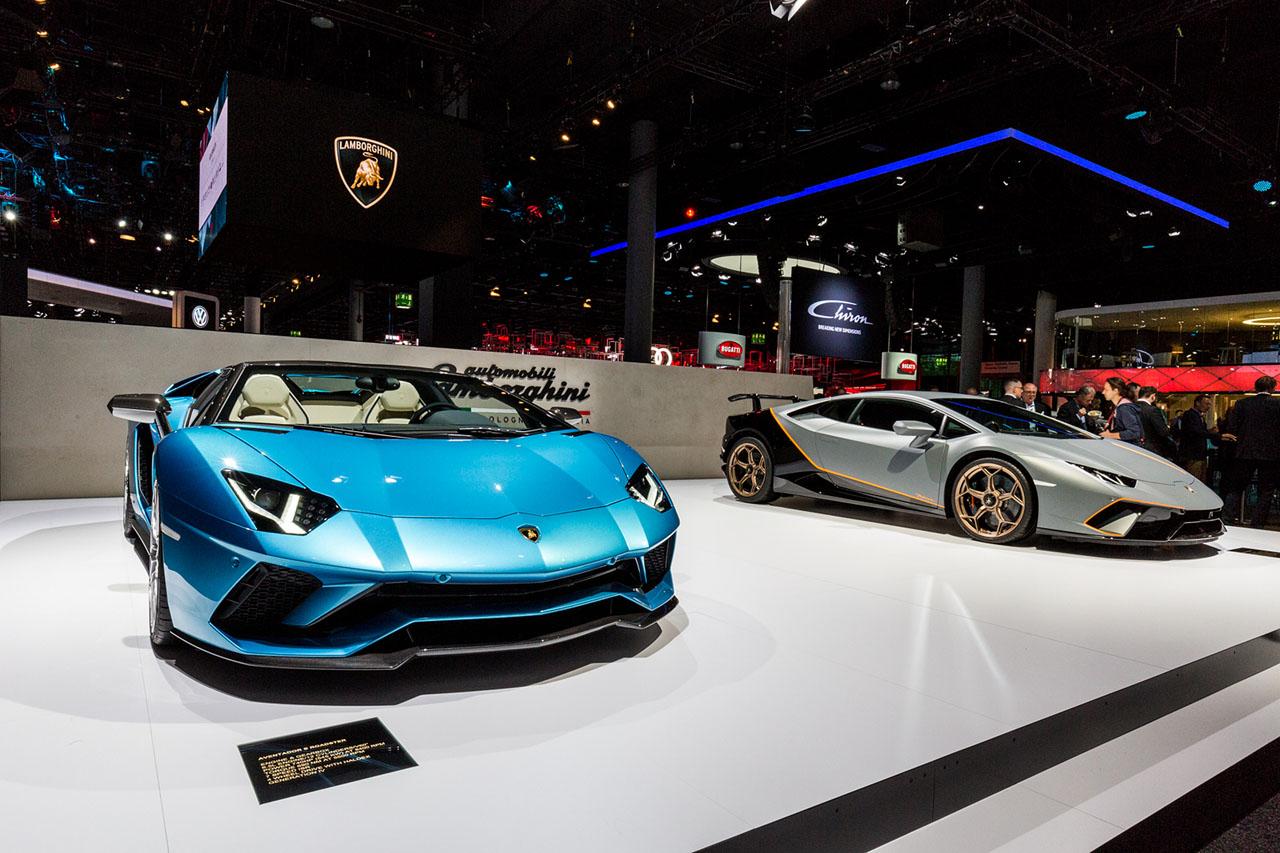
Lamborghini Zürich: Why Switzerland's Fifth Dealership Signals More Than a Ribbon-Cutting
A top-ten global market gets a new showroom and the Huracán EVO's Swiss premiere
Switzerland consistently ranks among Lamborghini's top ten markets worldwide, and in May 2019 the brand opened Lamborghini Zürich in Kloten to serve a region whose demand shows no sign of plateauing.
160 deliveries and 48% growth in one year
Lamborghini delivered 160 vehicles to Swiss customers in 2018, a 48% jump over the prior year, and with a full year of Urus sales plus Huracán EVO deliveries starting in summer 2019, the brand expected to push well past that figure.
LDVI: Lamborghini's first predictive dynamics system
The Huracán EVO's LDVI system anticipates driver inputs rather than simply reacting to them, coordinating all-wheel drive and all-wheel steering so the car is, as Chief Commercial Officer Federico Foschini put it, remarkably easy to drive while remaining deeply engaging.
The Urus as volume driver
The Urus paired its 4.0-liter twin-turbo V8 with active torque vectoring, four-wheel steering, carbon ceramic brakes, adaptive air suspension, and up to six driving modes plus the customizable EGO mode, making it the volume driver behind Switzerland's 48% sales growth.
Ad Personam: atelier, not catalog
Lamborghini Zürich incorporates an Ad Personam studio where Swiss buyers can configure materials, finishes, and color combinations in a dedicated space designed to feel more like a private atelier than a sales floor.
Two audiences converge in one showroom
Foschini framed the Kloten expansion around two converging forces: the broadening audience drawn in by the Urus and the established super sports car clientele eager to see the latest evolution of the V10 platform.
Built for Swiss pass roads, not runways
Swiss owners tend to favor mountain passes for handling enjoyment over outright speed, and the Huracán EVO's predictive LDVI chassis management was designed to sharpen exactly that kind of driver engagement at real-world speeds.
The Aventador SVJ among rivals
The Aventador SVJ anchored the opposite end of the lineup with 770 hp from a naturally aspirated V12, a 2.9-second sprint to 100 km/h, and the production car lap record at the Nürburgring-Nordschleife, giving the Zürich showroom a range that stretched from school-run SUV to track record holder.