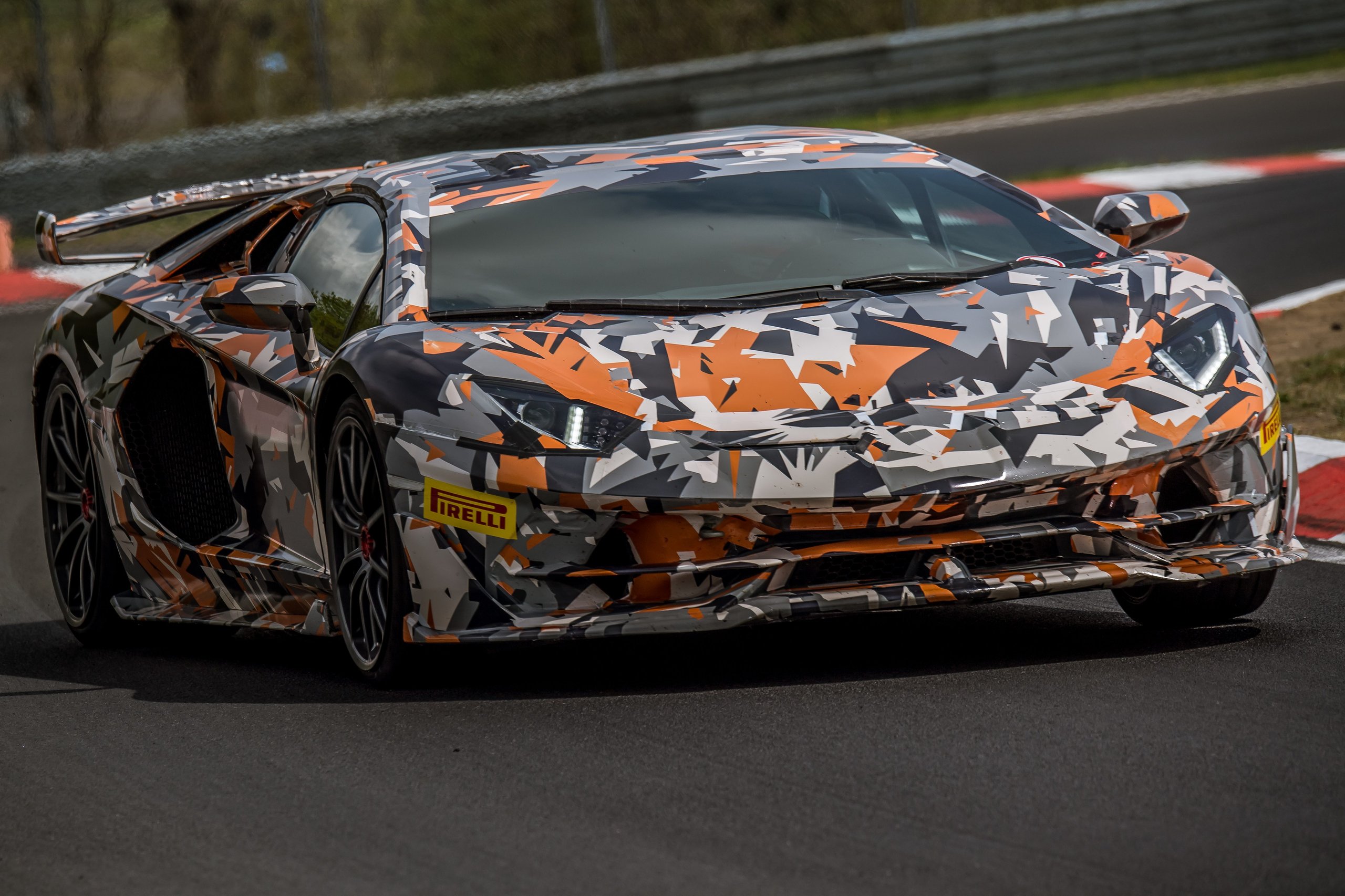
6:44.97 — The Aventador SVJ Sets a Nürburgring Record in Camouflage
Lamborghini chose a lap time, not a design reveal, as the SVJ's introduction.
Lamborghini driver Marco Mapelli drove the camouflaged Aventador SVJ prototype around the 20.6 km Nordschleife in 6:44.97, certified by Remak personnel using VBOX-Racelogic GPS instrumentation.
ALA 2.0 and the seven-second advantage
Electronically controlled flaps in the front splitter and rear wing toggle between low-drag and high-downforce configurations, and the system can open flaps on one side independently to create an aerodynamic yaw moment that helps rotate the car into corners.
Pit preparation before the record attempt
The SVJ's record depended on a full engineering overhaul — re-engineered four-wheel drive, rear-wheel steering, and ESC, plus a significantly stiffer chassis — all built around a naturally aspirated V12 rather than a turbocharger or hybrid module.
A deliberate Nordschleife escalation
Lamborghini's Nordschleife trajectory has been a deliberate escalation: the Aventador LP 750-4 SV broke the sub-seven-minute barrier in 2015, the Huracán Performante posted 6:52.01 a year later, and the SVJ now sits comfortably in the mid-6:40s.
Performance credential before design reveal
Lamborghini confirmed the SVJ will be unveiled at Monterey Car Week in August, meaning the company chose to lead with a verified lap record rather than a design reveal.
CFD simulation predicted the result
A virtual Nürburgring simulation of the SVJ already returned a faster lap than the Huracán Performante before the car turned a physical wheel on the Nordschleife, confirming that the aerodynamic architecture represented a step change rather than an incremental improvement.
Customer-available rubber set the record
Lamborghini fitted optional Pirelli P Zero Trofeo R tires for the record attempt — a semi-slick compound available to customers as a factory option, so the 6:44.97 was set on rubber any SVJ buyer can order.
The naturally aspirated V12 makes its case
The record speaks in the unmistakable voice of a naturally aspirated twelve-cylinder engine that Lamborghini clearly has no intention of retiring quietly.