6:44.97 in Camouflage: The SVJ Arrives with a Record
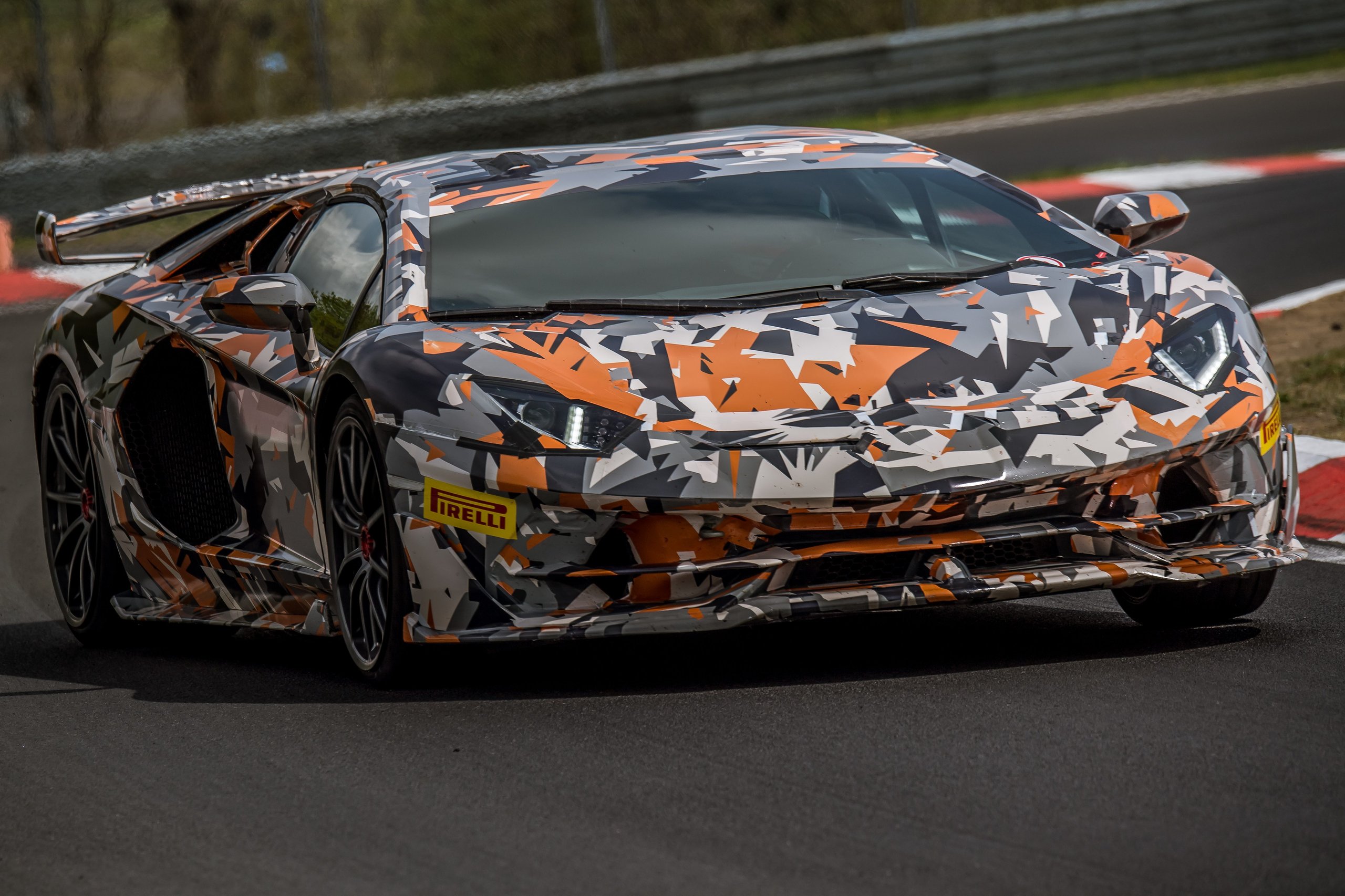
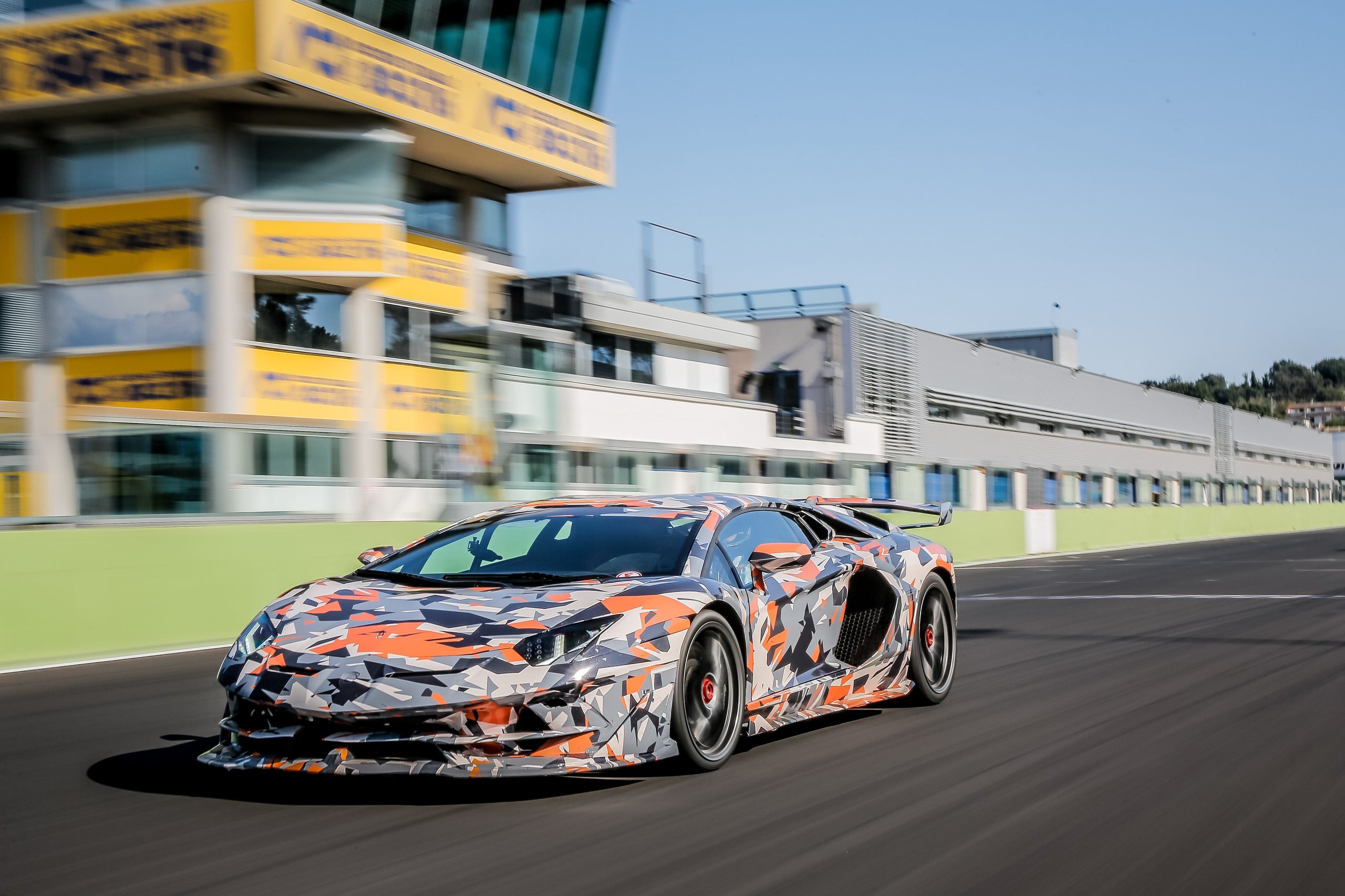
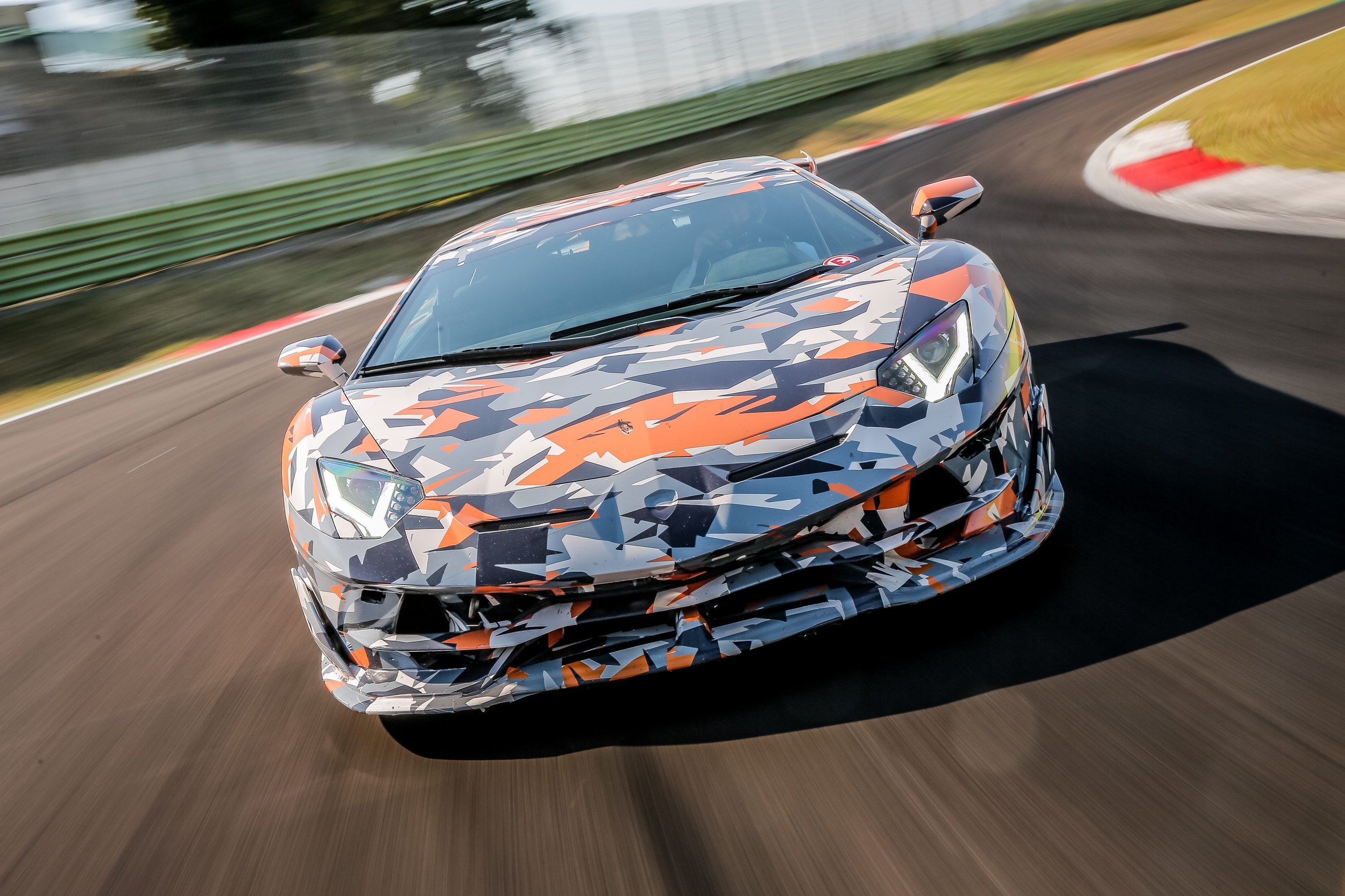
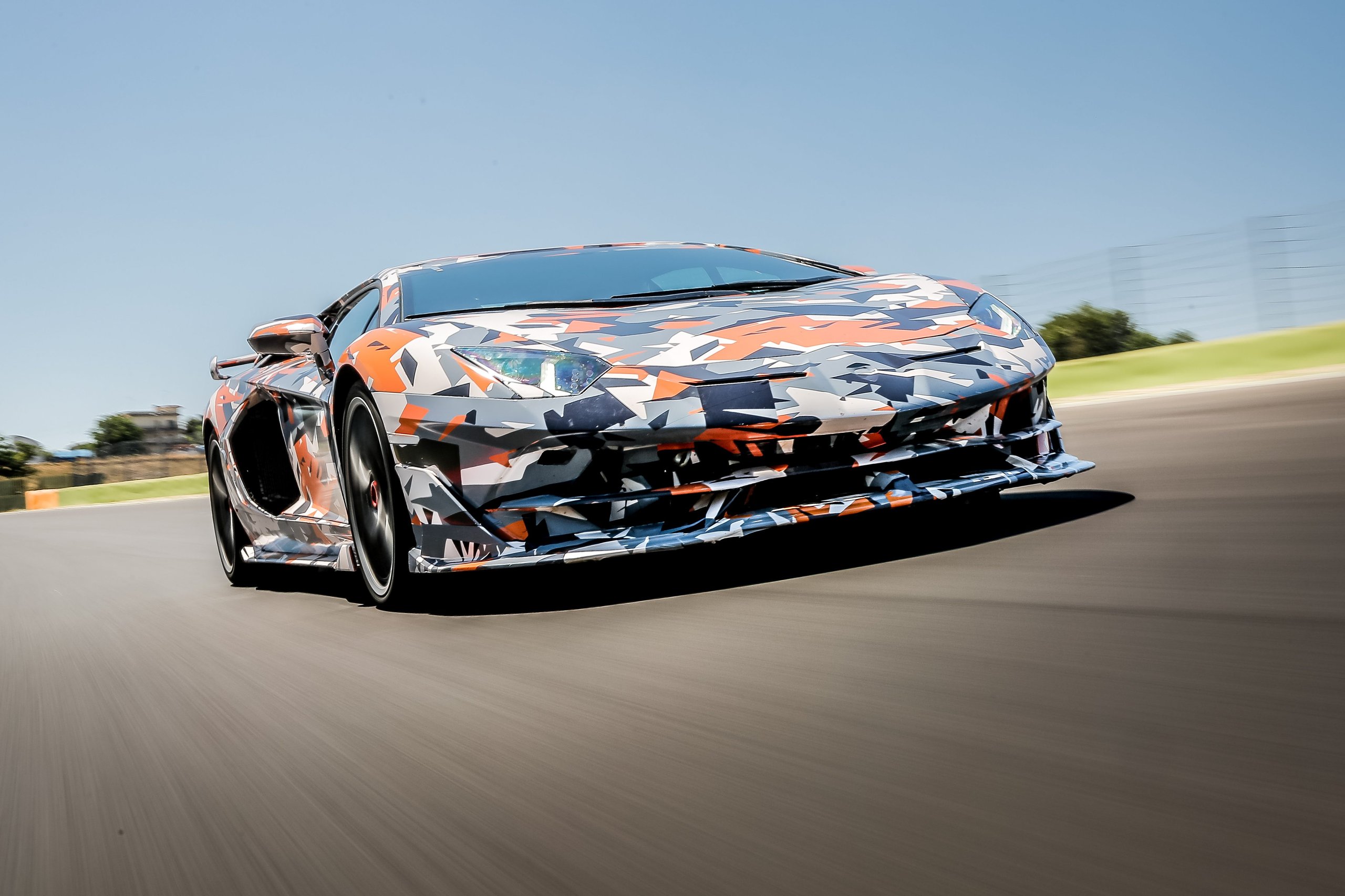
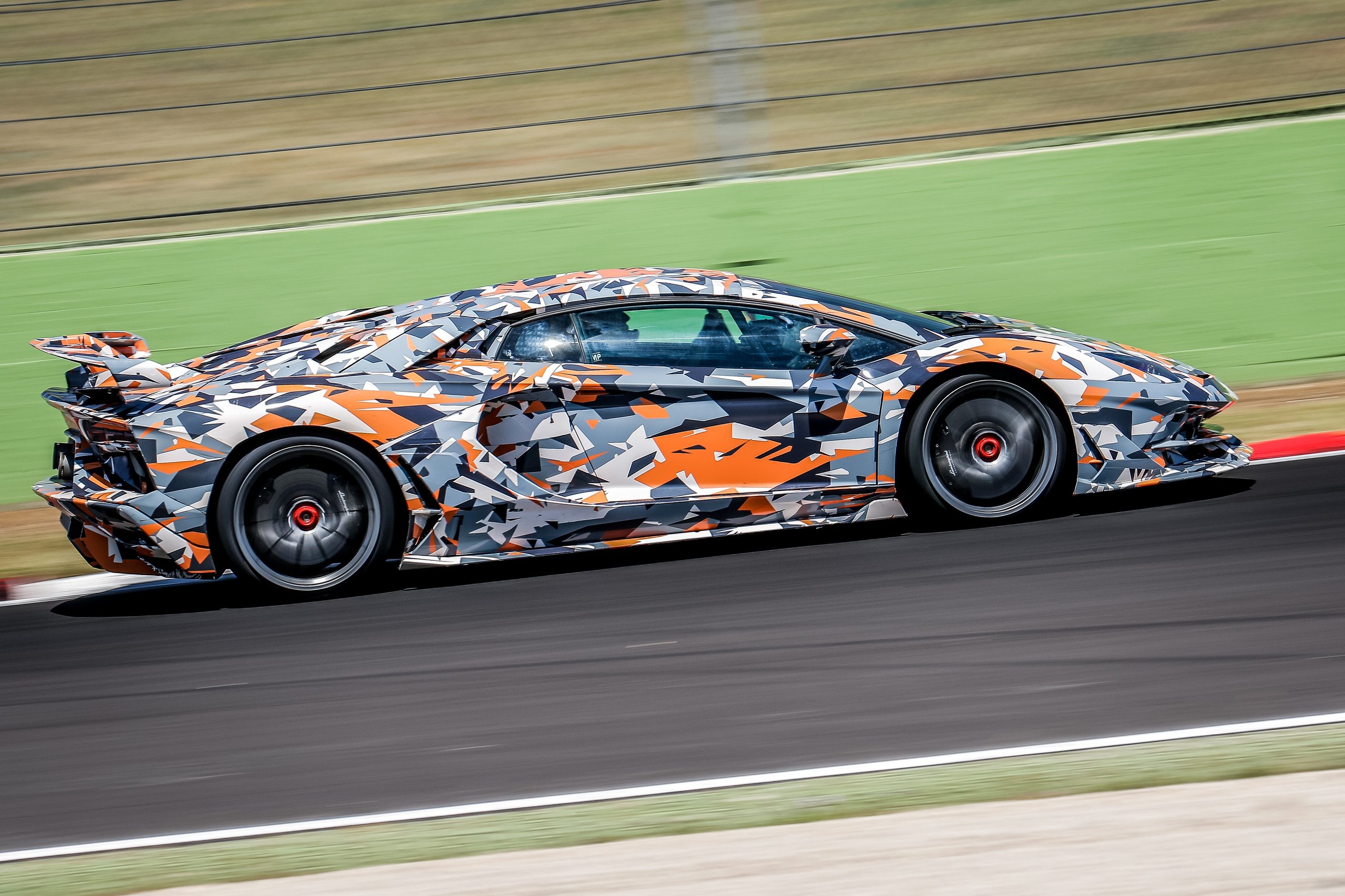
Before anyone outside Sant’Agata Bolognese has seen the finished car in the metal, Lamborghini sent a camouflaged Aventador SVJ prototype around the Nürburgring Nordschleife and came back with a 6:44.97 production car lap record. Official Lamborghini driver Marco Mapelli handled the 20.6 km lap under formal scrutiny from Remak personnel, who certified the time using VBOX-Racelogic GPS instrumentation. Cameras inside and out, plus full telemetry, recorded every meter. This was no casual development session.
The sequencing is deliberate. Lamborghini confirmed the SVJ will be unveiled at Monterey Car Week in August, meaning the company chose to lead with a verified performance credential rather than a design reveal. That tells you exactly how Lamborghini wants the SVJ perceived: as a machine whose engineering argument precedes its aesthetics. For context, the Huracán Performante previously held this record with a 6:52.01 set in 2016. The SVJ shaved more than seven seconds off its smaller sibling’s benchmark, a staggering margin on a circuit where tenths define generations of development. And it did so with a naturally aspirated V12 at a time when rivals increasingly lean on forced induction and hybrid assistance for their fastest laps. That fact anchors everything that follows.
What the ‘Jota’ Suffix Actually Means
Lamborghini says the SVJ takes its “Jota” suffix following a company tradition that denotes track-focused talent. The lineage traces back to the one-off Miura Jota built by factory test driver Bob Wallace in the late 1960s, a car that stripped the Miura P400 to its competitive essentials and became a legend partly because Lamborghini never officially sanctioned it. The suffix resurfaced on the Diablo SE30 Jota in the 1990s and reappeared with the Aventador J, a roofless one-off shown at Geneva in 2012.
What connects these cars is not a shared specification but a shared philosophy: each one pushed the existing platform toward its absolute limit, often with less concern for road comfort than the base model allowed. The SVJ follows that template precisely. Lamborghini describes the car as a convergence of its technologies designed to exceed current performance benchmarks, and the Nürburgring time suggests that description carries real substance. Every Jota has been a statement about how far the naturally aspirated architecture can stretch; the SVJ simply stretches it further than any predecessor.
ALA 2.0: How Active Aerodynamics Won Seven Seconds
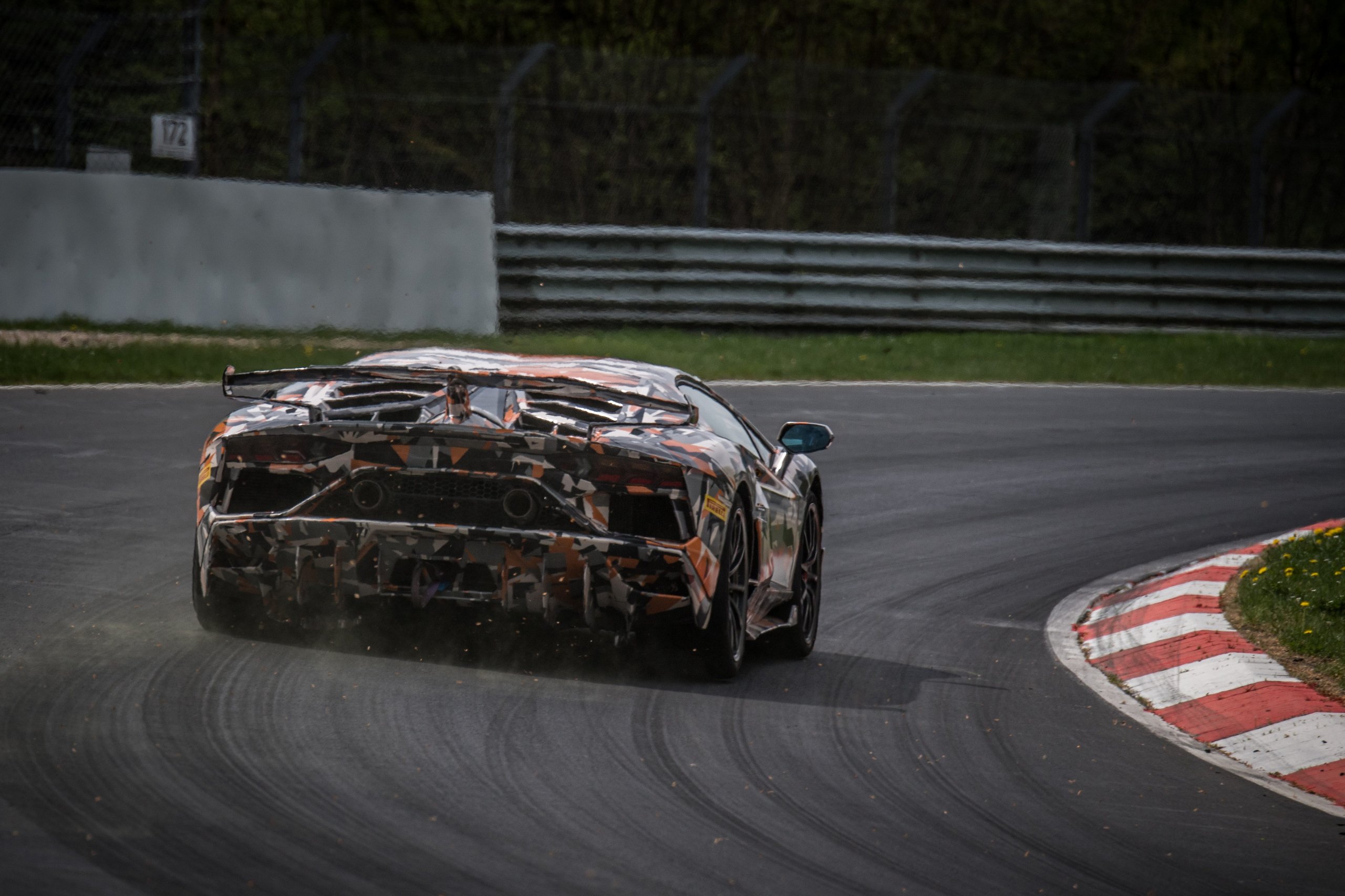
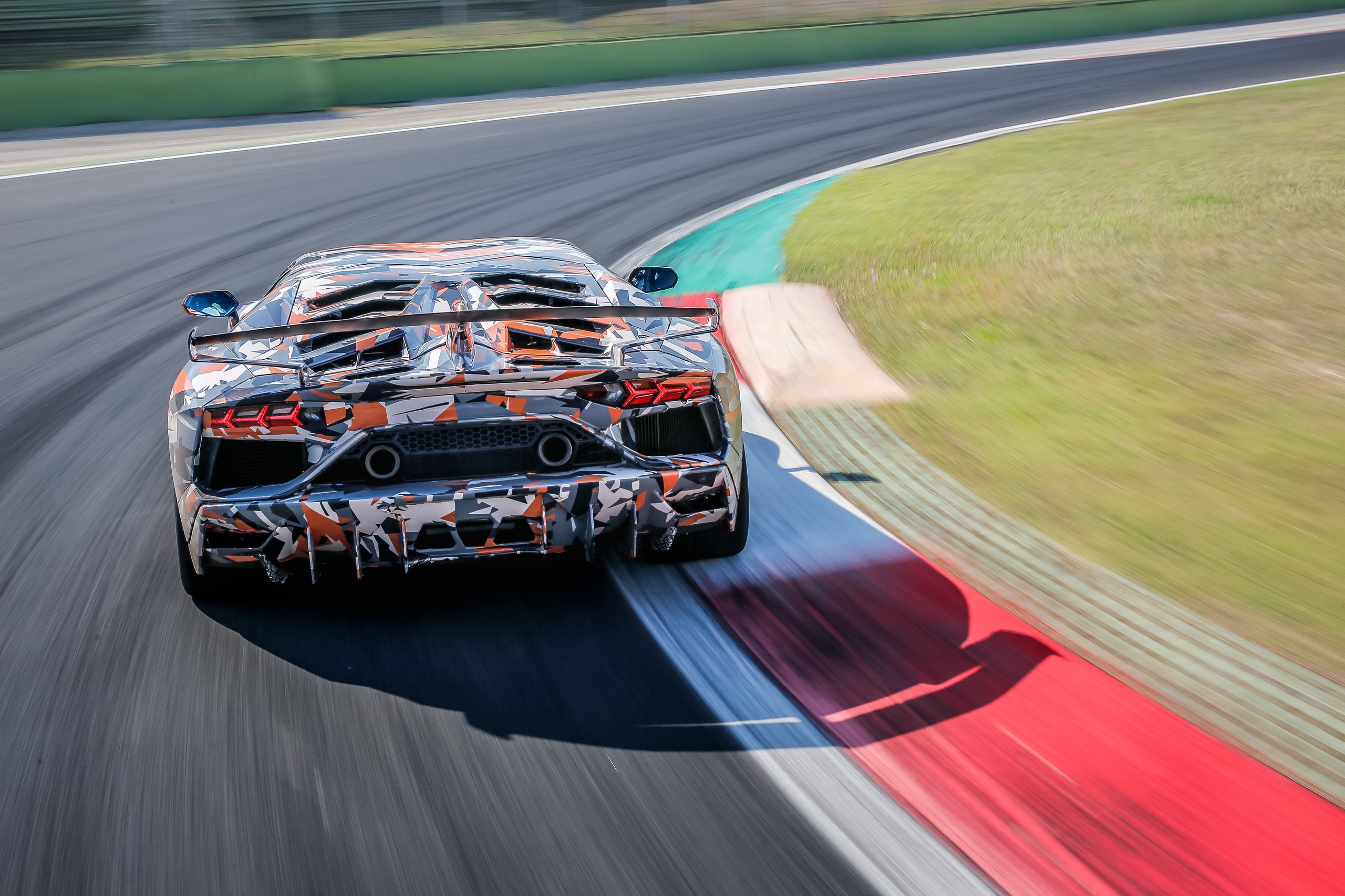
Central to the SVJ’s record is Lamborghini’s patented ALA 2.0 active aerodynamics system with aero vectoring, an evolution of the system first introduced on the Huracán Performante. ALA stands for Aerodinamica Lamborghini Attiva, and the principle is straightforward even if the execution is anything but: electronically controlled flaps in the front splitter and rear wing open and close to toggle between low-drag and high-downforce configurations depending on what the car needs at any given moment.
On a straight, the flaps open to let air pass through the rear wing, reducing drag and allowing the V12 to push the car harder. Under braking and through corners, those flaps close, turning the wing into a full downforce-generating surface. The genuinely clever part is the aero vectoring element: the system can open flaps on one side of the rear wing independently, creating an aerodynamic yaw moment that helps rotate the car into corners. Think of it as active torque vectoring that works through air pressure rather than brake intervention.
Lamborghini says development involved significant CFD simulation to optimize ALA performance, and that the resulting downforce required a complete rework of the Aventador’s active and passive dynamic systems. Perhaps the most telling detail: a virtual Nürburgring simulation of the SVJ already returned a faster lap than the Huracán Performante before the car turned a physical wheel on the Nordschleife. The engineering team knew, before the tires ever touched tarmac, that the SVJ’s aerodynamic architecture represented a step change rather than an incremental improvement. Seven seconds on the stopwatch proved them right.

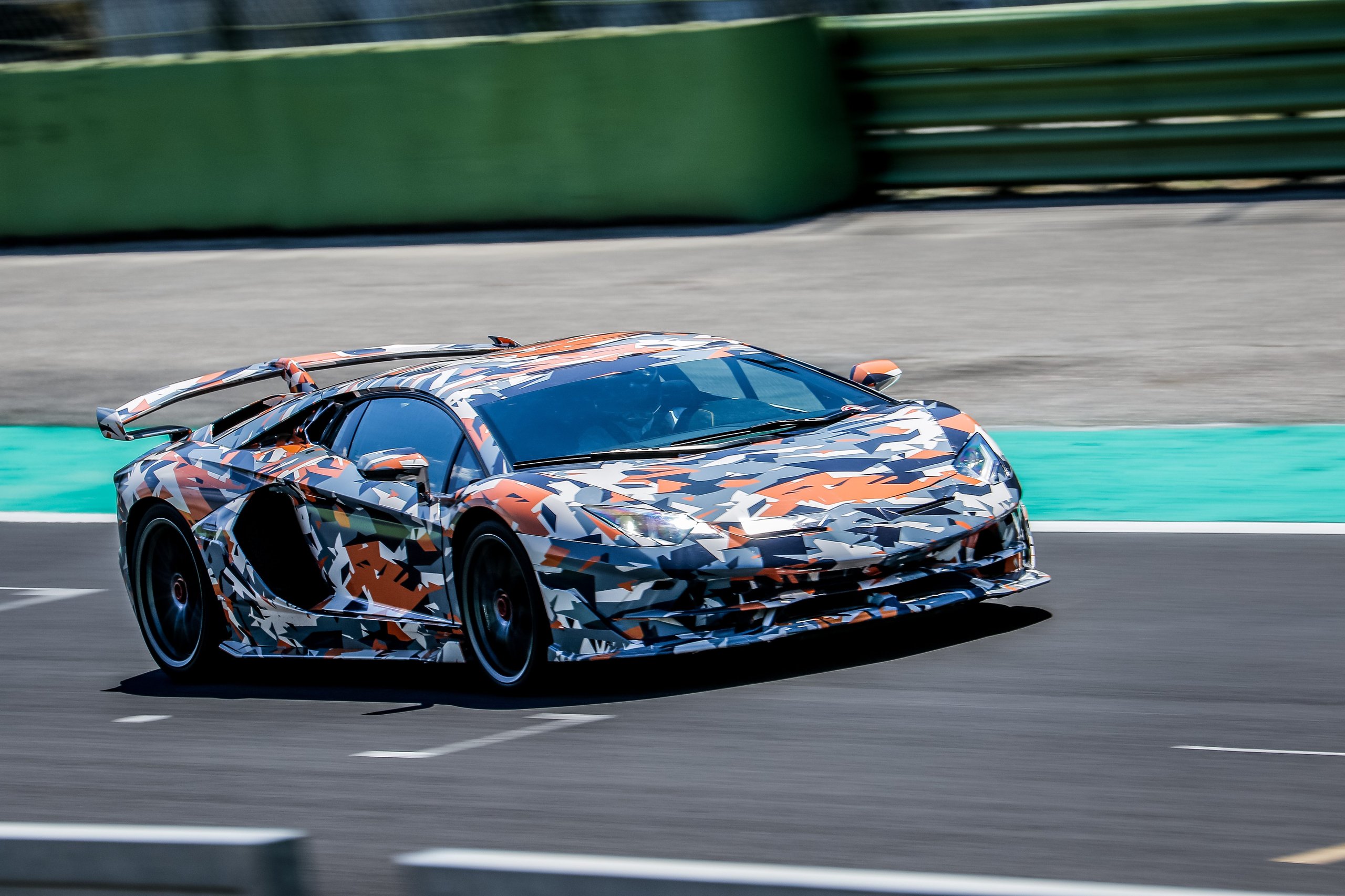
The camouflaged Lamborghini Aventador SVJ powers through a turn, leaving a trail behind.
Beyond the Wing: Chassis, Tires, and the Full Engineering Argument
ALA 2.0 gets the headlines, but the SVJ’s record run depended on a broader engineering overhaul that reinforces the same thesis: Lamborghini wrung every fraction from its naturally aspirated platform rather than bolting on a turbocharger or a hybrid module. The car’s four-wheel drive system, rear-wheel steering, and ESC were entirely re-engineered. The chassis is significantly stiffer than the Aventador LP 750-4 SV, the steering was retuned for sharper response, and the weight-to-power ratio sits at 1.98 kg/hp, achieved through lightweight materials and higher power output.
Tire choice for the record deserves particular attention. The SVJ comes standard with specifically developed Pirelli P Zero Corsa rubber, but for the Nürburgring attempt, Lamborghini fitted optional Pirelli P Zero Trofeo R tires. Pirelli technicians provided extensive on-site support. The Trofeo R is a semi-slick compound available to customers as a factory option, so the record was set on rubber any SVJ buyer can order, not a bespoke racing special.
For prospective buyers weighing the SVJ against an Aventador S for real-world use, forum discussion on Lamborghini-Talk reflects a practical split. The SVJ’s stiffer setup and lower front clearance make it a more demanding daily companion, and owners considering long European road trips tend to gravitate toward the S for its relative compliance. The SVJ rewards commitment to the track-focused experience, not casual boulevard cruising.

Mechanics meticulously prepare the camouflaged Lamborghini Aventador SVJ at the Nürburgring.
What the Record Signals for Lamborghini’s V12 Future
The SVJ’s 6:44.97 reclaims the Nürburgring production car record for Lamborghini after the Huracán Performante’s 6:52.01 was surpassed in September 2017. Lamborghini’s Nordschleife history now reads as a deliberate escalation: the Aventador LP 750-4 SV broke the sub-seven-minute barrier in 2015, the Performante pushed into the low 6:50s a year later, and the SVJ now sits comfortably in the mid-6:40s.
The strategic significance lies in the engine behind the time. In a competitive landscape shifting toward forced induction and electrification, the SVJ’s naturally aspirated V12 remains a defining differentiator. Lamborghini is proving that its signature powertrain architecture, paired with advanced aerodynamics and chassis engineering, can still compete at the absolute frontier of road-car performance. For the brand’s enthusiast base, that validation carries weight well beyond the stopwatch.
Several critical details remain unconfirmed ahead of the Monterey unveiling. Lamborghini’s announcement does not include exact horsepower or torque figures, a 0-60 time, top speed, or pricing. According to FastestLaps.com, the SVJ produces 770 ps at a weight of 1,718 kg, figures consistent with the stated 1.98 kg/hp ratio, though Lamborghini itself will presumably confirm the full specification sheet in August. For now, the record speaks louder than any data table could, and it speaks in the unmistakable voice of a naturally aspirated twelve-cylinder engine that Lamborghini clearly has no intention of retiring quietly.

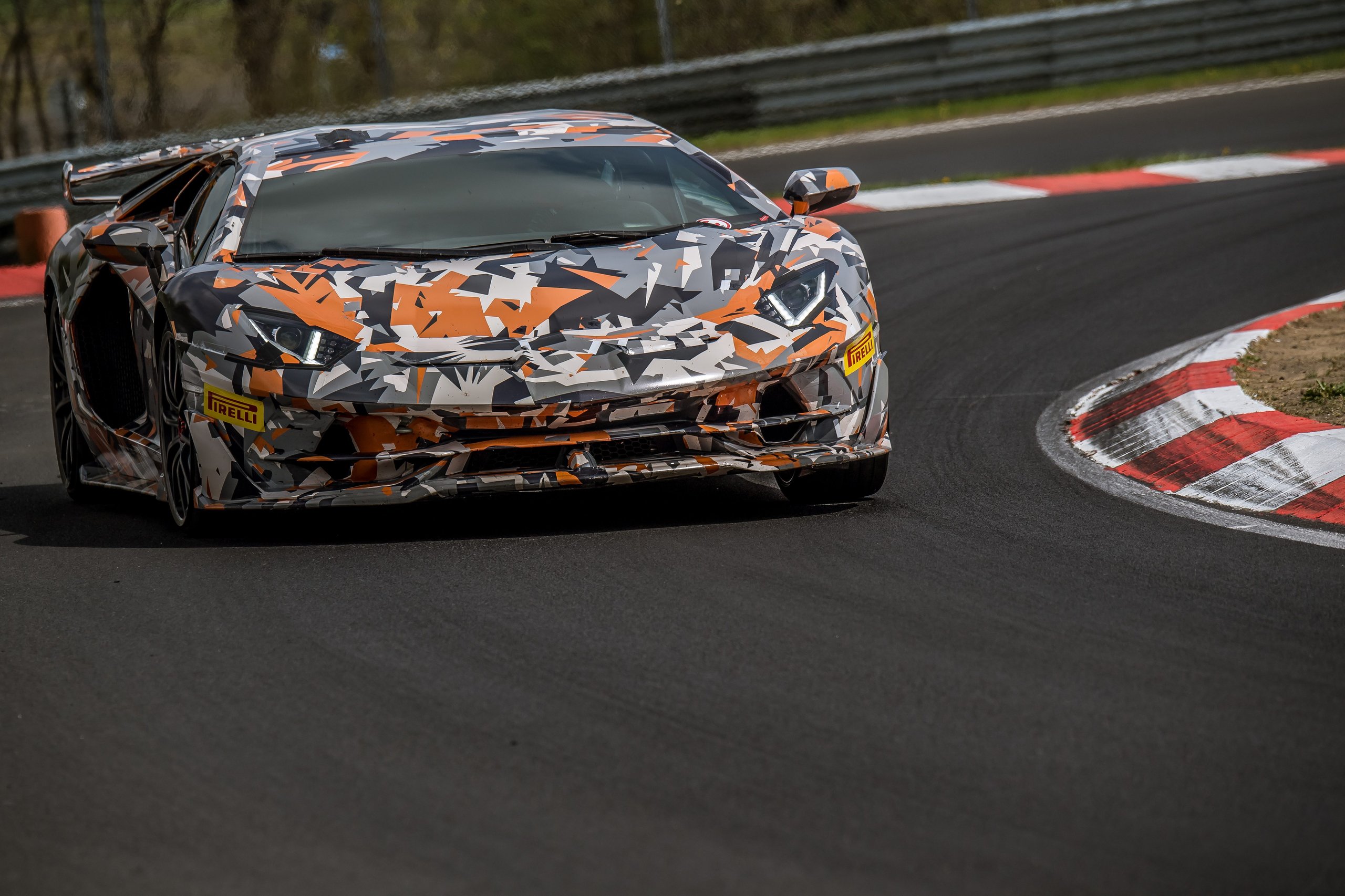
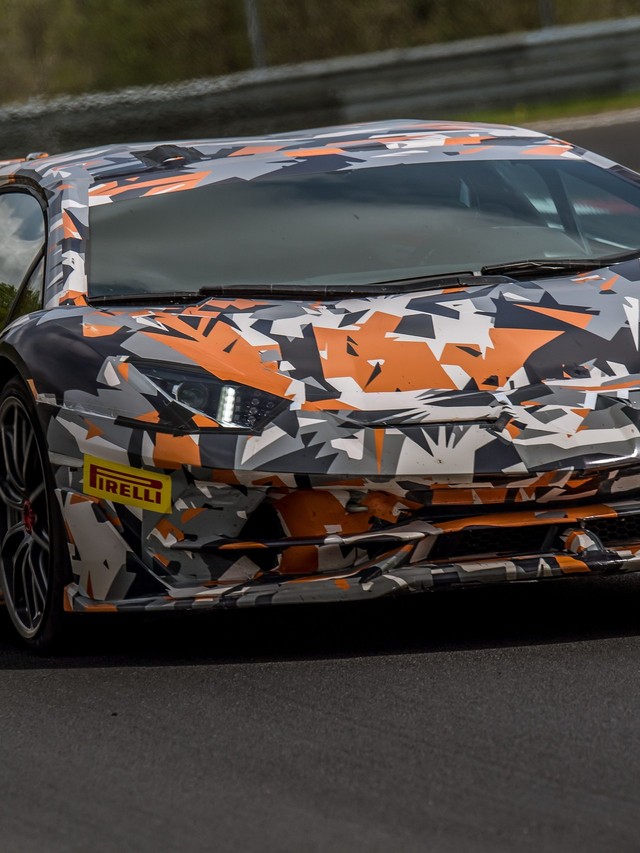
The camouflage-wrapped Lamborghini Aventador SVJ prototype takes on a challenging corner at the Nürburgring.
Gallery