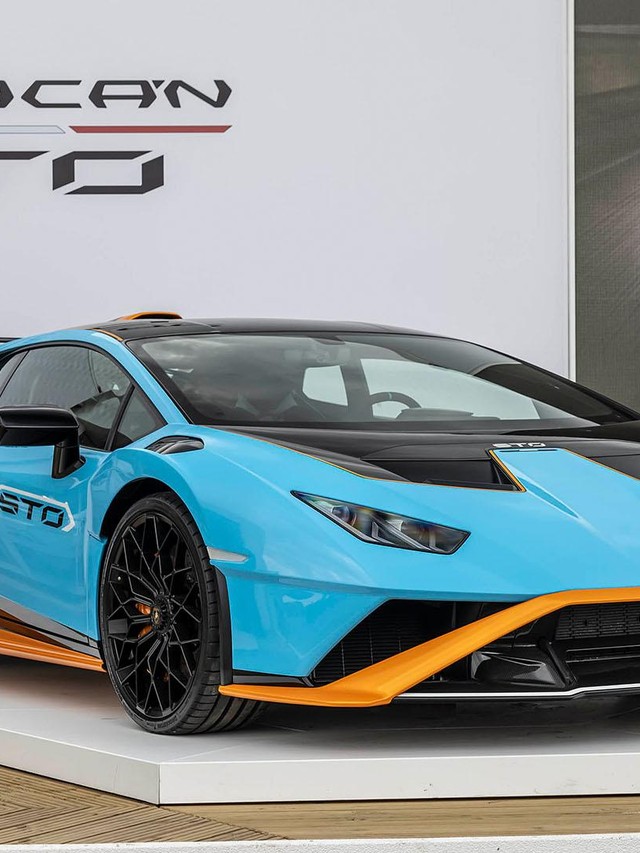
Round 4 at Spa: A Mid-Season Showdown on Motorsport’s Most Demanding Stage
Close to 50 Lamborghini Huracán Super Trofeo Evos will line up on the Spa-Francorchamps grid this weekend for Round 4 of the 2018 Super Trofeo Europe season, sharing the Belgian circuit’s marquee weekend with the 24 Hours of Spa. The event marks the midpoint of six double rounds in the continental calendar, and with 22 different race winners already this year across four classes, every qualifying session and rolling start carries genuine championship weight.
Lamborghini says the one-make series has never skipped Spa-Francorchamps in its ten editions, a claim that underscores just how central this circuit is to the series’ identity. According to one report, Spa is the only venue to appear on every Super Trofeo Europe calendar since the championship launched in 2009. That kind of continuity is rare in customer racing, where calendars shift constantly to accommodate promoters and sanctioning bodies. For Squadra Corse, the Belgian Ardennes remain non-negotiable.
The sheer breadth of competition makes this round especially compelling. The PRO, PRO-AM, AM, and Lamborghini Cup classes all remain tightly contested, and the grid size rivals or exceeds what most single-manufacturer series manage globally. Ferrari’s Challenge series and Porsche’s Carrera Cup both field substantial grids, but few luxury supercar brands consistently put this many identical machines on track at once. The scale of the Super Trofeo operation is a quiet flex that Lamborghini rarely gets enough credit for. More importantly, it is the scale that makes the series function as a genuine talent incubator rather than a gentleman’s parade.
The Huracán Super Trofeo Evo: Lamborghini’s Purpose-Built Equalizer
Every car on the Spa grid runs the same Huracán Super Trofeo Evo specification, and that uniformity is the entire point. In a one-make series, the car itself becomes the controlled variable, the thing that strips away equipment advantages and forces the driver to the surface. Lamborghini’s naturally aspirated 5.2-liter V10 sits at the center of the formula, a powerplant whose linear throttle response and predictable torque curve reward precision over brute aggression. One perspective within the motorsport community suggests the V10’s characteristics are specifically designed to isolate driver skill, and anyone who watches a Super Trofeo start through Eau Rouge can see why that argument holds up.
The Huracán platform replaced the Gallardo Super Trofeo, which itself was a properly serious piece of kit: stripped interior, full rollcage, competition damping, upgraded brakes on 18-inch wheels with slick tires, and an e-gear system locked into its most aggressive mode. Those earlier Gallardo race cars could pull 2.1G under braking. The Huracán Evo carried that philosophy forward with more sophisticated aerodynamics, including the prominent rear wing and front splitter visible on every car in the field, plus refinements to the chassis that reflected nearly a decade of one-make racing data.
A later iteration, the EVO2, would reportedly push the V10’s output to 620 horsepower with further aerodynamic development by Lamborghini Centro Stile. In 2018, though, the Evo specification already represents the sweet spot between raw performance and the kind of mechanical durability that lets amateur and professional drivers alike race hard for 50 minutes without worrying about exotic hybrid components or turbo reliability. The car is deliberately analog in a way that makes the racing better, and that analog character is precisely what allows the series to function as a proving ground for young talent. When the machinery cannot mask deficiencies, the cream rises fast.
Forging Future Stars: The Young Drivers Program in Action
Giacomo Altoé arrives at Spa leading the PRO class standings, a position he has held since the season opener at Monza. The young Italian, racing with Antonelli Motorsport, carries two victories and a new distinction: membership in the Lamborghini Squadra Corse Young Drivers Program. Established in 2014, that program evaluates candidates on far more than lap times. Lamborghini says the assessment covers performance progression, consistency, technical feedback quality, physical fitness, and professionalism. The goal is to build complete racing drivers, not just fast ones.
The pipeline works. Maximilian Paul and Mattia Michelotto, both products of the Young Drivers Program, were promoted to Lamborghini Squadra Corse factory driver status. Michelotto began in the Super Trofeo Europe championship as a teenager and won the World Finals in his debut season. Paul secured a DTM race victory and won races in International GT Open. These are not hypothetical career paths. They are documented outcomes that give the Super Trofeo series a purpose beyond weekend trophies.
Altoé’s presence at the top of the 2018 PRO standings, paired with experienced co-driver Daniel Zampieri, fits the pattern precisely. The series gives young talent structured seat time against a mix of seasoned professionals and ambitious amateurs, all in identical machinery. Riccardo Agostini, the 2017 PRO champion of the North American series and a World Final winner, returns to the Antonelli Motorsport stable this weekend as well, adding another layer of competitive depth. When a former champion shows up to race in the same car as a Young Drivers Program member, the talent development story writes itself.
For anyone wondering how drivers progress beyond Super Trofeo, the answer increasingly points toward GT3. The forthcoming Temerario GT3, Lamborghini’s first competition car fully designed, developed, and built in-house, represents the next rung on that ladder. Squadra Corse’s investment in identifying and training drivers through Super Trofeo feeds directly into the personnel needed to campaign more complex machinery at the GT3 level and beyond.
Championship Battles: What to Watch Across All Four Classes
The PRO title fight between Altoé/Zampieri and the Imperiale Racing pairing of Karol Basz and Vito Postiglione is separated by just three points. Basz and Postiglione bring an enviable consistency as the only crew to score victories at every circuit so far, with three wins total. Behind them, Bonaldi Motorsport’s James Pull and Kelvin Snoeks sit third, 20 points off the lead but remarkably consistent despite not yet taking a win. Their season trajectory suggests the breakthrough is a matter of when, not if. Spa’s long straights and high-speed compressions tend to reward exactly the kind of measured racecraft Pull and Snoeks have shown all year.
PRO-AM belongs, for now, to Loris Spinelli and Juan Perez. The Antonelli Motorsport duo holds a ten-point advantage over Takashi Kasai, built on four victories. Kasai, sharing the VS Racing entry with Philipp Wlazik, opened the year with a Monza win and remains dangerous. Emanuele Zonzini and Lorenzo Bontempelli (Iron Lynx) broke through at Misano and sit third, while Hans-Peter Koller and Edoardo Liberati (VS Racing) have been qualifying threats, with Liberati claiming two consecutive pole positions.
The AM class produced a lead change at Misano when Manuel Lauck and Florian Scholze (Dörr Motorsport) jumped to the top of the standings. They won at Spa last year, so the Ardennes circuit could be favorable ground. Andrej Lewandowski (VS Racing) trails by three points after dominating Silverstone alongside August MacBeth. Glauco Solieri, in his first Super Trofeo Europe season with Antonelli Motorsport, and Raffaele Giannoni (Automobili Tricolore) round out a four-way battle that could swing on a single qualifying session.
The Lamborghini Cup, the series’ gentleman-driver class, features four different winners from four rounds. Gerard Van der Horst leads with two victories, holding a 15-point margin over James Collado (AGS Events). Supachai Weeraborwornpong (Team Lazarus) and Willian Van Deyzen (Van der Horst Motorsport) each have one win. This is the class where the one-make format delivers its purest entertainment: identical cars, varying experience levels, and enough unpredictability to keep the standings fluid through the final round at Vallelunga in November.
A few names on the entry list add color beyond the championship math. Carrie Schreiner shares the Konrad Motorsport cockpit with Fabian Vettel, brother of four-time Formula 1 world champion Sebastian. Francesca Linossi partners with Stefano Colombo in the Iron Lynx entry. Neither pairing is a novelty act; both are racing for points in a field where finishing position matters for team budgets and driver reputations.
Why Super Trofeo Still Matters for Lamborghini’s Motorsport Identity
One-make racing series serve a dual commercial purpose that rarely gets discussed plainly. They sell cars: someone buys every one of those nearly 50 Huracán Super Trofeo Evos on the grid, and the teams pay for parts, tires, logistics, and entry fees that flow back through Lamborghini’s customer racing ecosystem. The less visible return is strategic. The Super Trofeo functions as a controlled laboratory where Squadra Corse can observe driver talent, validate component durability under race conditions, and build the organizational muscle needed to run larger motorsport programs. The 22 different winners this season are not a statistical curiosity; they are proof that the format works as intended, surfacing ability that might otherwise stay hidden behind equipment disparities.
The progression from the Gallardo-based series that launched in 2009 to the current Huracán Evo platform mirrors Lamborghini’s broader product evolution. Each generation of the race car refined the engineering lessons learned on circuits like Spa, Monza, and Silverstone. Those lessons now feed into the Temerario GT3 program, which Lamborghini describes as its first fully in-house competition car. The connection is direct: the people, processes, and performance data accumulated across a decade of Super Trofeo racing inform how Squadra Corse approaches a GT3 car that will compete against Ferrari, Porsche, McLaren, and Mercedes-AMG in the world’s most competitive customer racing category.
The timing raises an interesting question for enthusiasts watching Lamborghini’s road car lineup shift toward hybrid powertrains. The Super Trofeo’s naturally aspirated V10 formula remains a pure expression of the combustion-era Lamborghini character, and there is no confirmed timeline for when, or whether, the one-make series will transition to a hybridized platform. For now, the Huracán Super Trofeo Evo occupies a specific and valuable niche: a race car that sounds, responds, and punishes mistakes like a naturally aspirated mid-engine supercar should, without the additional complexity of electric motors or battery management.
For anyone considering Super Trofeo participation, the series structure, with its World Final bringing together European, Asian, and North American champions, offers a genuine competitive pathway that few rival one-make championships can match. The car is purpose-built, not a road car with a rollcage bolted in, and the grid sizes mean you are actually racing, not circulating in a procession. Whether the long-term future involves the Temerario platform or something else entirely, the 2018 season at Spa represents the Huracán formula at its most mature and competitive.
Free practice sessions run Thursday, qualifying and Race 1 take place Friday, and Race 2 closes the weekend Saturday morning. Both races will stream live on the Squadra Corse website and the Lamborghini Squadra Corse Facebook page.
Gallery


