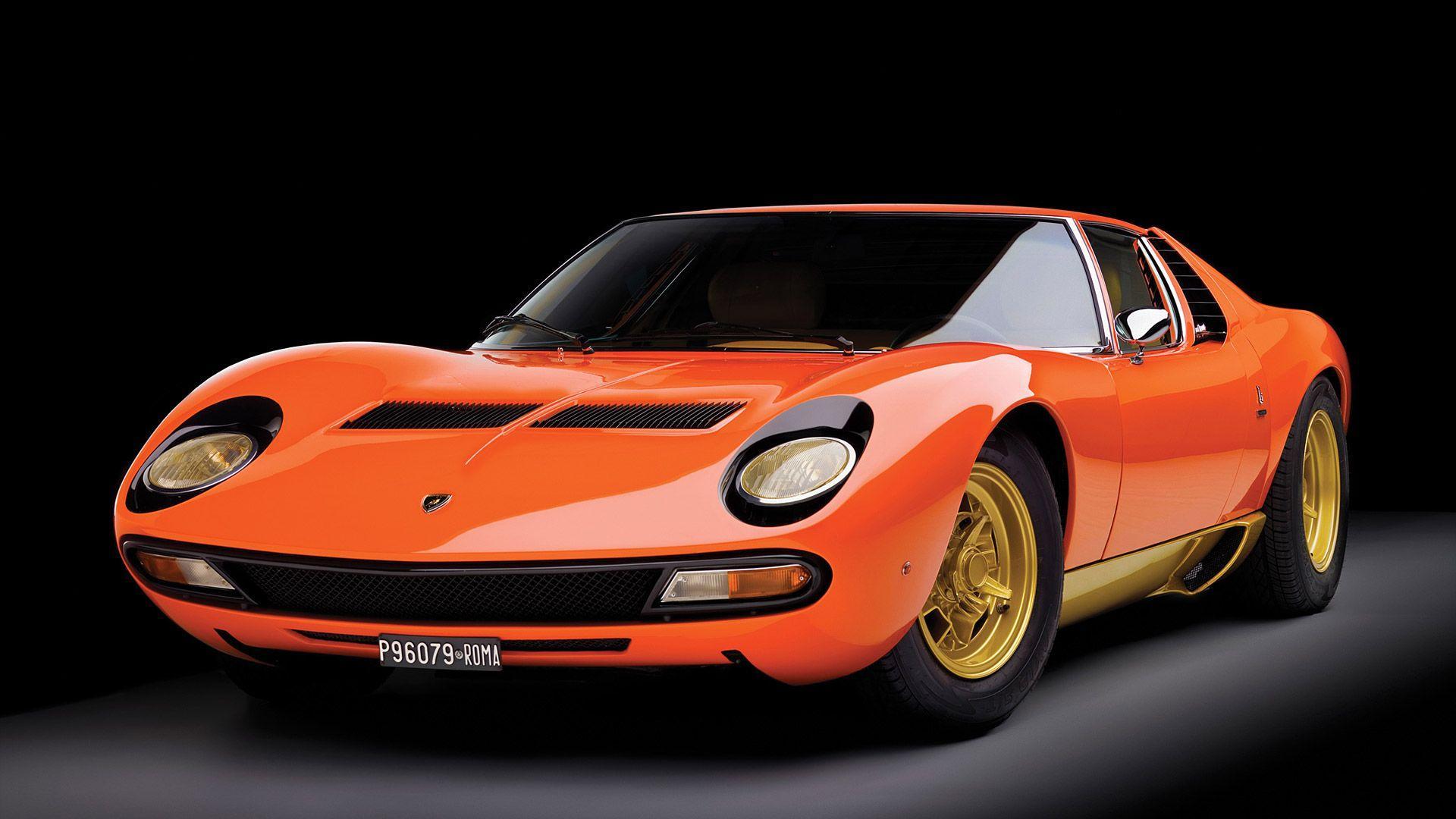
The 'Italian Job' Miura Survived: Cinema's Most Famous Supercar Myth, Debunked
Polo Storico proved that the orange Miura seen driving through alpine tunnels was never destroyed.
For decades, enthusiasts believed Paramount Pictures destroyed a Lamborghini Miura P400 while filming the opening sequence of the 1969 classic The Italian Job.
The forensic clue hidden in the headrests
Enzo Moruzzi swapped the white seats for black test seats to protect the leather, but the white headrests — mounted to the glass divider, not the seats — stayed in place, and that mismatch became a key clue Polo Storico later used to confirm the car's identity.
Too important to destroy
The Miura was already the most pursued car of its era, and the factory understood that destroying one for a film would have been an act of vandalism, not showmanship.
Back to the factory, then to its first owner
The driving Miura returned to Sant'Agata Bolognese in perfect condition, had its white seats reinstalled, and was prepared for delivery to its first buyer, an Italian collector based in Rome.
Every detail checked against factory records
Polo Storico cross-referenced the Arancio Miura paint, the left-hand-drive configuration, the white leather interior specification, and the telltale white headrests against archival production documentation.
The car that defined the modern supercar
The Miura's revolutionary mid-engine layout was conceived as an after-hours project by engineers Giampaolo Dallara, Paolo Stanzani, and test driver Bob Wallace, initially without the blessing of Ferruccio Lamborghini himself.
A quiet life across five decades of collections
The driving Miura went on to live a quiet life across multiple collections for nearly five decades before Polo Storico tracked it down and certified its identity.
Moruzzi's role in the two-car solution
Enzo Moruzzi, who regularly transported cars to clients and film sets for Lamborghini, spotted a nearly complete Miura P400 on the production line that matched the wrecked car's color, configuration, and interior.
The instinct that preserved the evidence
Moruzzi was a trusted figure who knew the cars and the factory floor well enough to spot a color match on the production line without consulting a database, and his decision to swap the seats left the physical evidence that proved decisive half a century later.
The investigation that settled the question
Fritz Kaiser's 2018 acquisition set the stage for a proper investigation that ultimately drew on Lamborghini's own archives and the firsthand memories of people like Moruzzi who were present at the factory when the film was made.
A lineage that traces back to the Miura
Every mid-engine Lamborghini since — from the Countach through the Diablo, the Murciélago, and on to the current Revuelto — traces its fundamental layout philosophy back to the Miura.