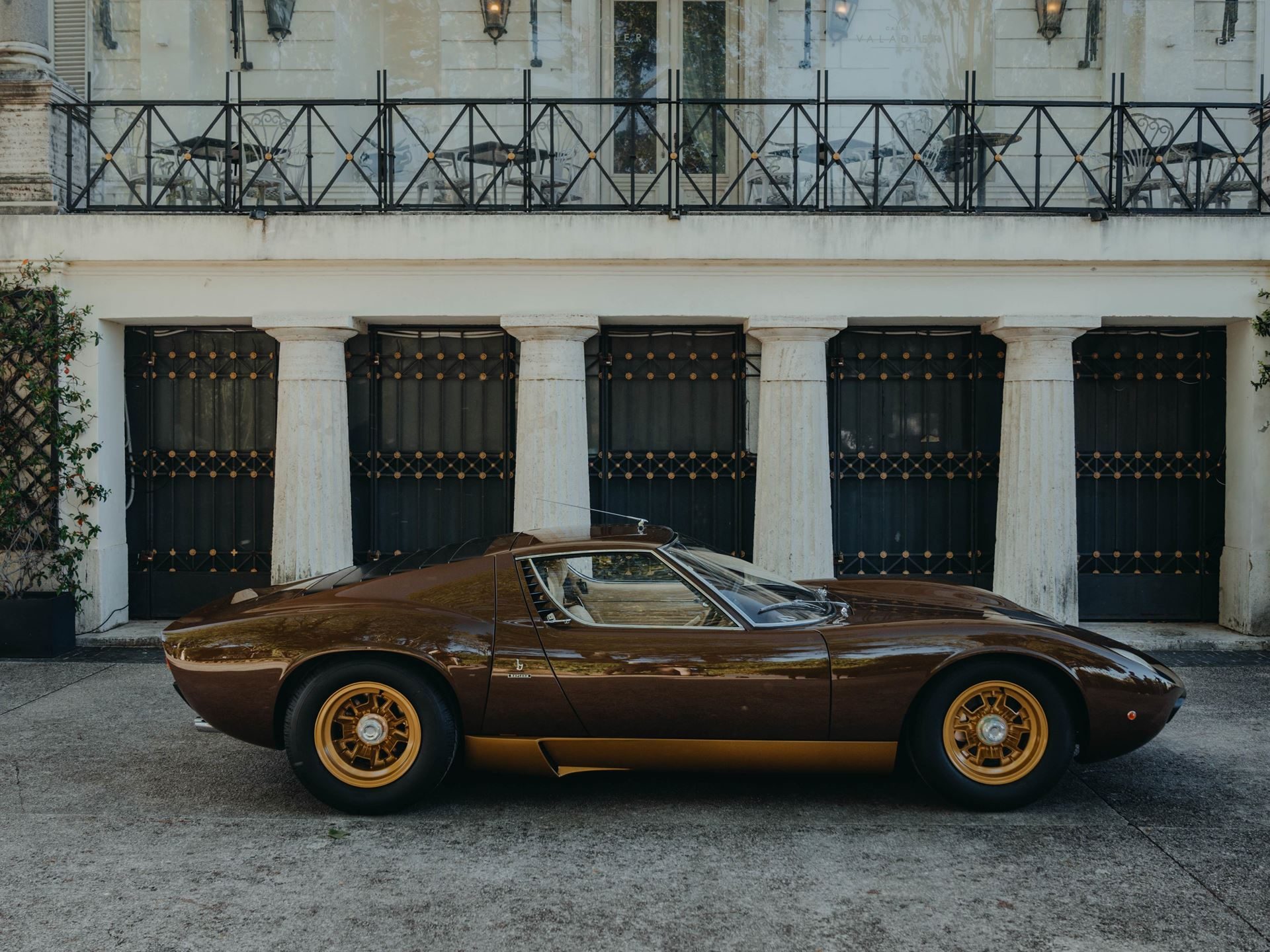
Three Years to Rebuild One Miura SV: Inside Polo Storico's Factory Restoration
A 1972 Miura SV returned to its original configuration now carries full Polo Storico certification.
A Miura SV that arrived in Sant'Agata Bolognese at the end of 2023 in a non-original configuration has now been returned to factory spec after three years of work by Polo Storico, Lamborghini's dedicated heritage department.
Rear badge and louvers on the certified SV
Factory heritage programs sit at the top of the collector car world's hierarchy of trust, and the Polo Storico seal carries real financial weight when Miura values are stratospheric.
Matching the paint to 1972 production records
Identifying the correct chromatic specification for the paintwork required extensive historical research, because the shade evolved across Miura models and production years.
Period-correct cabin details sourced from the production sheet
Every interior detail had to be researched and sourced or fabricated to match the original production sheet, a process that helps explain why the restoration consumed three full years.
Miuras gather in Rome for the model's 60th anniversary year
The Miura celebrates its 60th anniversary in 2026, and both the restored SV and the famous 1968 Miura P400 from The Italian Job appeared together at the Anantara Concorso Roma, both carrying Polo Storico's seal of authenticity.
Polo Storico's guarantee of original identity
Giuliano Cassataro, Head of After Sales at Automobili Lamborghini, said the team is proud to have completed a restoration that returns the Miura SV to its original identity according to historical standards that only Polo Storico, as official custodian of the brand's heritage, can guarantee.
The highest tier of authenticity for a Miura
A Polo Storico-certified Miura SV, restored over three years using original production documentation and presented at a major concours, represents the highest tier of authenticity available for this model.
Six-figure stakes in the details
The difference between a correct car and a nearly correct car can represent six figures at auction, which is why factory certification from Polo Storico matters most to collectors tracking the Miura market.
Polo Storico's role as brand custodian
Lamborghini Polo Storico authenticates and restores vehicles using historical and documentary research combined with production-sheet verification.
The restored Miura SV cabin in Senape leather
The cabin received restored air conditioning preparation, reinstated hazard lights, a more compact steering wheel, and an extended handbrake lever, all verified against the car's original build records.
Mechanical authenticity beneath the bodywork
The SV, widely credited with defining the modern supercar through its revolutionary mid-engine layout, is described as the final evolution of the Miura lineage.
The Italian Job Miura wins in Rome
Three other historic Lamborghinis joined the concours, including the 1968 Miura P400 from The Italian Job, which secured first place and received the special "La vettura di Cinecittà" award recognizing its cinematic significance.
Primary-source access that independents cannot replicate
Polo Storico works from production documentation that records each car's original characteristics, and for a model like the Miura, where small details evolved between production years and individual cars sometimes left the factory with unique specifications, that primary-source access is irreplaceable.