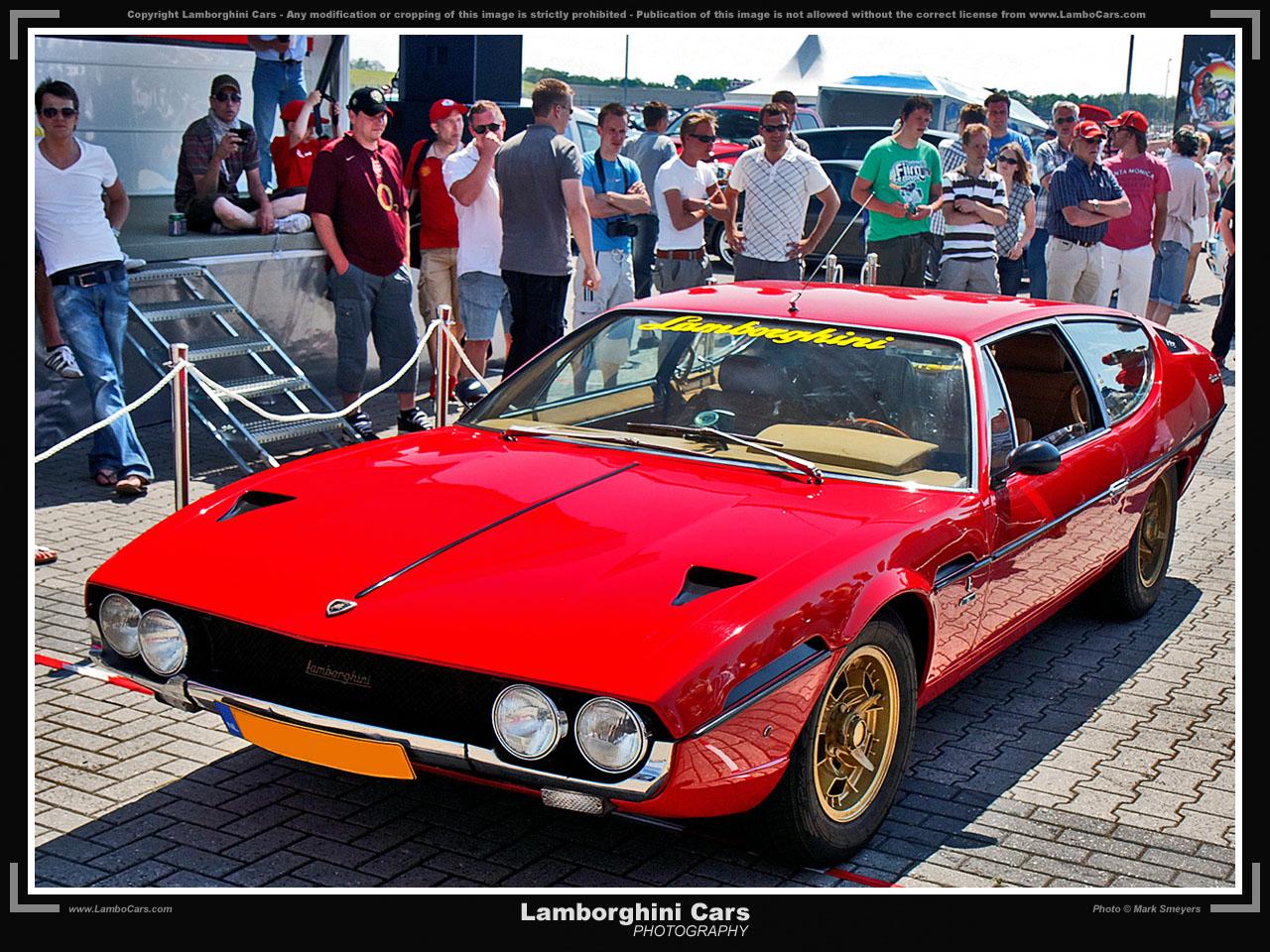
Twenty V12 Lamborghinis Crossed 800 km of Italy to Prove the Espada and Islero Still Belong on the Road
A Polo Storico driving tour celebrated fifty years of Lamborghini's front-engine grand tourers.
Lamborghini's roots run through front-engine grand tourers powered by the same family of V12 engines that made the Miura famous.
Two sides of Lamborghini's 1968 grand touring ambition
The Espada was Lamborghini's first true four-seater and also the first model to offer an optional automatic transmission, a genuinely radical idea from a company whose founder believed refined GT cars could outclass anything from Maranello.
Forty-one years with the same Lamborghini
A 1973 Espada Series 3 won an award for the longest continuous single ownership after its English owners restored the car and registered for the tour to coincide with their golden wedding anniversary.
Polo Storico's commitment beyond the trophy pieces
Polo Storico's willingness to organize a dedicated tour for the Espada and Islero, models that rarely headline auction results, suggests a broader commitment to the entire production history rather than just the most valuable cars.
Factory attention and collector confidence
A model that the manufacturer actively restores, certifies, and celebrates is a model the market takes more seriously.
Nearly 800 km from Perugia to Sant'Agata Bolognese
The route spanned nearly 800 km through Umbria, Tuscany, and Emilia-Romagna, threading through Orvieto and Assisi before concluding at Lamborghini's headquarters in Sant'Agata Bolognese.
Shared V12, fundamentally different propositions
Both the Espada and Islero debuted at the 1968 Geneva Motor Show, sharing a 4.0-liter V12 engine but offering fundamentally different propositions.
6,000 km from Oslo without a support truck
A rare Espada Series 2 won the award for farthest distance traveled after its Norwegian crew drove a 6,000 km round trip from Oslo across Scandinavian highways and Alpine passes, without a support truck or a factory chase car.
Restoration philosophy: original condition, not concours perfection
Polo Storico aims to return cars to their original factory condition, including minor imperfections that were present at the time of production, rather than chasing modern concours perfection.
The engineering argument makes itself
Twenty V12 Lamborghinis crossed 800 km of Italian roads and arrived in excellent condition, with Polo Storico standing behind every restored seal and remanufactured part.