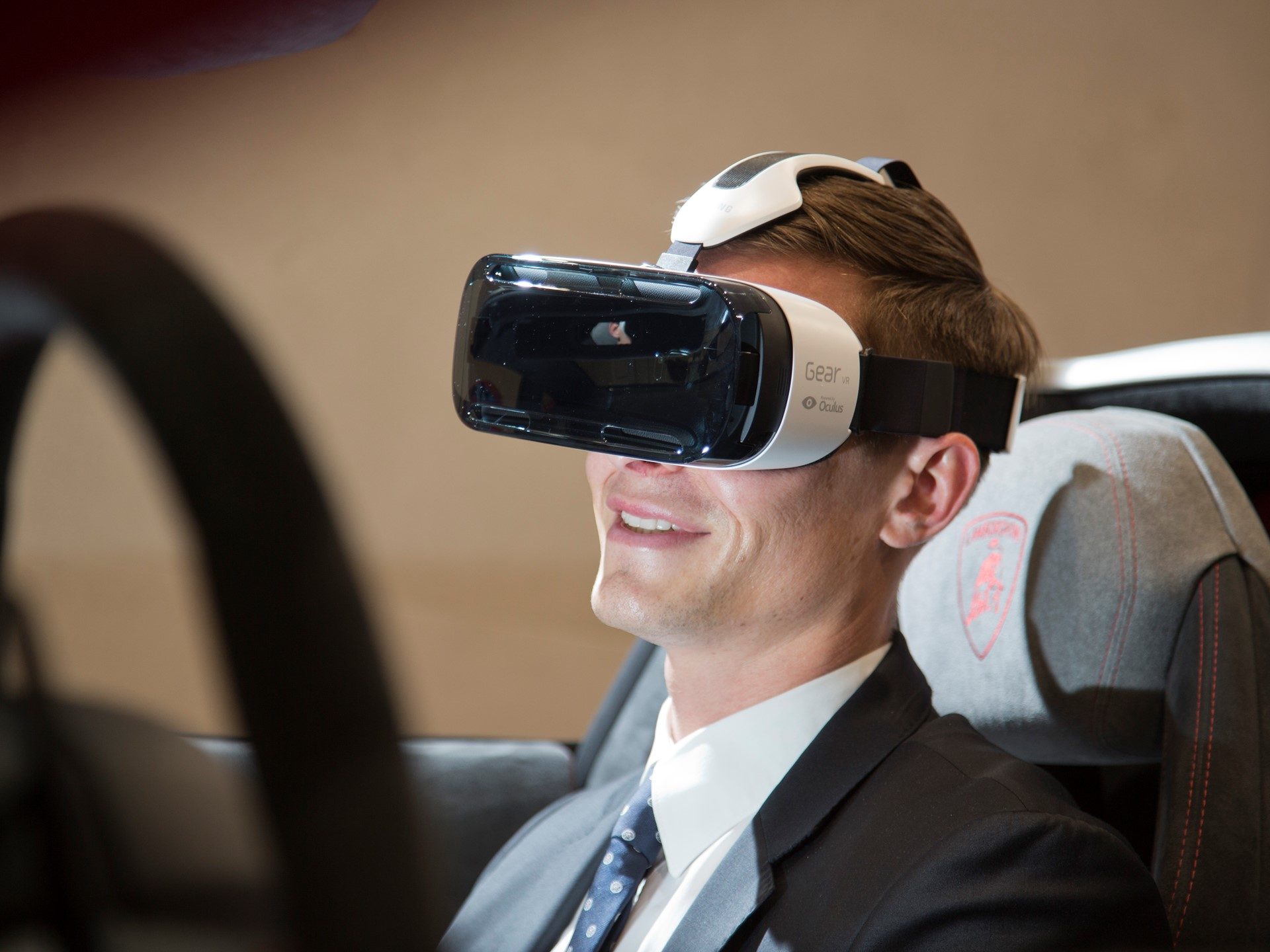
When Lamborghini Strapped a Galaxy Note 4 to Your Face and Called It the Future
A 2015 Geneva VR demo that quietly launched a decade-long digital strategy
At the 2015 Geneva International Motor Show, Lamborghini and Samsung built a virtual reality driving experience around the Huracán LP 610-4, powered by the Samsung Gear VR headset with Oculus technology.
The Huracán platform that anchored the VR demo
The Galaxy Note 4's Quad HD display, split across both eyes, could not genuinely convey the violence of a 5.2-liter V10 accelerating to redline, but fidelity was never the point.
Aspiration over heritage: Lamborghini's tech-forward bet
Lamborghini understood that the teenagers who once pinned Countach posters to bedroom walls had grown into adults putting Huracán configurator screenshots on Instagram, and partnering with Samsung and Oculus positioned the brand as willing to experiment.
The cockpit the VR experience replicated in spatial audio
The binaural audio was likely the strongest element, because a naturally aspirated V10 at full song is one of the most distinctive sounds in automotive engineering and spatial audio can convey its character even when the visuals lag behind.
Telemetry X: the digital thread reaches 5G
Lamborghini unveiled Telemetry X at the 2024 Consumer Electronics Show, an advanced track-connectivity concept integrating a real-time remote garage using 5G, a biometric data system analyzing the driver's physical state, and an enhanced coaching interface.
The Huracán LP 610-4's commercial legacy
The Huracán LP 610-4 that starred in the 2015 VR demo went on to become one of the most commercially successful Lamborghinis ever built, eventually spawning the Performante, the EVO, the STO, and the Sterrato before the platform gave way to the Temerario.
Three virtual routes mapped to the Huracán's ANIMA drive modes
Visitors could sit inside a show car, strap on the headset, and find themselves transported onto a cliff-hugging Sport route along the Amalfi Coast, a gentler Strada cruise through the town of Amalfi, or a flat-out Corsa lap of the Imola racing circuit.
Lamborghini on the show floor while rivals stayed traditional
Ferrari kept its experiential marketing closer to traditional channels such as factory tours, track days for owners, and carefully controlled media drives, while a consumer VR activation at a major 2015 show was unusual for any luxury automaker.
Early mobile VR's limits versus the Huracán cockpit
The Galaxy Note 4 ran a 2560×1440-pixel display split across both eyes, and anyone who used early mobile VR remembers the screen-door effect, where visible pixel grids broke the illusion of immersion every time you focused on a detail.
Digital engagement as a core brand pillar from Geneva to CES
Lamborghini's willingness to partner with consumer-electronics companies, to show up at CES rather than only at Pebble Beach, and to treat digital engagement as a core brand pillar can all be traced back to that Geneva booth.
From primitive headset to real-time 5G telemetry
A decade later, Lamborghini's comfort with emerging technology looks less like a marketing stunt and more like the opening chapter of a strategy that now includes real-time 5G telemetry and biometric driver analysis.