Why Lamborghini Brought a 1968 Miura to Art Basel Instead of a Showroom
A lime green Miura, a design museum, and a deliberate statement about Italian cultural legitimacy
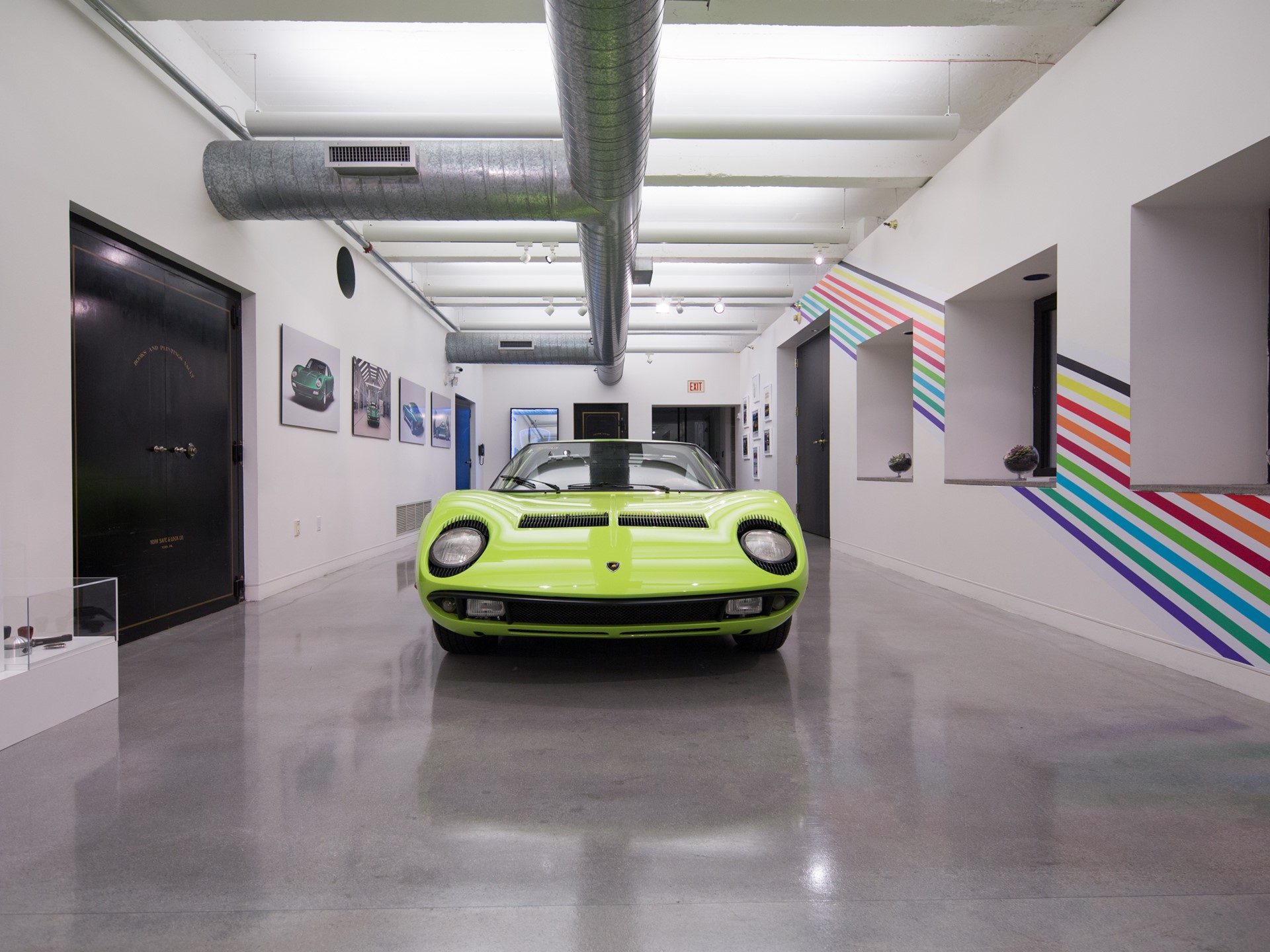
During Art Basel Miami Beach 2019, Lamborghini installed a 1968 Miura on the second floor of The Wolfsonian-FIU museum in Miami's Art Deco district, converting the gallery into an immersive 1960s installation titled A Dreamscape of Italian Design.
Gandini's engineering-driven proportions
Marcello Gandini designed the Miura's body at Bertone, reportedly going from initial sketch to prototype in roughly three months, and the result was a car whose proportions were dictated by engineering rather than decoration.
Lamborghini's roots beyond supercars
The Art Basel exhibit reinforced Lamborghini's Polo Storico program, the company's heritage division dedicated to certifying, restoring, and preserving classic models as a serious custodial effort.
A different cultural strategy than its rivals
Ferrari emphasizes motorsport heritage and lifestyle branding, Porsche leans into its engineering narrative, and McLaren skews toward technology and Formula 1, but Lamborghini chose to embed a historic car inside an independent museum's curated installation.
The Miura's enduring collector relevance
Clean Miura examples routinely command attention at major auction houses, and the model's presence at events like Pebble Beach and the Bologna Fair confirms its continued relevance in the collector world.
When cars share space with sculpture
The Wolfsonian-FIU is a serious design and propaganda museum, and positioning a car inside it surrounded by framed period images and lighting reserved for sculpture sent a deliberate message that the Miura belongs alongside furniture, typography, and industrial design.
The supercar template crystallized in 1966
Produced between 1966 and 1973, the Miura was the first supercar with a rear-mid-engine, two-seat layout to make a genuine international impact.
Heritage over horsepower at Art Basel
Lamborghini brought no Aventador SVJ, no Urus, and no configurator kiosk to Art Basel, and leading with a model more than 50 years old told you exactly what the company was selling: heritage, cultural legitimacy, and design permanence.
Peer of Italian design, not a guest
Lamborghini positioned itself as a peer of Italian architecture, furniture, and fashion by placing the Miura alongside non-automotive design masterpieces inside an independent museum rather than at a branded hospitality event.
The Miura's promise for Lamborghini's future
Anchoring its public identity to a model universally regarded as one of the most beautiful cars ever designed is Lamborghini's way of promising that aesthetic ambition will survive the powertrain transition into hybridization and electrification.