December 4, 2017: Lamborghini Bets the Brand on an SUV
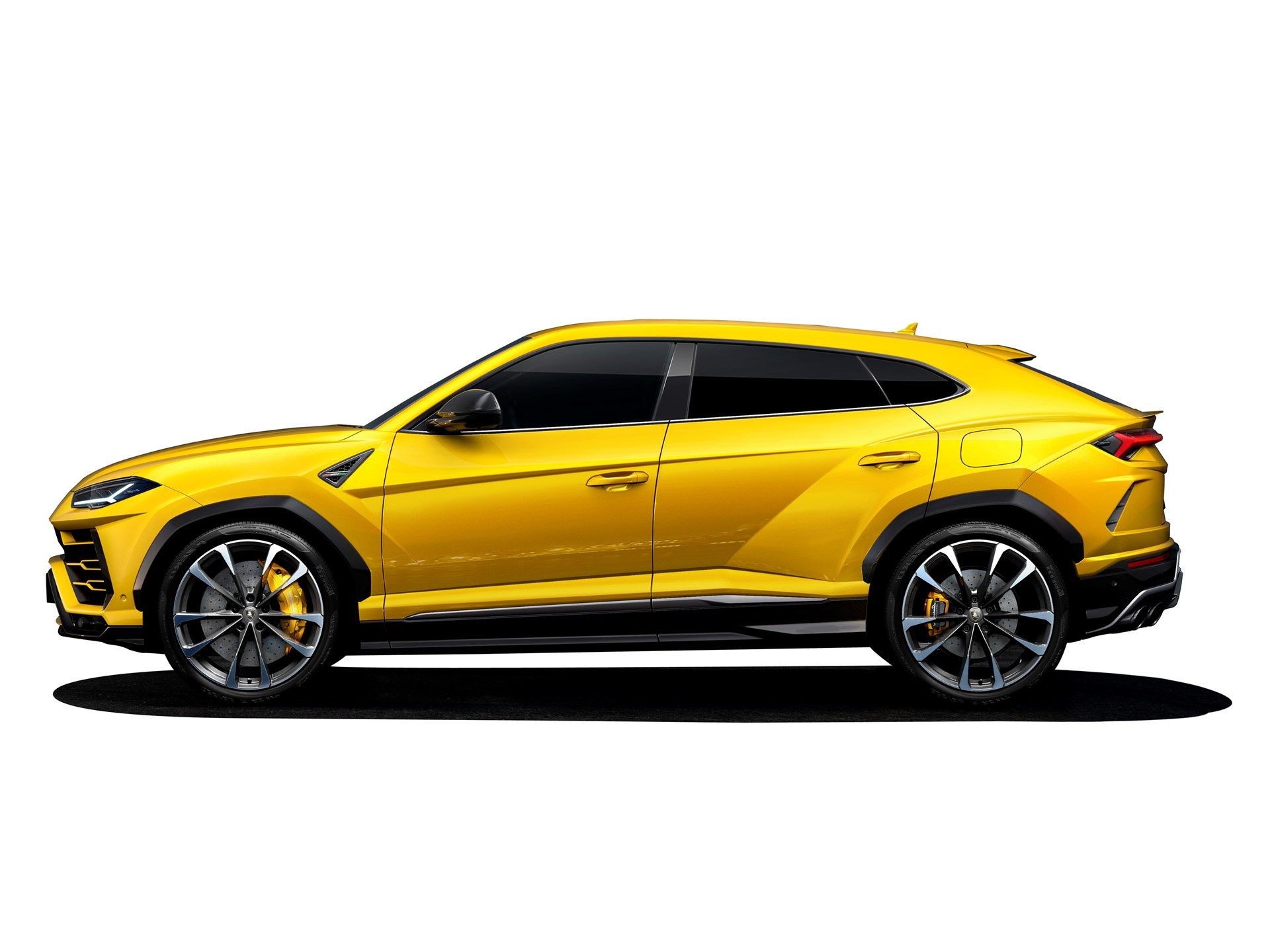
On December 4, 2017, Lamborghini did something that would have seemed absurd a decade earlier. The company that built its mythology on mid-engine V10s and V12s stood behind a five-door SUV in Sant’Agata Bolognese and told the world it belonged in the family. The Urus was Lamborghini’s third model line, its first production SUV since the brutish LM002 ended its run in 1993, and the first Lamborghini to carry a turbocharged engine. Stefano Domenicali, then chairman and CEO, framed the car as something the brand needed to invent rather than borrow: a vehicle Lamborghini called the world’s first “Super Sport Utility Vehicle,” a category label the company minted for itself.
The strategic intent was legible even before anyone turned the key. Lamborghini wanted to double its annual sales volume, fund future supercar development, and reach buyers who loved the badge but needed rear doors and a usable trunk. Every rival in the luxury performance space was either already selling SUVs or racing to build one. Porsche had proved the model with the Cayenne years earlier, and Bentley’s Bentayga was already on the road. Arriving late meant Lamborghini needed a sharper angle than “luxury SUV with a bull on the hood.” The angle it chose was raw performance, the kind that could be expressed in a single number: 305 km/h.
Why Lamborghini Needed the Urus More Than Purists Wanted to Admit
The commercial logic was straightforward, if uncomfortable for traditionalists. Lamborghini was a small-volume manufacturer competing against brands with far deeper pockets. The Huracán and Aventador were profitable, but they occupied a narrow slice of the market. An SUV could reach affluent buyers who would never consider a two-seat supercar for daily use, parents who wanted school-run capability without sacrificing the theatre of a Lamborghini badge.
Lamborghini was also operating within the Volkswagen Group, which gave it access to the MLB Evo platform shared with the Audi Q7, Bentley Bentayga, and Porsche Cayenne. Platform sharing is a pragmatic reality in the modern automotive industry, and it drew immediate fire. As CarBuzz reported, detractors called the Urus “a re-badged Audi RS Q8,” seeing shared underpinnings as proof of a cynical badge-engineering exercise. The criticism was predictable, and it missed the point. Every automaker in the VW Group portfolio uses shared architecture; what matters is what gets layered on top. Lamborghini’s engineering team layered aggressively.
Beyond platform economics, the Urus gave Lamborghini something it had never possessed: financial resilience. A brand that depends entirely on low-volume supercars is vulnerable to economic downturns, shifting emissions regulations, and the enormous R&D costs of electrification. The Urus was the funding mechanism for everything that came after, including the naturally aspirated V12 hybrid architecture that eventually powered the Revuelto.
Supercar Engineering in a Taller Body
Lamborghini’s answer to the “rebadged Audi” accusation lived in the chassis specification sheet. The Urus packed a 4.0-liter V8 Biturbo engine producing 650 PS at 6,000 rpm, with 850 Nm of torque arriving from just 2,250 rpm. An 8-speed ZF automatic transmission fed permanent all-wheel drive. Those numbers alone would have made headlines, but the chassis hardware is where Lamborghini genuinely separated the Urus from its platform siblings.
Active torque vectoring on the rear axle, rear-wheel steering, adaptive air suspension, active roll stabilization, and carbon-ceramic brakes all worked in concert to solve a fundamental physics problem: how do you make a vehicle this tall and this heavy respond like a car that sits six inches off the ground? Rear-wheel steering sharpened turn-in at low speeds and stabilized the car at highway velocities. Active roll stabilization fought the body lean that plagues tall vehicles in fast corners. The carbon-ceramic brakes, which Lamborghini says were the largest fitted to an SUV at the time, addressed the stopping distances demanded by a 305 km/h top speed.
Drivers could access up to six driving modes plus a customizable EGO mode through the Tamburo selector on the center console, toggling between road, sport, track, and off-road configurations. Lamborghini claimed a specific power output of 162.7 PS per liter and a power-to-weight ratio of 3.38 kg/PS, figures the company used to position the Urus above every SUV competitor on a performance-per-kilogram basis.
The result, on paper at least, was a 2.2-ton vehicle that could sprint from 0 to 100 km/h in 3.6 seconds and reach 200 km/h in 12.8 seconds. At launch, no other production SUV could match that top speed. For context, 305 km/h would have been a respectable figure for a sports car just fifteen years earlier.
The Purist Backlash (and Why It Faded)
Lamborghini knew the reaction was coming. Enthusiast forums and social media lit up with variations of the same complaint: this is not a real Lamborghini. The turbocharged V8 was a particular sore point. Every road-going Lamborghini before the Urus used a naturally aspirated engine, and the V10 and V12 soundtracks were central to the brand’s emotional appeal. A twin-turbo V8, no matter how potent, could not replicate that experience. Multiple owners and enthusiasts on forums like Lamborghini-Talk expressed disappointment that the Urus could be confused with other luxury SUVs on the road, lacking the visual shock value of a Huracán or Aventador.
The shared platform drew equal skepticism. Strip away the bodywork and the badge, and the Urus rides on the same bones as a Porsche Cayenne and a Volkswagen Touareg. For purists who believed Lamborghini should only build bespoke, ground-up supercars, this felt like a betrayal.
What shifted the conversation was seat time. Early criticism, as multiple reviewers noted, often came from photographs and preconceptions rather than from behind the wheel. Once journalists and owners experienced the Urus in person, opinions softened considerably. The car’s interior comfort, its surprising agility for its size, and the sheer violence of its acceleration won converts. It did not feel like a Cayenne with louder exhaust. It felt angrier, less refined in the best possible way, and more willing to rotate its rear end under power. Lamborghini followed the launch with a 114-city world tour that put the car in front of over 8,500 potential clients, letting the driving experience do the persuading that press photos could not.
Competitive Landscape: Setting the Benchmark Others Had to Chase
When the Urus arrived, the luxury performance SUV segment already included the Bentley Bentayga and various Porsche Cayenne variants. Lamborghini redefined the performance ceiling. The Bentayga offered supreme comfort and a W12 engine but positioned itself as a grand tourer, not a track weapon. The Cayenne Turbo was fast and dynamically sharp, yet it lacked the visual drama and emotional intensity that Lamborghini brought to the segment.
The Urus forced competitors to respond. Aston Martin developed the DBX707 with a clear eye on the performance benchmarks Lamborghini had established. Ferrari, which had long resisted the SUV concept, eventually launched the Purosangue in 2022, a vehicle Ferrari insists on calling an FUV rather than an SUV but which exists in the same competitive space. That Ferrari felt compelled to enter this market at all speaks to how thoroughly the Urus proved the commercial viability of a supercar brand building a high-riding vehicle.
For buyers weighing these options, the Urus occupied a specific niche: more theatrical than the Cayenne, more aggressive than the Bentayga, and available years before the Purosangue existed. It was the car for someone who wanted unmistakable presence in a school parking lot and genuine track capability on a weekend. Whether that combination appeals depends entirely on what you want a Lamborghini to be.
The Urus Effect: What One SUV Did to Lamborghini’s Trajectory
The commercial impact was enormous and swift. The Urus significantly boosted Lamborghini’s profitability and overall sales figures, transforming the company from a niche supercar builder into a brand with genuine volume. Revenue from Urus sales funded the development pipeline that produced the Huracán Tecnica, the Sterrato, and ultimately the Revuelto, Lamborghini’s first V12 hybrid supercar. Without the Urus’s financial contribution, the Revuelto’s complex plug-in hybrid V12 architecture would have been far more difficult to justify internally within the Volkswagen Group.
The Urus also served as a testing ground for Lamborghini’s electrification strategy. The Urus SE, a plug-in hybrid variant introduced later in the model’s lifecycle, married the twin-turbo V8 with an electric motor, previewing the kind of powertrain integration that now defines every new Lamborghini. The ST-X Concept, a race-spec Urus previewing a potential single-brand racing championship, signaled ambitions beyond the road.
Looking back from the vantage point of Lamborghini’s current lineup, the December 2017 launch reads less like a controversial departure and more like the moment Lamborghini secured its independence. The purists who worried about brand dilution got their answer in the Revuelto’s 1,015 horsepower and its screaming naturally aspirated V12. That engine exists, in part, because the Urus paid for it. For prospective buyers still debating whether an original 2017 Urus deserves garage space, the practical takeaway is clear: early examples represent the car that changed Lamborghini’s economics permanently, and clean, well-maintained launch-year models are likely to hold a distinct place in the brand’s history as the vehicle that made everything else possible.
Gallery