The Countach Goes to Washington
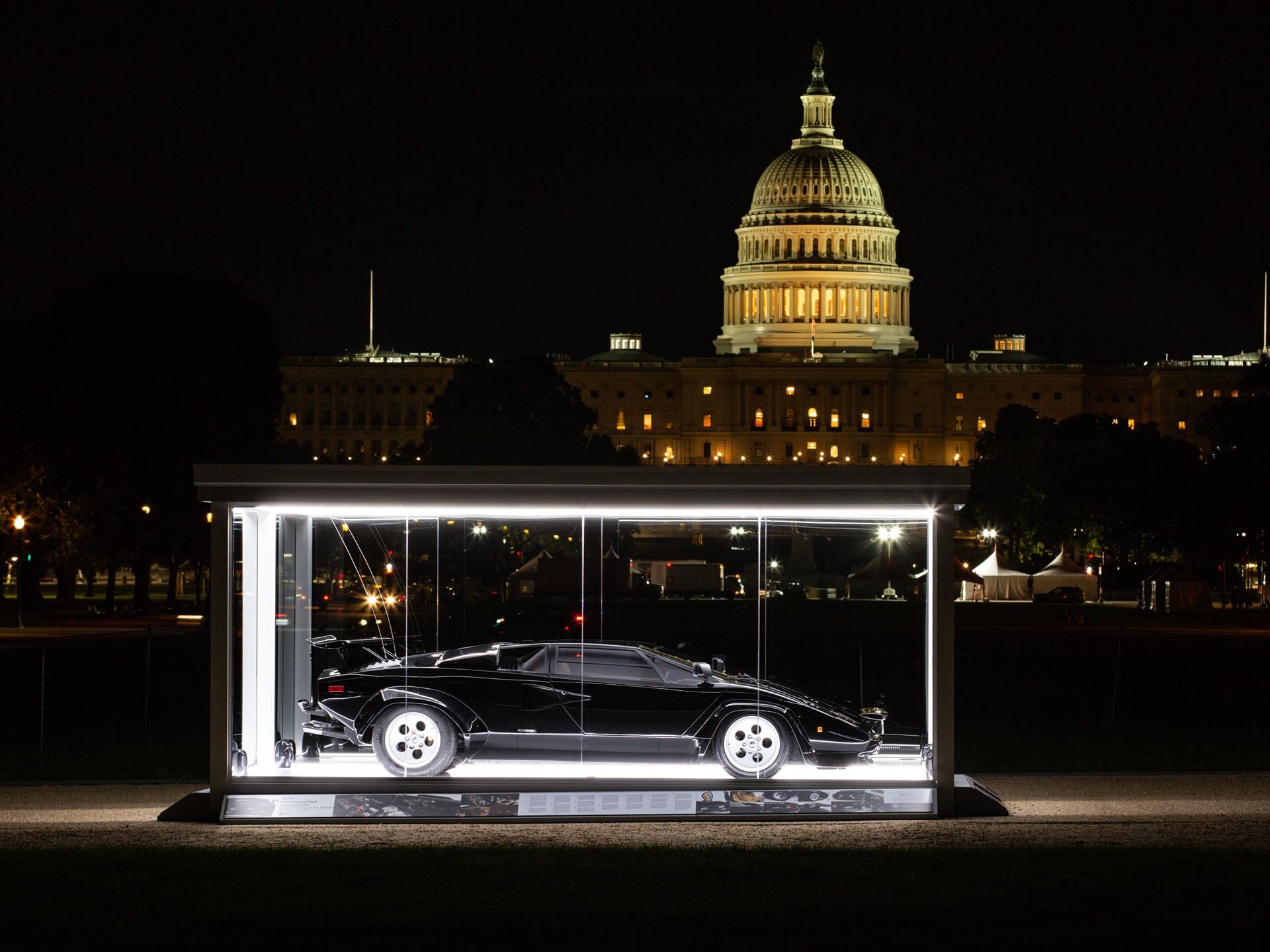
A black 1979 Lamborghini Countach LP 400 S, chassis number 1121112, is sitting in a glass case on the National Mall in Washington D.C. this week, flanked by the Lincoln Memorial and the Washington Monument. The car, famous for its starring role in the 1981 comedy The Cannonball Run, is the 30th vehicle inducted into the National Historic Vehicle Register, a program managed by the Hagerty Drivers Foundation in partnership with the U.S. Department of the Interior and Library of Congress.
That last detail is worth pausing on. The Library of Congress, America’s oldest cultural institution, will now permanently house all documentation related to this car: its history, provenance records, and a full 3D scan. A Lamborghini, preserved alongside the nation’s most significant cultural artifacts. For a car that spent its most famous three minutes on screen outrunning the law in the Nevada desert, the irony is exquisite.
This Countach is the second movie car added to the Register in recent months, following the 1981 DeLorean from Back to the Future. Both selections signal that the Register’s curators increasingly recognize automobiles not just for engineering milestones but for their role in shaping American popular culture. Chassis 1121112 earned its place not because of what it could do on a spec sheet, but because of what it meant to an entire generation.

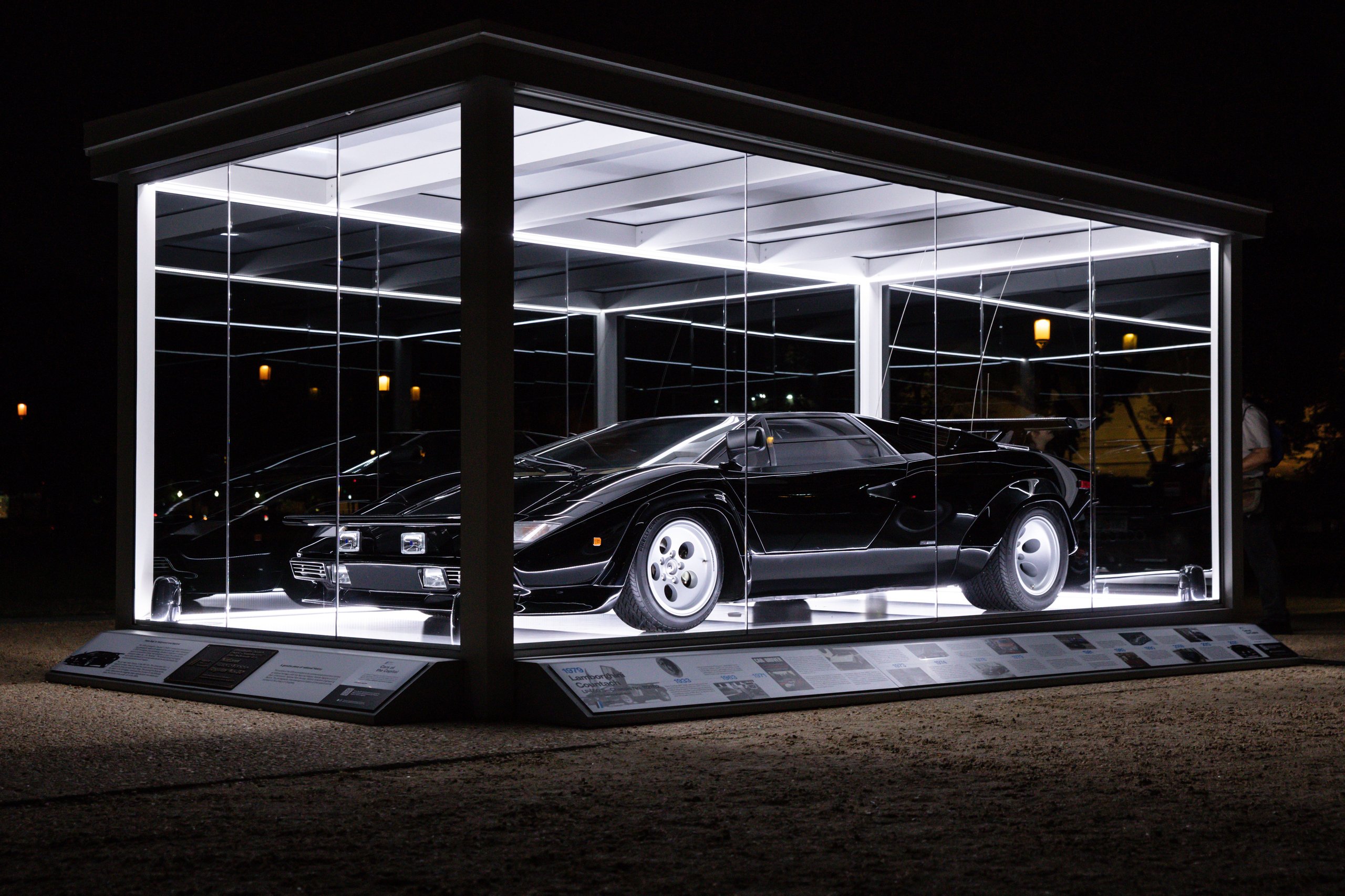
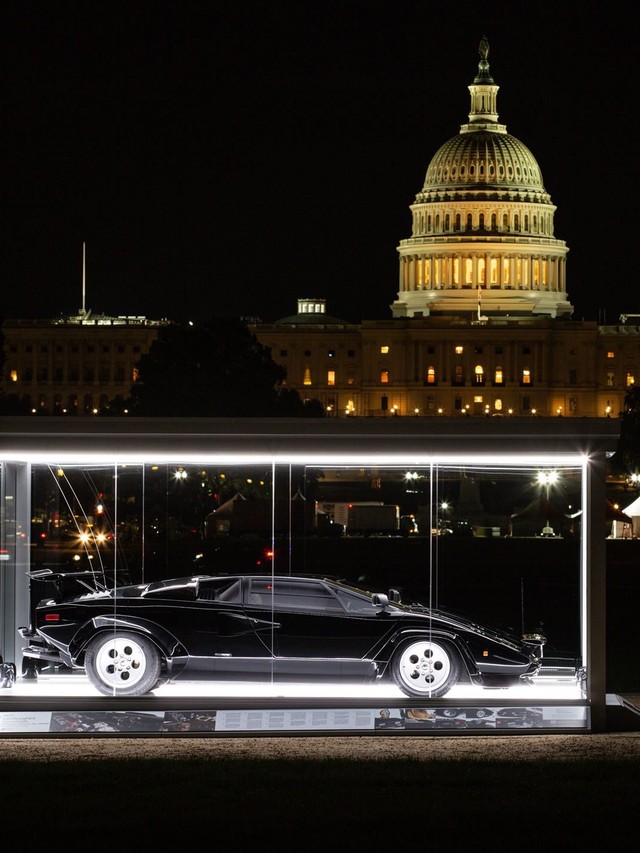
The 'Cannonball Run' Lamborghini Countach LP 400 S is displayed in a glass case with the US Capitol.
Why a Movie Car Matters More Than a Fast Car
Context is everything. When The Cannonball Run hit theaters in June 1981, the United States was living under a national speed limit of 55 mph. The real Cannonball Baker Sea-to-Shining-Sea Memorial Trophy Dash, a clandestine coast-to-coast race from Manhattan to Redondo Beach, California, existed precisely because that limit felt absurd to a certain breed of driver. The movie’s fictional version of that race, with its all-star cast including Burt Reynolds, Roger Moore, and Dean Martin, turned automotive rebellion into mainstream entertainment.
The Countach won the race in the film. More importantly, it owned the opening sequence: over three minutes of the LP 400 S tearing through desert roads east of Las Vegas, with nothing but the V12 and its six Weber carburetors providing the soundtrack. No dialogue. No exposition. Just the car.
That opening planted the Countach’s silhouette into the minds of millions of moviegoers who would never sit in one, many of whom were children at the time. Multiple enthusiast communities online still cite The Cannonball Run as the moment they became car enthusiasts. The bedroom poster phenomenon that defined the Countach’s cultural reach owes an enormous debt to those three minutes of film. Ferrari and Porsche both enjoy deep cinematic histories, but the Countach’s relationship with The Cannonball Run occupies a different category. The car was not a prop or a background detail. It was the protagonist, and its character was Lamborghini’s character: loud, unapologetic, and faster than whatever was chasing it.
The Car Itself: Film Modifications and a Colorful Provenance
Chassis 1121112 started life as a standard LP 400 S, finished in Nero black with a Senape (mustard tan) interior. Lamborghini says the car was delivered new to its Rome distributor, SEA Auto, then immediately exported to the United States and sold in Florida. In 1980, the owner, who happened to be a friend of director Hal Needham, loaned the car for filming.
The modifications made for the movie gave the Countach its distinctive on-screen look: a prominent front spoiler, twin spotlights, three antennas, and a bank of 12 exhaust pipes at the rear. Magneto notes the LP 400 S is one of only 105 Series 2 cars built between 1979 and 1981, making this already a rare machine before Hollywood got involved.
The post-film ownership story reads like a screenplay of its own. Ron Rice, founder of the Hawaiian Tropic sunscreen brand and a fixture of motorsport sponsorship in that era, spotted the Countach on set, fell in love with it, and bought it on the spot. Rice kept the car for over two decades before selling it in 2004 to Jeff Ippoliti, a Florida attorney and dedicated Lamborghini collector who still owns it today. According to Car and Driver, the car was restored to its film appearance, including swapping a later burgundy red interior back to the original Senape Tan.
For anyone who follows Countach provenance, that kind of unbroken, well-documented chain of custody is gold. Two long-term owners across 40 years, both of whom understood what they had. A throwout bearing for a two-valve Countach recently listed at $5,500 on enthusiast forums, which gives some sense of the commitment required to maintain these cars properly. Ippoliti’s stewardship clearly went well beyond keeping it running.

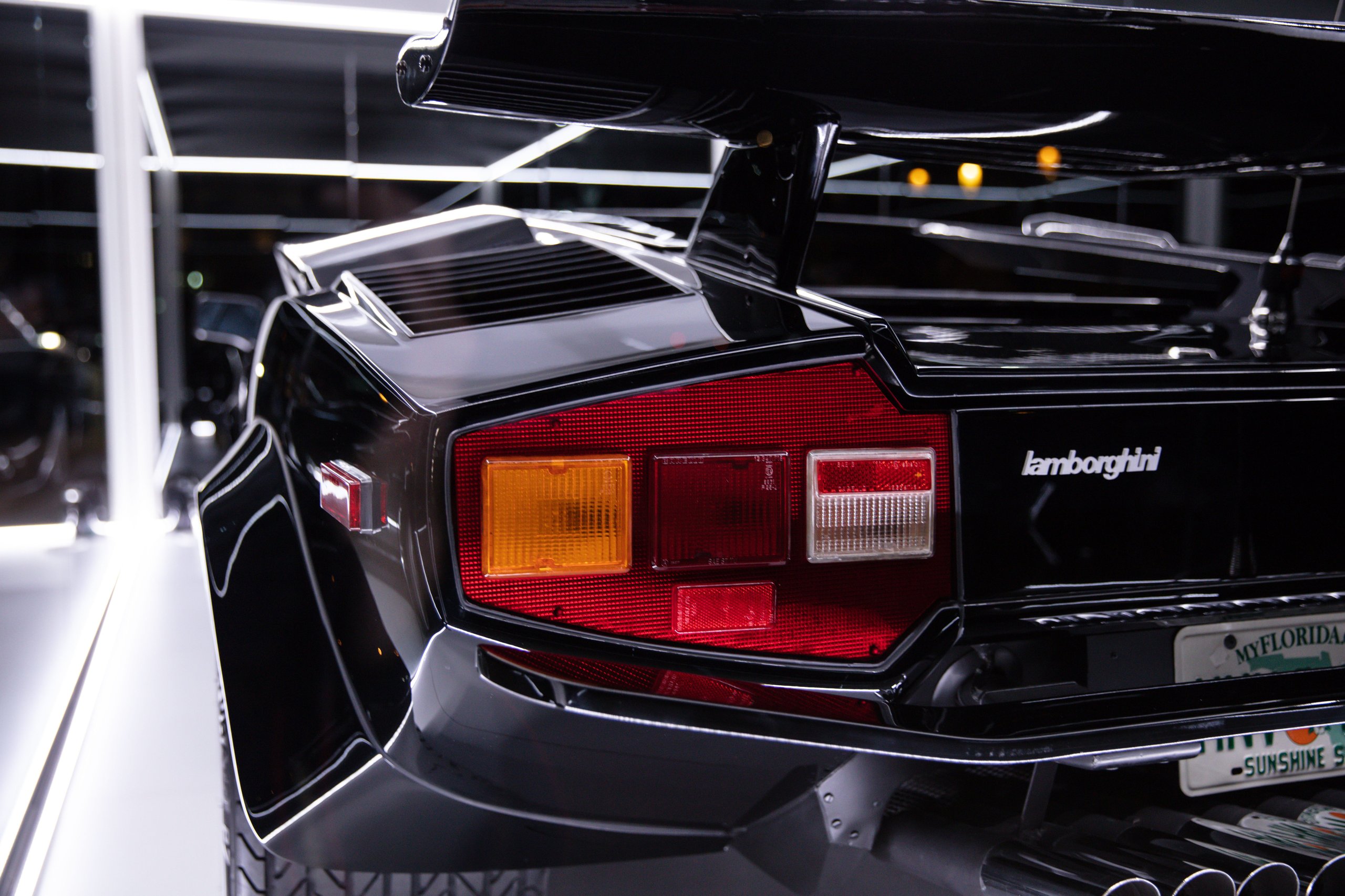
The rear of the 'Cannonball Run' Lamborghini Countach LP 400 S showcases its iconic design.
What the Register Preserves, and Why It Matters for Lamborghini’s Legacy
The National Historic Vehicle Register is not a hall of fame for expensive cars. Since its creation in 2009, only 30 vehicles total have been selected, each chosen for its demonstrated significance to American history, culture, or engineering. All information about chassis 1121112, including a complete 3D scan and copies of all documentation, will be permanently archived in the Library of Congress.
The 3D scanning element deserves attention from collectors and restorers. Digital preservation at this level creates a permanent, dimensionally accurate record of every panel gap, every modification, every surface detail. For a car that was physically altered for a film and then restored decades later, that scan becomes an invaluable reference document for future generations. Lamborghini’s own Polo Storico program handles heritage authentication and restoration for the brand’s classic models, but Library of Congress archival represents a different kind of institutional permanence.
No other Lamborghini currently sits on the Register. For a brand that built its identity on being the alternative to Ferrari, the outsider, the rule-breaker, earning a place in America’s most prestigious cultural archive through a movie about an illegal road race is fitting in a way that no engineering award could match. The Miura, which appeared in the opening sequence of The Italian Job in 1969, would be an obvious candidate for similar cultural recognition, though that film’s setting was British and Italian rather than American, which may affect the Register’s criteria.

This bronze plaque designates the 1979 Lamborghini Countach LP 400 S as National Historic Vehicle Register No.
A Rebel’s Reward
The Countach LPI 800-4, Lamborghini’s modern tribute to the original, arrived in 2021 as a limited-production hybrid built on the Sian’s architecture. It sold out immediately, proving that the Countach name still carries commercial weight four decades after the original ceased production. The Cannonball Run car’s induction into the Register reinforces something Lamborghini’s marketing department already knows: the Countach is the brand’s most potent cultural asset, more recognizable to non-enthusiasts than any V12 flagship the company builds today.
For collectors and Lamborghini enthusiasts watching the market, this kind of institutional recognition tends to have a downstream effect on the broader model’s desirability. Lamborghini has not disclosed any valuation impact, and the car is not for sale. But when the Library of Congress tells the world that a specific Countach LP 400 S matters enough to preserve forever, every other LP 400 S in existence benefits from that halo.
The car remains on public display on the National Mall through the end of the Hagerty Drivers Foundation’s annual showcase. After that, it returns to Ippoliti’s collection in Florida, where it will continue to exist as both a functional automobile and, now officially, a piece of American history.

The legendary 'Cannonball Run' Lamborghini Countach LP 400 S stands with its scissor doors open at sunrise.
Gallery