906 Million Euros and a Blueprint for Transformation
Lamborghini closed its 2016 fiscal year with 3,457 cars delivered worldwide, a seven percent jump over 2015 and the company’s sixth consecutive year of growth. Turnover crossed the 900 million Euro threshold for the first time, climbing four percent to 906 million Euros. Those numbers mattered on their own, but they mattered far more for what they were quietly funding: the single largest industrial expansion in the company’s history, all aimed at getting the Urus Super SUV into production by 2018.
Stefano Domenicali, then Chairman and CEO, framed the year as proof that Lamborghini could simultaneously grow its supercar business and invest aggressively in a third model line. A positive operating result confirmed the company was not simply chasing volume at the expense of profitability. Every record set in 2016 was, in effect, a down payment on a factory nearly doubling in size and a product portfolio about to look very different.
V10 and V12: The Cash Engines Behind the Curtain
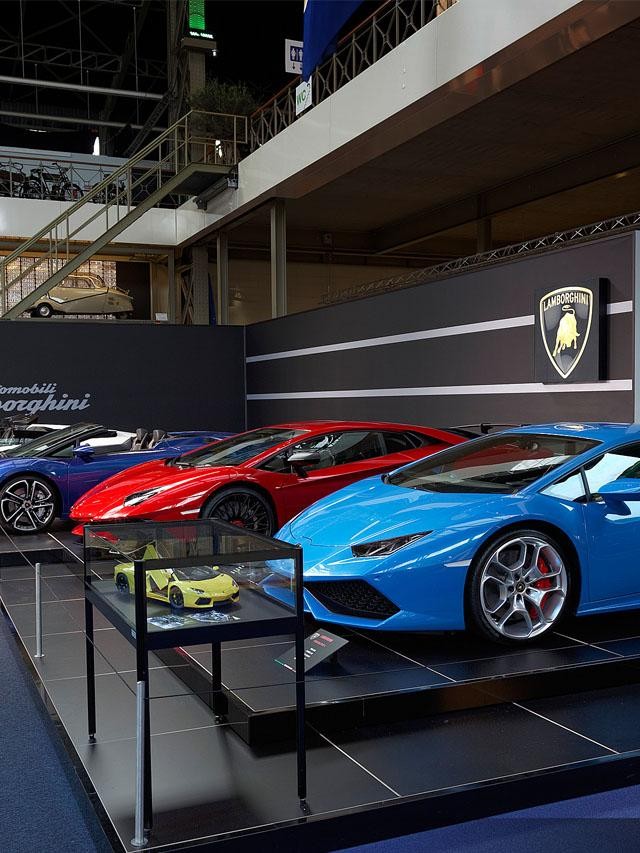
The Huracán carried the ledger. Lamborghini reported 2016 as its most successful year ever for V10 sales, with 2,353 Huracán Coupe and Spyder units reaching customers, up from 2,242 the year before. The V12 Aventador climbed from 1,003 to 1,104 units. Both model lines set records across all three major sales regions: EMEA, the Americas, and Asia Pacific. The United States remained the largest single market at 1,250 units.
Five new models kept the showrooms interesting. The Centenario Coupe and Roadster honored founder Ferruccio Lamborghini with a limited run that sold out before most collectors could react. The Aventador Miura Homage celebrated the Miura’s fiftieth anniversary, the Huracan Avio brought aviation-themed personalization to the V10 range, and the Huracan Rear Wheel Drive Spyder debuted at the Los Angeles Auto Show in November. The Aventador S appeared at the close of the year, refreshing the flagship. None of these cars existed purely for sentiment. Each reinforced the pricing power and desirability that made the Urus investment possible.
Building for the Urus: Jobs, Concrete, and a Calculated Risk
Behind the sales celebrations, Sant’Agata Bolognese was becoming a construction site. Lamborghini’s workforce grew from 1,298 to 1,415 employees during 2016, and the hiring was only beginning. More than 150 assembly line workers, technicians, and specialists had already been brought on specifically for Urus preparation, with a projected total of 500 new hires needed to support the program.
The physical expansion was equally dramatic. Production facilities were planned to grow from 80,000 to 150,000 square meters, and annual production capacity would double to 7,000 units. For a company that built fewer than 3,500 cars in its best year to date, committing to that kind of scale required either supreme confidence or a willingness to bet the company’s identity on a segment it had only touched once before, with the LM002 in the 1980s. That truck was a military-derived curiosity that sold in tiny numbers and became a cult classic precisely because it was so impractical. The Urus was conceived as the opposite: a volume play designed to bring Lamborghini into direct competition with the Porsche Cayenne Turbo and Bentley Bentayga while funding the next generation of supercars.

The Automobili Lamborghini factory building stands proudly under a clear sky, adorned with national and corporate flags.
The Exclusivity Question Lamborghini Had to Answer
Doubling production at a supercar company is not a neutral act. Enthusiasts and collectors rightly ask whether more cars means less prestige. Ferrari took a famously cautious approach to this problem, limiting production growth for years and only introducing the Purosangue SUV much later, with strict allocation controls. Lamborghini chose a different path: grow fast, grow boldly, and use the revenue to develop cars that would keep the core brand sharp.
With hindsight, the bet paid off. Car and Driver reported that Lamborghini broke the 10,000 unit barrier for the first time in 2023, a figure that would have seemed fantastical in 2016. The Urus accounted for the bulk of that growth, and the revenue it generated flowed directly into programs like the Revuelto and Temerario. Whether Lamborghini’s exclusivity survived the expansion depends on whom you ask. Supercar residual values remained strong, the Ad Personam customization program grew into a significant profit center, and the waiting lists for V12 and V10 models never shortened. The factory floor got bigger, but the allocation game got tighter.
What 2016 Actually Built
Viewed purely as an annual report, Lamborghini’s 2016 results look like a healthy year for a small manufacturer. Viewed as strategy, they reveal the financial and operational foundation for everything the company became over the following decade. The Huracan and Aventador earned the money. The Centenario and Miura Homage kept the brand mythology alive. The factory expansion and hiring spree turned Sant’Agata Bolognese into a facility capable of supporting three distinct model lines.
For anyone tracking Lamborghini’s trajectory today, from the hybrid Revuelto to the twin-turbo Temerario to the company’s recent decision to cancel its planned all-electric model, the throughline runs directly back to the choices made in 2016. The Urus was not a distraction from the supercar mission. It was the mechanism that secured it.
Gallery


