2,327 Cars, Zero Urus: The Numbers Behind the Record
Lamborghini delivered 2,327 cars worldwide in the first half of 2018, an 11% increase over the same period the prior year and the company’s fourth consecutive half-year record. The figure surpassed Lamborghini’s entire annual output from just five years earlier. The remarkable detail buried inside those numbers: not a single Urus was included. Customer deliveries of the Super SUV were scheduled to begin in July 2018, meaning every one of those 2,327 cars wore a Huracán or Aventador badge.
That distinction matters more than it might seem. CEO Stefano Domenicali described the moment as a pivotal shift in the company’s history, and the math supports the claim. Lamborghini crossed the billion-euro turnover threshold for the first time in 2017, the Urus production facility at Sant’Agata Bolognese was complete and ready, and the supercar business was healthy on its own terms. What came next would change the company’s scale entirely, but the H1 2018 result proved the core lineup could carry record growth without any help from the SUV that was about to rewrite the brand’s financial story.
The Urus Catalyst: Funding the Future from a Different Platform
The Huracán line drove most of the H1 volume, climbing from 1,400 to 1,604 units on the strength of the Performante variant. The Aventador held steady at 673 deliveries. Both lines were performing well, but neither could deliver the kind of revenue growth Lamborghini needed to fund its long-term ambitions. The Urus, powered by a 4.0-liter twin-turbocharged V8, a first for a production Lamborghini, was designed to solve that problem.
According to Robb Report, Lamborghini executives were initially skeptical about the Urus project. That skepticism proved short-lived. GoodCarBadCar reports that Lamborghini’s U.S. sales jumped 27% for the full calendar year 2018 once Urus deliveries hit stride, and the SUV quickly became the brand’s top-selling model in America. The pattern echoed across global markets. By year’s end, Lamborghini would deliver 5,750 cars total, a 51% leap over 2017, with the Urus accounting for the difference.
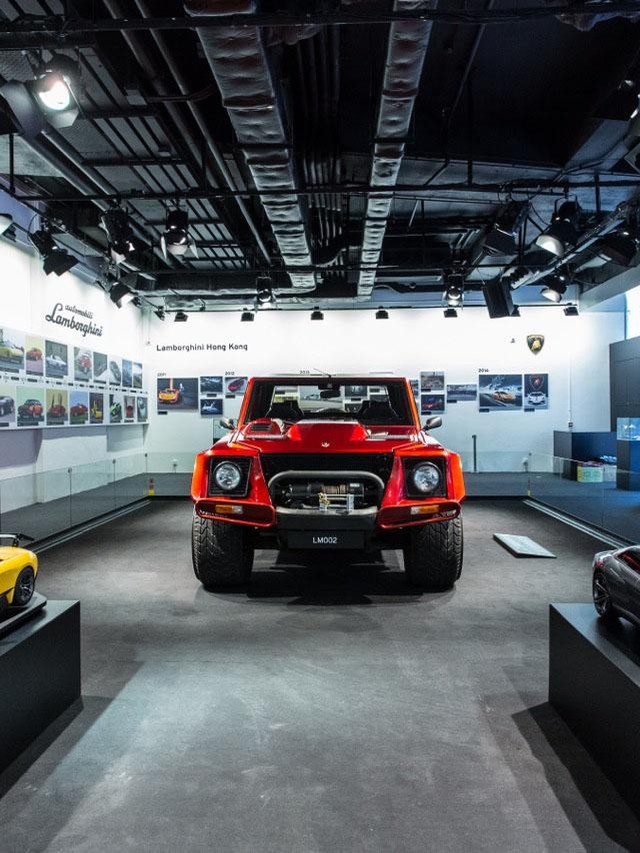
For enthusiasts who remember the LM002, the strategic logic was familiar but the execution was entirely different. The LM002 was a curiosity, a military-derived truck that sold in tiny numbers and never threatened to redefine the brand’s identity. The Urus was engineered from the start to become the volume leader, and it did exactly that. The H1 record, achieved without it, only underscored how much headroom the brand still had.
The Exclusivity Paradox: Growing Without Diluting
Domenicali was explicit about the tension: the company would enter what he called a new dimension while “never compromising the exclusivity of our brand.” The promise sounds straightforward, but the arithmetic gets complicated when production volume is about to more than double.
Lamborghini’s answer was segmentation. The Urus occupies a different showroom conversation than the Huracán or Aventador. Its buyers overlap with Porsche Cayenne Turbo and Bentley Bentayga customers, not necessarily with the collector who orders a Performante in a bespoke Ad Personam specification. By keeping supercar production volumes relatively stable while letting the Urus absorb the growth, Lamborghini could expand revenue without flooding the mid-engine market with extra units.
Ferrari would eventually face the same question with the Purosangue, arriving years later and with a more conservative production cap. Lamborghini moved first and moved aggressively, betting that the brand could absorb higher total volume as long as the supercar side of the business retained its scarcity. Whether that bet paid off depends on your metric. Financially, the results are unambiguous. Emotionally, some long-time owners still debate whether a brand selling north of 10,000 cars per year carries the same cachet it did at 3,800. The H1 2018 numbers sit right at the hinge of that argument: proof that the supercar business was thriving, and a preview of the volume surge about to arrive.
Regional Strength: Europe Surges, America Holds
Europe was the standout region in H1 2018, posting growth above 30%. Italy, the UK, and Austria recorded the highest gains within the continent, suggesting that Lamborghini’s home market enthusiasm was genuine rather than a function of fleet registrations or demo units. The United States remained the single largest national market, followed by Japan and the UK.
The European surge is worth noting precisely because it predates the Urus effect. Buyers in Italy and the UK were responding to the Huracán Performante and the Aventador S, both of which represented the naturally aspirated, driver-focused philosophy that defined Lamborghini’s identity at the time. The supercar lineup was pulling its weight before the SUV arrived to multiply the totals, reinforcing the thesis that Lamborghini’s core product was strong enough to set records on its own. The Urus would amplify that strength rather than compensate for any weakness.
What This Moment Meant for the Lamborghini We Know Today
H1 2018 looks, in retrospect, like the last snapshot of a two-model Lamborghini. Within months, the Urus would transform the company’s financial profile, fund the transition to hybrid powertrains across the entire lineup, and enable projects like the Revuelto and Temerario that define the current era. Revenue tripled from roughly one billion euros in 2017 to over three billion by 2025, and annual deliveries climbed from under 4,000 to above 10,000.
For buyers and enthusiasts, the practical takeaway from this inflection point is straightforward: the Urus bankrolled the engineering that makes today’s supercars possible. The hybrid V12 in the Revuelto, the twin-turbo V8 in the Temerario, the expanded factory capacity, the Ad Personam customization that now touches 94% of deliveries: none of it happens at the pace Lamborghini achieved without the Urus revenue stream.
The open question, and it remains genuinely open, is whether Lamborghini can continue to grow without adding a second SUV or crossover. Road & Track reports that executives have ruled out a second SUV, pointing instead toward a future 2+2 electric GT as the next expansion vehicle. If that holds, it would suggest Lamborghini learned something specific from the Urus experiment: volume is useful, but the brand works best when each model line occupies its own distinct territory. The July 2018 Urus deliveries that followed this sales report started a chapter that is still being written, but the record that preceded them proved the foundation was already solid.
Gallery


