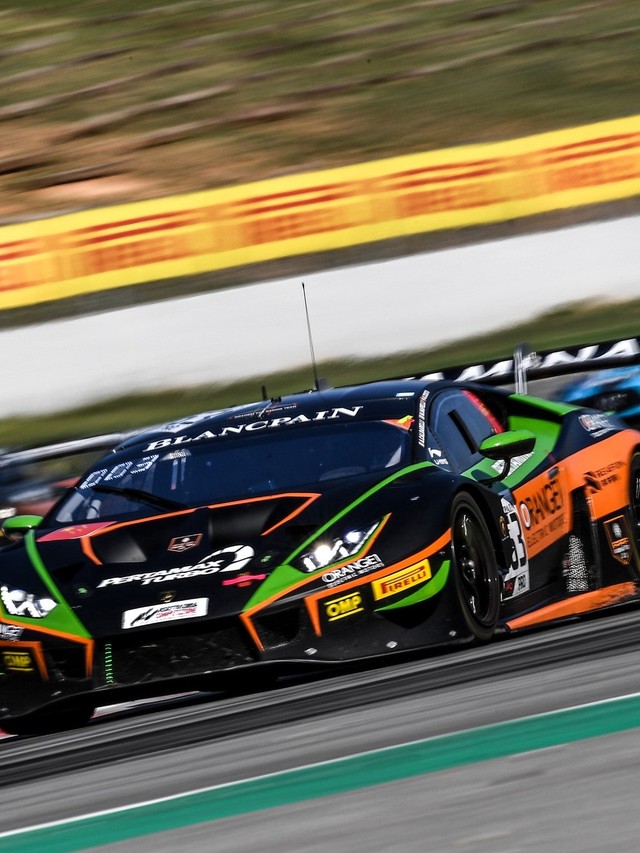
The 2020 Endurance Cup Triumph: A Historic Win for Lamborghini and Paul Miller Racing
Most endurance racing championships come down to the final lap, the final hour, or at least the final race result. Lamborghini’s 2020 IMSA GTD Michelin Endurance Cup campaign refused to follow that script. Madison Snow, Bryan Sellers, and Corey Lewis, driving the #48 Paul Miller Racing Huracán GT3 Evo, mathematically locked up the drivers’ and teams’ titles at the eight-hour mark of the Sebring 12 Hours. Four hours of racing remained, and the championship was already settled.
The significance ran deeper than a single clinch. Lamborghini had already secured the GTD manufacturers’ crown at Petit Le Mans, the round before Sebring. The drivers’ and teams’ titles completed a sweep of every available GTD Michelin Endurance Cup championship for the 2020 season, all earned through a privateer squad running Squadra Corse-prepared machinery rather than a factory superteam.
The Michelin Endurance Cup’s scoring structure made this possible in a way few casual fans appreciate. Lamborghini says the series spans four rounds totaling 52 hours of racing, but points are not simply awarded at the finish. They are distributed at set intervals within each race: the fourth hour, the eighth hour, and the twelfth hour. A team’s position at specific checkpoints matters as much as where it crosses the line. For Paul Miller Racing, leading GTD at the eight-hour mark delivered the maximum five points and rendered the remaining four hours of the Sebring 12 Hours irrelevant to the title fight. That mid-race structure, designed to reward consistency across long stints, worked exactly in Lamborghini’s favor and revealed something important about the Huracán GT3 Evo: it was built to be strong at every checkpoint, not just the last one.
The Huracán GT3 Evo’s Enduring Legacy: Engineering for Reliability and Performance
Coming into the Sebring weekend, Paul Miller Racing held a nine-point advantage over their closest rivals: Cooper MacNeil and Jeff Westphal in the #63 Scuderia Corse Ferrari. The math was straightforward. The Ferrari needed maximum points at both the eight-hour and twelve-hour intervals to have any chance of overturning the deficit.
The #48 Huracán GT3 Evo qualified ninth in class, four positions behind the Ferrari. Early in the race, the Ferrari appeared to be the stronger car at the checkpoints: at the four-hour mark, the #63 collected five points while the Lamborghini earned just two for eighth place. That narrowed the gap but did not erase it.
Snow, who arrived at Sebring as the recently crowned Lamborghini Super Trofeo North America champion, stayed in the car for a long stint through the middle portion of the race and kept the #48 near the top of the GTD order. When he pitted on the 210th lap, the team was positioned to lead the class at the critical eight-hour checkpoint. Snow, Sellers, and Lewis collected five points at that interval, and the title was theirs.
The contrasting fortunes of the other Lamborghinis on the Sebring grid underscored what the Huracán GT3 Evo could do when everything held together. The Magnus GRT car, driven by Spencer Pumpelly, John Potter, and Andy Lally, finished seventh and was the best-placed Lamborghini at the race itself. That same trio had finished second to Paul Miller Racing at the 24 Hours of Daytona earlier in the year, giving Lamborghini a 1-2 result at one of the world’s most prestigious endurance events. The #11 Grasser Racing Team entry, meanwhile, led the GTD class after two hours with Steijn Schothorst, Franck Perera, and Richard Heistand showing genuine pace, only for a driveshaft failure in the third hour to drop the car eight laps behind the field. They nursed it to 11th. That kind of attrition is precisely why the Endurance Cup rewards consistency over single-race heroics, and it underscores what Paul Miller Racing accomplished across the full season.
Paul Miller Racing’s Dynasty: A Six-Year Partnership of Success and Its Conclusion
The Sebring title clinch did not come out of nowhere. Earlier in 2020, Paul Miller Racing won the 24 Hours of Daytona outright in the GTD class, with Snow, Sellers, and Lewis joined by Lamborghini factory driver Andrea Caldarelli. That Daytona victory set the tone for the entire Endurance Cup campaign, banking crucial early-season points across the race’s three scoring intervals.
The 2020 Endurance Cup calendar included the 24 Hours of Daytona, Petit Le Mans at Road Atlanta, and the 68th running of the Sebring 12 Hours. Across those events, Paul Miller Racing’s consistency proved decisive. Qualifying ninth at Sebring and still clinching the championship illustrates the point: this was not about raw qualifying pace at any single event but about accumulating points across 52 hours of racing.
For anyone tracking Lamborghini’s broader IMSA trajectory, the 2020 result extended a remarkable run. Lamborghini captured the overall GTD manufacturers’ championship in both 2018 and 2019. Paul Miller Racing itself had taken the GTD drivers’ and teams’ titles in 2018 with Snow and Sellers. The 2020 Endurance Cup sweep confirmed that the Huracán GT3 Evo platform was not simply quick on its best days but reliable and competitive across the most punishing races on the IMSA calendar.
Connecting the Dots: How GTD Success Informs Lamborghini’s Future Motorsport Ambitions
Winning endurance championships with a customer racing team is a fundamentally different proposition than winning with a factory effort backed by unlimited resources. Paul Miller Racing operated as a privateer squad, which makes the breadth of their 2020 results all the more telling. A Daytona 24 Hours class victory, the manufacturers’ crown at Petit Le Mans, and a complete Endurance Cup title sweep at Sebring: that is a season most factory programs would envy.
Lamborghini’s GTD manufacturers’ titles in 2018, 2019, and the 2020 Endurance Cup manufacturers’ crown represent a sustained period of competitiveness in IMSA’s GT classes. The Huracán GT3 Evo earned its reputation across thousands of racing miles, not a single headline result. Reliability in 12-hour and 24-hour events is the hardest thing to engineer and the easiest thing to lose, and the 2020 results demonstrated that the platform delivered both speed and durability when it mattered most.
For a brand that built its motorsport identity through customer programs and the Super Trofeo ladder, the 2020 season stands as one of the strongest arguments that the approach worked. Every championship earned by privateer teams running Squadra Corse hardware validated the engineering underneath and strengthened the case for what Lamborghini could accomplish when it chose to invest further up the motorsport ladder.
Key Takeaways and What’s Next for Lamborghini in IMSA
For prospective Lamborghini customer racing buyers, the practical takeaway from the 2020 Endurance Cup campaign is clear. The Huracán GT3 Evo proved it could survive the most demanding races in North American sports car racing and deliver championships, not just podium appearances.
The deeper lesson is structural. Lamborghini’s privateer-driven success in GTD demonstrated that a customer racing model, when supported by strong engineering from Squadra Corse, can produce results that rival or exceed factory-backed programs. The 2020 sweep did not happen because of a single brilliant race or a fortunate safety car. It happened because the car, the team, and the scoring system all rewarded the same thing: relentless consistency across the longest, most grueling events on the calendar.
That foundation of proven reliability and competitive depth is precisely the kind of credential a manufacturer needs before stepping into higher categories of endurance racing. What Paul Miller Racing and the Huracán GT3 Evo accomplished in 2020 was not just a championship. It was proof of concept.
Gallery


