A Supercar Convoy Through the Cairngorms
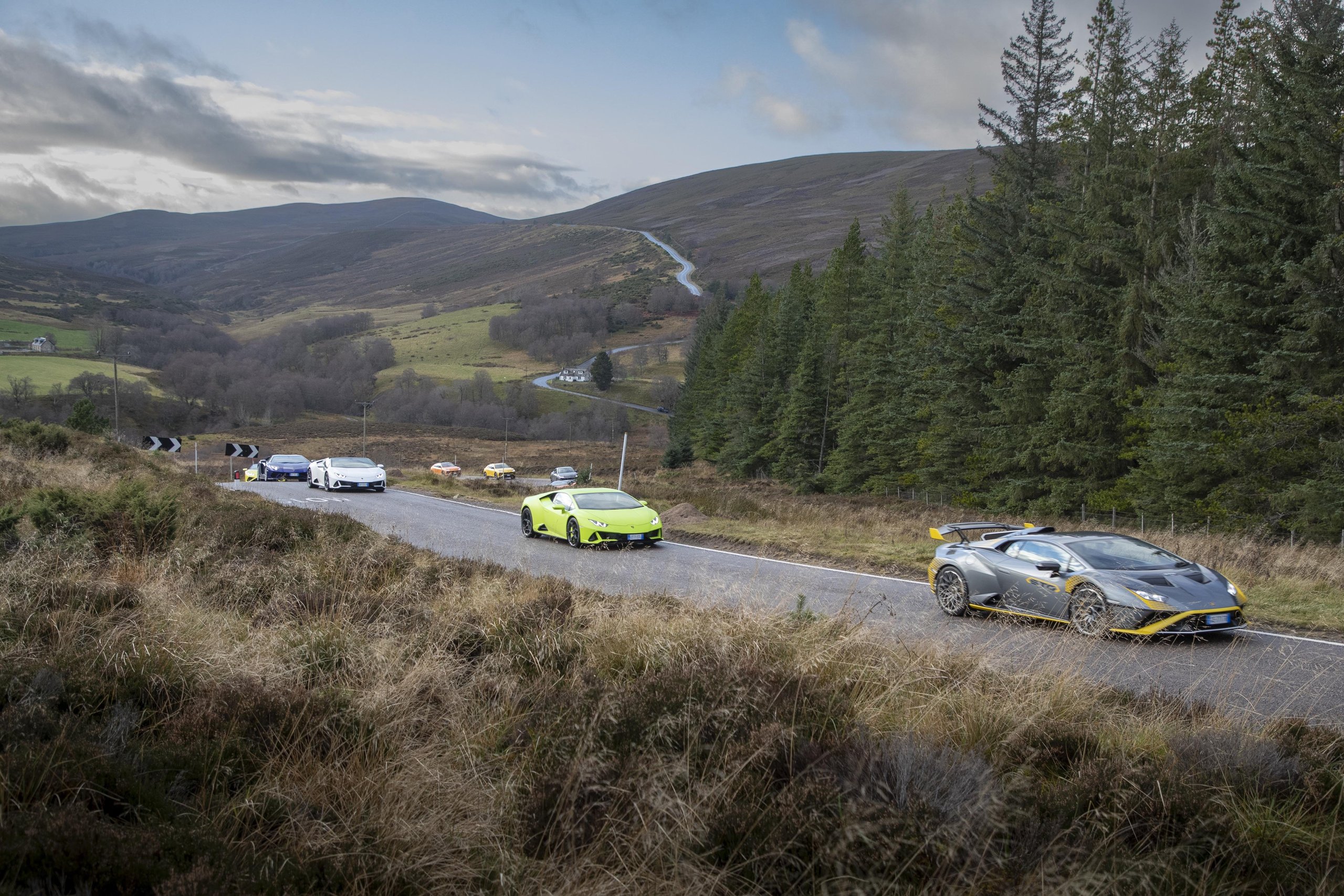
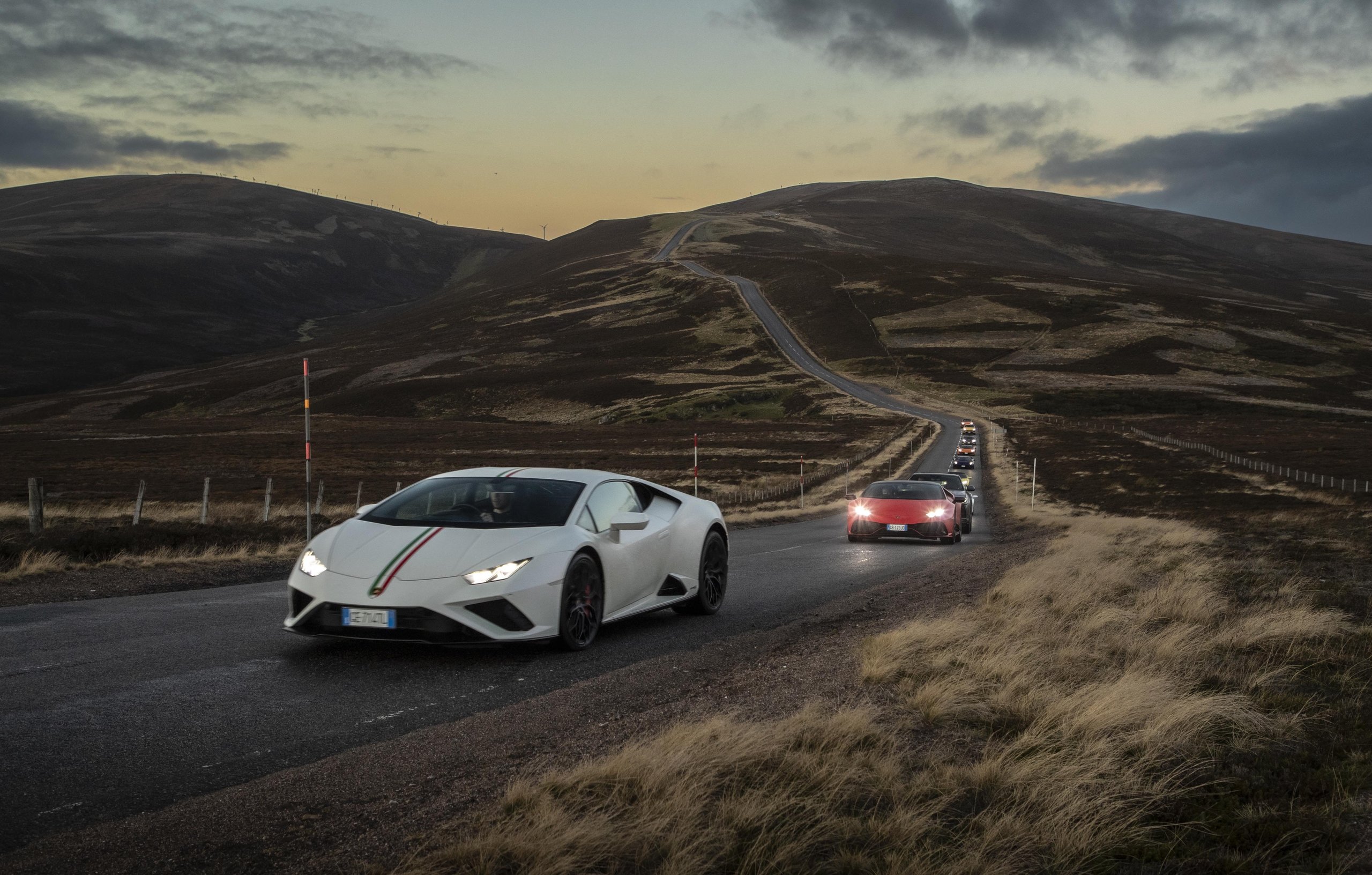
At the start of winter 2021, Lamborghini loaded a full cross-section of its lineup onto the Scottish Snow Roads and pointed it north from Edinburgh. Over 200 miles of tarmac later, through Tomintoul, the highest village in the Scottish Highlands, and past still-closed ski resorts, the convoy arrived at the Fife Arms in Braemar. Along the way it stopped at art installations, threaded through single-track mountain passes, and, on the final evening, parked beneath one of Europe’s darkest skies to stare at a single star. That star, Cor Tauri, also happens to be the name Lamborghini chose for its electrification strategy. Nothing about this trip was accidental.
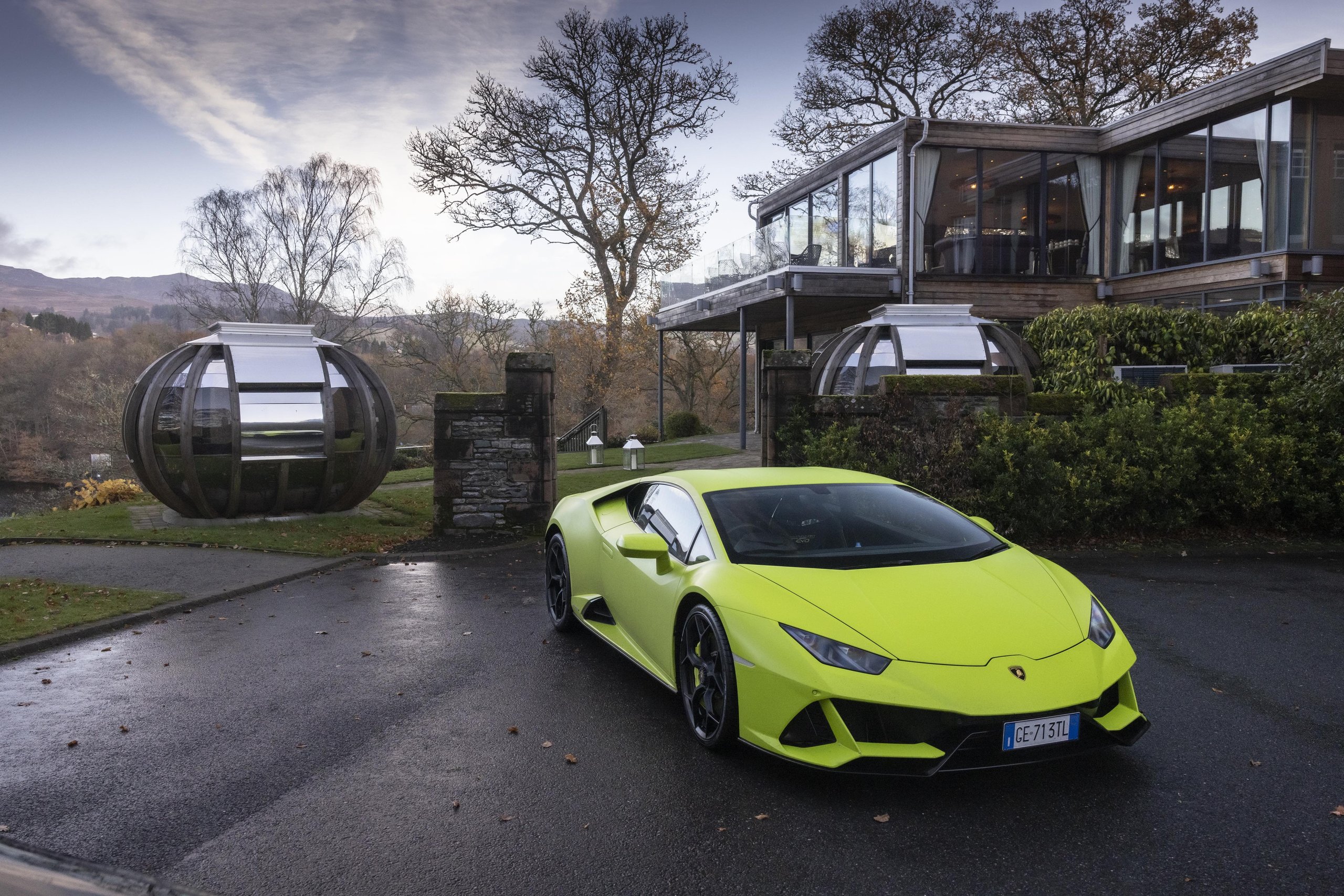
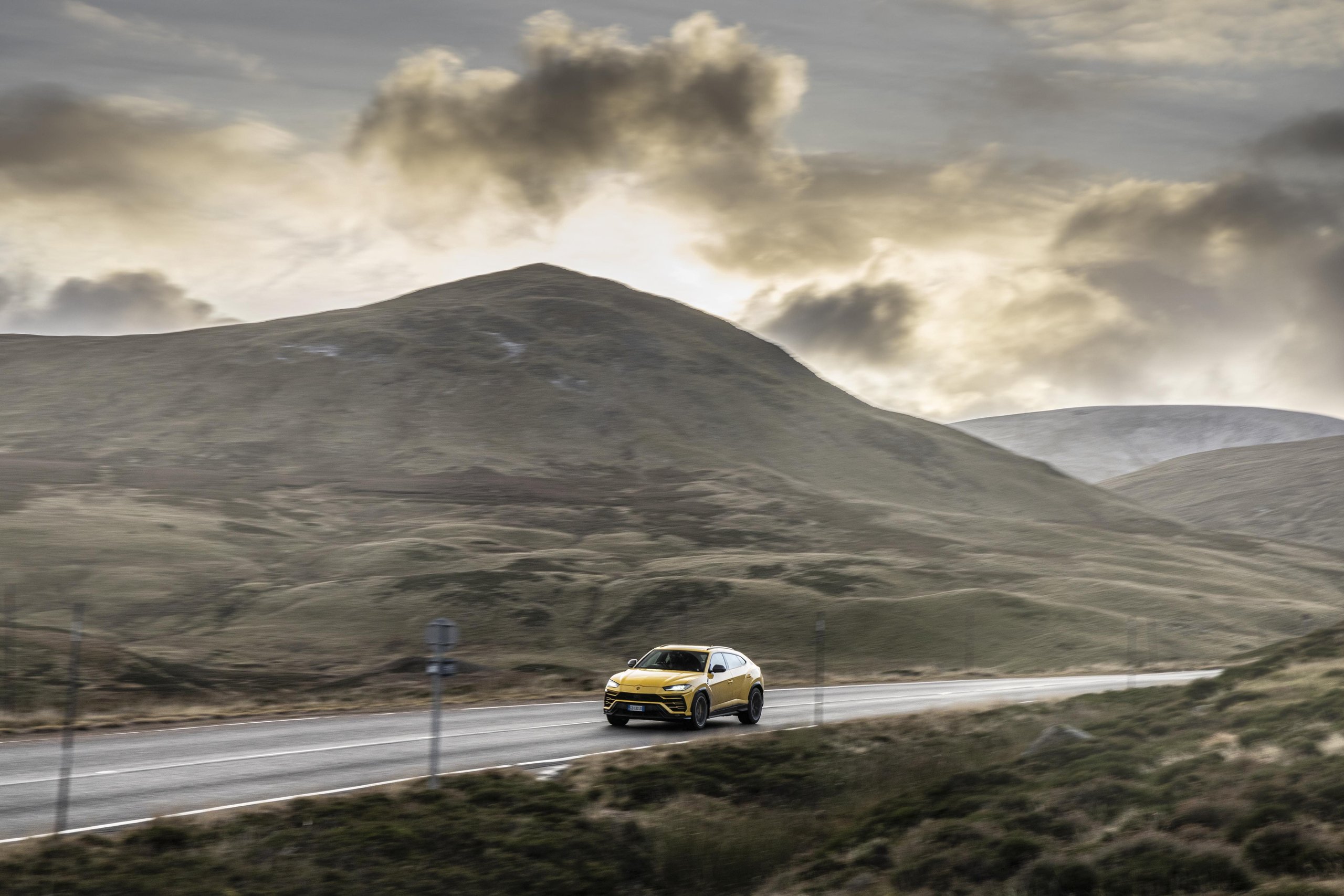
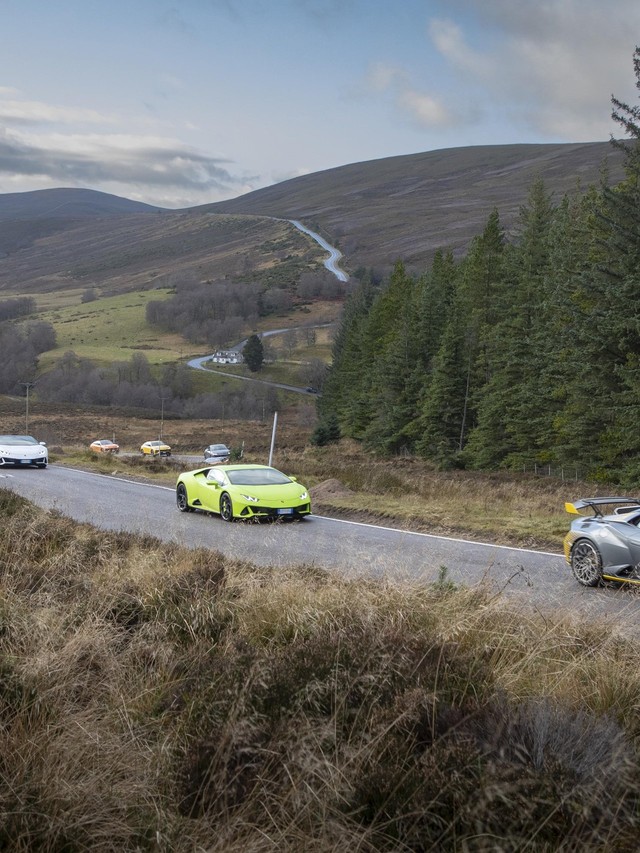
The cars read like a collector’s color chart: an Aventador SVJ Roadster in Arancio Fux alongside an Aventador S in Blu Dedalo, Huracán EVO coupes in the Fluo capsule finishes of Verde Shock and Arancio Dac, a Bianco Asopo Spyder, rear-wheel-drive Huracán variants in Bianco Canopus and Giallo Tenerife, and a Grigio Titans Huracán STO. Urus models dressed in Pearl Capsule Arancio Borealis, Giallo Inti, and a Graphite Capsule in matt Grigio Keres handled support duties. Lamborghini curated every element, from route selection to cultural stops, positioning the event not as a casual owner rally but as a lifestyle experience that folded art, landscape, and brand future into a single itinerary.

A convoy of vibrant Lamborghini supercars navigates a charming Scottish town street under a bright sky. Image: Automobili Lamborghini.
Supercars as Art Objects, Landscapes as the Gallery
The Snow Roads art trail exists independently of Lamborghini. Three installations punctuate the route through the Cairngorms: Still, near Tomintoul, The Watchers by Lecht ski resort, and Contours at the Glenshee Cairnwell pass. By routing the convoy through each one, Lamborghini framed its cars as designed objects placed against other designed objects, in a landscape dramatic enough to hold both.
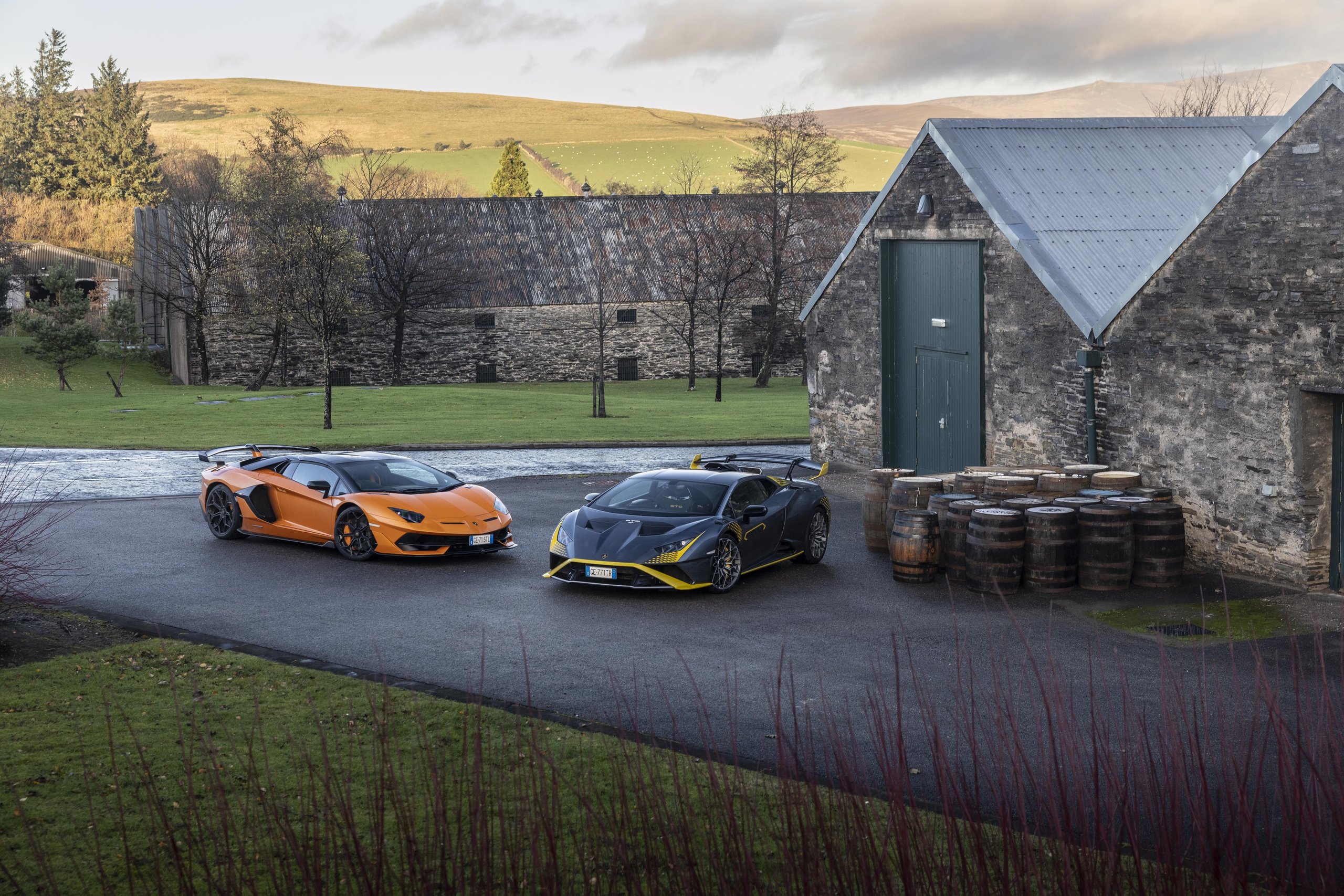
The Fife Arms reinforced the same logic. Owned by Hauser & Wirth, one of the world’s most prominent gallery networks, the hotel functions as a curated art space disguised as hospitality, containing over 15,000 original artworks and antiques. Parking an Aventador SVJ with its scissor doors open next to a rustic stone building stacked with whisky barrels creates a visual tension that no press photo of a car on a track can replicate. Lamborghini knows its buyers increasingly define themselves through cultural taste as much as horsepower, and this event catered directly to that identity. For a brand that sells cars starting north of $200,000, the message was deliberate: ownership is supposed to feel like this.

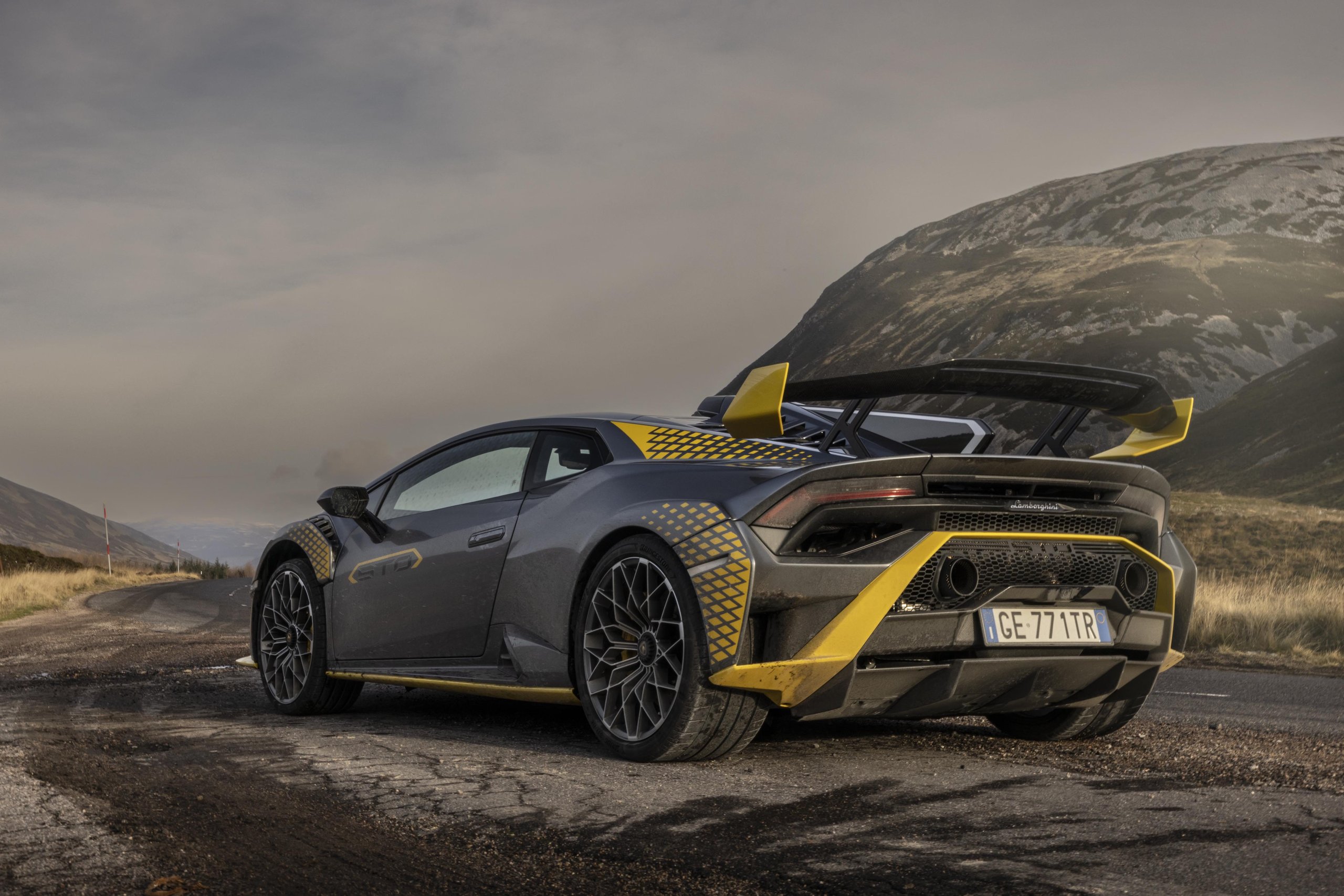
The powerful Aventador SVJ and agile Huracan STO stand side-by-side in a scenic rural setting. Image: Automobili Lamborghini.
What Each Model Brought to the Highland Roads
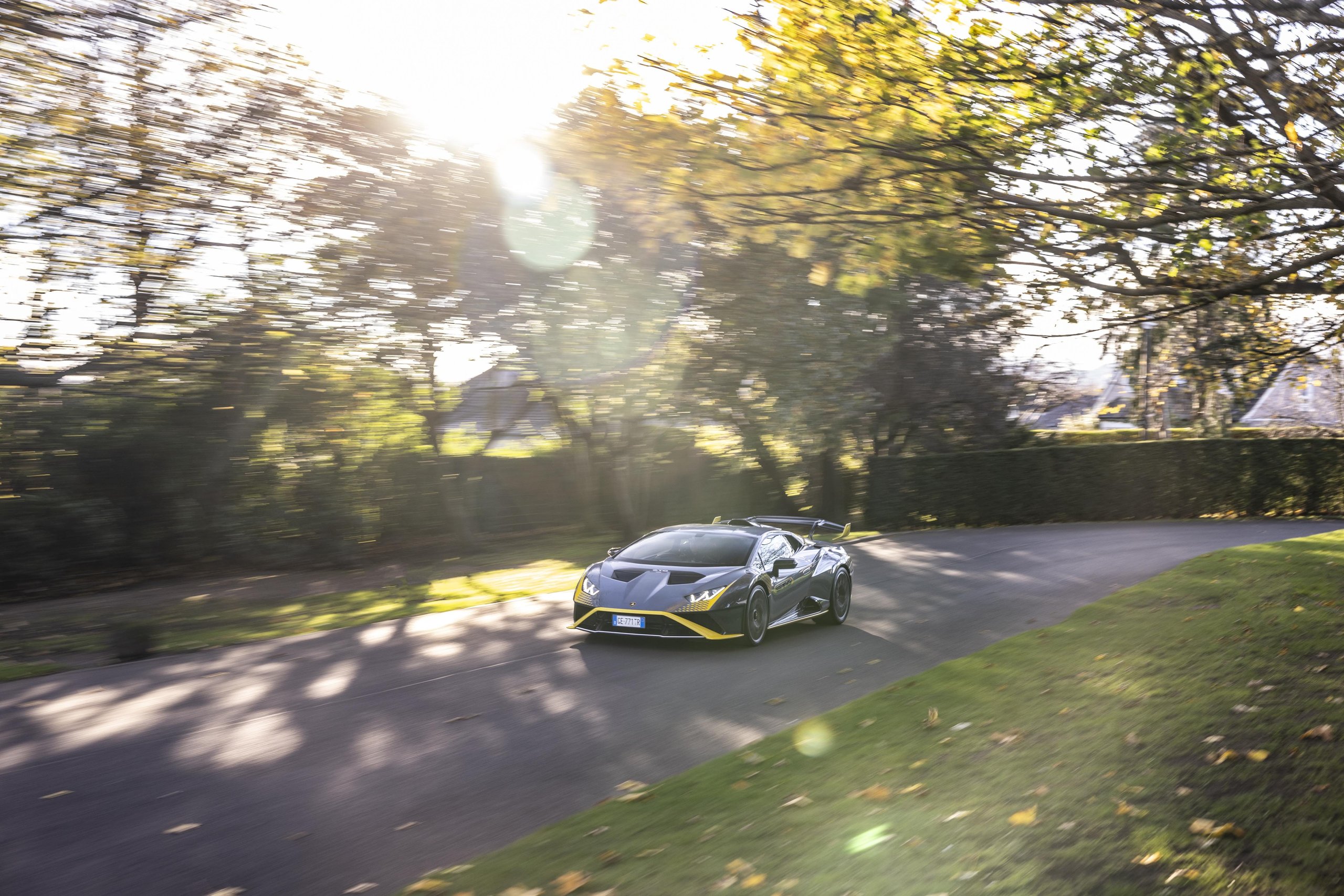
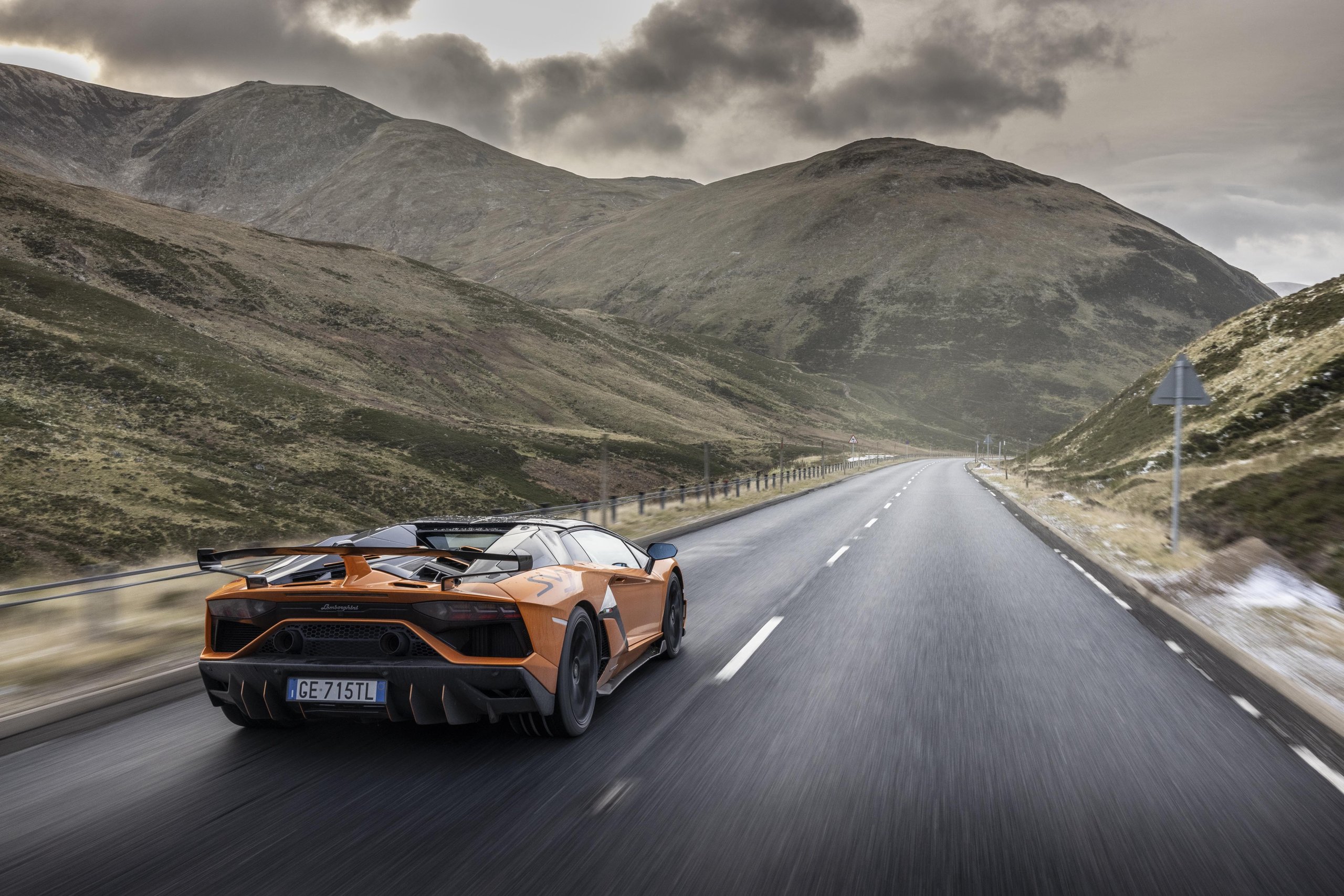
The model mix was purposeful. The Aventador SVJ Roadster represented the pinnacle of the outgoing V12 era, a car whose 2021 MSRP ranged from $421,321 to $577,461 depending on variant. The Huracán STO, derived directly from Squadra Corse’s Super Trofeo racing program, brought track credibility to public roads. Standard Huracán EVO models in both all-wheel-drive and rear-wheel-drive configurations demonstrated the breadth of the V10 family. And the Urus fleet proved its worth as the practical backbone of the trip, ferrying participants to evening activities where a low-slung supercar would struggle.
Owners who follow Lamborghini’s event programs, whether the Esperienza track days or the Giro touring rallies, will recognize the format. Lamborghini Talk forum members regularly share footage from similar events in Tuscany and elsewhere. The Scottish iteration stood out because the landscape itself did much of the work. Wet mountain passes, desolate moorland, and narrow village streets created a backdrop that made the cars look less like showroom exotics and more like machines being used as intended. That rawness served the larger narrative: if Lamborghini wanted to talk about where the brand is going, it helped to first show what the brand already does at its best.

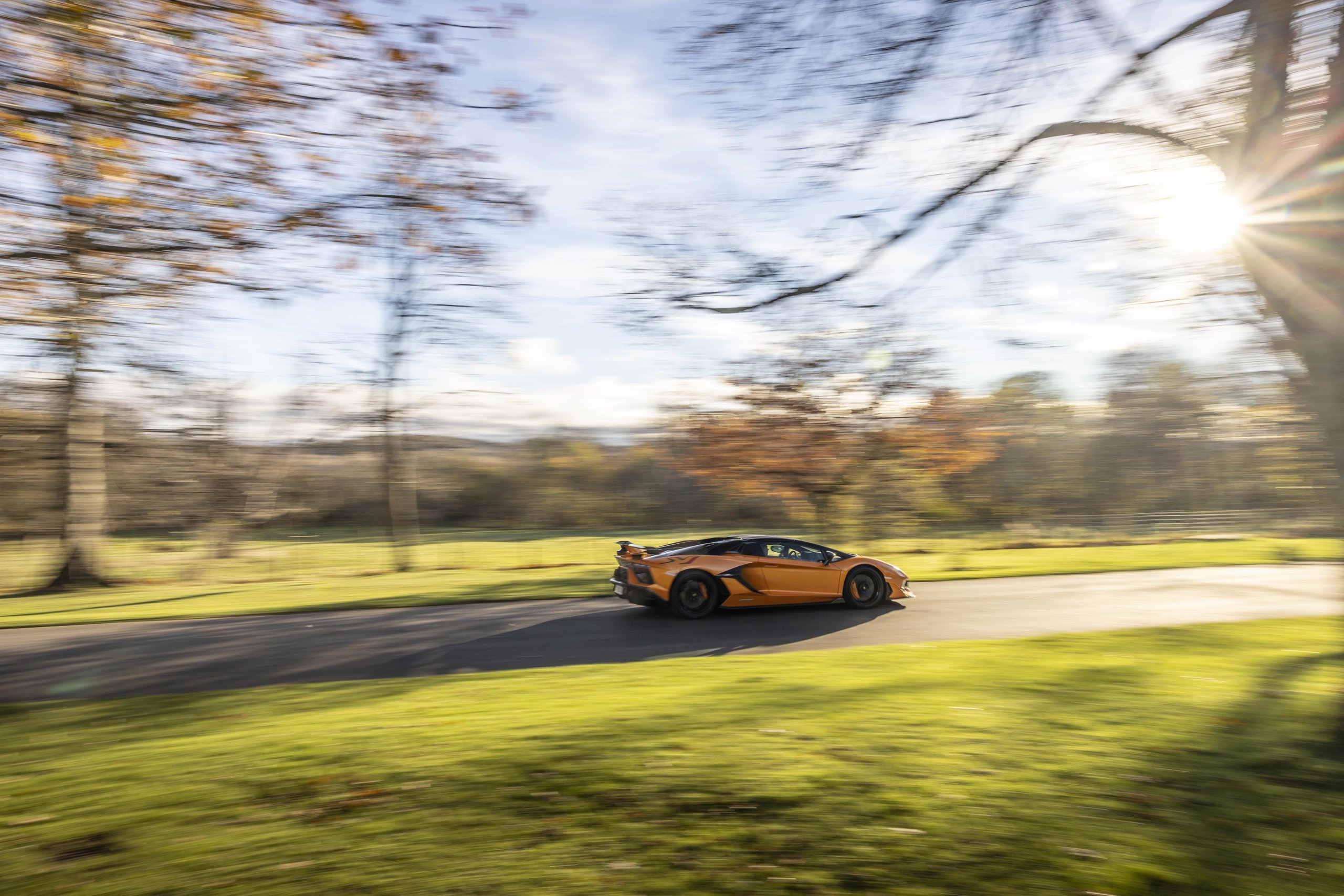
An orange Lamborghini Aventador SVJ blazes down a wet mountain road under a dramatic sky. Image: Automobili Lamborghini.
Cor Tauri: Stargazing as Brand Strategy
The trip’s final act was the most telling. Urus models transported participants to the Cairngorms Dark Sky Park, described as Europe’s most northerly, for a stargazing session. The target star was Cor Tauri, the brightest in the Taurus constellation. Lamborghini says it adopted the name as the moniker for its vehicle electrification and sustainability program.
At the time of this event, Cor Tauri was still a fresh concept. Lamborghini’s Direzione Cor Tauri strategy, announced in 2021, represented the largest investment in the company’s history, reportedly exceeding €1.5 billion over four years. The program was structured in three phases: a celebration of the internal combustion engine through 2022, a hybrid transition targeting the full lineup by the end of 2024, and an eventual fully electric model. The Revuelto, Lamborghini’s first hybrid V12 supersports car, and the Urus SE plug-in hybrid now represent the second phase in production. The twin-turbo V8 Temerario completed the hybridization of the core range.
Weaving the Cor Tauri reveal into a stargazing excursion, rather than a boardroom presentation, tells you how Lamborghini wanted the message received. Electrification was not positioned as a regulatory concession. It was framed as aspiration, literally pointing upward. The entire Scottish trip, from the art stops to the Dark Sky Park, built toward that single moment: a roomful of supercar owners looking at the stars and being told the future carries the same name.

The orange Lamborghini Urus drives along a dark road, its headlights cutting through the night under a canopy of stars. Image: Automobili Lamborghini.
How Lamborghini’s Experiential Playbook Compares
Ferrari runs its Cavalcade program, a multi-day touring event through scenic European routes reserved for owners of current models. Porsche operates permanent Experience Centers in Atlanta, Los Angeles, and elsewhere, offering track instruction and off-road courses. Ferrari’s Cavalcade reinforces exclusivity among existing customers; Porsche’s centers function as acquisition tools, inviting prospective buyers to feel the product.
Lamborghini’s Scottish tour sits somewhere between the two, blending the curated exclusivity of a Ferrari-style rally with cultural programming that neither rival typically offers. The art installations, the Hauser & Wirth hotel, the Dark Sky Park: these are not standard supercar-event checkboxes. They signal that Lamborghini is competing for a buyer who cares about experiences that extend beyond the driver’s seat. For a brand whose Urus already accounts for the majority of its annual sales volume, broadening the definition of what a Lamborghini event can be makes strategic sense.
Whether these curated tours are available to all Lamborghini owners or reserved for select clients remains unclear from the company’s public account of this event. Prospective buyers interested in similar experiences should ask their dealer about upcoming Esperienza and Giro programs, which represent Lamborghini’s broader portfolio of organized driving events. The Scottish format, with its emphasis on art and overnight luxury, suggests the brand is willing to experiment well beyond its standard offerings, and that willingness may be the clearest preview yet of how Lamborghini plans to sell an electrified future to people who fell in love with naturally aspirated V12s.

Luxury Lamborghinis are elegantly parked at a stately manor, blending performance with refined living. Image: Automobili Lamborghini.
Gallery