A Third Consecutive Win, Scored by the People Who Build the Cars
Automobili Lamborghini earned the Sustainability Champion 2023-2024 designation for the third consecutive year, a recognition bestowed annually by the German Institute of Quality (ITQF). What separates this particular trophy from the growing pile of corporate sustainability badges across the luxury automotive world is how the winner gets chosen: not by an external panel or a consulting firm reviewing annual reports, but by anonymous employees.
Approximately 10,000 employees from 1,750 Italian companies (each with at least 300 staff) scored their own employers across 17 criteria spanning economic, social, and environmental sustainability. Companies needed to beat the overall average to qualify, and only 287 made the cut. The award itself evolved this year from the earlier Green Star Award, which focused primarily on environmental issues. The 2023 certification broadened its scope to assess all ESG dimensions, evaluating how companies affect their employees across governance, social welfare, and environmental impact.
Chairman and CEO Stephan Winkelmann framed the recognition in characteristically measured terms, calling it acknowledgment of “all the sustainability, social and governance policies that we uphold in our company on a daily basis” and noting that employee appreciation means “the entire company shares the same values.” The corporate language is predictable. The mechanism behind it is not, and that mechanism is the thread running through everything Lamborghini is doing right now.

The iconic Lamborghini shield logo proudly displayed on the exterior of a modern building, framed by lush greenery. Image: Automobili Lamborghini.
Why Employee Validation Carries Weight in a Skeptical Market
Sustainability awards in the automotive industry are common enough to be wallpaper. Most rely on self-reported data, curated submissions, or third-party audits that companies pay for. The ITQF methodology inverts that dynamic by going straight to the workforce and keeping responses anonymous. If your employees think your ESG policies are performative, the score reflects it.
For a company of roughly 2,000 people concentrated in Sant’Agata Bolognese, this is a meaningful signal. The workforce is small enough that internal culture is difficult to fake at scale. Engineers, assembly technicians, paint shop operators, and administrative staff all participate in the same survey. When that group collectively rates the company above the threshold for three straight years, it suggests the policies are felt on the factory floor, not just printed in the annual report.
From a buyer’s perspective, this kind of internal validation deserves attention. Lamborghini owners increasingly care about the provenance of what they purchase, and knowing that the people assembling a Revuelto or a Urus SE genuinely endorse the company’s direction adds a layer of credibility that a glossy sustainability brochure cannot replicate. The question, then, is what exactly those employees are endorsing.
Direzione Cor Tauri: The Strategy Behind the Slogan
Lamborghini initiated its Direzione Cor Tauri environmental sustainability strategy in 2021, and it represents the largest investment in the company’s history. The roadmap targets the decarbonization of both the product lineup and the Sant’Agata Bolognese production facility, structured in three phases: a final celebration of pure internal combustion, a hybrid transition completed across the full range, and an eventual move to fully electric vehicles.
The company now offers a fully hybrid range, with the Revuelto serving as the flagship High Performance Electrified Vehicle. Lamborghini aims for a 50% reduction in fleet CO2 emissions by 2025 and an 80% reduction by 2030. Across the entire value chain, the target is a 40% reduction in CO2 emissions on a per-car basis by 2030 compared to 2021 levels. Electrification goals include launching a first all-electric model in 2028, followed by a fully electric SUV in 2029.
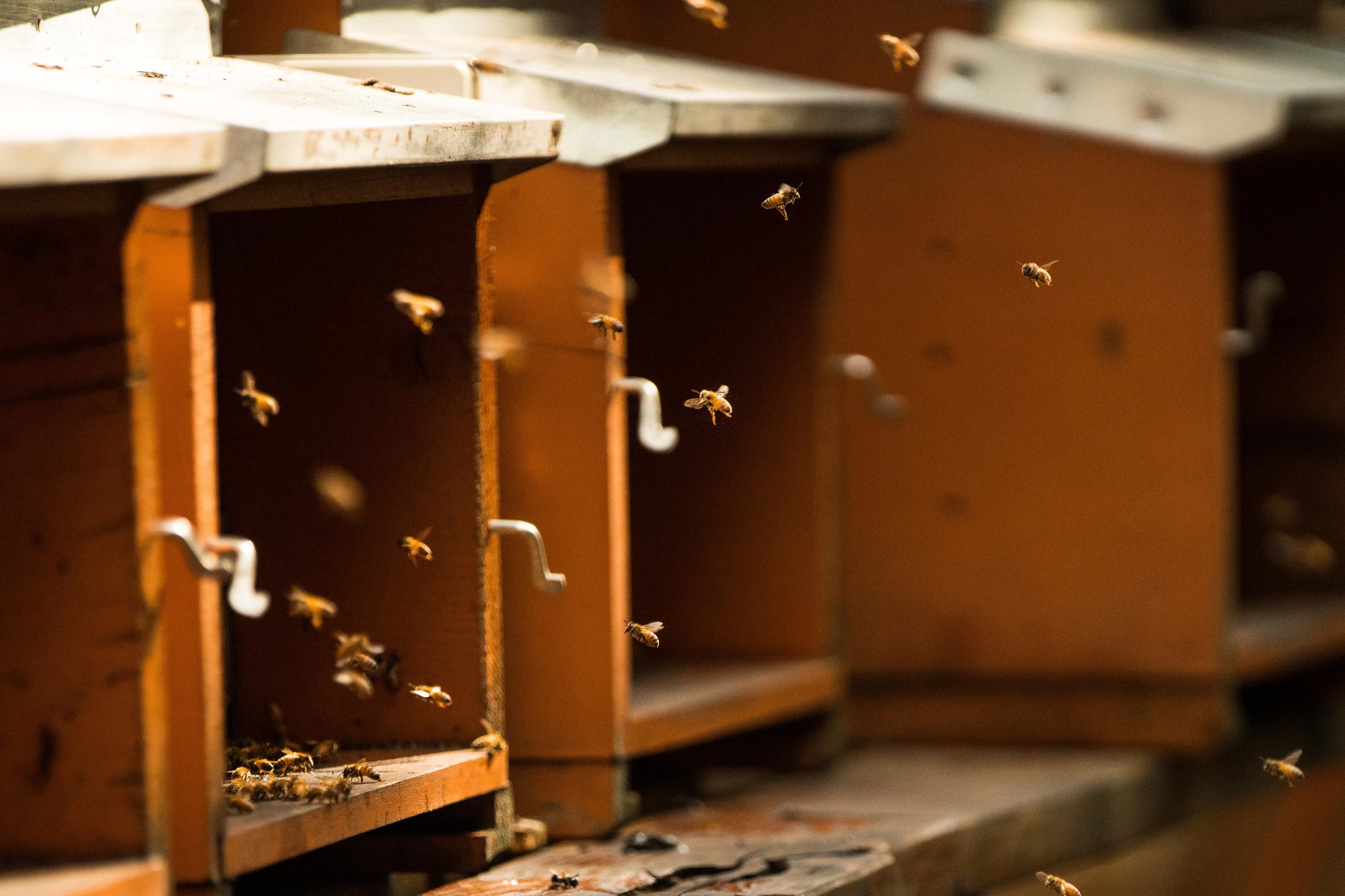
Concrete measures extend beyond the cars themselves. Lamborghini says it is committed to using lower-impact materials like recycled carbon and aluminum, reusable logistics containers, optimized transport routes, and employee carpooling and shuttle services. According to its first Sustainability Report, the company increased its self-generated energy production by 22%. And then there are the beehives. Lamborghini maintains an active apiary project at its headquarters, a biodiversity initiative that sounds quaint until you consider that monitoring bee colony health provides a continuous, living indicator of local environmental conditions around the production site. These are the programs that Lamborghini’s own workforce rated highly enough to earn the Sustainability Champion designation three years running.

Beekeepers in protective suits inspect a beehive, illuminated by the warm glow of the setting sun through the trees. Image: Automobili Lamborghini.
The Uncomfortable Math: Record Sales and Rising Emissions
No honest assessment of Lamborghini’s sustainability credentials can ignore the tension at the center of the story. The company’s direct and indirect greenhouse gas emissions (Scopes 1, 2, and 3) reportedly increased even as these awards accumulated. Lamborghini attributes the rise in Scope 1 and 2 emissions to increased energy consumption from its cogeneration plant and the activation of a new thermal power plant in the painting section. The Scope 3 increase, which covers the broader supply chain and vehicle use, is a direct result of selling more cars.
Lamborghini states it offset unavoidable production site emissions through certified carbon credits from 2015 through 2023, extending that commitment into 2024. Carbon offsets remain a contentious tool in climate policy, and informed buyers should understand that offsets do not eliminate emissions; they fund equivalent reductions elsewhere.
This is the green paradox that few competitors discuss openly. Lamborghini is growing, building more cars, expanding its factory footprint, and simultaneously claiming sustainability leadership. The per-car reduction targets are the more intellectually honest metric, because they acknowledge that absolute emissions may rise with volume while intensity per unit improves. Whether that framing satisfies a given buyer’s environmental calculus is a personal decision. But the fact that employees who see these tradeoffs daily still rate the company favorably on ESG criteria suggests the internal culture treats the tension as a genuine engineering problem rather than a marketing inconvenience.
Competitive Context: Where Lamborghini Stands Among Rivals
Lamborghini is not alone in placing sustainability at the center of its corporate strategy. Ferrari, McLaren, and Porsche all publish sustainability reports and pursue electrification with varying urgency. What none of Lamborghini’s direct competitors can currently point to is a third-party employee survey confirming that internal culture aligns with external messaging. Most rival sustainability credentials rest on self-reported metrics or industry association certifications.
Lamborghini’s position within the Volkswagen Group provides structural advantages here. Access to shared research on battery chemistry, sustainable manufacturing processes, and supply chain decarbonization gives Sant’Agata Bolognese resources that independent manufacturers simply cannot match. Whether that translates into a meaningful differentiator for the buyer writing a seven-figure check is debatable, but for the growing cohort of ultra-high-net-worth individuals who scrutinize the ethical profile of every brand they associate with, it matters. The Sustainability Champion designation gives Lamborghini a talking point that is harder to dismiss than a self-published corporate responsibility PDF.
For prospective owners weighing a Lamborghini against its Italian and German rivals, the practical takeaway is straightforward: Lamborghini is investing at a scale (over 1.5 billion euros for the hybrid transition alone, according to multiple reports) that signals long-term commitment rather than a compliance exercise. The employee validation adds a dimension that competitors will find difficult to replicate without genuinely changing their internal cultures first.

A vibrant convoy of Lamborghini supercars navigates a scenic highway through a breathtaking mountain valley. Image: Automobili Lamborghini.
What This Signals for Future Lamborghini Models
Awards like this one do not change the sound a V12 makes at 9,000 rpm or improve a car’s lateral grip through Maggotts and Becketts. Their value is contextual: they reveal the corporate environment in which the next generation of Lamborghinis will be conceived, engineered, and built. A workforce that genuinely endorses its employer’s direction tends to produce better work, and in a company where hand-finishing and assembly precision define the product, alignment between worker conviction and output quality is anything but abstract.
Lamborghini confirmed no specific product changes tied to this award, nor should anyone expect that. The Revuelto and Temerario represent the hybrid phase. The Lanzador concept previewed the electric future. Both product families emerged from the same Direzione Cor Tauri framework that Lamborghini’s own employees endorsed through this survey. If the company can maintain that internal consensus through the far more disruptive shift to full electrification, it will arrive at 2028 with a workforce that believes in what it is building. That kind of conviction, validated year after year by anonymous ballot rather than boardroom decree, tends to show up in the finished product.
Gallery