The Nürburgring Showdown: Leitch Sells a Dummy for Leipert’s Breakthrough
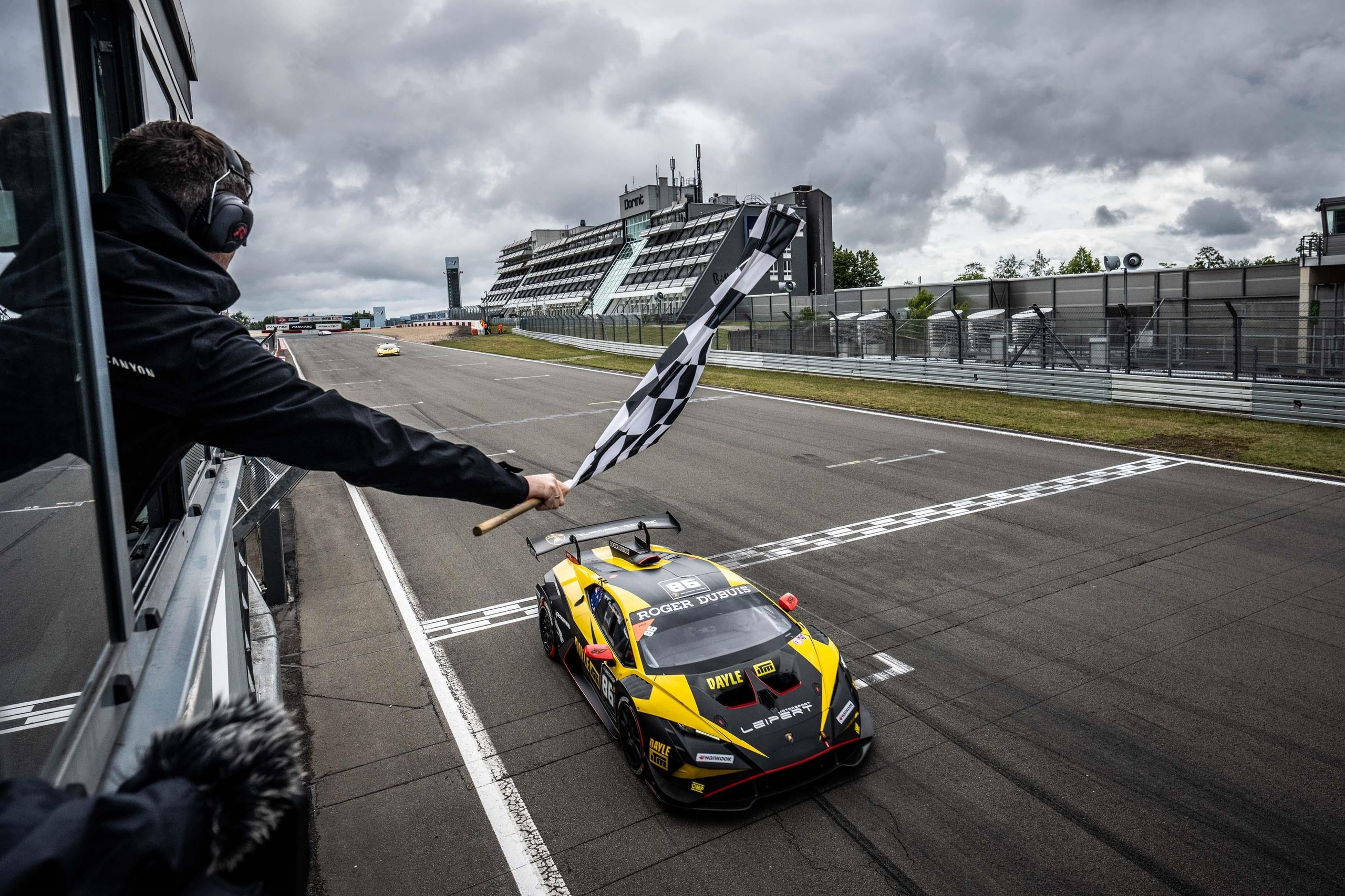
Six minutes from the checkered flag at Nürburgring, Brendon Leitch threaded his Leipert Motorsport Huracán Super Trofeo EVO2 down the inside of turn 11, sold Andrzej Lewandowski what he later called “a little dummy,” and seized the overall lead of Lamborghini Super Trofeo Europe Race 2. In the same move, he covered off Amaury Bonduel’s attempt to sneak through from behind. On replay it looks clean. In real time it required split-second awareness of two threats at once.
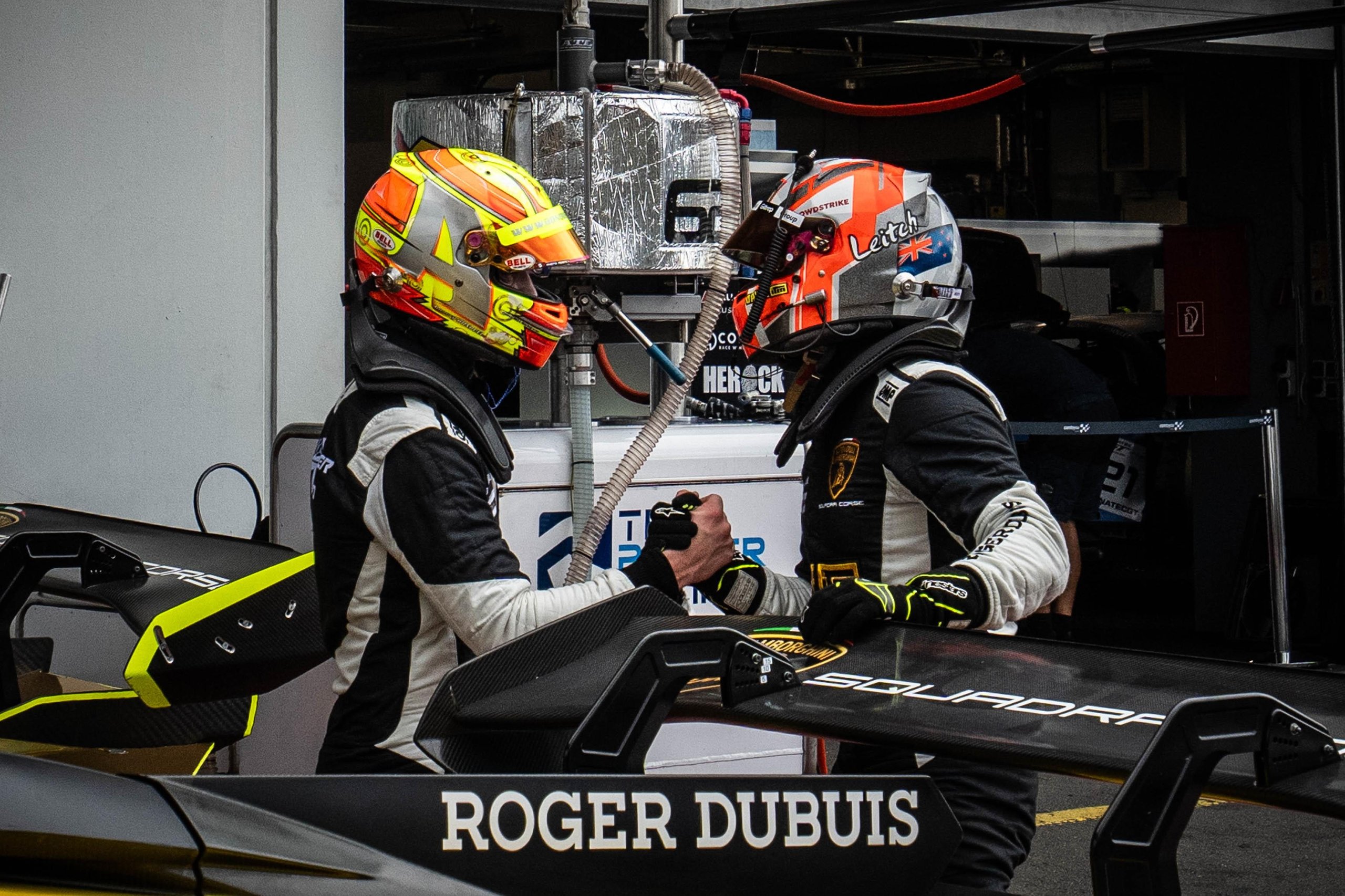
Leitch crossed the line 1.535 seconds ahead of Bonduel, a margin that sounds slim until you consider he built it from nothing in barely three laps. For Leipert Motorsport, a German team racing on home soil, the result marked a first overall victory in the series. For Leitch, the New Zealander who started fifth on the grid, it restored his championship lead after a weekend where his main title rivals, Gilles Stadsbader and Mattia Michelotto, finished a distant 12th following a barrier strike at turn five.
Lamborghini says Leitch is the only driver to finish on the podium in every race this season. Consistency matters more than any single win in a championship, but combining both in one afternoon is the sort of result that redefines a title fight heading into the summer break. What made it possible was a convergence of pit-wall nerve, tire management on a treacherous surface, and the unforgiving character of the Huracán Super Trofeo EVO2 itself, a car that rewards bravery and punishes hesitation with equal conviction.
Pit Strategy and Tire Gambles on a Drying Nürburgring
Conditions at the start were designed to punish the impatient. A morning downpour left the surface damp enough to be treacherous but dry enough that every team committed to slick Hankook Ventus tires. Two safety car laps opened proceedings, giving drivers time to scrub heat into cold rubber on a greasy track. The opening laps were about survival as much as speed.
Once the field went green, the lead changed hands in a chaotic sequence at turn five. Bonduel led into the first corner but defended too aggressively against Loris Spinelli, which opened the door for Rebelleo Motorsport’s Daan Arrow to sweep around the outside and take the lead. Spinelli, racing in Pro-Am and keen to build a buffer for his co-driver Lewandowski, then moved past Arrow into the overall lead.
The real chess match came during the pit window. A mid-race safety car, triggered by an incident between Ibrahim Badawy and Nigel Schoonderwoerd at turn one, delayed the mandatory pit window by three minutes. Leitch pitted at the earliest opportunity. Arrow and Spinelli stayed out. That undercut proved decisive. When Lewandowski and Abbie Eaton (who took over from Arrow) returned to the track after their own stops, Leitch was right behind them on warmer tires and with momentum. He dispatched Eaton at turn 11, then set about reeling in Lewandowski for the winning pass.
In a one-make series where the cars are mechanically identical, the margins come down to when you pit, how quickly your tires come in, and whether you can find clean air. Leitch nailed all three. His post-race comments reinforce the point: he described the car as working best “in clean air,” a telling detail about how aerodynamic sensitivity and tire degradation interact on the EVO2. Stuck behind another car in dirty air, the rear end gets nervous. Out front, everything stabilizes. The early pit stop bought him the clean track he needed to extract the car’s full potential, and the dummy at turn 11 was simply the final dividend of a strategy that began in the pit lane.

A Lamborghini Huracán Super Trofeo EVO2 navigates a challenging corner on the Nürburgring circuit.
The Huracán Super Trofeo EVO2: V10 Purity and Rear-Drive Challenge in Action
Every car on the Nürburgring grid ran the same specification: a naturally aspirated 5.2-liter V10 sending power exclusively to the rear wheels. No hybrid assist. No turbo spool to manage. No all-wheel-drive safety net catching oversteer before the driver even feels it. The formula is deliberately raw, and it produces racing where car control separates the field more than any engineering advantage ever could.
That rawness is precisely what made Leitch’s victory so revealing. On a drying track with cold slicks, the EVO2 demanded constant recalibration of throttle inputs, braking points, and steering commitment. A driver who misjudged the grip at turn five ended up in a barrier. It respected the car’s limits too much lost positions to someone willing to lean on the rear tires a fraction harder. Leitch found the narrow corridor between those extremes, and the result was a pass that looked effortless because the preceding 40 minutes of tire preparation made it possible.
For Lamborghini enthusiasts watching the brand pivot toward hybrid powertrains on the road, the Super Trofeo EVO2 represents something worth appreciating while it lasts. The Temerario GT3, which Lamborghini debuted at the 2025 Goodwood Festival of Speed according to Autoblog, will be the first competition car fully designed and built in-house at Sant’Agata. It trades the V10 for a twin-turbo V8 hybrid architecture. Performance will almost certainly be faster on paper. But races like this Nürburgring round illustrate why the naturally aspirated, rear-drive formula creates such compelling wheel-to-wheel action: the car rewards bravery and punishes mistakes in equal measure, with no electronic intermediary softening the consequences.

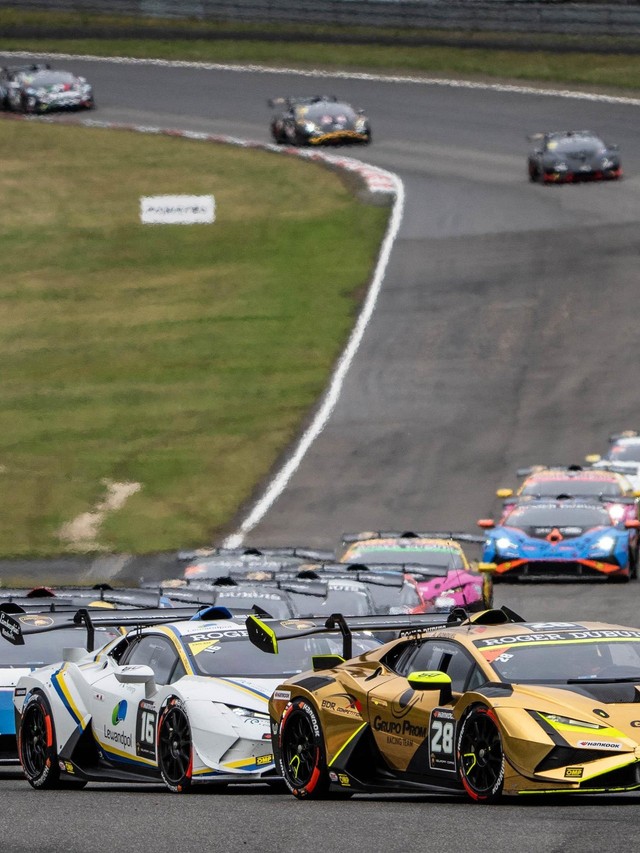
A striking blue Lamborghini Huracán Super Trofeo EVO2 leads the pack on the challenging Nürburgring circuit.
Class Battles and a Miraculous Gravel Save: The Rest of Race 2
Leitch’s overall result grabbed the headline, but the class battles underscored the same theme: on a car this demanding, driver skill is the only variable that matters.
In Pro-Am, Spinelli and Lewandowski won the class despite losing the overall lead to Leitch. Their strategy of building a gap during Spinelli’s opening stint paid off with a comfortable class margin, though Target Racing’s Frederik Schandorff and Alex Au maintained their points advantage by finishing second in class. Au started the race and pitted early, handing over to the more experienced Schandorff, who carved through the field. Jim Pla and Michael Blanchemain of Scuderia Villorba Corse fought a race-long scrap with Brutal Fish Racing’s Edoardo Liberati and Martin Ryba, finishing fourth and sixth in class respectively, separated by the Art-Line car of Shota Abkhazava and Egor Orudzhev.
The Am category produced the weekend’s most spectacular moment of car control. Gabriel Rindone gave Leipert Motorsport a second class victory, but the real drama belonged to Boutsen VDS’s Pierre Feligioni. Leading on the final laps, Feligioni dropped a wheel onto the grass at turn five, slid across the track and into the gravel trap. Instead of burying the car, he somehow drifted the Huracán out of the gravel without touching a barrier and finished second. On a rear-wheel-drive race car with no traction control safety net, that recovery borders on the absurd, and it speaks to the same driver-dependent character that defined Leitch’s winning pass.
Paolo Biglieri and Petar Matić of Bonaldi Motorsport made the Lamborghini Cup look routine, winning for the second consecutive day and moving to the top of the class standings. They led from pole and were never seriously challenged, with Leipert’s Jürgen Krebs finishing second. Brutal Fish Racing’s Charlie Martin and Jason Keats claimed the final podium spot after Iron Lynx’s Donovan and Luciano Privitelio dropped back late.

A tight formation of Lamborghini Huracán Super Trofeo EVO2 cars battles for position on the Nürburgring.
Championship Implications: Why This Matters Beyond One Race
Leitch’s win reshuffles the championship math at the best possible time. Stadsbader and Michelotto won Race 1 on Saturday but fell apart in Race 2 after Stadsbader’s barrier contact at turn five. Finishing 12th while Leitch won means the points swing from one day to the next was enormous.
Leitch now holds the championship lead heading into the summer break, with the fourth round scheduled for Valencia on September 15 to 17. His 100-percent podium record across every race this season gives him a statistical cushion that no other driver can match. Even on weekends where he lacks outright pace in qualifying (he started fifth, remember), his race craft and strategic awareness keep him in contention. That pattern, grinding out results when the car is not the fastest on the grid, is what separates championship contenders from race winners.
For anyone following the series from a buyer or enthusiast perspective, Leitch is worth watching as a barometer of where Lamborghini’s customer racing talent pipeline leads. One report indicates he went on to secure the 2023 European Pro class title as a solo driver, and later won the 2024 Super Trofeo World Championship in Pro-Am alongside co-driver Anthony McIntosh. That trajectory, from Super Trofeo podiums to world titles, is exactly the career ladder Lamborghini Squadra Corse designed the series to create.

Winners celebrate on the podium with their trophies at the Nürburgring Super Trofeo event in July 2023.
Super Trofeo’s Role in Lamborghini’s Motorsport Future
Lamborghini’s one-make series, which launched in 2009 according to available reporting, occupies a specific and deliberate position in the brand’s competitive ecosystem. It sits below GT3 and GT4 in the broader motorsport hierarchy, but its purpose is different from those open-competition categories. The Super Trofeo exists to develop drivers, engage customer racers, and keep the Huracán’s performance narrative alive in a way that showroom brochures cannot replicate.
Ferrari runs a similar playbook with the Ferrari Challenge. Porsche does it with the Carrera Cup. What distinguishes Lamborghini’s series is the character of the car itself. A rear-wheel-drive, naturally aspirated V10 race car with no driver aids is a fundamentally more demanding machine than a turbocharged, all-wheel-drive alternative. That difficulty is a feature, not a bug. It forces drivers to develop throttle sensitivity, car placement, and racecraft that translate directly to higher categories, precisely the skills Leitch demonstrated at turn 11.
The practical question for Lamborghini owners and prospective customer racers is what happens when the Huracán’s racing life eventually ends and the Temerario GT3 era begins. Lamborghini has not confirmed whether a Temerario-based Super Trofeo car will follow, but the pattern across every generation (Gallardo to Huracán) suggests it will. When it does, the series will trade its V10 voice for a twin-turbo V8 hybrid, and races like this Nürburgring round will become the benchmark that future one-make grids are measured against.
For now, the Huracán Super Trofeo EVO2 keeps producing exactly the kind of racing that justifies its existence: close, unpredictable, and decided by the driver rather than the car. Leitch’s Nürburgring win is the latest proof.

A vibrant field of Lamborghini Huracán Super Trofeo EVO2 cars charges through a turn at the Nürburgring.
Gallery