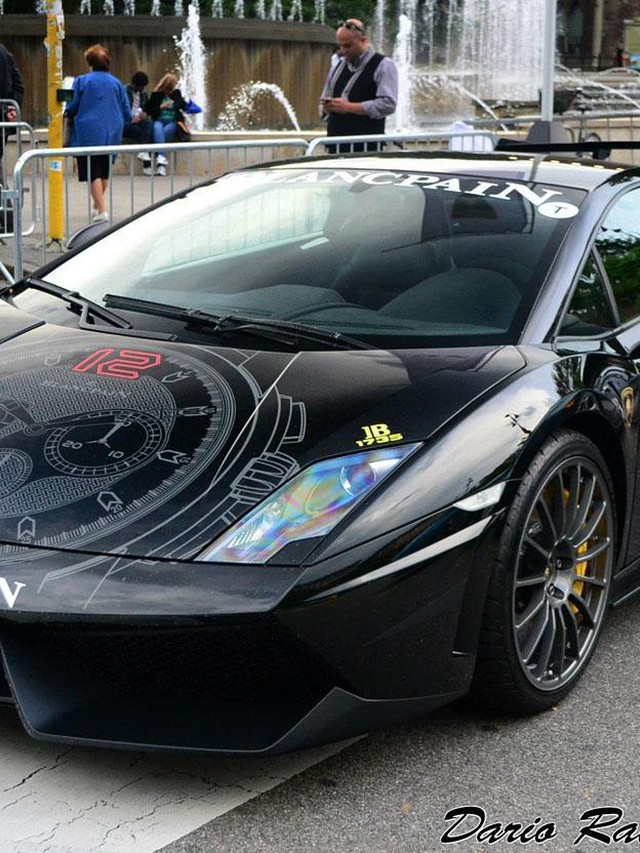
Five Wins, Four Poles, One Dominant Partnership
Rik Breukers and Axcil Jefferies, driving for GDL Racing, claimed the PRO class title in the inaugural 2017 Lamborghini Super Trofeo Middle East with a campaign that left almost nothing on the table. Lamborghini confirmed the pair won five of six races and took four pole positions across three rounds, the first at Abu Dhabi’s Yas Marina circuit and the final two at the Dubai Autodrome on different track layouts. No mistakes, no drama, just meticulous execution from two young drivers and a team that gave them a flawless car every weekend.
The championship crowned winners in four classes. Hendrik Still and Paul Scheuschner of Konrad Motorsport took the PRO-AM title. Andrew Haryanto, also racing with GDL Racing, clinched the AM championship with a round to spare. And Gabriele Murroni won the Lamborghini Cup, the category reserved for rookies, before moving on to the 2017 Super Trofeo Asia series in Sepang.
The Super Trofeo series, organized by Lamborghini Squadra Corse, launched globally in 2009 with European rounds before expanding to Asia and North America. Adding a dedicated Middle East championship in 2017 represented a deliberate bet on a region Lamborghini considers central to its commercial future, and the season that followed justified the gamble by producing champions whose careers would validate the entire structure.
Why the Middle East Got Its Own Championship
Lamborghini motorsport boss Giorgio Sanna has described the Middle East as a “strategic” market for the brand. The reasoning is straightforward: the region’s buyer demographic skews young, affluent, and receptive to performance branding. Launching a dedicated one-make series, rather than simply attaching a few Middle Eastern rounds to the existing Asian calendar, signaled that Squadra Corse viewed the Gulf as a standalone commercial opportunity.
The Super Trofeo format suits that ambition well. Every car on the grid is a Huracán Super Trofeo, a rear-wheel-drive, track-only variant stripped of the all-wheel-drive system found on most road-going Huracáns. That equalizes the machinery and puts the spotlight on driver skill, team preparation, and the kind of close racing that makes for compelling hospitality-tent viewing. For Lamborghini’s regional dealer network, the series doubles as an engagement tool: prospective owners watch the cars compete, meet teams, and experience the brand in a context that transcends a showroom visit.
Lamborghini confirmed that the Middle Eastern competition offered more races per weekend than its European, Asian, and North American counterparts, giving participants additional seat time in a condensed calendar. That density benefits amateur and gentleman drivers as much as young professionals, which matters in a region where the line between enthusiast owner and aspiring racer is often thinner than in mature European markets. Ferrari Challenge and Porsche’s various Carrera Cup programs operate on a similar principle, but Lamborghini’s decision to create a bespoke Middle Eastern series gave the brand a distinct identity in Gulf motorsport. Whether that distinction translated into measurable sales lift remains unconfirmed by Lamborghini, though the series continued to run in subsequent seasons, which suggests the commercial case held up.
Where the Champions Went Next
Breukers was eighteen years old when he won the PRO title and already a member of the Lamborghini Young Drivers Program. His co-driver Jefferies, then 22, brought experience from the GP2 and GP3 single-seater ladder. The pairing illustrated exactly what Squadra Corse designed the program to do: give emerging talent seat time in a controlled, competitive environment and identify who deserves a path toward higher-tier GT racing.
The career trajectories that followed speak for themselves. According to available reporting, Breukers went on to secure back-to-back GTD class wins at the Rolex 24 Hours in 2018 and 2019 with GRT Grasser Racing Team, plus a victory at the 12 Hours of Sebring in 2019 and an overall win at the Dubai 24 Hour that same year. Jefferies became a three-time Super Trofeo Middle East champion and later won the Dubai 24 Hour in both 2021 and 2022 with GPX Racing. PRO-AM champion Hendrik Still moved into GT4 racing in Europe, while Paul Scheuschner competed in the European Le Mans Series LMP3 category.
For anyone considering the Super Trofeo as a first step into professional racing, these outcomes matter more than any lap time. The series functions as a credentialing platform: perform well, and Squadra Corse’s network of factory-supported teams takes notice. That pipeline now feeds into Lamborghini’s GT3 program and, looking ahead, the Temerario GT3, which represents the brand’s first fully in-house competition car.
The Huracán Super Trofeo: The Machine Behind the Racing
The car itself deserves attention. The Huracán Super Trofeo is a purpose-built race machine: rear-wheel drive, stripped interior, full roll cage, competition suspension, and aerodynamics designed for close-quarters circuit racing rather than top-speed bragging rights. Choosing rear-wheel drive over the road car’s all-wheel-drive layout emphasizes throttle management and driver sensitivity, qualities that translate directly when graduates step up to GT3 or endurance machinery.
As Autoblog noted in a later feature, the Huracán Super Trofeo was built specifically for the one-make series, and the platform proved durable enough to spawn the later EVO and EVO2 iterations that kept the championship competitive for nearly a decade. That longevity reinforced Lamborghini’s credibility in customer racing at a time when Squadra Corse was still building its operational reputation against more established programs from Porsche and Ferrari.
For collectors, a side note: low-mileage Super Trofeo cars occasionally surface on the secondary market. They represent an interesting slice of Lamborghini’s naturally aspirated V10 era, though they are emphatically not street-legal in most jurisdictions.
What the Inaugural Season Built
Viewed in isolation, the 2017 Super Trofeo Middle East was a compact, three-round championship with a modest grid. Viewed as the opening chapter of something larger, it was a proof of concept that Lamborghini could sustain a dedicated regional series in a market where the brand’s road-car sales were growing rapidly. The format survived its debut season, expanded, and fed talent into programs that now compete at the highest levels of GT and endurance racing worldwide.
The practical lesson for anyone watching Lamborghini’s current motorsport trajectory: the Temerario GT3 program and the broader Squadra Corse operation did not emerge from nowhere. They were built on the back of seasons like this one, where the brand tested whether its racing infrastructure could function as both a commercial tool and a legitimate driver-development ladder. Breukers, Jefferies, Still, Scheuschner, Haryanto, and Murroni were the first names written into the Middle East series record book. Several of them went on to prove that the series produced real racers, not just regional trophy holders.
Gallery


