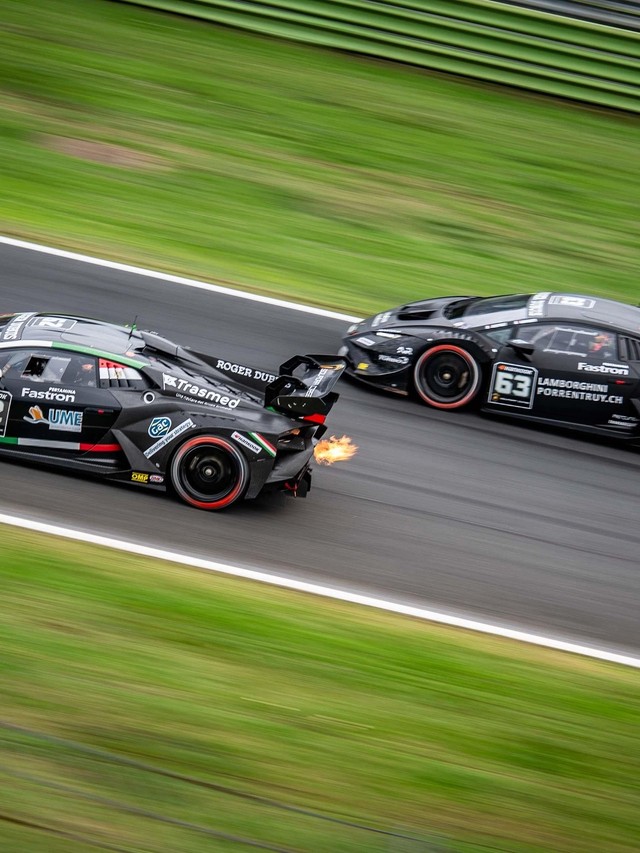
Fifth Season, First All-Female Pairing: COTA Hosts a Loaded Super Trofeo Grid
Lamborghini’s fifth season of Super Trofeo North America competition opens May 4 through 6 at Circuit of The Americas in Austin, Texas, and the grid tells a richer story than the usual preseason driver shuffle. Three women will compete across the 2017 calendar, including what Lamborghini says is the series’ first all-female driver pairing: open-wheel veteran Pippa Mann and returning competitor Jackie Heinricher, fielded by Prestige Performance and Wayne Taylor Racing in the Pro-Am class. Ashley Freiberg, who brings GT3 Cup Challenge and IMSA SportsCar Challenge victories to DAC Motorsports, rounds out the trio.
The series returns to COTA’s 3.4-mile, 20-turn layout for a third consecutive year, with two 50-minute sprint races opening the six-event calendar. Competition remains divided across Pro, Pro-Am, Amateur, and Lamborghini Cup classes, a structure designed to accommodate everyone from seasoned professionals to drivers making their first foray into organized racing. That breadth of entry points is the quiet engine behind what Squadra Corse is actually building: a talent pipeline disguised as a customer racing program.
The Roster: NHL Veterans, World Champions, and a 17-Year-Old
The pipeline only works if the grid attracts genuine variety, and the 2017 entry list delivers. Ross Chouest, the reigning Lamborghini Cup champion and World Champion in the category, graduates to the Am class with DXDT Racing. Seventeen-year-old Austin Versteeg, who missed the 2016 IMSA Prototype series championship by a single point, joins him. Former NHL All-Star defenseman Patrice Brisebois returns to DAC Motorsports after claiming his maiden victory at COTA last season.
In the Pro ranks, Prestige Performance and Wayne Taylor Racing field two cars pairing Alex Popow with Michele Beretta and last year’s Pro-Am champion Trent Hindman with Riccardo Agostini. Multi-time Super Trofeo champion Edoardo Piscopo, who also served as the Huracán GT3 factory test driver in 2015, teams with newcomer Taylor Proto in Pro-Am for US RaceTronics. Prototype racers, professional hockey players, and single-seat open-wheel competitors all channeled through the same car on the same grid: that is the point. The series absorbs talent from wildly different backgrounds and gives Squadra Corse a single stage on which to evaluate all of it.
The GT3 Junior Program: Where Super Trofeo Becomes a Formal Pipeline
Beretta and Agostini carry a designation that separates them from the rest of the field: both are members of the Lamborghini Squadra Corse GT3 Junior Program. Lamborghini describes the program as providing instruction and guidance designed to develop selected drivers into brand ambassadors, but the practical implication runs deeper than corporate language suggests.
Single-make series across the supercar industry serve a dual purpose. They sell race cars to gentleman drivers, and they identify professional talent worth investing in. Lamborghini’s junior program formalizes that second function, creating a documented pathway from customer racing into the factory GT3 effort. Piscopo’s trajectory from Super Trofeo champion to Huracán GT3 factory test driver illustrates how the pipeline works in practice. The junior program is not a parallel initiative running alongside the series; it is embedded within it, with Beretta and Agostini racing on the same grid, against the same competitors, in the same 50-minute sprint format as the gentleman drivers paying for their own seats. That integration creates a feedback loop: junior drivers gain race experience while the factory evaluates them under genuine competitive pressure, not in private tests or simulator sessions.
Lamborghini has not disclosed the specific financial commitment required for privateer teams or junior program participants. What the series structure does confirm is a dealership-supported model, with teams representing specific Lamborghini retailers, which distributes costs and creates a commercial incentive for dealers to invest in motorsport as a brand-building exercise rather than treating it as pure expense.
Why Three Women on the Grid Matters More Than the Headline Suggests
Listing the number of women competing in a racing series is easy. Explaining why it matters for Lamborghini specifically requires looking at how the brand positions itself against rivals. Ferrari Challenge and Porsche’s various one-make series have historically attracted larger fields, but Lamborghini’s willingness to publicize the Mann-Heinricher pairing as a milestone signals that Squadra Corse views diversity as a competitive differentiator for the series, not an afterthought.
Freiberg’s inclusion is arguably the more telling data point. She arrives with genuine race-winning credentials, not as a promotional entry. Mann brings IndyCar experience. Heinricher returns for a second season, suggesting the series environment was worth coming back to. For a customer racing series trying to grow its grid, demonstrating that the paddock welcomes a broader range of competitors is a practical business decision as much as a values statement. Larger grids mean more car sales, more dealer engagement, and more television content. The diversity angle and the commercial growth angle point in the same direction, and both feed the pipeline thesis: the wider the net, the better the talent pool.
620 Horsepower, Rear-Wheel Drive, and the Car That Makes the Pipeline Work
Every driver on the 2017 grid competes in the same machine: the purpose-built Lamborghini Huracán Super Trofeo. The car draws its naturally aspirated 5.2-liter V10 from the road-going Huracán, managed by a MoTeC control unit and producing 620 horsepower. A hybrid carbon and aluminum frame, modified geometries for improved cooling and gearbox packaging, and a dry weight of 1,270 kg (2,800 lb) give it a weight-to-power ratio of 2.05 kg/CV.
The detail that matters most for driver development is the rear-wheel-drive layout. The road car sends power to all four wheels; the race car does not. That distinction forces drivers to manage traction, rotation, and throttle application with far less electronic safety net, building skills that translate directly to GT3 competition where rear-drive configurations are standard. One source reports the Super Trofeo is 335 pounds lighter than the LP610-4 it derives from, which further sharpens the car’s responses and raises the penalty for driver error.
| Spec | Huracán Super Trofeo |
|---|---|
| Engine | 5.2L naturally aspirated V10 |
| Power | 620 hp |
| Dry Weight | 1,270 kg (2,800 lb) |
| Drivetrain | Rear-wheel drive |
| Gearbox | 6-speed sequential |
| Frame | Hybrid carbon/aluminum |
Equal machinery puts the emphasis on driver skill and team preparation, which is exactly what a talent-development pipeline requires. In its third year of service within the series, the Huracán Super Trofeo remains the tool that makes the entire program function.
From COTA to Imola: The Longer View
The 2017 season calendar runs through five North American venues before culminating at the Autodromo Enzo e Dino Ferrari in Imola, Italy, where regional champions converge for the World Finals. That global structure, with parallel series in Europe and Asia, gives Lamborghini a worldwide scouting network disguised as a customer racing program.
Reports indicate the Temerario Super Trofeo will replace the Huracán-based car for worldwide competition starting in 2027, which would make the current Huracán platform’s final seasons a particularly interesting period for talent identification. Drivers who prove themselves now, in the naturally aspirated V10 era, will be the candidates Squadra Corse considers when the turbocharged hybrid Temerario GT3 needs its own roster of factory-supported competitors. The 2026 North American calendar already features 39 cars across events at Sebring, Laguna Seca, Watkins Glen, Road America, and Indianapolis Motor Speedway, suggesting the series has continued to grow in the years since this 2017 season opener. For anyone following Lamborghini’s motorsport trajectory, the names appearing on the 2017 COTA entry list are worth remembering. Some of them will surface again in very different machinery.
Gallery


