Champions Crowned in the Rain at Dubai Autodrome
Jack Bartholomew and Taylor Proto walked away from Race 1 at the Dubai Autodrome as 2018 Lamborghini Super Trofeo Middle East champions, each wrapping up their respective titles with a race still to run. Bartholomew, driving for FFF Racing Team by ACM alongside teammate James Pull, took the PRO category crown on the strength of three consecutive victories. Proto, also under the FFF Racing banner, locked down the AM class with a second-place overall finish. Both titles were decided mathematically before Saturday’s Race 2 could even factor in.
The circumstances made the result more compelling than a dominant runaway might suggest. Light rain forced organizers to start Race 1 in Wet Race Mode behind the safety car on the 5.3 km Dubai Autodrome circuit. When the field was released, the conditions immediately began separating drivers who could manage a rear-wheel-drive Huracán Super Trofeo on a damp surface from those who could not. Pole-sitter Rik Breukers of GDL Racing ran off the track within two laps, handing the effective lead to Axcil Jefferies of Konrad Motorsport, who proved to be the fastest driver on the day. Jefferies recorded the best race lap of 1’58″740, the only driver to dip below the 1:59 barrier.
The pit-window driver change reshuffled the order. Carrie Schreiner took over the Konrad Motorsport car from Jefferies but could not hold off Bartholomew, who slotted into first and stayed there to the checkered flag. Behind him, Proto finished second overall. Daniel Zampieri, in the Antonelli Motorsport car he shared with Glauco Solieri, drove a strong second stint to claim third overall and first in the PRO-AM class, keeping that category’s title fight alive for Race 2. The Lamborghini Cup title, led by Mark Proto but not yet decided mathematically, also carried over to Saturday.
Wet Track, Rear Drive, and the Skill It Took to Win
What made this particular title clinch worth watching was the combination of conditions and car. The Huracán Super Trofeo is a rear-wheel-drive, naturally aspirated V10 race car. On a dry circuit, its 620-class horsepower and single-make specification keep the field close and put the emphasis on racecraft. On a wet surface, that rear-drive layout becomes a character test. Breukers, who qualified on pole, found out quickly. Jefferies, who adapted fastest, was rewarded with the only sub-two-minute lap of the race.
Bartholomew’s ability to manage the car through the wet phase and then capitalize after the driver swap speaks to the kind of racer the Super Trofeo series is designed to produce. According to SnapLap, Bartholomew was born in September 1998, making him just 19 years old at the time of this championship. His 2018 Middle East campaign saw him secure 2 wins and 6 podiums across 6 races in the Pro category. He also placed second in the Lamborghini Super Trofeo Asia Pro category that same year and finished 9th in the World Final. For a teenager, that breadth of competition across multiple regional series is exactly the development path Lamborghini’s Squadra Corse division intends the Super Trofeo to provide.
Proto’s AM title followed a different but equally valid logic. The AM class exists to give gentleman drivers and semi-professional racers a competitive framework where they can race the same machinery without being overwhelmed by the outright pace of PRO entrants. Proto’s consistency across the season, culminating in a second-place overall finish in the title-deciding race, demonstrated the kind of measured approach that keeps AM competitors returning season after season. Customer retention matters as much as talent discovery in a series built around selling race cars.
The Huracán Super Trofeo as Lamborghini’s Proving Ground
Lamborghini’s one-make series, established in 2009 with the Gallardo Super Trofeo, operates on a straightforward principle: identical cars, equal preparation, and a format that rewards the driver rather than the engineering budget. The Huracán Super Trofeo replaced the Gallardo as the platform and refined the concept. Stripped of all-wheel drive, fitted with a full roll cage, competition damping, and racing slicks, the car bears only a family resemblance to its road-going sibling. It is a purpose-built race car that happens to share an engine and basic architecture with something you can drive to dinner.
The series runs across multiple regions: Europe, Asia, North America, and the Middle East. Each regional championship feeds into an annual World Final, creating a pyramid structure where regional champions compete against each other on a global stage. Bartholomew’s trajectory illustrates the system at work. SnapLap reports that he finished third in the 2017 Super Trofeo Middle East with one win and six podiums before stepping up to win the championship outright in 2018. In 2019, he moved to the Super Trofeo Europe Pro category with Bonaldi Motorsport.
This ladder structure mirrors what Ferrari operates with the Ferrari Challenge and what Porsche runs through its various Carrera Cup and Supercup series. The competitive question for Lamborghini is whether its pipeline produces drivers who can eventually step into higher-tier GT racing and represent the brand at events like the 24 Hours of Spa or the Rolex 24 at Daytona. The Super Trofeo is the first rung on that ladder, and results like Bartholomew’s 2018 season are the evidence Squadra Corse points to when justifying the investment.

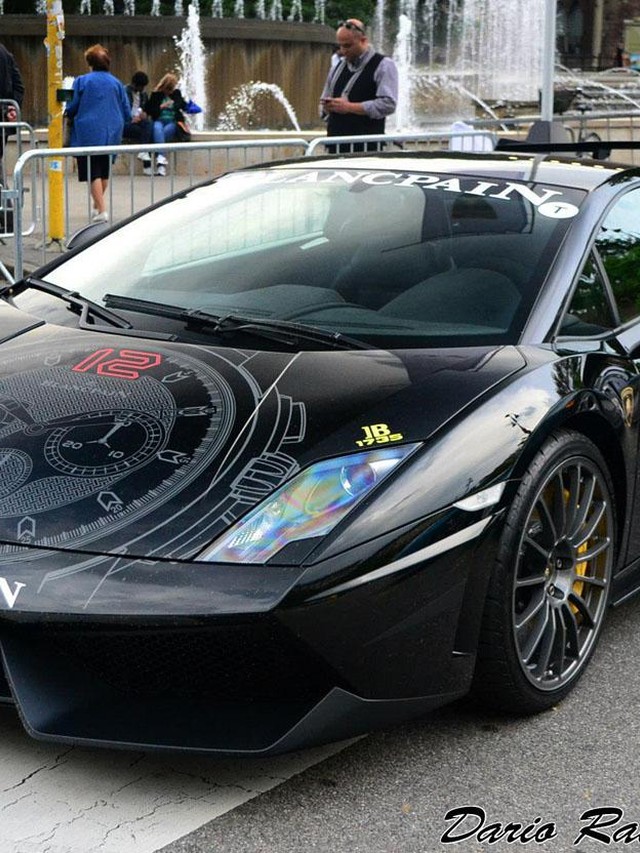
A black Lamborghini Huracán Super Trofeo race car with orange accents speeds around a turn on a grey racetrack.
From Regional Titles to the Global Stage: Where the Pipeline Leads
The story most race reports skip is where a Super Trofeo championship actually leads. For Bartholomew, the answer involved continued competition within the Lamborghini ecosystem. His career arc, from British karting through F4 and British GT4 before entering the Lamborghini Young Driver Development Programme with FFF Racing in 2017, represents a clean case study in how the system is supposed to work. SnapLap’s career records show 10 wins, 9 pole positions, and 48 podiums across 121 races in his motorsport career.
The landscape for Lamborghini’s GT racing ambitions is shifting. As Autoblog reported, the Temerario GT3, which debuted at the 2025 Goodwood Festival of Speed, represents Lamborghini’s first competition car fully designed, developed, and built in-house. That distinction matters. Previous Lamborghini GT3 cars relied on external partners like Dallara for chassis development. The Temerario GT3 brings that capability under Squadra Corse’s own roof, which changes the relationship between the one-make series and the GT3 program.
If Lamborghini follows its own historical pattern, the Super Trofeo series will eventually transition to a Temerario-based platform, giving customer racers their first experience with the twin-turbo V8 hybrid architecture in a controlled, single-make environment before some of them graduate to GT3 competition. For teams and drivers who built their programs around the Huracán’s naturally aspirated V10 characteristics, this transition will mean adapting to an entirely different powerband, altered weight distribution, and the complexities of turbo management in wheel-to-wheel racing. Lamborghini has not confirmed the timeline for a Temerario Super Trofeo car, but the logic of the ladder system points clearly in that direction.
Teams like FFF Racing, Konrad Motorsport, Antonelli Motorsport, and GDL Racing all field multiple entries across regions, suggesting a business model healthy enough to sustain multi-car operations across several championships simultaneously.
Unfinished Business in Dubai and What Comes Next
Race 1 settled the PRO and AM titles, but two categories remained open heading into Saturday’s Race 2. In the PRO-AM class, Konrad Motorsport and Antonelli Motorsport carried their fight to the final race, with Zampieri and Solieri’s strong third-place finish keeping Antonelli in contention against the Jefferies/Schreiner pairing. The Lamborghini Cup saw Mark Proto leading the standings but without a mathematical lock, meaning Gerald Van der Horst and the remaining contenders still had a theoretical shot.
The Middle East series occupies a specific niche in the global Super Trofeo calendar. Running across venues in Abu Dhabi and Dubai during the winter months, it offers teams and drivers a compact, three-round championship that serves as both a standalone competition and a warm-up for the longer European and Asian seasons. Bartholomew’s 2018 campaign, which spanned the Middle East, Asia, and the World Final, shows how drivers use the regional series as building blocks rather than isolated events.
That is the thread connecting a rain-soaked Race 1 at Dubai to the broader arc of Lamborghini’s motorsport program. The Temerario GT3 will eventually become the flagship competition car, but the one-make series is where the customer base, the driver talent, and the operational knowledge are cultivated. Bartholomew’s title, earned at 19 years old in a rear-drive V10 race car on a wet track, is one data point in that larger picture, but it is exactly the kind of data point the system is designed to produce.


