Seven Wins From Eight Starts, and a Title Fight at Laguna Seca
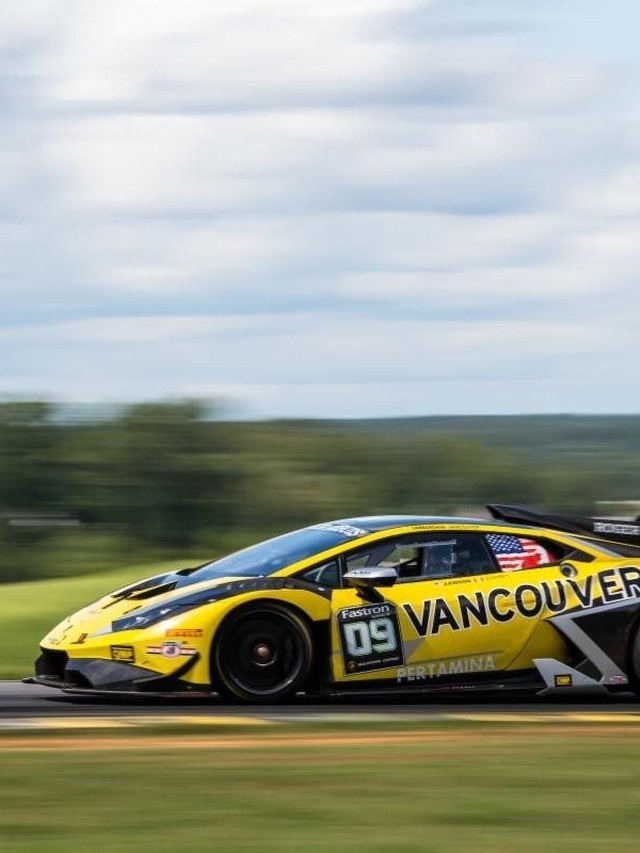
Jake Eidson and Damon Ockey arrived at WeatherTech Raceway Laguna Seca in September 2019 carrying a record that bordered on absurd for a ProAm pairing: seven victories from the first eight races in the Lamborghini Super Trofeo North America ProAm class. One more clean weekend in their No. 09 US RaceTronics, Lamborghini Vancouver Huracán Evo and the championship would be settled before the series even reached its annual World Finals.
The numbers alone tell a story of dominance, but the more revealing detail is how they got there. Eidson, a young professional with a Platinum Cup championship in the 2017 IMSA Porsche GT3 Cup USA series already on his résumé, and Ockey, a seasoned amateur with deep track knowledge, built something most co-driver pairings in customer racing never quite achieve: genuine strategic symbiosis. Their season became a case study in what separates a fast team from a winning one, and it happened to unfold inside Lamborghini’s most accessible competitive platform.
Lamborghini’s Super Trofeo North America is a one-make series organized by Squadra Corse, the brand’s motorsport division. The ProAm class pairs a Bronze-rated driver (per FIA categorization) with a Gold or Silver-rated co-driver, creating a deliberate skill asymmetry that rewards teamwork and strategy as much as outright pace. Every car on the grid is an identically prepared Huracán Super Trofeo, stripping away the equipment variable and putting the spotlight squarely on the humans inside the cockpit. That structure is precisely what made the Eidson-Ockey partnership so instructive: their dominance was not bought with a better car, but built through a series of small, compounding advantages in how they worked together.
The Synergy Secret: Why Being the Same Height Matters More Than You Think
Customer racing at this level involves mandatory driver changes during each race, and that is where Eidson and Ockey found an advantage most people would never consider. The two drivers are nearly the same physical size. No adjusting pedal boxes, no repositioning mirrors, no fumbling with seat inserts. According to Lamborghini, the duo completed driver swaps in approximately 25 seconds.
In a sprint race format where total race time can be under an hour, shaving even five seconds off a pit stop is the equivalent of finding free lap time. Multiply that across a doubleheader weekend and the cumulative advantage becomes substantial. It also reduces the risk of a botched exchange, which in a series where every car is mechanically identical can be the difference between a class win and a mid-pack finish.
Physical compatibility, though, was only the visible layer. Both drivers highlighted mutual learning and open-mindedness as essential to their partnership. Ockey brought circuit-specific knowledge to tracks Eidson was visiting for the first time in a Lamborghini, serving as a living track guide. Eidson contributed racing line analysis and setup feedback that Ockey credited with making him measurably faster. This kind of bidirectional coaching is common rhetoric in racing, but the results suggest it was more than lip service. Ockey praised Eidson’s speed and his contributions on car setups, while Eidson described a partnership where both drivers actively share small details that compound into larger gains. The 25-second pit stop was the most visible expression of their chemistry; the less visible part was a shared language of racecraft that let them hand a car back and forth without losing momentum.
Racing Hard, Racing Smart: The Discipline of Car Preservation
The 2019 season marked the first time either Eidson or Ockey competed in a co-driver arrangement, and both acknowledged it forced a fundamental recalibration of their racing instincts. A solo driver can push tires to the absolute limit because the consequences belong entirely to them. With a co-driver waiting to take over, that calculus changes completely.
Ockey described the adjustment plainly: when you drive first, you bring at least some of the car back for your partner. Both drivers adopted a tire preservation strategy, managing degradation so the second stint driver inherited a car that could still push hard at the end of the race. In a one-make series where mechanical parity eliminates equipment excuses, tire management is one of the few variables a team can actually control, and the Eidson-Ockey pairing treated it as a competitive weapon rather than a concession.
That broader philosophy extended beyond rubber. The team’s stated approach was to race hard but clean, with bringing the No. 09 car home intact treated as a paramount objective. Ockey was explicit about avoiding unnecessary battles with cars from other classes, and Eidson acknowledged the financial reality: these are not cheap machines, and an off-track excursion carries costs that go well beyond a single weekend’s result. Anyone who follows customer racing recognizes this tension. The fastest amateur teams are often the ones that know when not to fight, banking consistent finishes rather than chasing heroic but fragile victories. Seven wins from eight starts is essentially the scoreboard proof of that discipline.
Sim racing communities offer an indirect window into just how demanding the Huracán Super Trofeo can be. Multiple discussions across racing simulation forums describe the car as rewarding within a specific operating window but punishing when pushed beyond it, with users noting twitchy steering behavior and a tendency to snap loose in adverse conditions. The real car is a different animal entirely, but the simulation feedback reinforces the idea that consistent results in this platform require patience and precision, not just raw aggression. For a ProAm duo whose entire strategy rested on preserving the car across two stints, that demanding character actually amplified their advantage: discipline paid double.
Beating the Pros: ProAm Ambitions Beyond Class Silverware
Winning the ProAm class was the primary objective, but Eidson and Ockey set a secondary target that reveals the real depth of their competitiveness: overall podium finishes, competing directly against Pro class entries where both drivers hold Gold or Silver FIA ratings.
They reached that overall podium three times during the season. For a ProAm lineup, this is a significant achievement. The Pro class exists precisely because it features drivers without the skill-level handicap that defines ProAm. Beating those entries, even occasionally, requires the ProAm team to execute flawlessly on strategy, pit stops, and tire management while also carrying genuine pace.
Eidson framed the distinction clearly: ProAm podiums are satisfying, but overall podiums are what the team truly pursued. That ambition, and the fact they delivered on it repeatedly, suggests a pairing operating at the upper boundary of what ProAm regulations are designed to contain. It also validated the Huracán Evo as a platform where driver skill and team execution can overcome the structural disadvantage of a mixed-rating lineup. Every one of those overall podiums traced back to the same compounding advantages: the fast pit stops, the tire preservation, the shared racecraft. Against Pro entries, there was simply no margin to waste, and the Eidson-Ockey partnership had spent the entire season learning how to waste none.
For Lamborghini, these are exactly the stories Squadra Corse wants to tell. A customer racing program thrives when its participants feel they can compete above their classification, because that belief drives engagement, repeat entries, and the kind of word-of-mouth that no marketing budget can replicate.

The number 09 Lamborghini Huracán GT3 race car, adorned in yellow and black, blazes down the track with impressive speed.
The Huracán Evo as Customer Racing Cornerstone
Lamborghini’s Super Trofeo series occupies a specific niche in the broader landscape of manufacturer-backed one-make championships. Ferrari runs its Challenge series. Porsche operates the Carrera Cup. Each program serves a similar commercial function: provide wealthy enthusiasts and aspiring professionals with a structured, relatively accessible path to competitive wheel-to-wheel racing in a car that carries the brand’s identity.
The Huracán Super Trofeo, with its naturally aspirated V10 and identically prepared specification across the grid, was designed to be a reliable and repeatable platform. The goal is to remove the engineering arms race entirely, so that results reflect driver talent and team strategy rather than development budgets. For a ProAm pairing like Eidson and Ockey, this philosophy was essential. Without mechanical parity, a Bronze-rated amateur would have no realistic path to challenging Gold-rated professionals, regardless of how well the team executed its strategy. The identical machinery did not create their dominance, but it created the conditions under which their particular strengths, the fast swaps, the tire management, the mutual coaching, could translate directly into results.
The series also functions as a development pipeline. Following their dominant 2019 ProAm campaign, Eidson moved up to the Pro class for the 2020 season, partnering with Steven Aghakhani at US RaceTronics. Multiple outlets reported that the Aghakhani and Eidson pairing, with an average age of just 21, became the youngest Pro class duo in Super Trofeo history worldwide. That progression from ProAm champion to Pro competitor is precisely the career ladder Squadra Corse designed the series to provide.
Looking further ahead, the Super Trofeo platform itself is evolving. CarBuzz reports that a new Temerario Super Trofeo race car is expected to arrive in 2027, marking the transition from the Huracán to Lamborghini’s twin-turbo V8 hybrid architecture. For current and prospective competitors, that shift will mean adapting to an entirely new powerband and the added complexity of electrified assistance, a significant change for a series built around the predictable, linear delivery of a naturally aspirated ten-cylinder engine.
What This Season Proved, and What Comes Next
Jake Eidson’s full 2019 record ultimately reached 11 wins from 12 ProAm races across the season, a statistic that speaks for itself. The Laguna Seca finale, with both races streamed live on IMSA.tv and squadracorse.lamborghini.com, offered the final chapter of a campaign that was effectively decided long before the checkered flag fell at the last North American round.
For prospective Super Trofeo participants, the Eidson and Ockey story illustrates something that entry brochures and hospitality packages cannot: the competitive return on investing in the right co-driver relationship. The financial commitment to compete in a series like this is substantial, and Lamborghini’s own drivers acknowledged the cost factor explicitly when discussing their conservative approach to risk. Exact budgets for a full Super Trofeo season are not published by Lamborghini, and the figures vary widely depending on team support, travel, and damage. What the source material does confirm is that car preservation was a conscious strategic priority, not just a platitude.
The broader takeaway for Lamborghini enthusiasts is that Squadra Corse’s customer racing ecosystem works as intended when the right ingredients align. Identical machinery. A class structure that rewards intelligent pairings. A car demanding enough to separate skill levels but reliable enough to finish races. Eidson and Ockey proved that the biggest edge in a spec series is not found in the car but in the partnership, from the 25-second driver swaps to the tire management to the shared decision about which battles to fight and which to let go. Eidson’s subsequent promotion to the Pro class confirmed that the ladder functions as designed. The question now is whether the Temerario-era Super Trofeo, whenever it arrives, can preserve that balance while introducing the turbocharged hybrid complexity that defines Lamborghini’s new generation of road and race cars.


