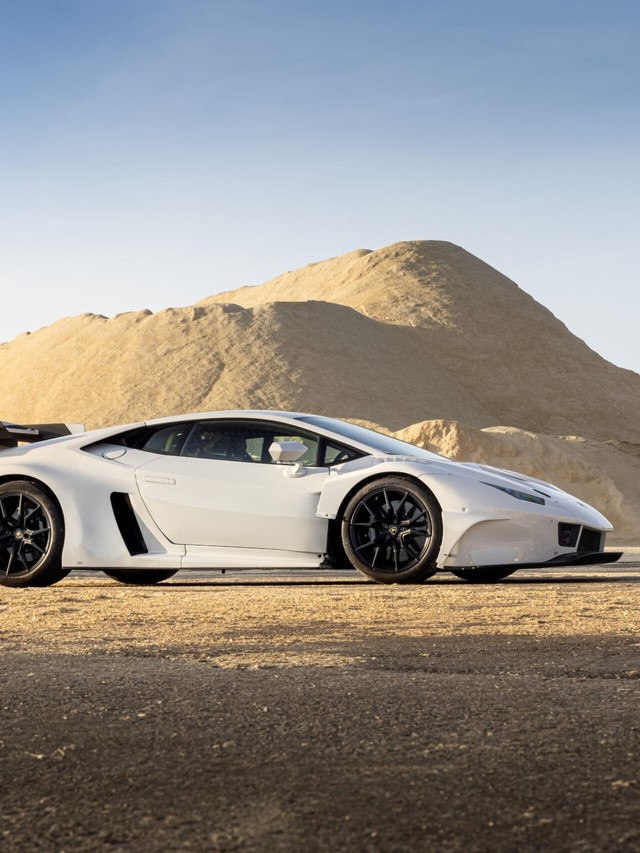
Lamborghini’s First Hybrid, Named for the Man Who Made It Possible
When the Sián FKP 37 rolled onto the stage at the IAA 2019 in Frankfurt on 10 September, it carried two stories simultaneously. The first was technical: Lamborghini’s first hybrid production car, a 6.5-liter V12 augmented by a supercapacitor-powered electric motor, producing a combined 819 horsepower. The second was deeply personal. The FKP 37 suffix honored Ferdinand Karl Piëch, born in 1937, the Volkswagen Group chairman whose strategic vision brought Lamborghini under Audi AG’s ownership in 1998 and, in doing so, gave Sant’Agata Bolognese the engineering resources and financial stability to build cars exactly like this one.
The name Sián itself translates to “flash of lightning” in the Bolognese dialect, a nod to the car’s electrical component and to the region where every Lamborghini V12 is assembled by hand. All 63 planned units sold before the car was even shown to the public, each priced at over two million euros before taxes. That instant sellout confirmed what Lamborghini suspected: its most devoted collectors were not afraid of electrification, provided it arrived on Lamborghini’s terms.
Viewed from a distance of several years, the Sián reads less like a limited-edition curiosity and more like a declaration of intent. Every hybrid V12 Lamborghini that followed, from the Countach LPI 800-4 to the Revuelto, traces a direct line back to the engineering decisions made for this car. Yet the Sián’s significance begins not with its powertrain but with the man whose initials it carries, and the corporate transformation he set in motion two decades earlier.
Why Lamborghini Chose a Supercapacitor Instead of a Battery
The Sián’s most consequential engineering choice was also its least understood. Rather than bolting a conventional lithium-ion battery pack to the V12, Lamborghini used a supercapacitor as the energy storage device for its hybrid system. The distinction matters enormously for a car that exists to deliver violent, immediate thrust.
A supercapacitor stores less total energy than a lithium-ion battery of equivalent size, but it can absorb and release that energy far more rapidly. Lamborghini says the Sián’s supercapacitor is three times more powerful than a battery of the same weight and three times lighter than a battery producing the same power. For a company obsessed with power-to-weight ratios, that trade-off was not a compromise. It was the point.
The practical result is a 48-volt electric motor integrated into the gearbox, feeding torque directly to the rear wheels. It recharges fully during every braking event and deploys its energy during acceleration, providing an instantaneous boost that fills the narrow gap before the V12’s naturally aspirated power curve reaches full song. Lamborghini claims the Sián achieves the lowest weight-to-power ratio of any V12 in its history, accelerating from 0 to 100 km/h in less than 2.8 seconds and reaching a top speed beyond 350 km/h.
The competitive context is worth noting. Ferrari’s SF90 Stradale, which arrived around the same time, used a conventional lithium-ion battery pack to power three electric motors producing a combined 217 horsepower of electric assistance alone, enabling a brief all-electric driving mode. McLaren’s Artura took a similar battery-centric path. Both approaches prioritize sustained electric range and the marketing appeal of silent urban driving. Lamborghini’s supercapacitor system offered none of that. What it offered instead was zero weight penalty, zero degradation over charge cycles, and the kind of instantaneous power delivery that a naturally aspirated V12 demands from its supporting cast. The philosophy was clear: electricity serves the engine, not the other way around.
That philosophy did not emerge in a vacuum. It grew from a corporate culture reshaped by the man the car was named after.
Piëch’s Engineering DNA and What It Meant for Sant’Agata
Ferdinand Karl Piëch was not a sentimentalist. He was an engineer who ran the Volkswagen Group with a famously exacting technical standard, and his decision to bring Lamborghini into the Audi fold in 1998 was strategic rather than charitable. According to Lamborghini, Piëch “innately understood the attraction and potential of the Lamborghini brand and how it could fit within the Volkswagen Group, whilst retaining its unique Italian super sports car identity.”
That last clause is the critical one. Under previous ownership changes, including Chrysler, various investment groups, and a period of near-bankruptcy in the early 1990s, Lamborghini’s identity survived mostly on stubbornness and the loyalty of a small workforce in Sant’Agata. Piëch’s Audi acquisition gave the company access to Volkswagen Group’s engineering infrastructure, quality control systems, and supplier networks without demanding that Lamborghini become a rebadged Audi. The V12 stayed. The mid-engine layout stayed. The aggressive design language stayed.
Piëch served as chairman of the Volkswagen Group executive board from 1993 to 2002, a period during which Lamborghini developed the Murciélago and laid the groundwork for the Gallardo, the car that would eventually make the company profitable. His influence extended beyond the balance sheet. Piëch was, by training and temperament, an engineer who valued technical ambition over cost-cutting. That philosophy permeated the decisions Lamborghini made in the years after the acquisition, creating the conditions under which a project like the Sián could even be proposed.
Stefano Domenicali, who was CEO at the time of the Sián’s unveiling, described Piëch as someone who “particularly appreciated the appeal of the iconic Lamborghini V12 powertrain.” Naming the car FKP 37 was Lamborghini’s way of acknowledging that debt. Piëch passed away in August 2019, just weeks before the Sián’s Frankfurt debut. The timing gave the tribute an unplanned gravity, and it lent the car’s design language a sense of occasion that went beyond aesthetics.
Design Language That Pointed Forward and Backward Simultaneously
The Sián’s body is a study in controlled aggression, its design cues serving as a bridge between Lamborghini’s angular past and its electrified future. One report describes the car as incorporating styling inspired by the classic Countach, and the resemblance is visible in the sharp, geometric surfacing and the way the roofline drops toward the rear. But the Sián also borrows from the Terzo Millennio concept, Lamborghini’s 2017 vision study for a fully electric supercar, particularly in its Y-shaped headlight signature and the flowing integration of aerodynamic surfaces.
Several design details reflect the car’s hybrid nature in ways that go beyond cosmetic signaling. The engine hood features autonomous vent flaps that open independently based on temperature, using smart materials rather than electronic controls or sensors. It is a small detail, but it captures Lamborghini’s approach to the Sián perfectly: advanced technology deployed in service of a visceral, mechanical experience rather than as a digital gimmick.
The Sián also introduced Lamborghini’s first use of electrochromic elements in the roof, a technology that would later appear in modified form on subsequent models. Each of the 63 owners specifies their car through Lamborghini’s Centro Stile and Ad Personam personalization program, meaning no two Sián FKP 37s look alike. For collectors, that level of individualization on a car this rare transforms each example into a bespoke object rather than a production vehicle.
At the IAA 2019 stand, the gold-finished Sián shared the stage with a Blu Eleos Urus fitted with the new Chrome Package and a pair of Ad Personam Huracán EVOs in Rosso Epona and Viola Mithras. A commemorative book bearing the Lamborghini emblem and an Italian flag ribbon sat nearby, a quiet reminder of the brand’s roots alongside its most forward-looking product. The visual effect was deliberate: Lamborghini’s entire current lineup, from SUV to V10 sports car to hybrid V12 flagship, presented as a unified design family.

A commemorative book featuring a golden Lamborghini emblem is displayed with an Italian flag ribbon. Image: Automobili Lamborghini.
From 63 Supercapacitor Cars to the Revuelto: How the Sián Rewrote the V12 Roadmap
Limited-edition Lamborghinis often function as technology incubators, and the Sián is the clearest example in the company’s modern history. Its supercapacitor hybridization, while modest in absolute power contribution (the electric motor adds 34 horsepower to the V12’s 785), proved that electrical assistance could be integrated into a Lamborghini powertrain without adding the kind of mass that would compromise the car’s character.
The Countach LPI 800-4, revealed in 2021, used the same supercapacitor-based mild-hybrid architecture as the Sián, confirming that the technology was not a one-off experiment but a validated platform component. When the Revuelto arrived in 2023 as the Aventador’s full successor, it moved to a more conventional plug-in hybrid setup with three electric motors and a lithium-ion battery, but the philosophical foundation remained the same: electricity exists to make the V12 experience more intense, not to replace it.
For buyers watching Lamborghini’s trajectory, the Sián represents a specific moment of proof. It demonstrated that Sant’Agata could electrify its flagship powertrain, maintain the naturally aspirated V12’s character, and sell every unit before the car was even publicly shown. The fact that the Revuelto subsequently became one of Lamborghini’s most successful launches, with a multi-year order backlog, suggests the Sián’s real contribution was not 34 extra horsepower. It was confidence, both for the engineers who built it and the collectors who bought it, that Lamborghini’s electrified future would still feel like a Lamborghini.
As Autoblog noted in a 2025 feature, the Sián FKP 37 was produced between 2020 and 2022, and examples with delivery mileage are already commanding significant collector attention. The car’s value proposition was never about daily driving or practicality. It was about owning the first page of a chapter that Lamborghini is still writing.
What the IAA 2019 Stand Revealed About Lamborghini’s Brand Strategy
Auto show stands are expensive real estate, and how a manufacturer allocates that space tells you what it wants the world to remember. Lamborghini’s Frankfurt presence in 2019 was calibrated to deliver a single message: this is a company that can be simultaneously exclusive, innovative, and deeply personal.
The Sián occupied the visual center, but the surrounding display was equally deliberate. The Urus in its Model Year 2020 configuration introduced standard soft-closing doors and new connected services, signaling that Lamborghini’s SUV was maturing from a shock-value debut into a refined ownership proposition. The Huracán EVO models, finished in Ad Personam specifications that included multilayer matt paints and patented carbon skin interiors, demonstrated the depth of Lamborghini’s customization program. Even the Brand Extension area, featuring the Menswear fashion line and a preview of a new bag collection, reinforced the idea that Lamborghini’s design DNA extends beyond the cars themselves.
For the enthusiast community, the practical takeaway from the Sián’s debut was reassurance. Lamborghini was not approaching electrification apologetically or treating it as a regulatory burden. The company framed its first hybrid as the fastest car it had ever built, named it after an engineering titan, sold every example to existing collectors, and surrounded it with evidence that the broader brand was thriving. Whether that confidence was justified would take several more years and several more models to confirm. The Revuelto’s success suggests it was.
Gallery


