A Sixth Consecutive Record on Just Two Model Lines
Lamborghini closed 2016 with 3,457 cars delivered worldwide, clearing the 3,400-unit threshold for the first time and extending a sales streak that stretched back six consecutive years. The 7% increase over the prior year’s 3,245 deliveries matters not because the raw number is enormous by mainstream standards, but because the company achieved it with only two model lines in production: the V10 Huracán and the V12 Aventador. That restraint is the thread running through everything Lamborghini accomplished in 2016, and it frames the question the Urus would soon force the brand to answer.
For context, 2016’s total represented more than 2.6 times the volume Lamborghini moved in 2010. Six years of unbroken growth, built entirely on naturally aspirated supercars sold through 135 dealers in 50 countries. CEO Stefano Domenicali called it “a real team achievement” and pointed to the sustainability of the brand’s commercial strategy, but the subtext was clear: Lamborghini was proving it could grow without diluting its identity, at least for the moment.
The regional balance underscored that confidence. Sales split roughly into thirds across EMEA (Europe, Middle East, Africa), the Americas, and Asia Pacific, with each region posting new records. The USA remained the single largest market at 1,041 units, followed by Japan, the UK, Germany, Canada, the Middle East, and China.
The Huracán’s Best V10 Year Ever
The Huracán was the engine of this growth. A total of 2,353 Coupé and Spyder units reached customers, up from 2,242 the year before, making 2016 the most successful year in Lamborghini’s history for V10 sales. That figure accounts for roughly 68% of the company’s entire output, and it arrived without a turbocharged shortcut or a crossover sibling to subsidize development costs.
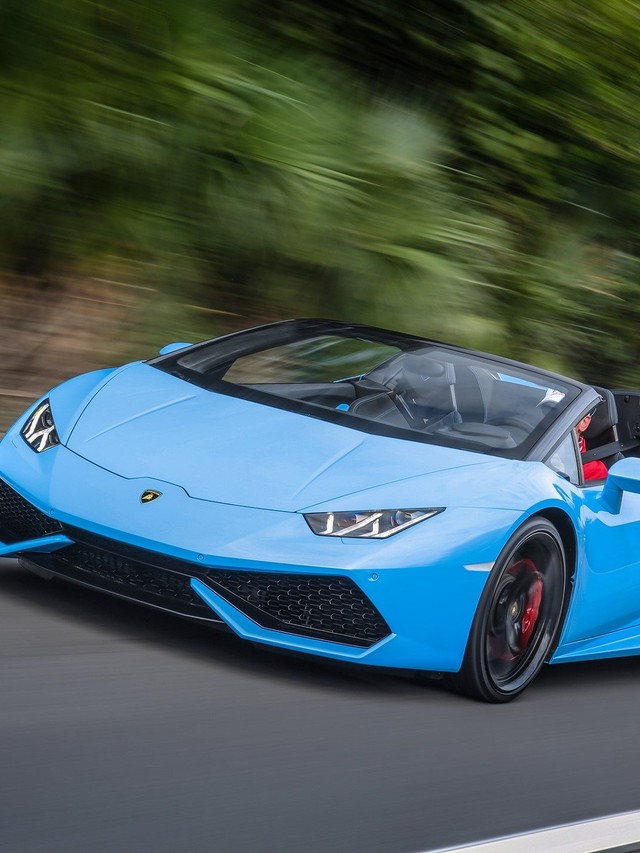
Lamborghini expanded the lineup aggressively during the year. The special-series Huracán Avio, limited to 250 units, began deliveries in summer 2016. The Huracán Rear Wheel Drive Spyder debuted at the Los Angeles Auto Show in November, giving the range a more accessible, driver-focused entry point. For buyers who wanted the visceral experience of a naturally aspirated V10 without all-wheel-drive intervention, the RWD Spyder became the answer.
The Aventador posted 1,104 deliveries (up from 1,003 in 2015) and hit a production milestone: the 6,000th unit rolled off the line in December 2016. That same month, Lamborghini announced the Aventador S, packing 740 hp, four-wheel steering, and revised aerodynamics. The “S” suffix carried historical weight, signaling enhanced variants in Lamborghini’s lineage, and it gave the V12 flagship fresh commercial momentum heading into 2017.

The vibrant blue Lamborghini Huracan Spyder showcases its exhilarating speed on the track, a testament to its powerful design. Image: Automobili Lamborghini.
Limited Editions and the Miura’s 50th Anniversary
Lamborghini leaned heavily into heritage and exclusivity in 2016, a strategy that served both brand image and the bottom line while reinforcing the two-model philosophy. The Centenario Coupé debuted at Geneva, followed by the Centenario Roadster at Monterey Car Week in August. Only 20 units of each body style were planned for delivery starting in 2017, celebrating the centenary of founder Ferruccio Lamborghini’s birth. Every car was sold before it was publicly shown, a pattern that would become standard for Lamborghini’s ultra-limited releases.
The Aventador Miura Homage, limited to 50 units, marked the 50th anniversary of the car widely credited as the first modern supercar. Lamborghini’s heritage department, PoloStorico, organized a year-long celebration that included appearances at Goodwood, Villa d’Este, Pebble Beach, and Amelia Island, plus an Italian tour featuring 20 privately owned Miuras. For collectors, these events reinforced something tangible: Lamborghini was actively curating and certifying its own history, which tends to support residual values across the classic range. The limited editions and heritage program showed that exclusivity could coexist with growth, so long as the core lineup stayed small.
Motorsport Expansion and the Super Trofeo Pipeline
Squadra Corse, Lamborghini’s motorsport division, posted its own record numbers, and the connection to showroom success was more than cosmetic. The Super Trofeo one-make series, running across Europe, Asia, and the Americas, averaged grids of more than 80 Huracán Super Trofeos and attracted 150 more drivers than in 2015. A new Middle East series was planned for early 2017 in Abu Dhabi and Dubai.
On the GT3 front, customer teams fielded more than 40 cars worldwide, collecting 18 overall race wins, 22 pole positions, and 52 podium finishes. Lamborghini teams took championships in both the GT Asia Series and the International GT Open. The motorsport program matters beyond trophies because it feeds directly into product development and brand credibility. Buyers who spec a Huracán Performante or (later) an STO are paying for technology validated in these series, and expanding grid sizes signal growing confidence from privateer teams willing to invest in the platform. In a year when Lamborghini sold just 3,457 road cars, the racing operation punched well above the company’s commercial weight class.
The Urus Looming: Why 2016’s Numbers Were Just the Beginning
Domenicali’s reference to “a company-wide quantum leap” pointed squarely at the Urus, confirmed for a 2018 launch as Lamborghini’s third model line. New factory facilities in Sant’Agata Bolognese were scheduled for completion within 2017, and the SUV was expected to roughly double production capacity. The two-model discipline that defined 2016 was about to end.
Looking at these figures with the benefit of hindsight makes the scale of transformation obvious. Lamborghini celebrated 3,457 deliveries as a historic milestone. By 2024, according to Motor1, the company was delivering more than 10,600 vehicles annually, with the Urus accounting for the majority. The 3,400-unit company of 2016 was about to become something fundamentally different.
For enthusiasts who owned or ordered Huracáns and Aventadors during this era, the 2016 vintage represents the last full year before the SUV reshaped Lamborghini’s identity and production economics. Whether that transformation preserved or diluted the brand’s character remains one of the most debated questions among Lamborghini owners. Multiple enthusiast forum discussions reflect a split: some credit the Urus with funding the development of cars like the Revuelto and Temerario, while others view the SUV era as a departure from the exclusivity that made Sant’Agata special.
What the 2016 numbers confirm is that Lamborghini’s commercial strategy was already working before the Urus arrived. Six consecutive years of growth, built on two naturally aspirated supercars and a dealer network one-tenth the size of most luxury competitors. The Urus accelerated the trajectory, but the foundation was laid here, in a year when 3,457 cars felt like a remarkable achievement and the company could still define itself entirely by the supercars it built.


