A Twin-Turbo V8 That Revs Like a Naturally Aspirated Engine
A turbocharged V8 that reaches 10,000 rpm sounds like a contradiction. Turbochargers work by forcing exhaust gases back through the intake, which typically limits how fast an engine can spin because the whole system needs time to spool and breathe. Naturally aspirated engines (those without turbos) own the high-rev territory. The Lamborghini Temerario‘s 4.0-liter twin-turbo V8, and the engineering choices required to get there, tell you everything about what Lamborghini thinks electrification should be.
The V8 uses a flat-plane crankshaft and a “hot vee” layout — the turbochargers sit inside the V of the engine rather than outside it, which shortens the path exhaust gases must travel and allows the turbos to spool faster. The result is reduced lag at low revs and a lighter, more compact package overall. The V8 alone produces 789 horsepower and 538 lb-ft of torque.
The hybrid system integrates three axial-flux electric motors. One sits between the V8 and the eight-speed dual-clutch gearbox (built by Graziano), contributing 148 horsepower. Two further electric motors drive the front axle independently, giving the car its all-wheel-drive capability without a mechanical connection to the rear. Lamborghini says the combined output is 920 CV — roughly 907 horsepower in the metric most English-speaking buyers use.
For the driver, the consequence is tangible. Off the line, the front e-motors deliver instant torque like an EV. As the V8’s turbos spool and the engine climbs past 4,000 rpm, the character shifts from electric shove to turbocharged thrust. And then, at the upper reaches of the rev range, the Temerario keeps pulling. The engine note changes, the power delivery tightens, and the tachometer sweeps past numbers that simply do not exist on any other twin-turbo V8 road car. That final stretch of travel is Lamborghini’s argument that hybrid power and emotional intensity are not mutually exclusive.
The car accelerates from 0 to 100 km/h in 2.7 seconds and reaches a top speed of 343 km/h. Those numbers sit at the outer edge of what road-legal cars from any manufacturer currently offer. But the more interesting figure is the redline: 10,000 rpm in a turbocharged road car is not something any other production V8 has managed. It required the flat-plane crank arrangement, the hot-vee packaging, and lightweight rotating assembly components that would not have been cost-viable without the kind of investment Lamborghini made in the Temerario as a full model-line replacement for the Huracán.

The Design Behind the Numbers
The Temerario’s body did not emerge from a brief handed to an external studio. It was conceived and shaped entirely within Centro Stile Lamborghini, the brand’s in-house design department based in Sant’Agata Bolognese, the same northern Italian town where every Lamborghini road car since the 1960s has been built. The design was led by Mitja Borkert, who has overseen Lamborghini’s visual language since 2016 and is responsible for the current generation of Huracán, Urus, and Aventador family styling.
Borkert’s brief for the Temerario was to signal a complete departure from the V10 Huracán without abandoning the visual aggression that defines Lamborghini’s identity. The result is a sharper, more angular car with an emphasis on aerodynamic function over decoration. Active elements in the front splitter and rear diffuser adjust automatically, managing downforce and drag balance across the speed range. The cabin is lower than the Huracán’s by a meaningful margin, a consequence of the more compact V8 package allowing the engine to sit lower in the chassis, which in turn drops the roofline.
The car was developed at Sant’Agata Bolognese and validated across multiple test environments, including the Misano Adriatico circuit on Italy’s Adriatic coast — a track used regularly by Lamborghini for vehicle dynamics development because its mix of high-speed corners and tight technical sections mirrors the demands that customer-car buyers actually impose on their machines. Additional high-speed and durability testing was conducted at Millbrook Proving Ground in the UK, a facility used by numerous European manufacturers for its controlled-environment test routes.
The interior continues a pattern Lamborghini has been developing since the Huracán STO: a driving environment that prioritises the information the driver needs and removes the ornamentation they do not. Carbon fibre paddle shifters sit directly behind the steering wheel spokes. The instrument display is driver-focused, angled toward the seating position rather than centered on the console. The black-and-orange interior visible in campaign imagery is one point on a very wide colour spectrum — Lamborghini’s Ad Personam customisation programme, the factory’s bespoke paint and trim service, makes over 400 exterior colours available, with paint options on some specifications costing up to $16,500 individually.
Squadra Corse Builds Its Own GT3 for the First Time
The Temerario GT3 race car uses the same engine without the hybrid element. The hybrid element is omitted to meet current competition regulations, so what remains is a lighter, simpler car with a proven engine architecture.
Lamborghini says the GT3 was designed and developed entirely in-house by Squadra Corse, the company’s racing department. That phrase, “entirely in-house,” carries weight. Previously, Lamborghini’s customer racing programme relied on collaborative arrangements for the chassis engineering of its GT-class entries. Building the whole car internally means Squadra Corse now controls the development process under one roof, which changes what is possible when a customer racing team calls with a problem mid-season. For teams buying the car, this should mean faster factory support and more direct feedback loops between the race department and the people running the cars on weekends.
The GT3 programme also validates the V8’s durability claim. Motorsport learnings suggest the engine is designed for sustained high-load operation on track. If a GT3 car can survive multi-hour endurance stints at or near redline, the road car’s powertrain has a proven mechanical foundation underneath its hybrid software layer. The Huracán Super Trofeo currently competes in Lamborghini’s one-make racing series, and Lamborghini reports a Temerario Super Trofeo introduction in 2027, which would complete the transition from V10 to V8 across Lamborghini’s entire customer-racing ladder.
The Temerario GT3 also had a notable test driver: Andrea Caldarelli, one of Lamborghini’s factory works drivers and a regular competitor in GT endurance racing, was involved in the car’s development programme. Having a works driver shape the car’s chassis balance during development — rather than just signing off on a finished product — means the race version was calibrated by someone with direct experience of what GT3 cars need at the limit in competition. Caldarelli’s feedback loop between the race car and the road car’s engineers is part of what Squadra Corse means by full in-house development.
What the Temerario Replaces, and What Buyers Actually Gain
Multiple reports confirm the Temerario is the direct successor to the Huracán. Replacing it with a turbocharged, electrified V8 is the kind of move that splits a fanbase, and Lamborghini knew it would.
The gains are concrete. The hybrid system’s front-axle e-motors give the Temerario true electric all-wheel drive, meaning the front wheels receive torque independently and instantaneously, without waiting for a mechanical differential to distribute power. At corner exit, each front wheel can receive exactly the torque it needs based on grip, not based on a mechanical ratio. The practical consequence: the car rotates more predictably under load, turn-in is sharper than the Huracán’s mechanical AWD system allowed, and the front axle communicates grip state more honestly because there is no mechanical coupling to the rear muddying the signal.
The battery is a 3.8 kWh lithium-ion pack. That is small by plug-in hybrid standards — a typical family PHEV carries three or four times as much capacity — but the Temerario’s battery is not designed for electric commuting. It exists to buffer the electric motors during hard acceleration and regenerative braking, keeping the system responsive without adding significant mass. The electric-only range will be minimal: enough for quiet departures from a residential garage, not much further. Lamborghini is explicit that the HPEV designation — “High-Performance Electrified Vehicle” — is not a fuel-economy claim. It is an assertion that the electric components make the combustion engine perform better.
Owners who configure aggressively will find plenty to spend on. Road & Track reported that leaked pricing documents show some paint options costing $16,500. The Alleggerita lightweight package strips material from the interior and adds carbon fibre components, bringing weight down at the cost of comfort. Lamborghini has not officially confirmed base pricing, but the options list alone has the potential to add tens of thousands to the final invoice before a buyer has made any performance modifications. The Ad Personam programme expands this further across the full range.

The ‘Born Temerario’ Campaign and What It Actually Sells
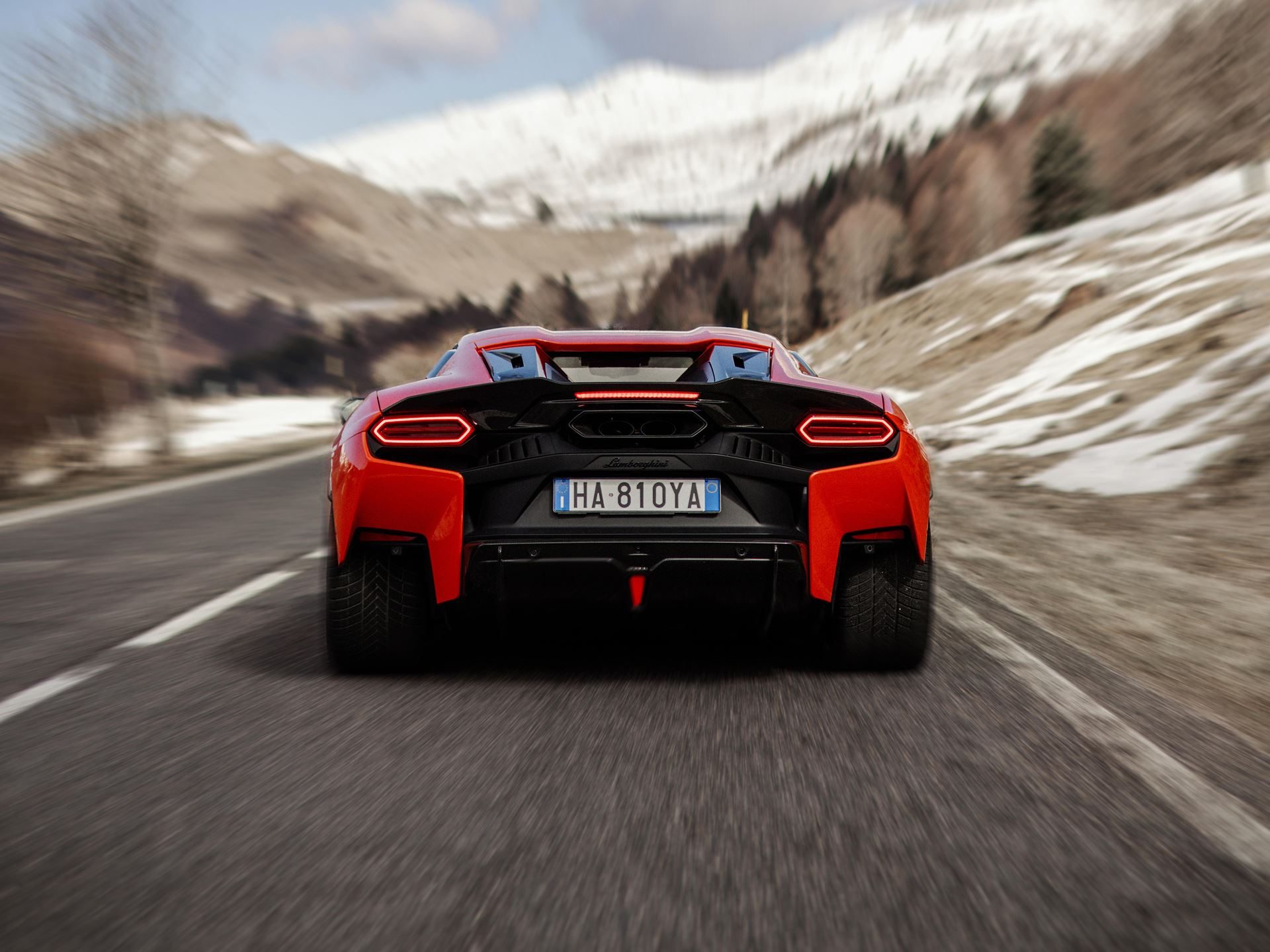
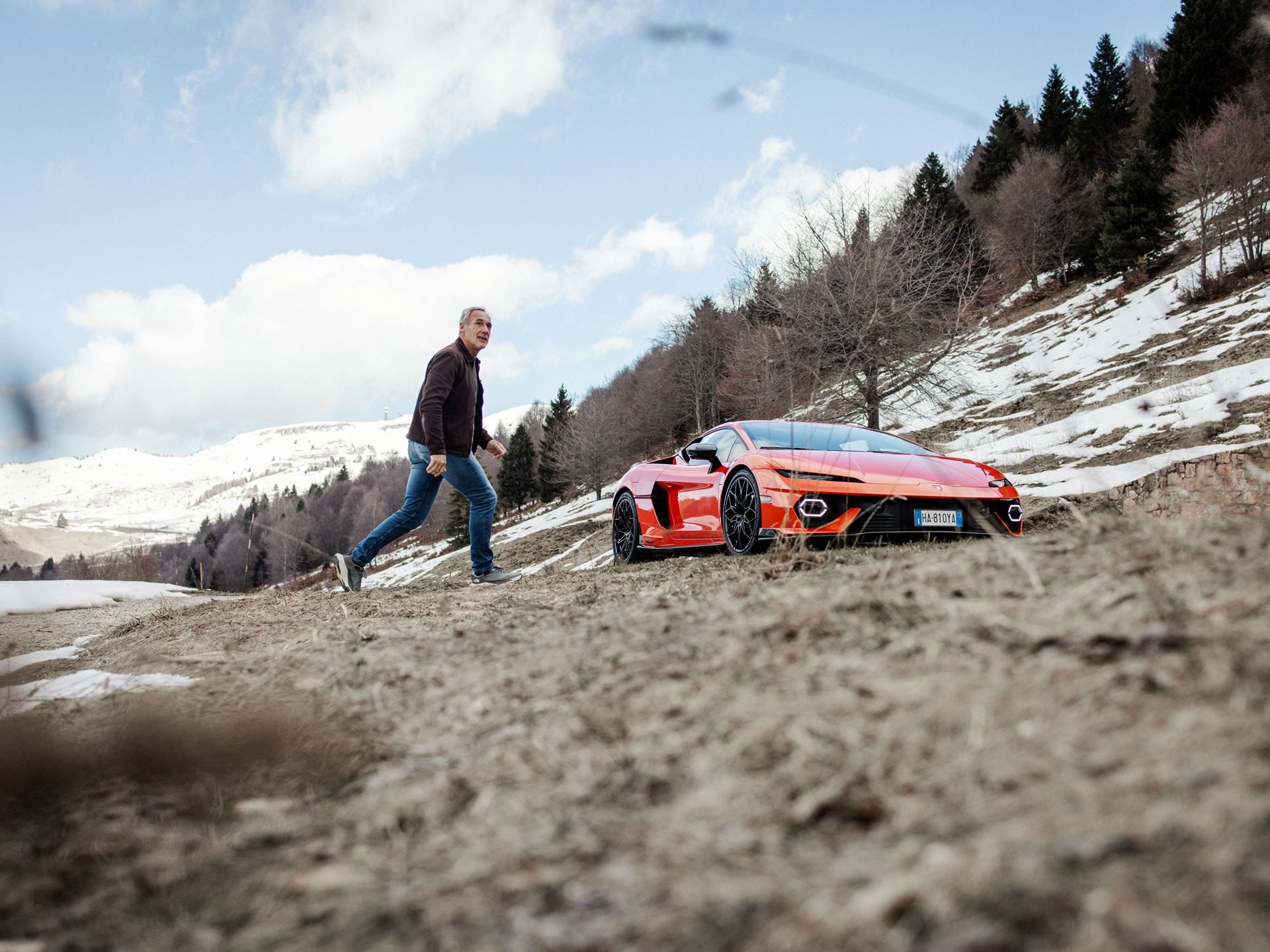
Lamborghini’s new video, titled “Born Temerario,” features South African-born professional explorer Mike Horn driving the car on snowy mountain roads in Italy. Horn’s credentials are legitimate and, frankly, staggering. Over 30 years, he completed a solo 18-month journey along the equator without motorized transport, walked to the North Pole in total winter darkness over 183 days, undertook a 20,000 km non-stop expedition following the Arctic Circle, and climbed four of the world’s highest mountains without supplemental oxygen. Lamborghini says he also completed a multi-year voyage around the planet via both poles and led a four-year expedition focused on environmental education.
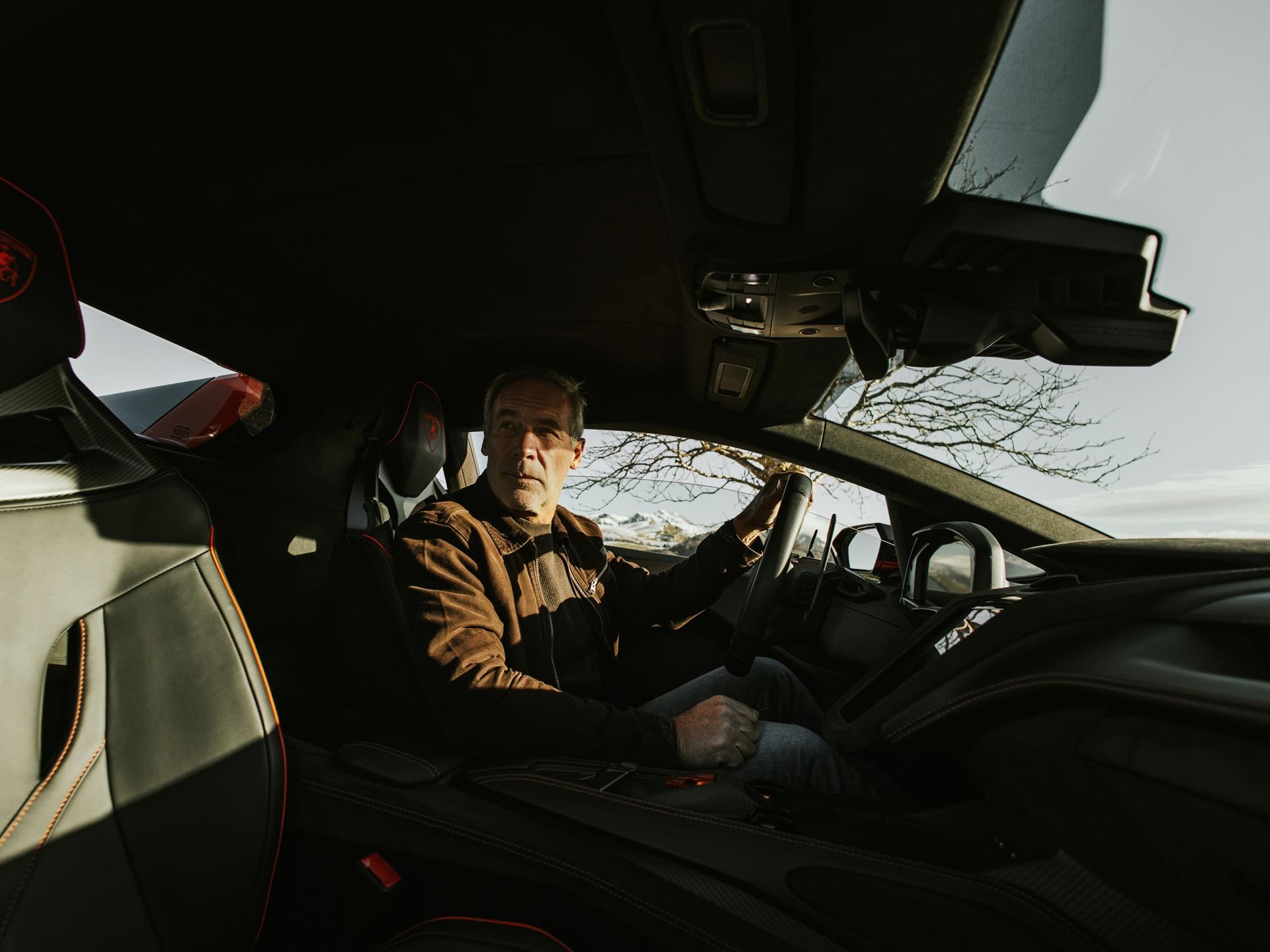
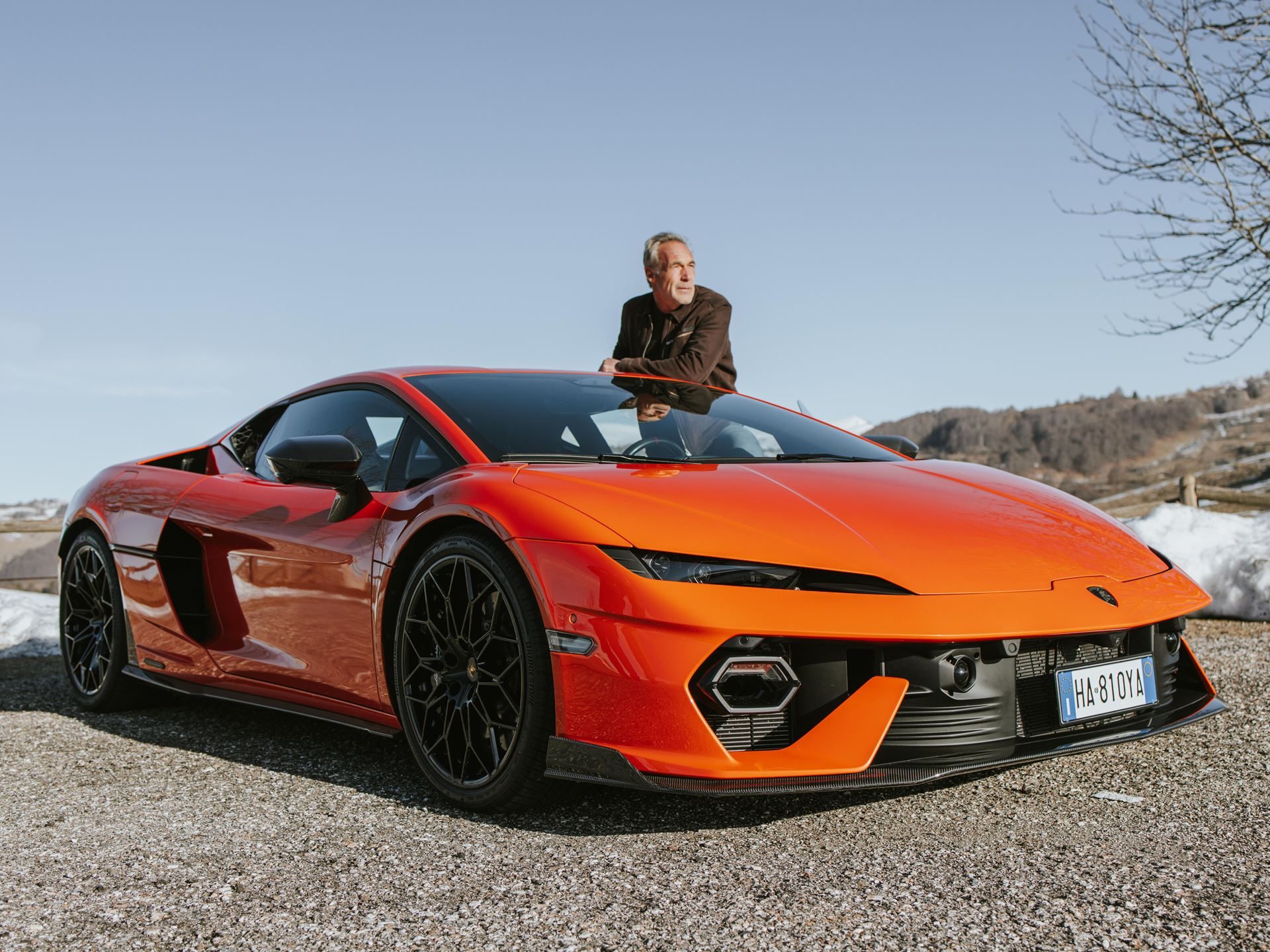
The campaign frames Horn as someone who embodies the “Born Temerario” spirit. Strip away the motivational-speaker phrasing in the press release (and there is a lot of it), and the marketing logic is straightforward: Lamborghini wants the Temerario associated with physical capability and real-world toughness, not just track times and launch-control runs. The campaign imagery reinforces this. Horn stands with crossed arms in front of the orange Temerario on a snowy mountain road, looking like a man who has genuinely been cold before. He sits behind the wheel in the car’s black-and-orange interior, carbon fibre paddle shifters visible on the steering wheel, looking out at a landscape that could not be further from a California car show.
Whether the adventure-explorer angle resonates with actual Temerario buyers is an open question. Most supercars in this segment spend their lives on smooth tarmac in temperate climates, not on icy Alpine passes. But the campaign does something subtler than lifestyle aspiration: it positions the Temerario as a car with a dual personality, comfortable enough for a mountain road trip and aggressive enough for its GT3 sibling to compete globally. That duality is the hybrid powertrain’s real selling point, and Horn’s career of operating in extreme conditions is a more interesting metaphor for it than another celebrity behind the wheel at a press event.
It is also worth noting what the campaign does not do: it does not make a single direct reference to the Huracán, to V10 engines, or to the mechanical heritage the Temerario replaces. Lamborghini is not asking buyers to grieve one era and accept another. The “Born Temerario” framing treats the car as self-contained, born with its own character rather than descended from something. Whether that framing holds up once the purist press gets proper track time in the car remains to be seen.

Where the Temerario Lands in a Segment Going Hybrid
The Temerario’s approach — a larger V8 with three e-motors and a redline that belongs on a naturally aspirated engine — is the most mechanically complex solution in its segment. Whether complexity translates to superiority on the road depends on calibration, weight management, and how the software integrates three separate torque sources at the limit.
For prospective buyers, several questions remain unanswered. Lamborghini still has not confirmed official pricing, though the configurator leak reported by Road & Track suggests the options list alone could add tens of thousands to the total. Delivery timelines are similarly opaque. The 0 to 60 mph run takes 2.4 seconds, the 0 to 100 km/h run takes 2.7 seconds, and the top speed is 343 km/h — numbers that place the Temerario at the front of its competitive class on paper. The electric-only contribution from the small battery will be minimal in real-world use, enough for quiet neighbourhood departures but not a meaningful reduction in fuel consumption for anyone driving the car the way it is meant to be driven.
The practical buyer takeaway: if you are on a Temerario allocation list, the car you are waiting for is the most technically ambitious entry-level Lamborghini ever built. The hybrid system adds weight but also adds capability the Huracán never offered — instant torque off the line, electrically driven front wheels for sharper turn-in, and a combustion engine that can scream to a redline previously reserved for atmospheric motors. The design from Centro Stile Lamborghini and Mitja Borkert signals the same ambition in visual terms: this is not a Huracán with a different nose; it is a full reset of what a Lamborghini below the Revuelto is supposed to be. If the calibration delivers on the engineering promise, the Temerario will feel like two different cars depending on where you put the throttle and the drive-mode selector.
The competition will respond. But the specific combination that Lamborghini has assembled here — a 10,000 rpm turbocharged V8, three electric motors with independently driven front wheels, an in-house GT3 programme, and a design pedigree that runs directly through Sant’Agata Bolognese — is expensive to replicate and difficult to homologate in a single generation. That is Lamborghini’s clearest signal that the brand intends to own the emotional high ground in the hybrid supercar segment, not just the spec sheet. The Temerario does not ask permission from the Huracán’s legacy. It simply arrives with better numbers, a sharper design, and a race car already in development.

Gallery