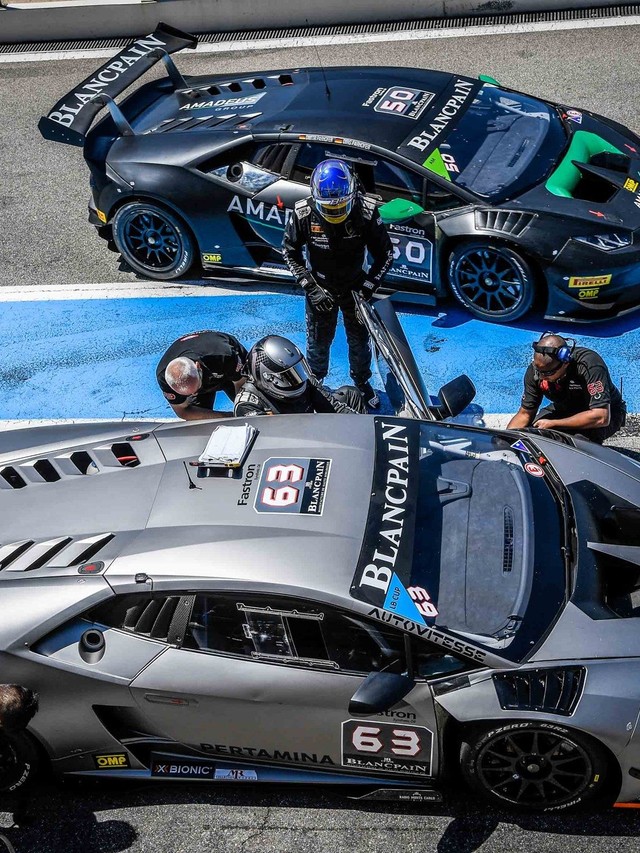
Lamborghini and Blancpain Close the Book on Eight Years Together
The partnership between Automobili Lamborghini and Swiss watchmaker Blancpain formally concluded on December 31, 2016, ending an eight-year collaboration that reshaped how both brands presented themselves to the world. Lamborghini confirmed the split in early February 2017, framing it as a mutual and amicable conclusion rather than a rupture.
The numbers tell a compelling story on their own. When the Lamborghini Blancpain Super Trofeo launched in 2009, it fielded 11 Gallardo Super Trofeo cars on a single continent. By 2016, 98 Huracán Super Trofeo cars competed across three continents. That kind of growth, nearly ninefold in participant count, does not happen by accident. It required sustained investment, logistical infrastructure, and a brand partnership that gave the series credibility in circles where motorsport alone would not have opened doors.
The more interesting question, though, is what this scaffolding actually built. Lamborghini says it will continue fielding customer teams and Huracán GT3s in the European and Asian Blancpain GT Series, meaning the racing relationship persists even as the title sponsorship disappears. The Super Trofeo one-make series enters 2017 without the Blancpain name on its masthead for the first time since its inception. Whether that absence matters, or whether the partnership already accomplished what Lamborghini needed it to, is the real measure of these eight years.
How Super Trofeo Became a Global Platform
The Super Trofeo’s trajectory from a European gentleman-driver series to a genuinely global racing championship reveals how Lamborghini used a luxury co-branding deal to accomplish something that raw motorsport spending alone might not have achieved.
The series expanded into Asia in 2012 and North America in 2013, according to available reporting. That expansion timeline matters: Lamborghini was building a three-continent racing infrastructure during a period when many manufacturers were contracting their motorsport footprints. The inaugural Super Trofeo world championships took place at Italy’s Autodromo Vallelunga, and by 2015, the World Finals had moved to the historic Sebring Motor Speedway, with one report indicating 84 cars competing across the three regional championships that year.
Blancpain’s involvement gave the series a luxury positioning that extended well beyond pit lane signage. Lamborghini says the two brands served as co-ambassadors at prestigious lifestyle events, including Lamborghini’s own 50th anniversary celebrations. The partnership also yielded a road car: one report describes the Gallardo LP 570-4 Blancpain Edition, unveiled in 2010, as a special road-legal model that married Super Trofeo racing cues with everyday usability.
A detail that rarely gets mentioned is that Blancpain’s CEO, Marc Hayek, personally drove one of the eleven cars in the inaugural 2009 season. When the head of your title sponsor straps into the race car himself, the collaboration carries a different kind of authenticity than a logo on a banner. That personal commitment set the tone for a partnership whose real product was not visibility but infrastructure, the kind of institutional foundation a racing program needs before it can stand alone.
The Strategic Logic of Luxury Partnerships in Motorsport
Luxury co-branding in motorsport is a calculated exercise, and the Lamborghini-Blancpain model worked because it addressed a specific problem. Lamborghini needed to build a customer racing ecosystem from scratch. Unlike Ferrari, which had decades of factory racing heritage and established programs like Corse Clienti and the FXX series, Lamborghini in 2009 was a relative newcomer to organized customer competition. Porsche, similarly, had long operated the Carrera Cup and GT3 Cup Challenge as self-sustaining ecosystems with deep institutional knowledge.
Blancpain provided more than money. The watchmaker brought access to a clientele that overlapped precisely with the kind of high-net-worth individuals who might buy a race car but would never respond to a cold call from a motorsport department. The lifestyle events, the co-branded timepieces, the shared presence at exclusive gatherings all served as a funnel, converting luxury consumers into racing participants. In that sense, the partnership was less a sponsorship than a recruiting tool for Lamborghini’s entire customer racing philosophy.
For prospective Super Trofeo entrants, the practical takeaway from this split is worth considering. The series proved its viability over eight years of sustained growth. Whatever title sponsor replaces Blancpain, or whether Lamborghini chooses to run the series independently, the infrastructure and participant base are established. The risk of a sponsorship change disrupting the racing experience for existing teams and drivers appears low, given Lamborghini’s confirmed commitment to continuing the program.
What Comes After Blancpain for Super Trofeo
Lamborghini has not announced a replacement title sponsor for the Super Trofeo series, and the company has not publicly disclosed whether it intends to seek one or operate the championship under its own name. What the available evidence does confirm is that the racing infrastructure survived the transition intact, which is itself the strongest argument that the Blancpain years built something durable.
The series has continued to attract commercial partners at various levels. One report indicates that Hankook became the exclusive tire supplier for the Super Trofeo starting in 2023, a deal that extends through the 2026 season. Sportswear brand Macron, according to another report, signed a three-season partnership beginning in July 2024 to outfit Lamborghini Squadra Corse staff. These are not title-level deals, but they demonstrate that the series retains commercial appeal to brands seeking association with Lamborghini’s racing platform.
The bigger strategic picture involves Lamborghini’s evolution as a racing manufacturer. The Temerario GT3, which Lamborghini debuted at the 2025 Goodwood Festival of Speed, represents a milestone: it is the company’s first competition car fully designed, developed, and built in-house. According to Autoblog, the car signals a shift from outsourced race car development to factory-controlled engineering. That transition, from a brand that relied on external partnerships for credibility to one building its own racing machinery from the ground up, traces a direct line back through the confidence and infrastructure that the Blancpain years helped establish.
Ferrari and Porsche have long operated their customer racing programs as vertically integrated operations, controlling everything from car development to series logistics. Lamborghini spent eight years using a luxury partnership to build toward that same level of self-sufficiency. The Blancpain chapter was the scaffolding. The question now is whether the building can stand on its own.
A Partnership That Served Its Purpose
Partnerships in the supercar world tend to be evaluated on a simple metric: did both parties emerge stronger? By that measure, the Lamborghini-Blancpain collaboration delivered. Lamborghini entered 2009 with no organized customer racing series and limited presence in the global GT landscape. By the time the deal concluded, Squadra Corse operated a three-continent championship with nearly 100 cars on the grid, and Lamborghini’s GT3 program competed in some of the most prestigious endurance events in the world.
Blancpain, for its part, gained sustained visibility in a market segment, wealthy performance enthusiasts, that traditional watch advertising struggles to reach. Marc Hayek racing his own car in the first season was not just a charming footnote; it was a signal of genuine investment that set the tone for eight years of credible collaboration.
Lamborghini’s motorsport trajectory since 2016 confirms that the Blancpain era was a launchpad, not a dependency. The Super Trofeo continues to grow, new commercial partners continue to sign on, and the in-house Temerario GT3 represents a level of racing ambition that would have been difficult to imagine when eleven Gallardos lined up on a single European grid. The Blancpain name may no longer appear on the series, but its influence on Lamborghini’s racing identity will be visible for years to come.
Gallery


